On April 6, 2026, the State Bank of Pakistan (via circulars FECL6 and FECL7) removed the per-transaction Form R requirement for freelancers and IT exporters, replacing it with a one-time declaration at account opening. Reforms also mandate one-working-day payment processing, raise the Form R threshold to above $25,000, and allow ESFCA debit cards for direct USD spending.
For years, Pakistani freelancers have succeeded despite their own banking system, not because of it. Endless paperwork, per-payment forms, and inconsistent bank rules turned receiving hard-earned dollars into a frustrating ordeal. Now, in one of the most significant reforms in years, the State Bank of Pakistan has removed a major part of that friction.
The headline change is the elimination of the per-transaction Form R requirement. This is genuinely good news for Pakistan's millions of freelancers and IT exporters. This article breaks down exactly what changed, what it means for you, and, honestly, what still needs fixing.
Let's be accurate, because the details matter. On April 6, 2026, the SBP issued two circulars, FECL6 and FECL7, introducing a package of reforms for IT exporters and freelancers. The centerpiece is the removal of Form R on a per-transaction basis.
Here is the important nuance many summaries get wrong: Form R has not vanished entirely. Previously, freelancers had to submit a Form R for every single incoming foreign payment, a separate form for each invoice, manually filed, constantly causing delays. Under the new rules, that per-transaction burden is gone, replaced by a one-time declaration at account opening (or as needed for existing customers), specifying the nature of your services. Banks then automatically tag the relevant service and purpose codes for each payment.
Form R still exists, but only as a reporting requirement for larger transactions, its threshold has been raised to above $25,000. So for the vast majority of freelancers, whose individual payments fall well under that, the per-payment paperwork effectively disappears.
The Form R change is the headline, but the reform package is broader and genuinely substantial. Alongside it, the SBP introduced several linked measures.
Payments must now be processed within one working day, a maximum turnaround time for inward export receipts and outward remittances from ESFCA accounts, so you get your money faster. Documentation was standardized across all banks, ending the confusing situation where every institution asked for different things. ESFCA debit cards are now allowed, enabling direct USD spending on international services (like software subscriptions and tools) without conversion. And banks were ordered to set up dedicated complaint-resolution systems specifically for IT exporters and freelancers, giving you a real escalation path when a bank fails to meet the one-day standard.
Together, these address the actual, day-to-day pain points freelancers have complained about for years.
To appreciate the relief, understand the old burden. Form R was documentation designed for traditional goods exporters, not digital freelancers earning small, frequent payments from global clients.
The result was a structural mismatch. Freelancers had to provide separate documentation for every foreign remittance, navigate inconsistent requirements that varied from bank to bank, and wait extended, unpredictable periods for processing. For many, this friction was so discouraging that they avoided formal banking entirely, using informal channels or leaving money on foreign platforms.
Removing the per-transaction requirement signals a real shift toward a trust-based, streamlined system that treats digital services as the modern export they are.
A central part of this ecosystem is the Exporters' Special Foreign Currency Account (ESFCA), designed specifically for freelancers and IT exporters. It is worth understanding because it is now more powerful than before.
An ESFCA lets you receive, hold, and manage foreign currency earnings, and critically, retain up to 50% of your earnings in foreign currency rather than being forced to convert everything to rupees immediately. This reduces unnecessary conversion losses and gives you flexibility to spend in dollars. With the new debit-card facility, you can now spend that foreign currency directly on international services. Typically, freelancers operate a dual setup: a regular PKR account for local use and an ESFCA for international earnings, covering both worlds without workarounds.
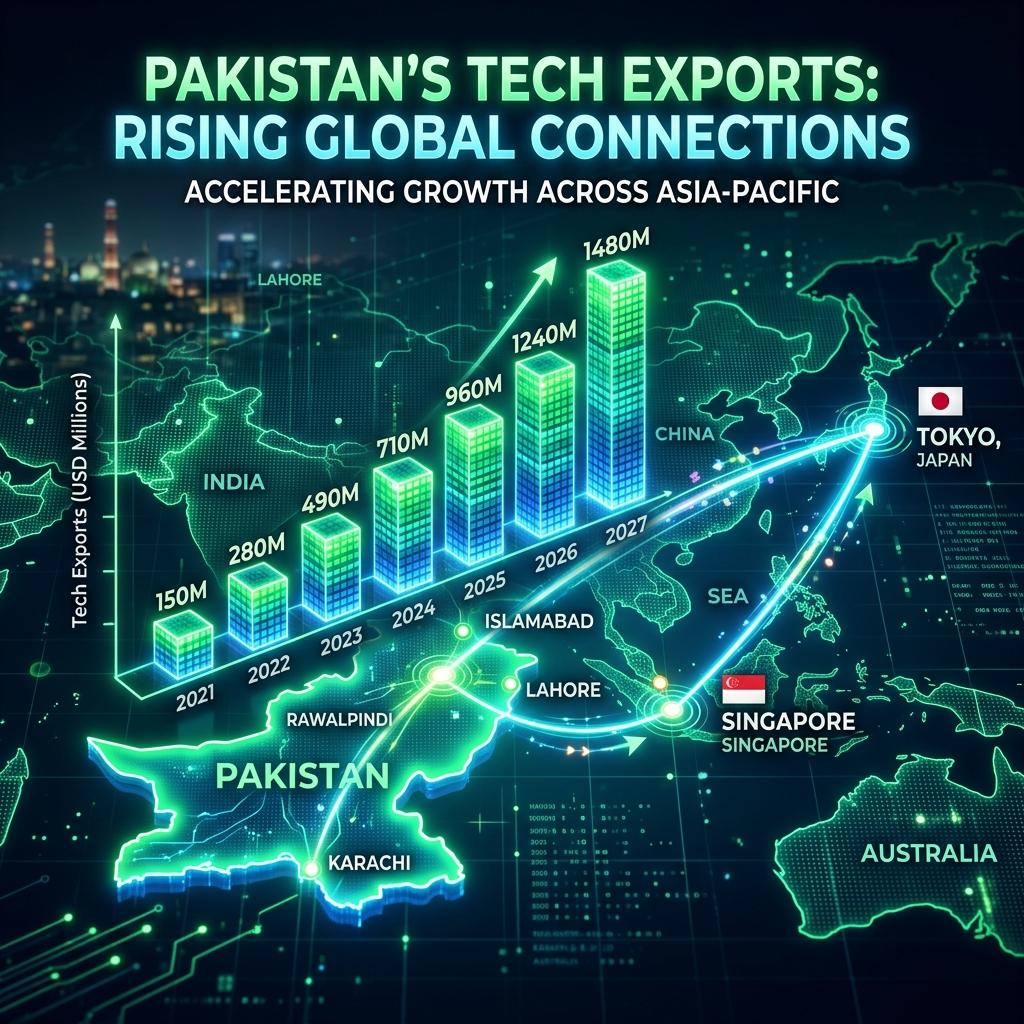
Encouragingly, this is not just theory, the reforms appear to be working. Following these easings, freelancer export receipts surged, reaching $557 million in the first half of fiscal year 2026, a striking 58% jump from $352 million in the same period the year before.
That kind of increase suggests the reforms are doing exactly what they were meant to: encouraging more freelancers to bring their earnings home through formal, documented channels. When the system is easier and faster, more people use it, which benefits both freelancers and the national economy.
For freelancers, the practical impact is real and immediate. Onboarding is faster, freelancer accounts are expected to open within about two working days, lowering the barrier for newcomers. Payment processing is quicker, with the one-day mandate and far less paperwork meaning faster access to your earnings. And there is a stronger case for formalization, with the friction reduced, operating within the formal financial system is now more attractive than informal workarounds, which also helps you build a documented income history (useful for visas, taxes, and future credit).
If you had delayed formalizing your freelance income because banking was such a hassle, this is a genuine reason to reconsider.
Being honest strengthens the good news, and real gaps remain. Foreign currency still cannot easily be withdrawn as cash within Pakistan, and local spending requires conversion to rupees, consistent with the country's exchange-control framework. Implementation can still vary between banks in practice, even with standardized rules on paper, so experiences differ. And the biggest structural gap remains access to credit, freelancers still struggle to get loans, credit lines, and financial products, because banks are not yet set up to assess freelance income.
There is also a bigger unsolved piece: the outbound experience for clients. Receiving money has improved, but foreign clients still cannot pay Pakistani freelancers as easily as they pay freelancers in countries with Stripe and similar tools. That is the next frontier.
Zooming out, these reforms reflect an important shift in mindset. Governments are increasingly recognizing freelancers as a formal, valuable economic segment rather than an informal afterthought.
The SBP's move is a direct acknowledgment that foreign-exchange rules designed for traditional trade did not fit digital services, and a signal that growing IT export revenue is now a genuine policy priority. Pakistan is aligning itself with global freelance economies that simplify payments and actively support digital workers. For a country where freelancing generates vital foreign exchange, youth employment, and digital-economy growth, that recognition matters.
Freelancers are a real economic force in Pakistan, contributing significantly to foreign-exchange earnings, digital-economy growth, and jobs for a young population. Reducing friction in their financial systems has national benefits: it increases documented export volumes, improves tax and economic data, and strengthens resilience by bringing more earnings through official channels.
The 58% jump in freelancer receipts is early proof of the payoff. Make it easier for freelancers to operate formally, and more of them will, growing the pie for everyone.
If this momentum continues, the logical next steps would tackle the remaining gaps: freelancer-friendly credit products that assess digital income, clearer and stable tax frameworks, better integration with global payment systems, and solving the outbound client-payment problem. Get those right, and Pakistan could position itself among the world's leading freelance economies.
The direction is clearly positive. The task now is to keep going rather than stop at this win.
The State Bank's removal of per-transaction Form R, alongside one-day processing, standardized rules, ESFCA debit cards, and dedicated complaint systems, is the most meaningful improvement to freelancer banking in years. It is not perfect: credit access, cash withdrawal, and client-side payments still need work. But for the first time in a long while, the system is genuinely adapting to how modern freelancers actually earn. The early 58% surge in freelancer receipts shows the impact is real. If you are a Pakistani freelancer who has struggled with banking friction, the message is simple: it just got significantly easier, and it is worth taking another look at operating formally.
This article is for general informational purposes only and reflects SBP reforms announced in April 2026. Banking rules, thresholds, and implementation can change and vary by bank; verify current requirements with your bank and the SBP (sbp.org.pk) before acting. This is not financial advice.
On April 6, 2026, the State Bank of Pakistan (SBP) issued circulars FECL6 and FECL7 introducing major reforms for freelancers and IT exporters. The headline change: the per-transaction Form R requirement was removed. Previously, freelancers filed a Form R for every incoming foreign payment, causing constant delays; now a single one-time declaration at account opening (specifying the nature of services) suffices, with banks auto-tagging service and purpose codes. Form R still exists as a reporting requirement, but its threshold was raised to above $25,000, so most freelancers' payments skip it entirely.
Other reforms: a maximum one-working-day processing time for inward export receipts and outward remittances from ESFCA accounts; standardized documentation across all banks; ESFCA debit cards permitting direct USD spending on international services; and mandatory dedicated bank complaint-resolution systems for IT exporters and freelancers. Freelancer accounts are expected to open within about two working days.
The Exporters' Special Foreign Currency Account (ESFCA) lets freelancers receive, hold, and manage foreign currency, retaining up to 50% of earnings in foreign currency to reduce forced conversions. Freelancers typically run a dual setup: a PKR account plus an ESFCA.
Early results: freelancer export receipts surged 58% to $557 million in H1 FY2026 (from $352 million), indicating the reforms are drawing earnings into formal channels.
Remaining gaps: foreign currency can't easily be withdrawn as cash locally (requires PKR conversion), bank implementation varies, credit/loan access remains difficult, and the outbound client-payment experience still lags countries with tools like Stripe.
Informational only; verify current rules with your bank and SBP, as details can change.