eTaps is Pakistan's first AI-powered full-stack e-commerce automation platform, founded by young entrepreneur Muhammad Nafey under HMN Group. Launched in Lahore in 2025, it automates the full order lifecycle, using AI to verify orders, optimize couriers, manage inventory, reconcile finances, and track marketing, helping Pakistani online sellers cut fraud and improve efficiency.
Anyone who has run an online business in Pakistan knows the daily headaches: fake orders that waste money, couriers that lose or delay packages, inventory that never quite matches, and payments that are a nightmare to reconcile. Now a young Pakistani entrepreneur has built an AI-powered platform aiming to solve exactly these problems.
It is called eTaps, described as Pakistan's first AI-powered full-stack e-commerce automation system. It is a homegrown solution to homegrown problems, and a strong example of young Pakistani talent building real technology for the local market. Here is what it does, who built it, and why it matters for Pakistan's booming e-commerce sector.
To understand eTaps, you first have to understand the pain of running e-commerce in Pakistan. Unlike Western markets where card payments dominate, Pakistan runs heavily on cash on delivery (COD), which creates a specific and costly set of problems.
The founder built the platform around real frustrations he experienced firsthand. According to Muhammad Nafey, the idea emerged from problems he saw while running his own e-commerce businesses, including fake or unverified orders, courier delivery delays, inventory mismatches, and complex financial reconciliation.
These are not minor annoyances, they directly eat into profit. Fake COD orders mean sellers pay to ship products that get refused. Courier delays cause cancellations and lost trust. Inventory errors lead to overselling or dead stock. And reconciling which orders were paid, shipped, and returned can consume hours every week. eTaps was designed to attack all of these at once.
The story behind eTaps is as compelling as the product. It was founded by Muhammad Nafey, a young entrepreneur who, by his own account, started his first e-commerce business at the age of 13, using little more than his mother's phone and a dream.
That early, hands-on experience shaped the product. Rather than building technology in a vacuum, Nafey spent more than two and a half years on research, development, and testing before launching, drawing on years of real operational pain as an online seller. The platform operates under his company, HMN Group.
This founder-market fit, someone building a solution to problems they personally lived, is often what separates useful products from hollow ones. It is also a great example of the young, self-taught entrepreneurship increasingly visible across Pakistan's tech scene.
What makes eTaps different from a simple order-management tool is its "full-stack" approach, meaning it aims to manage the entire lifecycle of an order rather than just one piece. Its core capabilities include several connected functions.
AI-powered order verification uses intelligent algorithms to check orders and flag potentially fake or fraudulent ones before money is spent shipping them, a direct answer to the COD fraud problem.
Courier optimization automatically assigns suitable courier partners and detects potential delivery delays in real time, helping sellers avoid the losses that come from poor logistics.
Inventory and stock management lets businesses track stock levels accurately to prevent both overselling and shortages.
Financial reconciliation simplifies the tangled process of matching payments, orders, and shipping records, one of the most time-consuming tasks for sellers.
Marketing attribution shows which advertising channels are actually generating sales, so businesses can spend their ad budgets more wisely.
Bringing all of these into a single connected system is the platform's central promise: less manual work, fewer errors, and more visibility.
Early adopters have reported encouraging outcomes, and it is worth sharing them while being clear about their source. According to the company, businesses using eTaps have reported order verification accuracy exceeding 90%, real-time detection of courier delays, and reduced return ratios with improved operational efficiency.
These are promising indicators. In fairness, these are early, company-reported figures rather than independently audited results, which is normal for a newly launched platform. The real test will be sustained performance across many businesses over time. But the early direction suggests AI-powered automation can meaningfully improve profitability and reliability for online sellers, which is exactly the problem worth solving.
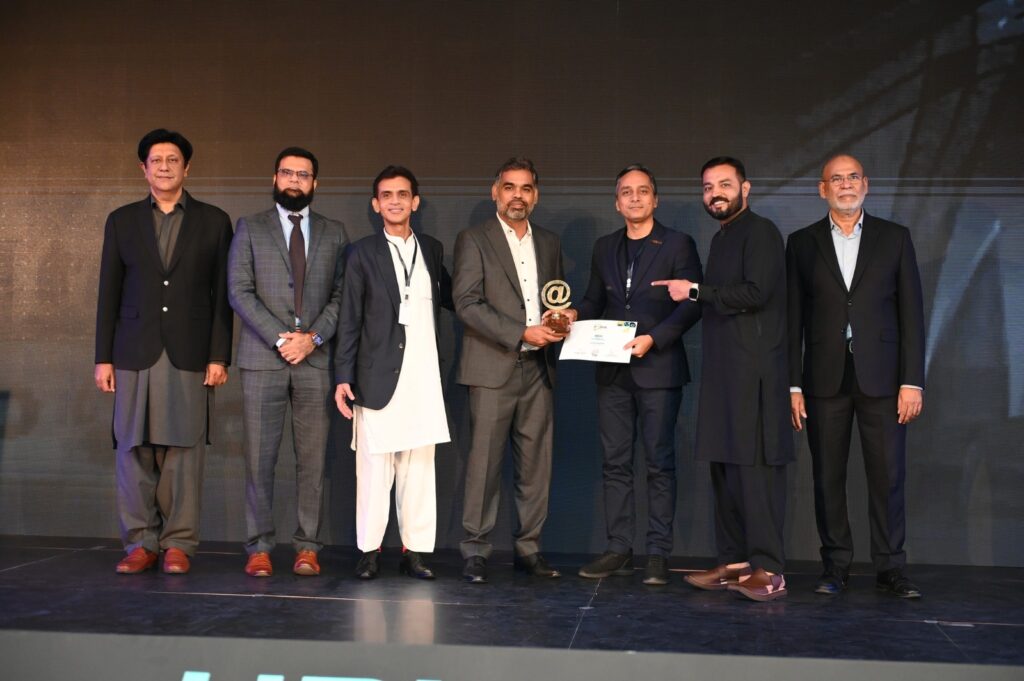
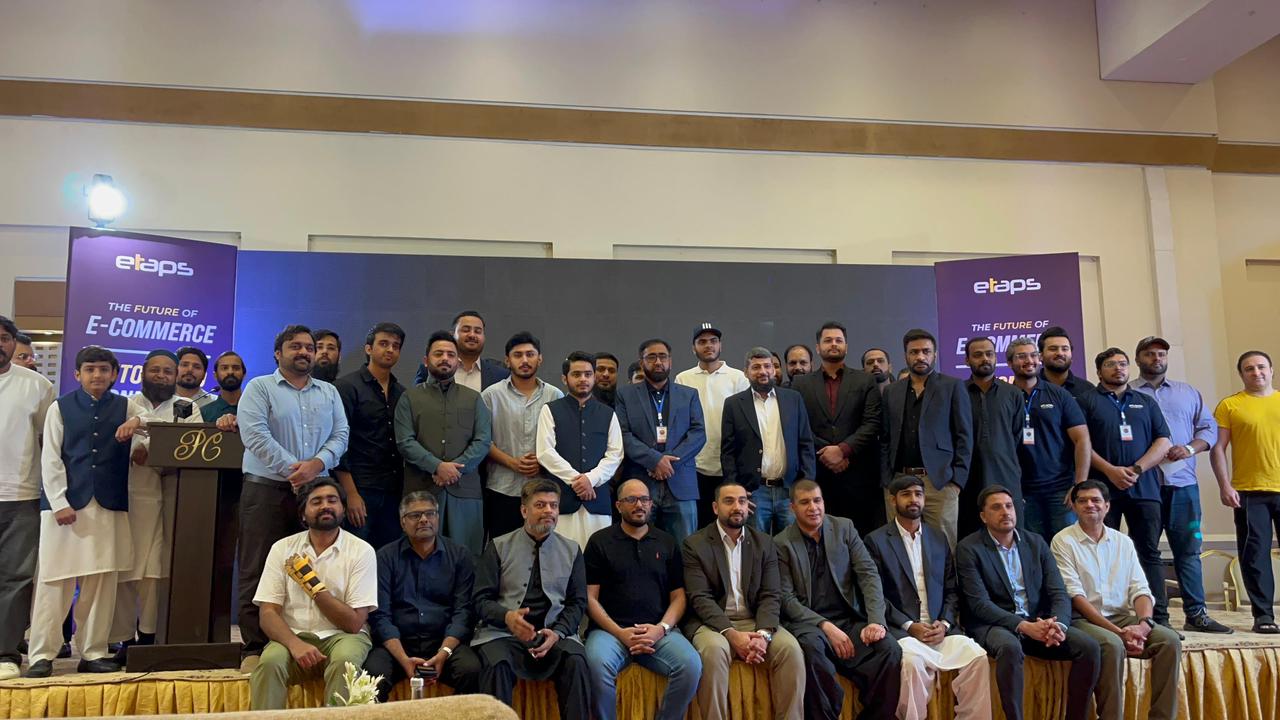
eTaps was unveiled with significant visibility, signaling the growing importance placed on e-commerce technology in Pakistan. The platform was launched at the E-Commerce Leaders Summit 2025 at the Pearl Continental Hotel in Lahore, bringing together entrepreneurs, technologists, and industry leaders.
The event drew notable attention. The Governor of Punjab, Sardar Saleem Haider Khan, attended as Chief Guest and praised the efforts of young entrepreneurs, emphasizing that digital transformation and startup innovation can help strengthen Pakistan's position in the global digital economy. Government recognition of a young founder's platform reflects a wider, welcome shift toward valuing homegrown tech innovation.
eTaps arrives at an important moment for Pakistani e-commerce.
For online sellers, tools that cut fraud, streamline logistics, and save time on reconciliation directly protect thin margins. In a COD-heavy market, fraud reduction alone can be the difference between profit and loss.
For the e-commerce sector, platforms like eTaps represent the next phase of maturity, moving beyond just having online stores toward building the operational infrastructure that makes them efficient and scalable.
For founders, Nafey's story is inspiring proof that young Pakistanis can build serious, problem-solving technology for the local market, and that there is real opportunity in solving unglamorous but painful operational problems.
For the digital economy, more efficient e-commerce means more successful businesses, more jobs, and a stronger contribution to Pakistan's growing online retail market, which has expanded rapidly with rising internet and smartphone use.
eTaps fits a broader and important trend: the rise of "enabling" technology in Pakistan's digital economy. For years, attention focused on marketplaces like Daraz and on individual sellers. Now, a new layer is emerging, companies building the tools, logistics, payments, and automation that make the whole ecosystem work better.
This is a sign of maturity. Mature e-commerce markets are not just about storefronts; they are about the invisible infrastructure behind them. As experts note, AI is set to play a growing role in supply chain management, customer behavior analysis, predictive inventory planning, and fraud detection. Platforms tackling these areas locally, with understanding of Pakistani realities like COD, are well positioned to add real value.
If platforms like eTaps deliver consistently and gain wide adoption, they could meaningfully raise the efficiency of Pakistan's e-commerce sector, helping local businesses scale and even compete internationally. The trend toward AI-driven automation in commerce is global, and Pakistani solutions built for local conditions have a natural advantage at home.
The road ahead includes real challenges, earning seller trust, proving results at scale, and competing as the space grows. But the direction is promising, and the emergence of homegrown players is exactly what a maturing ecosystem needs.
The launch of eTaps is a meaningful step for Pakistan's digital economy, and a proud example of young Pakistani entrepreneurship solving real problems with AI. By tackling the everyday pain points of online sellers, fraud, logistics, inventory, and reconciliation, in a single automated platform, it addresses genuine needs in a fast-growing market. While it is still early and results will need to prove out at scale, the vision is strong and the founder's journey is inspiring. Platforms like eTaps show that Pakistan's e-commerce future will be built not just on selling online, but on the smart, homegrown technology that makes selling online work.
This article is for general informational purposes only and reflects information available about eTaps, including company-reported figures, as of 2026. Product capabilities and results can vary; businesses should evaluate any platform against their own needs before adopting.
eTaps is described as Pakistan's first AI-powered full-stack e-commerce automation platform, founded by young entrepreneur Muhammad Nafey under his company HMN Group. It was unveiled at the E-Commerce Leaders Summit 2025 at the Pearl Continental Hotel in Lahore, with the Governor of Punjab, Sardar Saleem Haider Khan, as Chief Guest.
The platform was built to solve real operational pain points Nafey experienced while running his own e-commerce businesses (he reportedly started his first online business at age 13). These include fake or unverified orders (a major issue in Pakistan's cash-on-delivery-heavy market), courier delivery delays, inventory mismatches, and complex financial reconciliation. He spent over two and a half years developing and testing it.
Unlike simple order-management tools, eTaps is "full-stack," managing the entire order lifecycle. Its core capabilities: AI-powered order verification (flagging fraudulent/fake orders), courier optimization (auto-assigning couriers and detecting delays in real time), inventory and stock management (preventing overselling/shortages), financial reconciliation (matching payments, orders, and shipping records), and marketing attribution (identifying which channels drive real sales).
According to the company, early adopters reported order verification accuracy exceeding 90%, real-time courier delay detection, and reduced return ratios with improved efficiency. These are early, company-reported figures, not independently audited, but the direction is promising.
eTaps reflects a broader trend: the rise of "enabling" e-commerce infrastructure in Pakistan, tools, logistics, and automation that make the ecosystem work, beyond just marketplaces like Daraz. Experts expect AI to grow in supply chain management, customer behavior analysis, predictive inventory, and fraud detection.
This is informational, not an endorsement; businesses should evaluate platforms against their own needs.