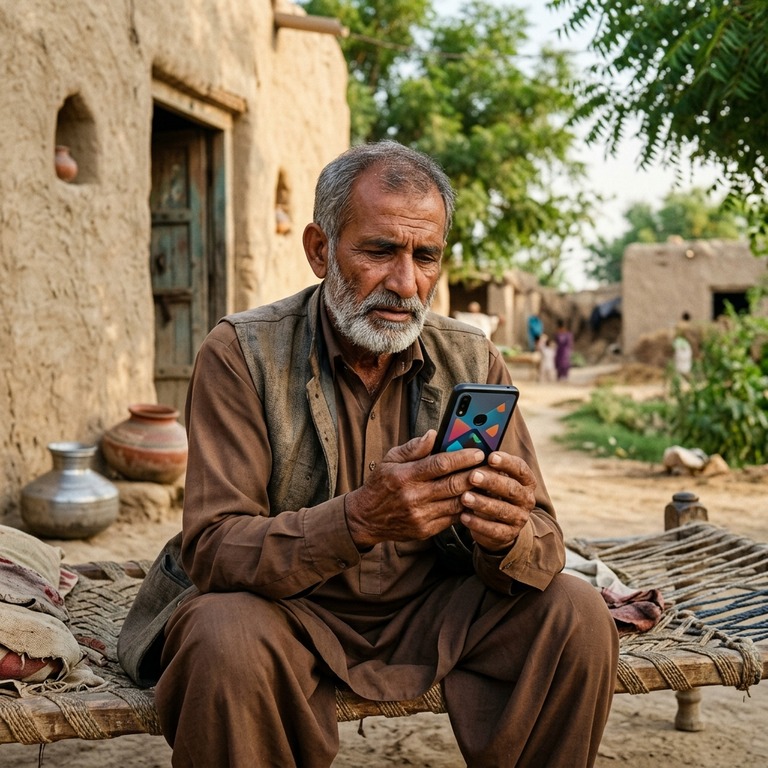
Pakistani professionals once chose between a local job and freelancing. Now there is a third path: a full-time remote job with a foreign company, paying a foreign-currency salary with real employee benefits, often enabled by Employer of Record (EOR) services. This fast-growing option offers freelancing’s global pay with a job’s stability, and it is reshaping Pakistani careers.
For years, an ambitious Pakistani professional faced a familiar, frustrating choice. On one side: a local job, stable and structured, but often paying modest salaries that struggle against inflation and a weakening rupee. On the other: freelancing, with the allure of earning in dollars from global clients, but without the security, benefits, or predictability of a real job. Two paths, each with a hard trade-off. Stability or global pay, pick one.
But that binary is breaking down, because a genuine third path has emerged and is quietly booming: a full-time remote job with a foreign company. Not freelancing, not a local job, but an actual salaried position with an overseas employer, paying a foreign-currency salary, often with real benefits, while you live and work from Pakistan. Increasingly enabled by the rise of “Employer of Record” services, this path offers much of freelancing’s global income with much of a job’s stability. For a lot of Pakistani professionals, it may be the best option of all. Here is what this third path is, why it is growing, how it compares to the alternatives, and whether it is right for you.
Let’s start with the familiar dilemma, because it frames why the third path matters so much. For most ambitious Pakistani professionals, especially in tech and digital fields, the career choice has long come down to two options, each with real drawbacks.
Option one, a local job: it offers stability, a regular salary, structure, colleagues, and (sometimes) benefits and career progression. But the pay, in a country facing high inflation and a weak rupee, often feels inadequate, and local salaries rarely match what the same skills could earn globally. Many talented Pakistanis feel underpaid and stuck. Option two, freelancing: it offers the thrilling possibility of earning in dollars from international clients, far more than local wages, with flexibility and independence. But it comes with real costs: no job security, no guaranteed income (feast or famine), no benefits (no paid leave, health cover, or retirement), the constant hustle of finding clients, payment hassles, and isolation. As we have explored, freelancing is genuinely valuable but also genuinely precarious. So the traditional choice forced a painful trade-off: the security of a local job with disappointing pay, or the global pay of freelancing with no security. Neither was ideal, and many Pakistanis felt forced to choose between their financial ceiling and their peace of mind. That is exactly the gap the third path fills.
Here is the genuine alternative that changes the equation. The third path is a full-time, salaried remote job with a foreign company, a real employee role (not freelancing), where you work for an overseas employer while living in Pakistan, earning a foreign-currency salary, typically with employee benefits.
Think about what this means: you are a proper employee of a company in, say, the US, UK, Europe, or the Gulf, with a steady monthly salary (in dollars, pounds, euros, or similar), a defined role, a team and manager, often paid leave, and sometimes health or other benefits, but you do it all remotely from your home in Pakistan. You get the stability, structure, and belonging of a real job, plus the global-level pay that only international employment or freelancing offers, and you keep Pakistan’s low cost of living. It is, in effect, the best of both worlds: freelancing’s global income without freelancing’s insecurity, and a job’s stability without a local job’s low pay. This is not a hypothetical, it is happening at growing scale, as more global companies embrace remote work and tap international talent pools like Pakistan’s. For many Pakistani professionals, especially experienced ones, it is becoming the most attractive career option available. And a key enabler has made it far easier than before.
So why is this third path suddenly viable at scale? A big reason is a quiet but booming piece of infrastructure: Employer of Record (EOR) services. Understanding this helps explain why the opportunity is growing fast.
Historically, a foreign company could not easily hire a full-time employee in Pakistan, doing so legally required setting up a local entity, handling Pakistani payroll, taxes, and labour law, a costly, complex hassle most companies would not bother with for one or a few hires. That barrier kept full-time foreign employment rare. EOR services remove that barrier. An Employer of Record is a company that legally employs the worker in Pakistan on behalf of the foreign company, handling all the local payroll, tax, compliance, and legal obligations, while you actually work for the foreign company day-to-day. In effect, the EOR is your official employer on paper (so everything is legal and compliant in Pakistan), while your real job is with the overseas company. This lets any global company hire a full-time Pakistani employee easily, without a local office. And this market is booming: the global EOR industry is projected to reach around $16.7 billion by 2030, with Asia-Pacific identified as the fastest-growing region. Dozens of EOR platforms now operate in Pakistan. This infrastructure is the engine quietly powering the third path, turning “full-time remote job with a foreign company” from a rare exception into an increasingly common, accessible reality. (We have covered how EOR works in more depth separately; here, the key point is that it is what makes this path possible.)
To help you think it through, here is an honest comparison of the three paths, because each genuinely suits different people. There is no universally “best” option, only the best fit for your situation.
Consider the trade-offs. A local job gives you stability, structure, in-person community, and local career networks, but typically the lowest pay (in global terms) and limited upside against inflation. Freelancing gives you the highest potential flexibility and independence, global pay, and unlimited (uncapped) earning potential if you build it well, but the least security, no benefits, income volatility, constant client-hunting, and isolation. A full-time remote job with a foreign company sits in between in the best way: strong, stable foreign-currency pay (usually far above local salaries, though typically a fixed salary rather than freelancing’s uncapped potential), real job security and often benefits, a team and structure, and the ability to stay in Pakistan, while giving up some of freelancing’s flexibility and independence (you have a boss, set hours, and one employer). In short: local job = stability, low pay; freelancing = high/uncapped pay, low security; remote foreign job = strong pay plus stability (a middle path). For many, especially those who value both security and global income and do not need freelancing’s full independence, the third path is the sweet spot. But freelancing still wins for those who prize independence and uncapped upside, and local jobs suit those who value in-person work and local roots. Match the path to what you actually want.
Let’s get specific about who should seriously consider this third path, because it is genuinely ideal for certain people. Understanding if that is you helps you decide where to focus.
The full-time remote foreign job is especially well-suited to: professionals who want global-level pay but also crave stability and security (not everyone thrives on freelancing’s uncertainty); experienced professionals (with in-demand skills and a track record, who are attractive to foreign employers for full-time roles); people who want benefits and structure (paid leave, a steady salary, a defined role, a team) rather than the solo hustle; those who find freelancing’s client-hunting, payment hassles, and isolation draining; family breadwinners or anyone who needs predictable, reliable income; and people who want to stay in Pakistan (near family, low cost of living) while earning globally, rather than emigrating. It may suit you less if you deeply value total independence and flexibility (freelancing offers more), want uncapped earning potential (freelancing’s ceiling is higher), or prefer in-person work and local community (a local job fits better). So if you are a skilled professional who wants the security and benefits of a real job but the pay of the global market, without leaving Pakistan, the third path could be the best career move available to you. It is particularly powerful for experienced talent.
If this path appeals to you, here is practical guidance on actually landing a full-time remote job with a foreign company, because it is genuinely achievable with the right approach. The route is different from finding freelance gigs.
Key steps: build genuinely strong, in-demand skills (foreign employers hiring full-time want real expertise and reliability, so invest in becoming genuinely good and specialized); create a professional profile and presence (a strong LinkedIn, a solid CV/portfolio, and a track record that signals you are a dependable professional, not just a gig worker); target remote-first and global companies (many companies now hire fully remotely worldwide; look for those explicitly open to international/remote hires); use the right channels (remote-job boards and platforms that list full-time remote roles, EOR-enabled job marketplaces, professional networking, and the diaspora/referral network); understand EOR (know that reputable foreign employers will often hire you through an EOR, which is normal and legitimate, handling your legal employment in Pakistan); present yourself as an employee, not a freelancer (emphasize commitment, reliability, communication, and fit for a full-time role); and be patient and professional (landing a good full-time remote role can take time and a strong application, but it is very achievable for skilled people). The key mindset shift: you are seeking to be hired as a valued full-time team member by a global company, so build the skills, profile, and professionalism that make foreign employers want exactly that. Done right, this path is open to capable Pakistani professionals.
The rise of this third path carries real significance for Pakistan.
For professionals, it offers a genuinely better option for many: global pay plus stability and benefits, without emigrating, improving livelihoods and keeping talented people (and their earnings) in Pakistan.
For foreign exchange, full-time remote workers bring steady, substantial foreign-currency salaries into Pakistan, valuable, reliable inflows for the economy.
For talent retention, by letting Pakistanis earn global-level income while living at home, this path can reduce the pressure to emigrate (brain drain), keeping talent and spending in the country, a genuinely positive dynamic.
For the job market, it expands Pakistanis’ options beyond limited local jobs and precarious freelancing, giving skilled professionals a stable, well-paid route into the global economy.
The key insight is that the emergence of full-time remote employment with foreign companies as a viable, booming third path genuinely expands and improves the options available to Pakistani professionals, and more should know it exists and consider whether it fits them. For a long time, the career conversation in Pakistan was stuck in a false binary: endure a low-paid local job for security, or take up precarious freelancing for global pay. That framing is now outdated. The third path, enabled by the EOR boom and the global embrace of remote work, offers a genuine middle route that captures much of the best of both: the global-level, foreign-currency pay that makes freelancing attractive, combined with the stability, benefits, structure, and belonging of a real job, all while staying in Pakistan with its low cost of living. For a large number of Pakistani professionals, especially experienced ones who value both income and security, this is arguably the single most attractive career option now available.
The practical wisdom is threefold. First, know this path exists and take it seriously, many Pakistanis still frame their choices as only “job or freelancing” and miss this genuinely better third option. Second, assess whether it fits you, it is ideal if you want global pay plus stability and benefits and do not need freelancing’s full independence or uncapped ceiling; freelancing or a local job may suit others better, and that is fine. Third, if it fits, pursue it deliberately, build strong, in-demand skills and a professional profile, target remote-first global companies, use the right channels, and present yourself as a reliable full-time professional. The EOR infrastructure that makes it possible is booming (a market heading toward billions, with Asia-Pacific leading), so the opportunity is real and growing. For Pakistan, this path is quietly powerful: it lets talented people earn global incomes with security, keeps them and their earnings at home, and gives the country a way to plug its workforce into the global economy without losing its people to emigration. So the message to Pakistan’s professionals is simple and empowering: your options are wider than you think. Beyond the local job and freelancing, there is now a third path, a stable, well-paid, full-time remote job with a foreign company, and for many of you, it may be the best one yet. Learn about it, and see if it is your route to both security and global opportunity.
Expect full-time remote employment with foreign companies to keep growing as a path for Pakistanis, driven by the continued global normalization of remote work, the booming EOR infrastructure (a market heading toward roughly $16.7 billion by 2030, with Asia-Pacific fastest-growing), and global companies’ appetite for skilled, cost-effective talent. More Pakistani professionals, especially experienced ones, will likely secure these roles, and awareness of this path should grow.
For Pakistan, this trend is promising: it offers talented people stable global income without emigrating, brings in reliable foreign exchange, and helps retain talent. The main factors shaping how widely Pakistanis benefit will be their skills (foreign employers want genuine expertise), awareness of this path, and the ease of EOR-enabled hiring. The trajectory points toward remote foreign employment becoming a mainstream, aspirational career route for skilled Pakistanis, sitting firmly alongside (and for many, above) the traditional local-job and freelancing options. Those who build the skills and pursue it stand to benefit significantly.
For too long, ambitious Pakistani professionals believed they had just two choices: a stable but low-paid local job, or global-paying but insecure freelancing, a painful trade-off between peace of mind and earning potential. That binary is now broken, because a genuine, booming third path has arrived: a full-time remote job with a foreign company. It is a real salaried role with an overseas employer, paying global-level foreign-currency wages, often with benefits, structure, and a team, all while you live in Pakistan. Enabled by the rapidly growing Employer of Record industry (a market heading toward billions, with Asia-Pacific leading), it has turned “full-time foreign employment from home” from a rare exception into an increasingly accessible reality. For many Pakistanis, especially skilled, experienced professionals who want both strong income and genuine stability, this third path is the sweet spot: much of freelancing’s global pay with much of a job’s security. It will not suit everyone, freelancing still wins for the independence-lovers and uncapped-earners, and local jobs for those who value in-person roots, and that is perfectly fine. But the crucial point is that the choice is no longer just two options. If you are a capable professional feeling stuck between an underpaid local job and precarious freelancing, know that there is now a third way, build the skills and profile to pursue it, and you may find the career that gives you both the global income and the security you have wanted. Your options are wider than you thought. The third path is real, it is growing, and for many Pakistanis, it may be the best one yet.
This article is for general informational and career-guidance purposes, based on trends and information available in 2026 (including the IEC Group’s Global EOR Study 2026 market projections). Figures and market data are as reported by cited sources and may vary. Individual career outcomes depend on many factors, including skills, experience, and effort. This is not career, legal, financial, or tax advice; verify employment, tax, and legal details for your specific situation with qualified professionals.
Pakistani professionals have traditionally faced a two-way career choice: a local job (stable but low-paid in global terms, struggling against inflation and a weak rupee) or freelancing (global dollar pay but insecure, no benefits, volatile income, constant client-hunting, isolation). A genuine, fast-growing third path now breaks that binary: a full-time remote job with a foreign company. This is a real salaried employee role with an overseas employer (US, UK, Europe, Gulf, etc.), paying a foreign-currency salary, often with benefits (paid leave, sometimes health cover), a defined role, and a team, while the worker lives in Pakistan with its low cost of living. It offers much of freelancing’s global pay plus much of a job’s stability and structure.
What makes it possible at scale is the boom in Employer of Record (EOR) services. Previously, a foreign company needed a local legal entity to hire a full-time Pakistani employee (too much hassle), keeping such roles rare. An EOR legally employs the worker in Pakistan on the foreign company’s behalf, handling local payroll, tax, and compliance, while the worker actually works for the overseas employer, so any global company can now hire full-time Pakistani employees easily, without a local office. The global EOR market is projected to reach around $16.7 billion by 2030, with Asia-Pacific the fastest-growing region, and dozens of EOR platforms now operate in Pakistan.
Comparing the three paths: local job = stability/structure/community but lowest (global) pay; freelancing = highest flexibility, independence, and uncapped earning potential but least security, no benefits, volatility, and isolation; full-time remote foreign job = strong stable foreign-currency pay (usually far above local, though typically a fixed salary rather than uncapped) plus job security, benefits, team, and staying in Pakistan, while giving up some independence and earning ceiling. It is a middle path, and for many