Pakistan's fastest-growing freelancing isn't coding or design, it's non-IT services like virtual assistance, content writing, translation, and customer support. Recent data shows IT freelancing grew about 22% while total freelance exports jumped around 46%, meaning non-IT work is expanding much faster. It opens freelancing to more people, but is also the most exposed to AI automation.
Ask most people what Pakistani freelancing looks like, and they will describe a young coder or designer earning dollars on Upwork or Fiverr. That image is real, but it is increasingly incomplete. Because the data reveals something surprising: the fastest-growing part of Pakistan's freelance economy is not the coding and design work everyone celebrates. It is the "non-IT" services, virtual assistance, content writing, translation, customer support, data entry, and admin, that rarely make the headlines.
This matters, and it is genuinely good news in some ways and a warning in others. It means freelancing is opening up to far more Pakistanis, including those without technical skills. But it also raises a hard question, because this kind of routine work is exactly what AI is coming for. So what is actually happening, why is non-IT freelancing booming, is it a real opportunity or a trap, and what should freelancers do about it? Here is an honest look.
Let's start with the numbers, because they tell the story clearly. Recent figures from Pakistan's financial officials and the State Bank reveal a split in how freelancing is growing. IT-related freelancing (coding, software, design) generated around $333 million in export receipts in July to September 2026, up about 22% from the same period a year earlier. Strong growth, no doubt.
But here is the striking part: total freelance exports reached roughly $550 million in the first quarter of fiscal year 2026-27, up about 46% year-on-year. If IT freelancing grew 22% but the total grew 46%, the math points to one conclusion: the non-IT portion of freelancing is growing much faster than the IT portion. In other words, while the coding and design work keeps growing steadily, the non-IT services, the virtual assistants, writers, translators, customer-support agents, and admin workers, are expanding at a dramatically quicker pace. Officials have noted exactly this: although IT-related freelancing continues to contribute significantly, non-IT freelancing is expanding at a much faster rate. This is a real, data-backed shift in the shape of Pakistan's freelance economy, and most people have not noticed it. The "freelance nation" is quietly becoming far more than just a nation of coders.
So what exactly is this fast-growing non-IT work? It is worth being concrete, because it covers a huge, often-overlooked range of services. Non-IT freelancing means digital services that do not require programming or technical development skills.
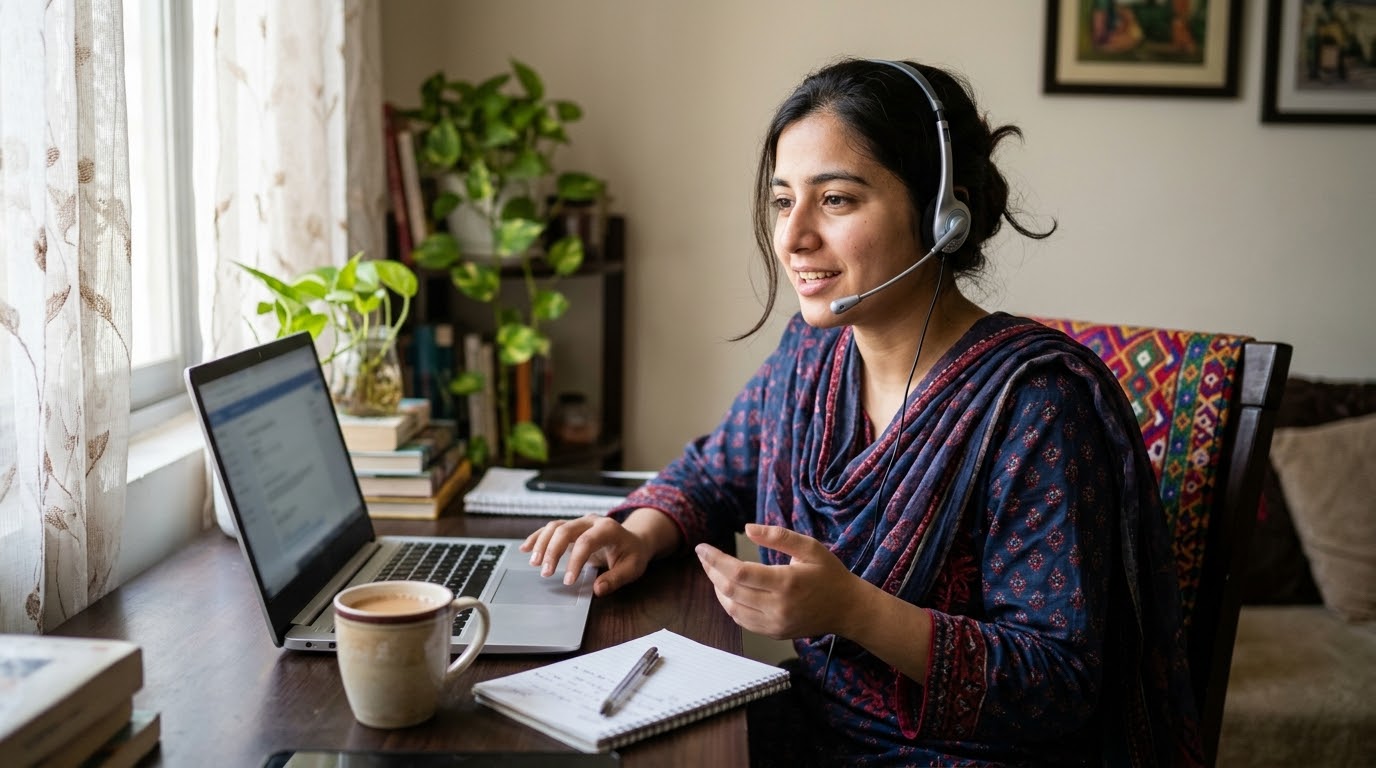
It includes things like: virtual assistance (handling email, scheduling, admin, and support tasks remotely for international clients); content writing and copywriting (articles, blogs, product descriptions, marketing copy); translation and transcription; customer support and chat/call handling; data entry and data processing; social media management and community moderation; bookkeeping and basic accounting support; general administrative and back-office work; and project coordination. What unites these is that they are real, in-demand services that businesses worldwide need, but they do not require you to be a programmer, developer, or designer. That is precisely why they are growing so fast: they open freelancing to a vastly larger pool of Pakistanis. You do not need a computer-science degree or coding bootcamp to become a skilled virtual assistant, writer, or support agent, you need good communication, reliability, organization, and language skills (especially English). This accessibility is the engine behind the non-IT boom, and it is reshaping who gets to participate in Pakistan's freelance economy.
Several forces are driving the surge in non-IT freelancing, and understanding them explains both the opportunity and its sustainability. Let's look at the main reasons.
The drivers include: lower barriers to entry (as noted, non-IT work does not require technical skills, so far more people can start, including those shut out of coding/design); huge and growing global demand (businesses everywhere increasingly outsource admin, support, content, and back-office work to affordable remote workers, and Pakistan offers capable, cost-competitive, English-speaking talent); the normalization of remote work globally (companies are now comfortable hiring remote support and admin staff from anywhere); economic pressure at home (with inflation and limited local jobs, many Pakistanis, including graduates and women working from home, are turning to accessible freelancing to earn, often in foreign currency); the rise of easy-to-use platforms (freelance marketplaces make it simple to offer these services globally); and the sheer size of the addressable market (every business needs admin, support, and content, a far larger pool of work than specialized coding). Together, these make non-IT freelancing a natural, fast-growing entry point into the global digital economy for a huge number of Pakistanis. It is accessible, in demand, and economically attractive, a powerful combination.
Let's give the opportunity its due, because the non-IT boom is genuinely positive in important ways. This trend is democratizing access to Pakistan's freelance economy, and that has real value.
Consider the upside. It opens earning to far more people: not everyone can or wants to code, so non-IT freelancing lets millions of non-technical Pakistanis, graduates, homemakers, students, people in smaller cities, participate in global freelancing and earn foreign income. It is especially empowering for women: flexible, home-based non-IT work (like virtual assistance or writing) has become a genuine path for many Pakistani women to earn independently, around family responsibilities. It brings in valuable foreign exchange: every non-IT freelancer earning dollars adds to Pakistan's crucial foreign-currency inflows. It builds digital participation: it brings more people into the formal digital economy and builds their skills and confidence. And it can be a stepping stone: non-IT work can be an entry point from which people grow into higher-value roles over time. So the non-IT boom is, in many ways, a genuine good-news story: freelancing is no longer just for the technical elite, it is becoming a broad-based opportunity for ordinary Pakistanis to earn globally. That inclusiveness is worth celebrating.
Now the crucial counterbalance, because there is a serious risk that every non-IT freelancer must understand. The very accessibility that makes non-IT work so popular, that it is routine and does not require specialized skills, also makes it the most exposed to AI automation.
Here is the hard truth. Much non-IT freelancing is exactly the kind of routine, repetitive, text-and-task-based work that AI tools are increasingly able to do: basic content writing, simple translation, data entry, routine customer-support responses, and administrative tasks. AI can already draft articles, translate text, answer common queries, and handle simple admin, cheaply and instantly. As we have explored before (in the "freelance sorting" that is hollowing out commodity work), the low-value, routine end of freelancing is exactly where AI pressure is strongest. So there is a real danger: Pakistanis who flood into basic, commodity non-IT work could find that work shrinking or getting cheaper as AI absorbs it, just as they are entering it. The boom could, for the most basic tasks, be followed by disruption. This does not mean non-IT freelancing is doomed, far from it. But it means non-IT freelancers cannot stay at the basic, commodity level and feel safe. The accessibility that lets them in is the same quality that makes the low end vulnerable. Awareness of this is essential, and it points directly to what they should do.
Given both the opportunity and the AI risk, here is the practical guidance that matters most, because non-IT freelancers can absolutely thrive if they move smartly. The key is to climb above the commodity level that AI threatens.
Concrete strategies: use AI as a tool, not a competitor (learn to use AI to do your work faster and better, becoming an AI-augmented professional who delivers more value, rather than competing with AI on basic tasks you will lose); move toward higher-value services (progress from basic data entry or simple writing toward more skilled, judgment-heavy work, strategic content, specialized writing, complex project coordination, expert virtual assistance, that AI cannot easily replace); specialize (become genuinely good in a specific niche or industry, specialists are far harder to replace than generalists); emphasize human strengths (reliability, communication, relationship-building, judgment, cultural understanding, and trust are human qualities clients still pay for, especially in support and coordination roles); build long-term client relationships (recurring, trusted clients value you as a person, not just a task-doer, making you more resilient); and keep learning (continuously upgrade your skills, including adding some technical or AI literacy, to stay valuable). The through-line is the same lesson echoing across Pakistan's whole freelance economy: do not stay at the cheap, routine, AI-replaceable bottom, use AI, add genuine value, specialize, and build relationships. Non-IT freelancers who do this will not just survive the AI shift, they will thrive in it. Those who do not risk being automated away.
The non-IT freelancing boom carries real significance for Pakistan.
For inclusion, it dramatically widens who can participate in global freelancing, bringing non-technical people, women, graduates, and those in smaller cities into the digital economy and foreign-currency earning.
For foreign exchange, the rapid growth of non-IT freelance exports adds valuable foreign currency to Pakistan's economy, exactly what the country needs.
For the skills challenge, it highlights both an opportunity (accessible earning for many) and an urgent need (helping these workers move up the value chain before AI disrupts the low end).
For the freelance economy's future, how Pakistan supports non-IT freelancers to become AI-augmented and higher-value, rather than stranded at the commodity level, will significantly shape the sector's resilience and earnings.
The key insight is that the non-IT freelancing boom is a genuine, inclusive opportunity for a huge number of Pakistanis right now, but it comes with a built-in expiry warning: the most basic, routine non-IT work is exactly what AI is poised to automate, so those entering it must plan to evolve beyond the commodity level from day one. This dual nature, accessible and valuable today, vulnerable at the bottom tomorrow, is the honest reality that both freelancers and policymakers need to grasp. The good news is real: freelancing is opening to millions who are not coders, bringing income, inclusion, and foreign exchange, and empowering groups like women and graduates who might otherwise be shut out. That democratization is genuinely positive and worth celebrating and supporting.
But the warning is equally real. The same routine, text-and-task work that makes non-IT freelancing accessible is the first in line for AI automation. So the strategic wisdom for Pakistan's non-IT freelancers is clear and urgent: treat basic non-IT work as an entry point, not a destination. From the start, use AI as a productivity tool (not a rival), aim to move up toward specialized, judgment-heavy, relationship-based work that AI cannot easily replace, develop a niche, and keep learning. For Pakistan broadly, the imperative is to help this fast-growing, largely non-technical freelance workforce climb the value chain, through training, awareness, and support, so the boom becomes lasting prosperity rather than a wave that AI later erodes. Handled well, the non-IT surge could be a powerful, inclusive engine of earning and foreign exchange for years. Handled passively, its lowest rungs could be automated out from under the very people counting on them. The opportunity is genuine; the key is to enter it with eyes open and a plan to grow. Accessible today, but you must evolve for tomorrow. That is the honest, empowering message for Pakistan's newest wave of freelancers.
Expect non-IT freelancing to keep growing fast in the near term, as more Pakistanis (especially non-technical people, women, and new graduates) enter it and global demand for remote support, content, and admin work stays strong. This will keep widening participation and adding foreign exchange, a genuinely positive near-term trajectory. At the same time, expect AI to steadily automate more of the routine, low-value end of this work, creating pressure on the most basic services over time.
The decisive factor will be how quickly non-IT freelancers (and the ecosystem supporting them) adapt, moving toward AI-augmented, specialized, higher-value work. Those who evolve will thrive and keep earning well; those who stay at the commodity bottom will face shrinking, cheaper work. For Pakistan, supporting this large workforce to climb the value chain is key to turning the boom into durable prosperity. The trajectory is one of real opportunity shadowed by real disruption, with adaptation deciding the outcome. The encouraging reality is that the opportunity and the path forward are both clear; what is needed is awareness and action, starting now.
The fastest-growing part of Pakistani freelancing is not the coding and design work that dominates the headlines, it is the non-IT services: virtual assistance, content writing, translation, customer support, and admin. The data makes it clear, with total freelance exports growing around 46% while IT freelancing grew about 22%, meaning non-IT work is surging ahead. This is genuinely good news in important ways: it is democratizing Pakistan's freelance economy, opening global earning to millions of non-technical people, empowering women and graduates, and bringing in valuable foreign exchange. Freelancing is no longer just for the technical elite. But there is an honest, crucial catch: the very routine, accessible nature of basic non-IT work makes it the most exposed to AI automation, the first thing AI is coming for. So the message for Pakistan's booming non-IT freelance workforce is both hopeful and urgent: this is a real, inclusive opportunity to start earning globally now, but treat the basic level as an entry point, not a destination. Use AI as a tool, move toward specialized and higher-value work, build genuine client relationships, and keep learning, so you climb above the commodity level before AI erodes it. Handled wisely, the non-IT boom can be a lasting engine of inclusive prosperity and foreign exchange for Pakistan. The door to global freelancing has opened wider than ever; the task now is to walk through it with a plan to grow. Accessible today, evolve for tomorrow, that is how Pakistan's newest freelancers turn a boom into a future.
This article is an analysis and opinion piece for general informational purposes, based on data and reports available in 2026 (including figures reported via Pakistan's Finance Ministry adviser and the State Bank of Pakistan). Figures (export values and growth rates) are as reported by cited sources and may vary by methodology. Individual outcomes vary. This is not financial or career advice.
The fastest-growing part of Pakistan's freelance economy is not coding or design, it is non-IT services: virtual assistance, content writing, copywriting, translation, transcription, customer support, data entry, social media management, bookkeeping, and administrative/back-office work. Recent data (via Pakistan's Finance Ministry adviser Khurram Schehzad and the State Bank of Pakistan, October 2026) shows IT-related freelancing generated about $333 million in export receipts in July-September 2026, up ~22% year-on-year, while total freelance exports reached roughly $550 million in Q1 FY27, up ~46%. Since the total grew far faster than the IT portion, non-IT freelancing is expanding much more quickly, something officials have explicitly noted.
What non-IT freelancing is: digital services that do not require programming or technical skills, needing instead communication, reliability, organization, and language skills (especially English). This is why far more people can do it.
Why it is booming: lower barriers to entry (no coding needed); huge global demand for affordable remote support, content, and admin; normalization of remote hiring; economic pressure at home pushing people toward accessible earning; easy freelance platforms; and the vast size of the admin/support/content market.
The genuine opportunity: it democratizes freelancing, opening global earning to millions of non-technical Pakistanis (graduates, homemakers, students, smaller-city residents), is especially empowering for women (flexible home-based work), brings valuable foreign exchange, and can be a stepping stone to higher-value roles.
The honest risk: the routine, text-and-task nature of basic non-IT work makes it the most exposed to AI automation. AI can already draft content, translate, answer routine support queries, and handle simple admin cheaply, so the lowest-value end is vulnerable just as people enter it.