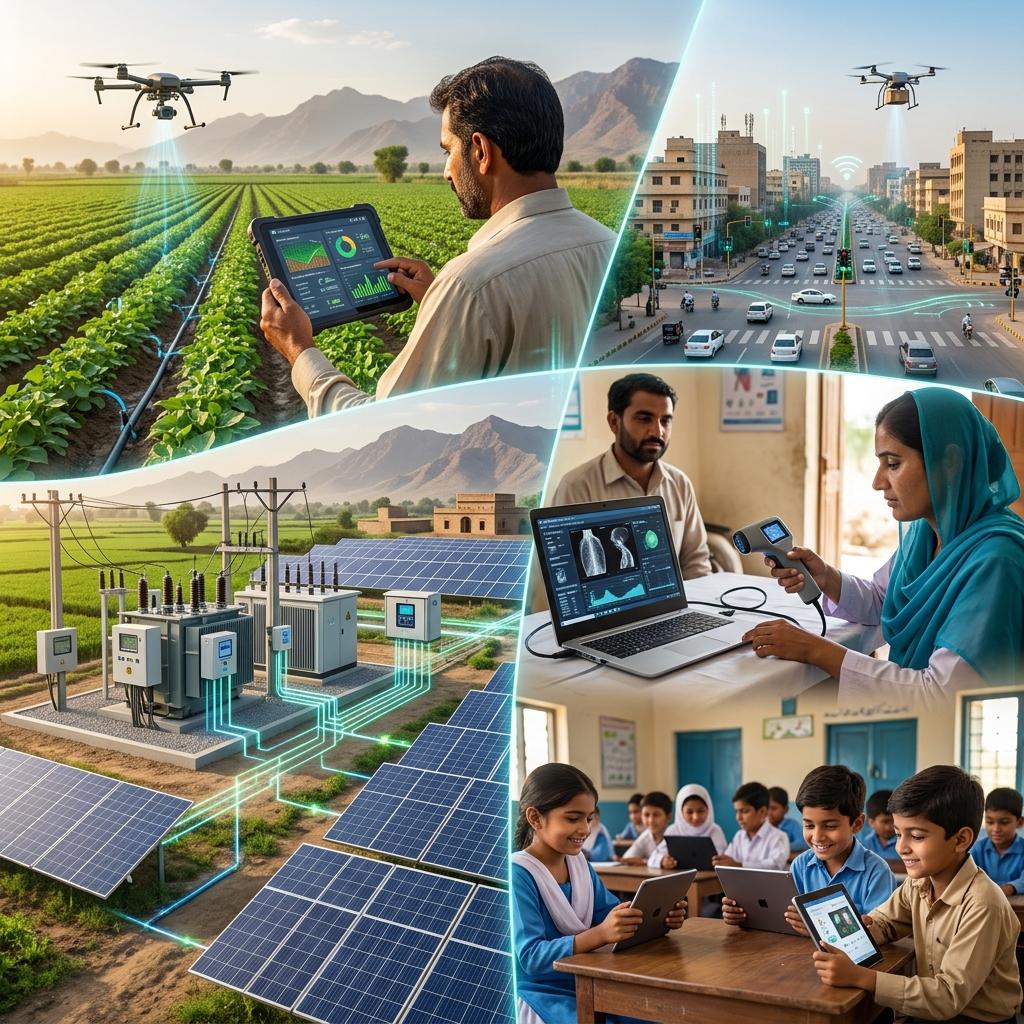
AI consumes significant water, mainly to cool the data centers running it. Estimates vary widely (from under 2ml to over 150ml per query), but aggregate use is large: Google reported around 6.4 billion gallons in 2023. For water-stressed Pakistan, this matters as the country considers data-center ambitions amid an already severe water crisis.
Here's something most people never think about when they ask an AI to write an email or answer a question: that simple prompt has a physical cost, and part of that cost is water. Behind every AI response sit racks of powerful processors running hot enough to need constant cooling, and that cooling often uses fresh water. As AI scales to billions of daily queries worldwide, this quiet "thirst" has become one of the most debated environmental questions of 2026.
For most countries this is an abstract concern. But for Pakistan, one of the most water-stressed nations on Earth, it deserves a closer, clear-eyed look. As Pakistan embraces AI and considers building its own data infrastructure, understanding AI's water cost, honestly, without exaggeration, matters. Here's how AI uses water, what the real numbers are (and why they're debated), and what it all means for thirsty Pakistan.
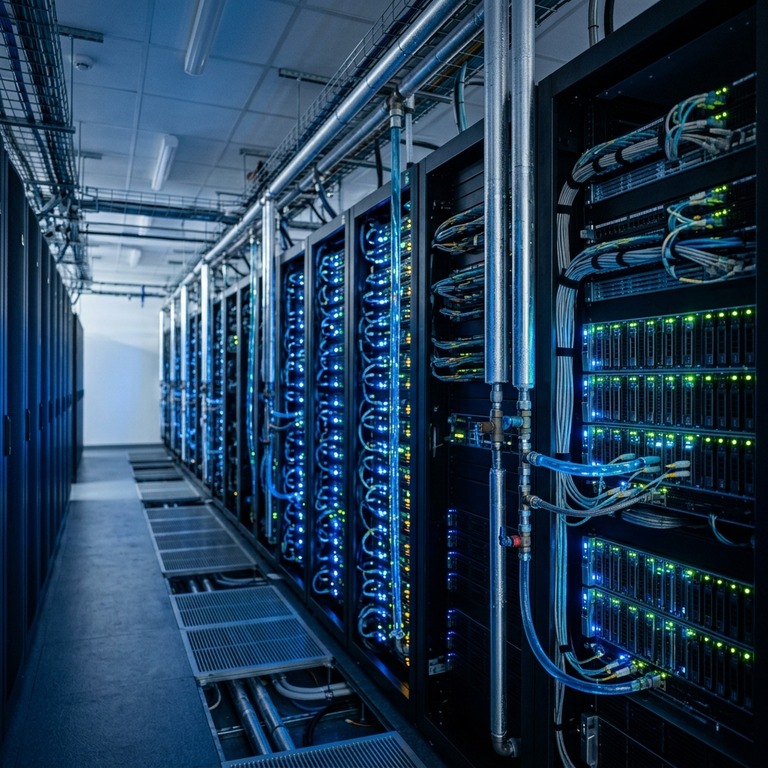
Let's start with the basic, perhaps surprising, fact: AI uses water, and understanding why makes everything else clear. When you use an AI tool, the actual computing happens in data centers, massive facilities packed with thousands of powerful processors (GPUs and CPUs) crunching the calculations behind every response.
These processors generate enormous heat, and if they overheat, they fail. So they must be constantly cooled. Many data centers use water-based cooling: water absorbs the heat and carries it to cooling towers, where much of it evaporates away. That evaporated water is consumed, gone from the local supply. There's also an indirect water cost: the electricity powering data centers is often generated at power plants that themselves use water for cooling and steam. And even making the chips uses water, producing a single microchip can require thousands of gallons of ultra-pure water. So AI's water footprint has several layers: cooling the servers, generating their power, and manufacturing their hardware. The key point for users: this water is consumed at the data center, not on your phone or laptop, so every query, from any device, contributes to the total.
Now to the figures, and here honesty is essential, because the numbers are genuinely contested, and you should be skeptical of any single scary statistic. Let's look at what's actually known.
A widely-cited 2024 estimate from UC Riverside suggested a 100-word ChatGPT response uses about 519ml of water, roughly one bottle. This figure went viral. But it's disputed: the researcher behind it has since revised the estimate for newer systems to around 15ml for a typical prompt (including on-site cooling), calling the original outdated. Meanwhile, OpenAI's CEO claimed an average query uses far less, about 0.32ml. Other 2025 studies found a huge range, under 2ml for efficient models, but over 150ml for some heavy "reasoning" models. In short, per-query water use varies enormously depending on the model, the cooling system, and what you count. So no single per-prompt number tells the whole story, be wary of viral statistics in either direction.
What's less disputed are the aggregate figures companies disclose directly. Google reported roughly 6.4 billion gallons of water use across its data centers in 2023; Microsoft's water use rose about 34% in a recent year; and Meta reported hundreds of millions of gallons. A single large data center can consume up to 5 million gallons per day, equivalent to a town of 10,000-50,000 people. These aggregate numbers are large, and rising, and that's the more reliable way to grasp the scale.
Here's why this global issue is particularly relevant to Pakistan, and it's a serious point. Pakistan is one of the most water-stressed countries in the world. The country faces severe and worsening water scarcity, with per-capita water availability having fallen dramatically over the decades to alarmingly low levels, and experts repeatedly warning of a deepening water crisis.
In that context, the water cost of AI and data centers isn't an abstract environmental footnote, it's directly relevant. As Pakistan pursues its AI ambitions and considers building data centers (part of its digital and AI strategy), it faces a real consideration: water-hungry data centers in an already water-scarce country could add strain to a precious, stressed resource. This isn't unique to Pakistan, globally, around one in five US data centers already draw water from stressed areas, and countries like the UK are clashing over placing AI facilities in high-water-risk zones. But for Pakistan, with its acute scarcity, the stakes are higher. It means Pakistan must think carefully about how and where it builds AI infrastructure, so that embracing AI doesn't inadvertently worsen an already critical water situation. This is a genuine planning challenge worth taking seriously now, before large-scale build-out, not after.
Before anyone concludes "AI is an environmental disaster" or "we should avoid AI," let's inject balance, because the reality is more nuanced and more hopeful than the scary headlines suggest. The framing isn't "AI versus water"; it's "how do we build AI responsibly."
Several honest points restore perspective. First, AI's water use, while real and growing, is still small compared to agriculture and industry, in Pakistan, as globally, farming uses the overwhelming majority of water (often 90%+), so AI data centers are not the country's main water problem. Second, the technology is improving: newer cooling methods like immersion cooling and direct-to-chip cooling can cut data-center water use substantially (some by 30-50% or more), and some facilities are shifting away from water-heavy evaporative cooling entirely. Third, per-query efficiency is improving even as total volume grows. And fourth, AI can also help save water, through smarter agriculture, leak detection, and resource management (a topic worth its own discussion). So the picture isn't AI as a water villain; it's a real, manageable cost that must be handled wisely, especially in water-scarce places. The goal is water-smart AI, not no AI.
Given all this, what should Pakistan actually do? The answer is to embrace AI while being deliberately water-smart about the infrastructure behind it. This is entirely achievable with foresight.
Several sensible principles apply. Choose efficient cooling: any data centers built in Pakistan should use modern, water-efficient cooling (immersion, direct-to-chip, air cooling where viable) rather than water-heavy evaporative systems. Locate wisely: situate data centers where water stress is lower, and avoid placing them in the most water-scarce regions. Demand transparency: require data-center operators to disclose their water use (and peak demand), so impacts are known and managed, officials should ask for water-source and peak-demand figures before approving projects. Consider alternatives: explore recycled or non-potable water for cooling, and renewable energy to reduce the indirect water footprint of power generation. And plan holistically: integrate data-center water needs into national water planning rather than treating them separately. With these steps, Pakistan can pursue its AI ambitions without needlessly straining its water. The key is building smart from the start.
This issue connects to several important areas for Pakistan.
For Pakistan's AI strategy, it's a crucial planning consideration, building AI infrastructure sustainably (water-wise) is essential given the country's scarcity, and should be baked into strategy now.
For policymakers, it highlights the need to consider water in data-center and tech-infrastructure decisions, requiring transparency and efficient design.
For the environment and citizens, protecting Pakistan's stressed water resources while advancing technology is a balance that directly affects people's lives and future.
For the tech sector, water-efficient, sustainable infrastructure is increasingly important globally, building it well positions Pakistan responsibly and competitively.
For public awareness, understanding that digital technology has physical, environmental costs encourages more thoughtful, sustainable development, everywhere.
The balanced expert takeaway is that AI's water consumption is a real and legitimate concern, particularly for water-stressed countries like Pakistan, but it's a cost to be managed wisely, not a reason to fear or reject AI. The mature response is neither dismissing the issue (as some tech boosters do) nor catastrophizing it (as some headlines do), but understanding it accurately and addressing it responsibly.
For Pakistan, the strategic wisdom is threefold. First, be aware, recognize that AI and data centers carry a water cost that genuinely matters in a water-scarce nation, and don't ignore it in the rush to embrace AI. Second, build smart, insist on water-efficient cooling, wise siting, transparency, and integration with water planning, so AI infrastructure minimizes its footprint. Third, keep perspective, AI is far from Pakistan's biggest water consumer (agriculture dwarfs it), the technology is getting more efficient, and AI can even help solve water problems, so the goal is responsible adoption, not avoidance. Pakistan can absolutely pursue its AI future; it just needs to do so with eyes open to the water dimension, planning for sustainability from the start. Handled wisely, embracing AI and protecting water are not in conflict. That clear-eyed, balanced approach, neither fear nor denial, is exactly what serves Pakistan best.
Expect AI's water footprint to remain a live global issue as AI scales, with growing pressure for transparency, efficient cooling, and sustainable siting, alongside genuine technological improvements that reduce per-unit water use. For Pakistan, as its digital and AI infrastructure develops, water-conscious planning will become increasingly important, and hopefully increasingly standard.
The encouraging trajectory is that awareness is rising, technology is improving, and sustainable practices are spreading. If Pakistan builds its AI future with water-smart principles from the outset, it can capture AI's benefits while protecting its precious water. The nations that plan for this now will avoid painful trade-offs later. For a water-stressed country, getting this right isn't optional, it's essential, and entirely achievable with foresight.
Every AI prompt really does "drink" a little water, and at global scale, that adds up to a significant, if often-overlooked, cost, mostly for cooling the data centers behind AI. The real numbers are debated (be skeptical of viral statistics), but the aggregate scale is genuinely large and rising. For Pakistan, one of the world's most water-stressed countries, this matters, not as a reason to reject AI, but as a crucial consideration in how it builds its AI future. The balanced truth is that AI is far from Pakistan's biggest water user, the technology is getting more efficient, and AI can even help solve water problems, so the goal is water-smart AI, not no AI. By choosing efficient cooling, wise locations, transparency, and sustainable planning, Pakistan can embrace AI's benefits without straining its precious water further. The task isn't to fear the tool, but to manage its costs wisely, with eyes open, from the start. In a thirsty country, that clear-eyed balance is exactly what the moment calls for.
This article is for general informational purposes only and reflects data and estimates available in 2026, many of which (especially per-query water figures) are contested and evolving, treat specific numbers as indicative, not definitive. Disclosure: this article is written by Claude, made by Anthropic; like all AI systems, Claude operates via data centers that consume water, so this discusses our own industry's footprint. It draws on independent sources. This is not environmental or policy advice.
AI consumes significant water, primarily to cool the data centers where AI computing happens. Powerful processors (GPUs/CPUs) generate enormous heat; many data centers use water-based cooling that evaporates water away (consuming it). There are also indirect water costs: electricity generation (power plants use water) and chip manufacturing (a single microchip can need thousands of gallons of ultra-pure water). The water is used at data centers, not the user's device, so every query contributes.
The per-query numbers are genuinely contested: a viral 2024 UC Riverside estimate said ~519ml (one bottle) per 100-word ChatGPT response, but the researcher later revised it to ~15ml for newer systems; OpenAI's CEO claimed ~0.32ml; and 2025 studies found under 2ml for efficient models but over 150ml for some heavy "reasoning" models. No single per-query figure is definitive. More reliable are aggregate disclosures: Google reported ~6.4 billion gallons in 2023; Microsoft's rose ~34% in a year; Meta hundreds of millions of gallons. A single large data center can use up to 5 million gallons/day (a town of 10,000-50,000 people).
Why it matters for Pakistan: it's one of the world's most water-stressed countries, with severe, worsening scarcity. As Pakistan pursues AI and data centers, water-hungry facilities could strain an already critical resource, so it must build water-smartly.
Balanced perspective: AI's water use, while real and rising, is small versus agriculture (which uses 90%+ of water in Pakistan), so AI isn't the main water problem; cooling technology is improving (immersion and direct-to-chip cooling cut use 30-50%+); per-query efficiency is rising; and AI can also help save water (smart agriculture, leak detection). The framing is "water-smart AI," not "no AI."
What Pakistan should do: use efficient cooling (immersion/direct-to-chip, not evaporative); site data centers where water stress is lower; require transparency on water use and peak demand before a