In August 2026, AI crossed a threshold from completing tasks to contributing original, verifiable research, an AI system reportedly solved 10 long-unsolved math and computer-science problems with checkable proofs. Combined with AI assistants crossing a billion users each and collapsing costs, it signals AI becoming a genuine tool for discovery, with real opportunities and challenges for Pakistan.
For a few years now, AI could write your emails, draft code, and answer questions, useful, but ultimately doing things humans already knew how to do, just faster. In 2026, something genuinely different happened: AI reportedly started solving problems that humans hadn't solved. That's not a small step; it's a shift in what these tools fundamentally are.
This matters far beyond Silicon Valley. As AI crosses from "helpful assistant" to "potential engine of discovery," and simultaneously becomes cheaper and more accessible than ever, the implications reach every country, including Pakistan. Here's what actually happened, why it's a real milestone rather than hype, and, most importantly, what it could mean for Pakistan's students, researchers, businesses, and future.
(Disclosure: This article discusses several AI companies, including Anthropic, the maker of Claude, the assistant used to write this piece. It draws on independent reporting and treats all companies evenhandedly, without promoting any.)
Let's start with the development that captures the shift. In August 2026, reports emerged that an AI system, OpenAI's research-stage "Astra", solved 10 long-standing, previously-unsolved problems in mathematics and theoretical computer science, reportedly with verified proofs, and at a modest compute cost.
Why is this different from AI's earlier feats? Because it's described not as a benchmark stunt, but as genuine, checkable original work, AI contributing solutions humans hadn't found, rather than just reproducing known answers faster. Alongside this, other 2026 milestones reinforced the trend: AI models scored at the top level on prestigious mathematics olympiad problems, and AI systems increasingly demonstrated multi-step reasoning and problem-solving that goes beyond simple question-answering. The direction, as one analysis put it, is unmistakable: AI is edging from "completes tasks well" toward "contributes original, checkable research." That's a fundamentally different kind of tool, and a genuine milestone if the trend holds.
It's worth being clear-eyed here, AI has been over-hyped before, so why treat this as genuinely significant? The distinction is important.
Previous AI advances mostly made existing tasks faster or easier, writing, summarizing, coding known solutions. Producing original, verifiable solutions to genuinely unsolved problems is a different category. If AI can reliably contribute new knowledge, help discover, prove, and solve things humans haven't, then it becomes a tool for advancing human knowledge, not just processing it. That has profound implications for science, medicine, engineering, and virtually every field that depends on solving hard problems. The key word, though, is "if", this is an early, still-developing capability, and it must be verified, replicated, and proven reliable over time. Healthy skepticism is warranted. But if the trajectory continues, this could be one of the most consequential technological shifts of our era. That's why it deserves attention rather than dismissal, or breathless overhype.
Alongside the capability leap, two other 2026 trends make this moment especially relevant for countries like Pakistan. First, AI became massively more accessible: leading AI assistants like ChatGPT and Gemini each crossed one billion users, an astonishing scale showing AI is now genuinely mainstream worldwide. Second, AI costs collapsed: intense competition drove prices down dramatically, with some AI model prices dropping by around 80%.
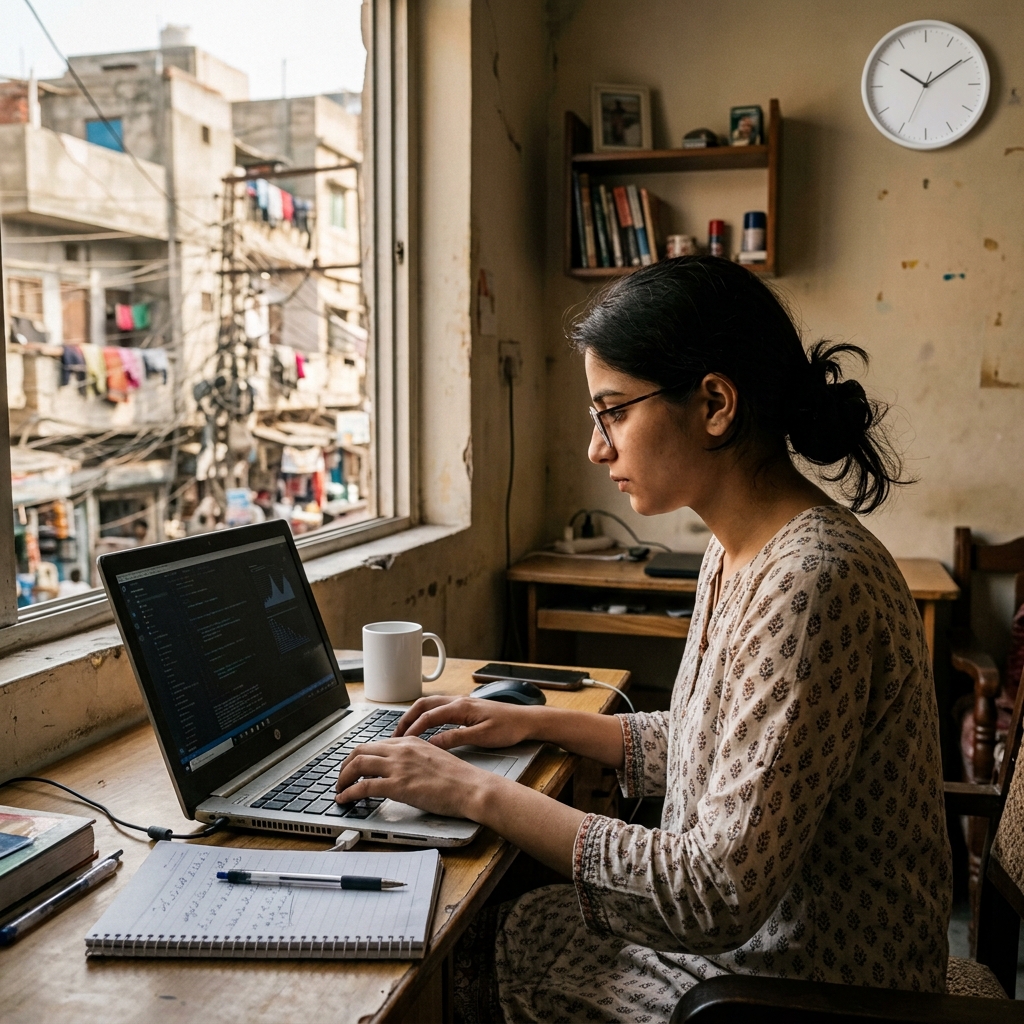
This combination, more powerful AND cheaper AND more widely available, is what makes AI's advance globally consequential rather than confined to wealthy labs. When cutting-edge AI capability becomes affordable and accessible to ordinary people and businesses, the playing field shifts. A student in Lahore, a researcher in Karachi, or a startup in Islamabad can potentially access AI tools nearly as capable as those used anywhere in the world, often at low or no cost. That accessibility is the bridge between a Silicon Valley breakthrough and real opportunity in Pakistan.
So how does a leap in AI capability translate into opportunity for Pakistan? In several genuine ways, if the country seizes them.
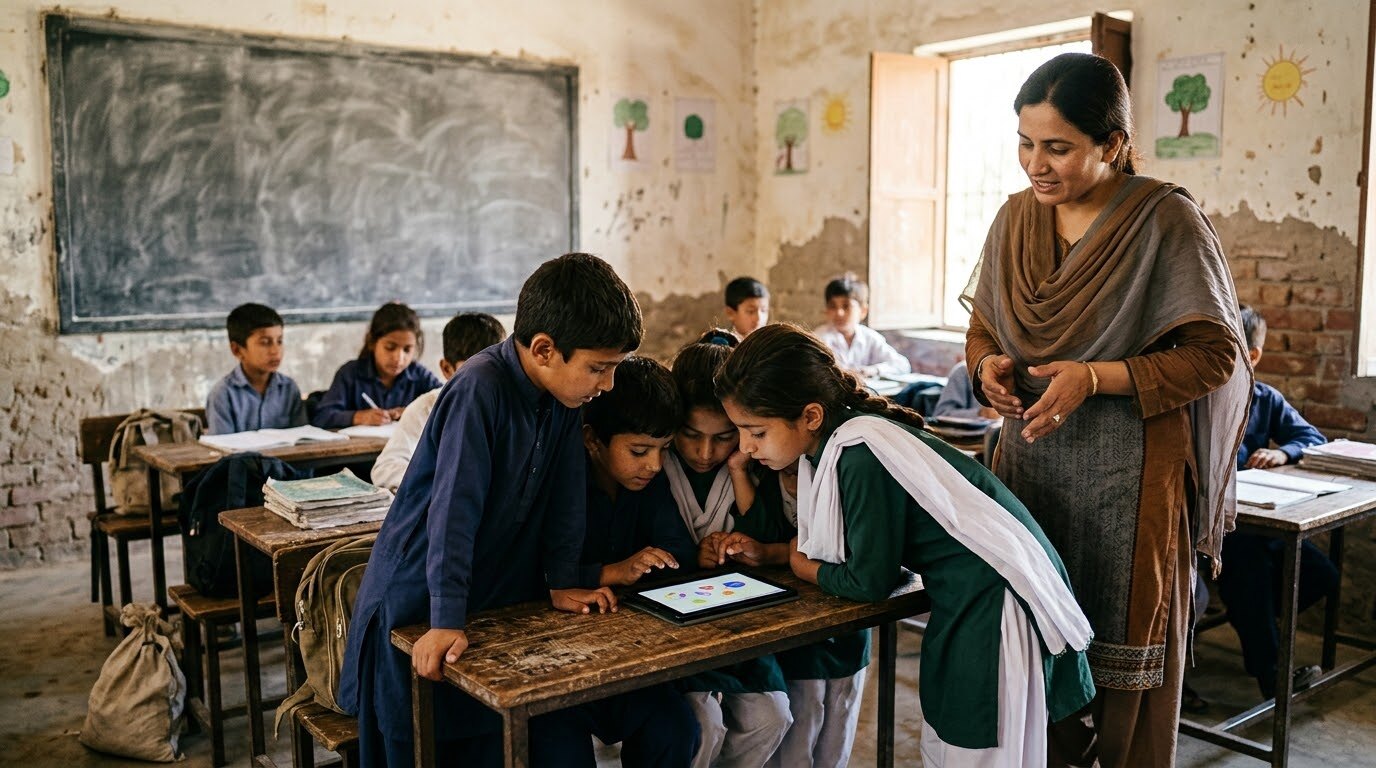
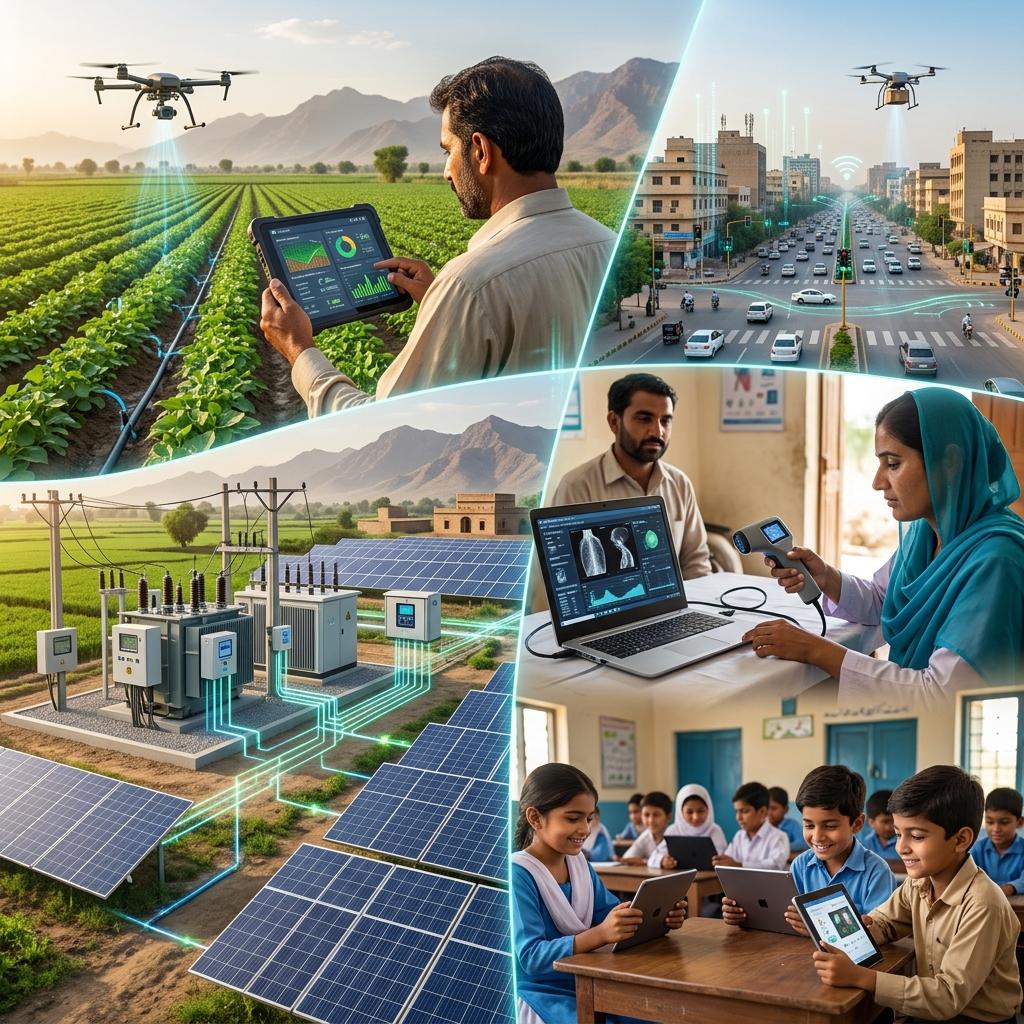
For students and researchers, increasingly powerful, affordable AI can be a remarkable force-multiplier, helping with learning, research, analysis, and problem-solving that once required resources Pakistani institutions often lacked. AI can partially level the research playing field. For businesses and startups, cheaper, more capable AI lowers barriers to building sophisticated products and services, a Pakistani startup can now access AI capabilities that would have required a huge budget just years ago. For freelancers and professionals, mastering these advancing tools means delivering higher-value work and competing globally. And for solving local problems, AI's growing capability could be applied to Pakistan's specific challenges, in agriculture, healthcare, education, and resource management, potentially finding solutions more efficiently. The core opportunity is this: as world-class AI becomes accessible and affordable, Pakistan's greatest asset, its large, young, capable population, can leverage it, if equipped with the skills and access to do so.
Balance is essential, so let's be honest about the flip side. This AI leap isn't purely opportunity, it brings real challenges Pakistan must navigate.
Several concerns are genuine. The capability gap: while tools are accessible, the deepest AI advances (and the compute behind them) remain concentrated in a few countries and companies, risking a widening divide between AI creators and mere users (as we've explored before). Job disruption: as AI grows more capable, it increasingly affects even skilled work, a real concern for Pakistan's workforce, especially entry-level roles. The skills gap: benefiting requires people who can actually use these tools well, and Pakistan's digital-skills development must keep pace. And responsible use: more powerful AI raises real questions about accuracy, misuse, over-reliance, and ethics that need thoughtful attention. Notably, 2026 also saw rising concern about AI safety and the need for oversight, even the leading labs are staffing up for serious regulation. So the picture is genuinely mixed: extraordinary opportunity alongside real risks. Pakistan's task is to maximize the former while honestly managing the latter.
Zooming out, this moment matters for Pakistan's trajectory in concrete ways.
For Pakistan's digital economy, riding the AI wave, through skills, applications, and services, could accelerate growth and global competitiveness.
For education and research, affordable powerful AI could uplift Pakistani institutions and students, if integrated thoughtfully.
For the workforce, the imperative to build AI skills becomes even more urgent, as capability, and disruption, accelerate.
For national strategy, it reinforces why Pakistan's AI ambitions (its AI policy, training goals, and infrastructure efforts) matter, the country needs to be an active participant, not a passive consumer, in the AI era.
For everyday Pakistanis, it means AI is becoming a more powerful tool in their hands, for learning, working, and building, if they choose to engage with it.
The most important insight about this moment is that AI's capability is advancing faster than most people's ability to use it wisely, and closing that gap is where the real advantage lies. It's easy to be dazzled by AI solving unsolved problems; it's harder, and more valuable, to actually harness these tools effectively for real purposes.
For Pakistan, the strategic takeaway is twofold. First, don't get left behind: the accessibility and affordability of powerful AI is a genuine, time-sensitive opportunity, especially for a young population that can adapt quickly. Investing in AI skills, education, and application now is crucial. Second, engage wisely, not just enthusiastically: the winners in the AI era won't be those who simply use AI, but those who use it skillfully, critically, and for genuine value, while managing its risks (accuracy, over-reliance, disruption). As AI grows more capable, human judgment, creativity, and wisdom in directing it become more valuable, not less. Pakistan's opportunity is to build a generation that doesn't just consume AI, but wields it thoughtfully to solve real problems and create real value. The technology is arriving, cheaper and more powerful by the month; the decisive factor is whether people learn to use it well. (And amid the excitement, it's worth remembering these are early, still-developing capabilities that warrant healthy skepticism alongside optimism.)
Expect AI capabilities to keep advancing, with more emphasis on reasoning, research, and autonomous problem-solving, alongside continued cost drops and wider access. The trend of AI as a tool for discovery, not just assistance, will likely deepen, though with ongoing questions about reliability, safety, and regulation. For Pakistan, the trajectory underscores an urgent, recurring theme: build skills, ensure access, apply AI to local problems, and participate actively in the AI era rather than watching from the sidelines.
The nations and individuals that thrive will be those who adapt fastest and use AI most wisely. Pakistan has the youthful, capable population to do this, the question, as always, is execution: skills, access, and the will to engage. The tools are becoming extraordinary and accessible; the opportunity is real for those who seize it thoughtfully.
AI crossing the line from completing tasks to solving problems humans couldn't is a genuine milestone, one that signals AI becoming a tool for discovery, not just assistance. Combined with AI becoming cheaper and more accessible than ever (billions of users, collapsing costs), this moment carries real significance for Pakistan. The opportunity is substantial: affordable, world-class AI in the hands of Pakistan's young, capable population could uplift education, research, business, and problem-solving. The challenges are equally real: the capability gap, job disruption, the skills imperative, and responsible use. The decisive factor won't be the technology itself, which is arriving regardless, but whether Pakistanis learn to wield it skillfully and wisely. As AI grows more powerful, the value shifts to human judgment in directing it well. For Pakistan, the message is clear and urgent: engage with this AI era actively, build the skills, apply the tools to real problems, and do so thoughtfully. The future is being shaped by those who use AI wisely, Pakistan can, and should, be among them.
This article is for general informational purposes only and reflects reports and developments in 2026, some of which involve early-stage, still-developing AI capabilities that warrant verification and healthy skepticism. Disclosure: Anthropic, mentioned here, makes the Claude assistant used to write this article; the piece uses independent sources and does not promote any company. This is not investment or professional advice.
In August 2026, AI reportedly crossed a significant threshold, from completing known tasks to contributing original, verifiable research. OpenAI's research-stage system "Astra" reportedly solved 10 long-unsolved problems in mathematics and theoretical computer science with verified proofs at modest compute cost, described as genuine original work rather than a benchmark stunt. Alongside, AI models achieved top-level performance on mathematics olympiad problems and demonstrated stronger multi-step reasoning. The direction: AI edging from "completes tasks well" toward "contributes original, checkable research", a different category of tool, though an early, still-developing capability that warrants verification and healthy skepticism.
Two parallel shifts amplify the significance for countries like Pakistan: AI became far more accessible (ChatGPT and Gemini each crossed 1 billion users) and dramatically cheaper (some model prices dropped ~80% amid competition). More powerful + cheaper + widely available means cutting-edge AI is within reach of ordinary people and businesses, not just wealthy labs, so a student in Lahore or startup in Islamabad can access near-world-class tools affordably.
Opportunities for Pakistan: AI as a force-multiplier for students/researchers (learning, analysis, research); lower barriers for businesses/startups to build sophisticated products; higher-value work for freelancers who master the tools; and applying AI to local problems (agriculture, healthcare, education). Pakistan's large young population is its key asset if equipped with skills and access.
Honest challenges: the capability gap (deepest advances and compute stay concentrated in a few countries, risking a creator-vs-consumer divide); job disruption (increasingly affecting skilled and entry-level work); the skills gap (benefiting requires people who can use the tools well); and responsible-use concerns (accuracy, over-reliance, ethics, safety, rising regulation).