Pakistan has pledged $1 billion in public investment in artificial intelligence by 2030. The plan funds sovereign compute infrastructure, an AI curriculum in schools, 1,000 fully funded AI PhD scholarships, and training for one million non-IT professionals. Announced at Indus AI Week 2026, it aims to turn Pakistan from an IT-services provider into a regional AI hub.
Pakistan has made one of its boldest technology commitments ever: a pledge to invest $1 billion in artificial intelligence by 2030. Announced by Prime Minister Shehbaz Sharif at Indus AI Week 2026, the plan aims to transform the country from a provider of low-cost IT services into a genuine player in the global AI economy.
But big government numbers can feel distant. What does a billion-dollar AI plan actually mean for you, a student, a professional, a freelancer, or a founder? This guide breaks down exactly what the plan funds, the real opportunities it creates, and an honest look at whether it can deliver. Let's translate the headline into something practical.
The core of the announcement is a clear financial commitment. The government pledged $1 billion in public investment in AI by 2030, aimed primarily at developing sovereign compute infrastructure and expanding national research capacity.
"Sovereign compute" simply means Pakistan's own AI computing power, data centers and processing capacity owned and controlled within the country, rather than rented from foreign companies. This is the foundation everything else is built on, because AI needs massive computing power to run.
The Prime Minister framed this as a fundamental shift in mindset. He described artificial intelligence as a strategic pillar of national development, stressing that Pakistan would no longer remain a passive consumer of global AI technologies. The stated ambition is to make Pakistan a regional AI hub, anchored in ethical adoption, sovereign control, and youth-led innovation.
The plan is not just about infrastructure. It includes specific programs that create real, personal opportunities. Here are the four biggest, and who each one helps.
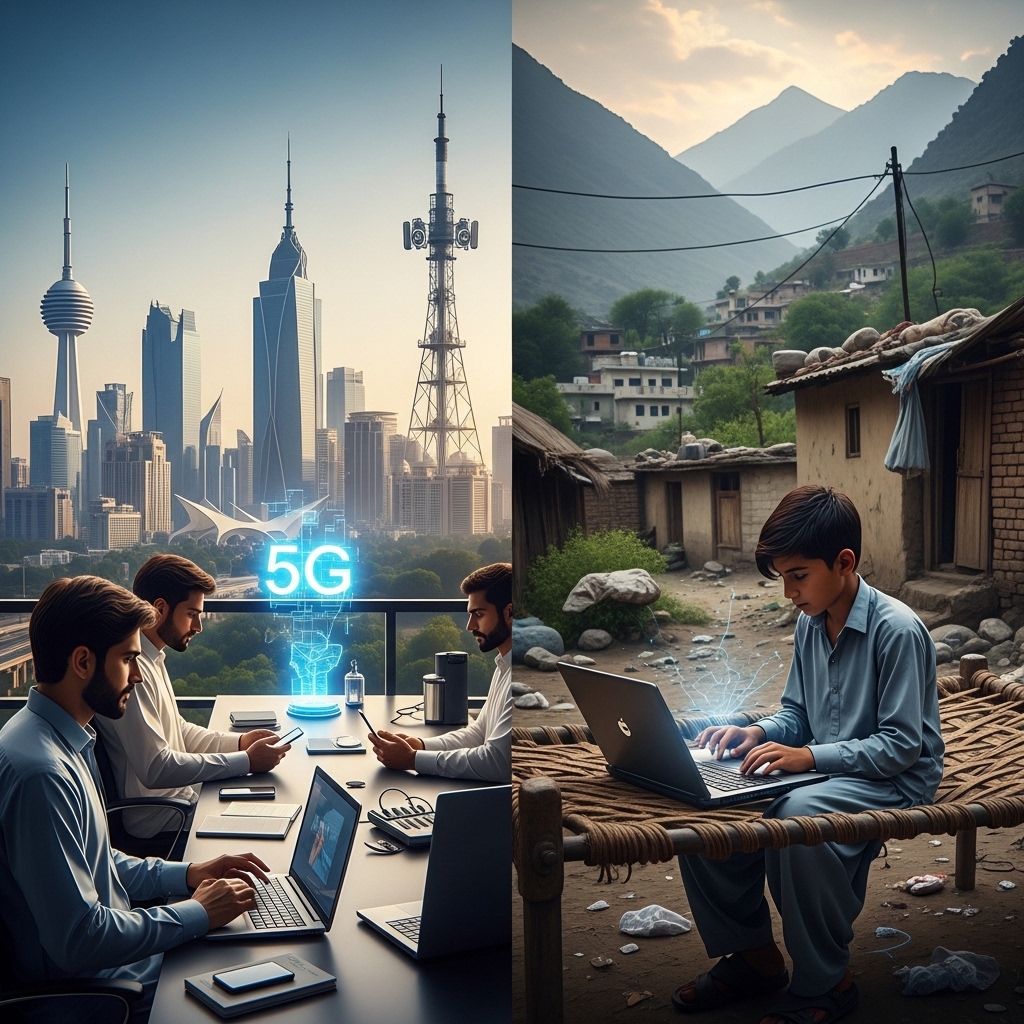
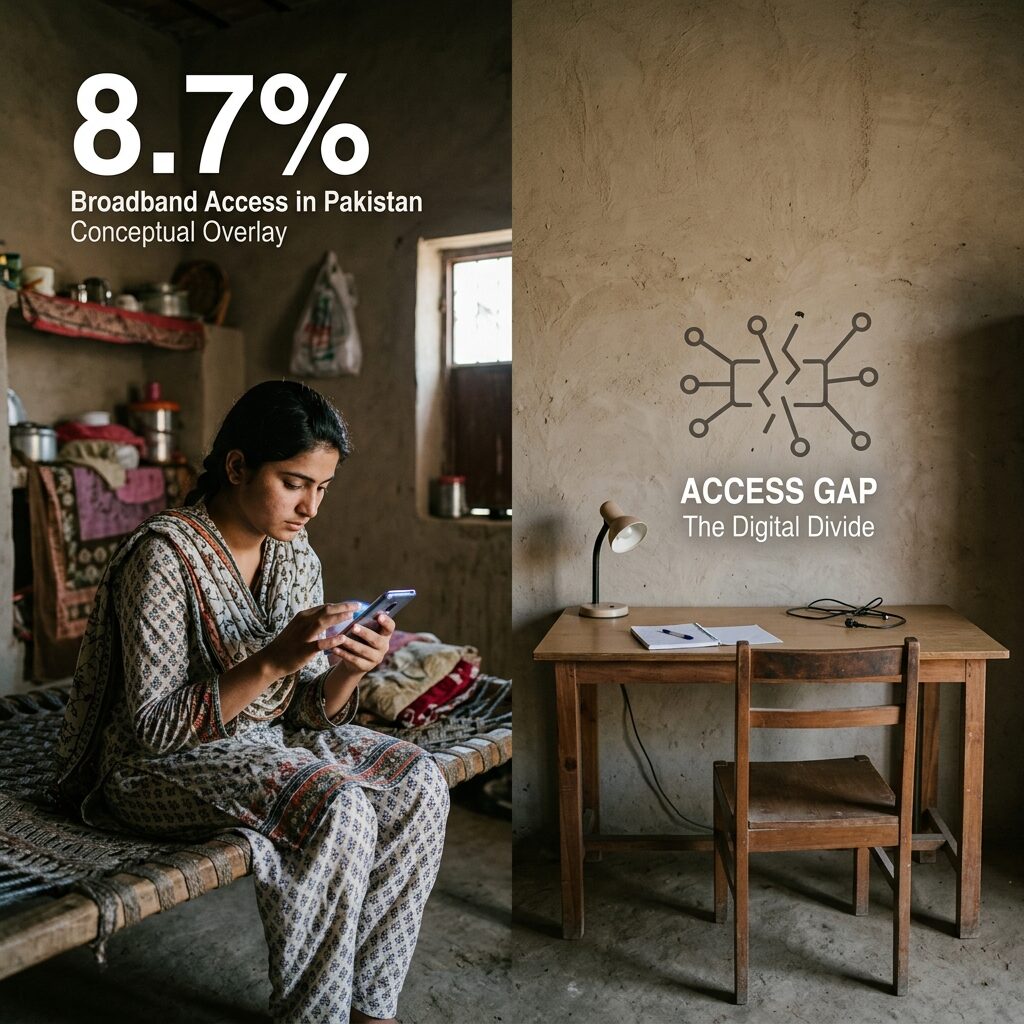
1. AI Curriculum in Schools. An AI curriculum will be introduced in all federally controlled schools, as well as in Azad Jammu and Kashmir, Gilgit-Baltistan, and remote parts of Balochistan. What it means for you: if you are a student or parent, the next generation will learn AI basics early, leveling the playing field between big cities and remote areas.
2. 1,000 Fully Funded PhD Scholarships. The government will provide 1,000 fully funded PhD scholarships in AI to students across the country by 2030, aimed at building world-class research capacity. What it means for you: if you are a graduate or researcher, this is a direct, funded path to advanced AI expertise, something that previously required expensive study abroad.
3. Training 1 Million Non-IT Professionals. A nationwide program will train one million non-IT professionals in AI skills to boost productivity and improve livelihoods. What it means for you: you do not need to be a programmer to benefit. Teachers, marketers, accountants, farmers, and business owners can learn to use AI tools to work better and earn more.
4. Sovereign Compute and Research Centers. The investment builds national data centers and research hubs. What it means for you: if you are a founder or developer, cheaper local computing power and research support make it far more affordable to build AI products from within Pakistan.
The reasoning connects to a bigger economic vision. For decades, Pakistan's tech industry earned money mainly by providing IT services and freelance work, valuable, but low-margin and increasingly threatened by AI itself.
Planning Minister Ahsan Iqbal captured the shift, noting that the world had entered a moment where intelligence itself had become a factor of production, with nations competing on ideas, talent, data and technology rather than commodities. He described AI as a bigger disruptor than electricity or the internet.
The goal, in plain terms, is to move Pakistan up the value chain: from selling cheap labor to owning valuable AI capability. With 60% of Pakistan's population being young, the government sees a massive opportunity to turn its youth into AI creators rather than just users.
This $1 billion pledge is not a standalone announcement. It builds on a series of steps. Pakistan approved its first National AI Policy in 2025, then launched a sovereign AI cloud and a startup fund. A separate initiative is already training 10,000 government officials in digital skills.
The country also has real infrastructure to build on. Officials point to a national backbone of more than 234,000 kilometers of fiber-optic network, six submarine cables, around 58,000 cellular towers, and over 20 modern data centers. The plan also connects to the Islamabad Declaration, a framework of national principles for sovereign AI, and ambitious projects like a planned Quantum Valley innovation ecosystem.
A responsible look must weigh the obstacles, because ambition alone does not guarantee results. Pakistan has announced bold tech plans before, and analysts consistently point to one core issue: execution.
The first challenge is implementation speed. Reports note that Pakistan approved its National AI Policy in 2025 but implementation has moved slowly, with awareness and readiness being the main pillar active so far. Turning pledges into working programs is the hard part.
The second challenge is energy and infrastructure. New data centers need enormous, reliable electricity, and grid reliability remains a known weakness. As one analysis put it, new computing capacity has to be matched with affordable energy and resilient digital networks, meaning grid modernization must happen alongside AI investment.
The third is the skills gap and follow-through. Training a million people and funding a thousand PhDs is excellent on paper, but it requires quality teaching, real jobs for graduates, and sustained funding, not just announcements. The plan's success depends on delivery over the full period to 2030.
The expert consensus is cautious optimism. The direction is widely praised, treating AI as a national priority is exactly right, and the specific, funded programs are more concrete than vague slogans. The inclusion of non-IT training and rural schools shows welcome awareness that AI must reach everyone, not just elite tech circles.
But experts stress that the real measure will be quiet, unglamorous execution: reliable power, quality training, transparent use of the funds, and creating actual demand for AI skills in the economy. If Pakistan delivers even most of this, the impact could be transformational. If it stalls at the announcement stage, it becomes another missed opportunity.
Between now and 2030, watch for concrete signs of progress: scholarships actually awarded, training programs launched with real enrollment, data centers built and powered, and AI curriculum reaching classrooms. These milestones, not the headline figure, will show whether the plan is working.
If it succeeds, a Pakistani student could learn AI in school, earn a funded PhD at home, and build a global AI product using local infrastructure, without ever needing to leave. That is the future this plan is reaching for.
This article is for general informational purposes only and reflects announcements and analysis available in 2026. Government plans, timelines, and figures can change; verify current program details through official sources before acting.
At Indus AI Week 2026 in Islamabad, Pakistan's Prime Minister Shehbaz Sharif announced a pledge to invest $1 billion in public funds in artificial intelligence by 2030, aiming to shift Pakistan from a low-cost IT-services provider into a regional AI hub and "no longer remain a passive consumer of global AI technologies."
The investment focuses on sovereign compute infrastructure (AI computing power and data centers owned and controlled within Pakistan) and expanding national research capacity. It sits within Pakistan's broader AI agenda, following the National AI Policy approved in 2025, the launch of a sovereign AI cloud, a startup fund, and the Islamabad Declaration on sovereign AI principles.
Four flagship programs were announced: an AI curriculum in all federal schools plus AJK, Gilgit-Baltistan, and remote Balochistan; 1,000 fully funded AI PhD scholarships by 2030; a nationwide program to train one million non-IT professionals in AI skills; and national data centers and research hubs. A separate initiative is already training 10,000 government officials. Priority sectors include agriculture, mining, and industry. Pakistan's existing digital backbone includes 234,000+ km of fiber, six submarine cables, ~58,000 cellular towers, and 20+ data centers.
Honest challenges flagged by analysts: slow implementation (the National AI Policy's main active pillar so far is awareness/readiness), energy and grid reliability for power-hungry data centers, and the need for quality training, transparent spending, and real jobs for graduates. Expert consensus is cautious optimism: the vision and concrete, funded programs are praised, but success depends on execution by 2030.
This is informational analysis, not policy endorsement or financial advice; government plans and figures can change.