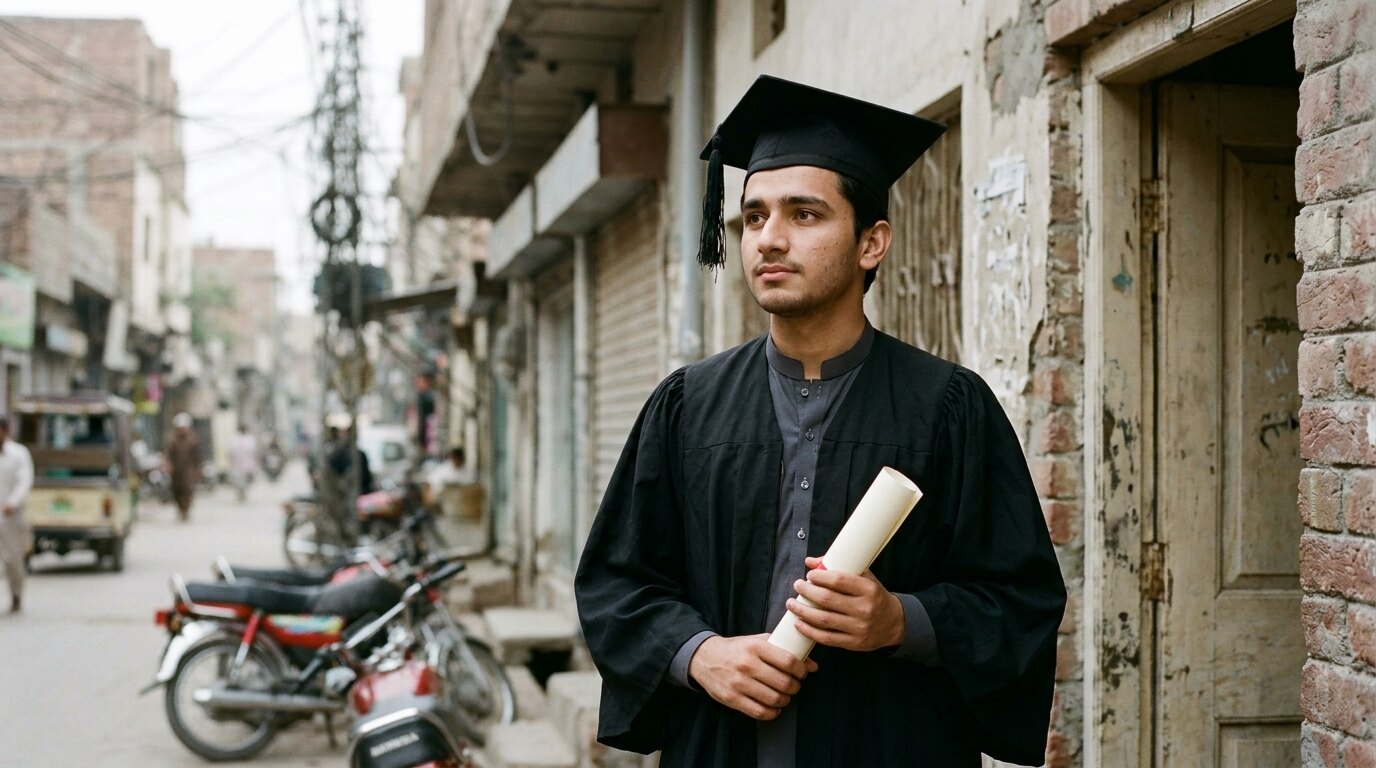
Pakistan's skills crisis reportedly costs the economy around $31.5 billion a year. Only about 7% of Pakistani youth receive formal technical and vocational training (versus a 22% regional average), and graduate unemployment (ages 20-24) is around 32.8%. Experts say the problem is systemic, an education system disconnected from job-market needs, not a lack of youth capability.
Here's a statistic that should alarm everyone who cares about Pakistan's future: the country's skills crisis reportedly costs the economy around $31.5 billion every single year. That's an enormous, largely avoidable loss, the price of a persistent, painful gap between the education young Pakistanis receive and the skills the job market actually needs. And behind that number lies a deeply frustrating human reality: millions of educated young Pakistanis struggling to find decent jobs, not because they lack ability, but because the system has failed to equip them with what employers want.
This matters enormously, and it deserves honest examination. Because the easy (and wrong) response is to blame the youth, "this generation isn't skilled enough." The truth, as experts make clear, is the opposite: the problem is systemic, an education-and-training system disconnected from reality, not a failure of young Pakistanis' capabilities. Here's what the crisis really is, what's causing it, what it costs, and what would genuinely fix it. This is a problem Pakistan can solve, if it names it correctly.
Let's start with the data, because it lays bare the scale of the problem. Recent analysis (highlighted even at the World Economic Forum's Global Future Leaders meeting) has quantified Pakistan's skills crisis, and the figures are sobering.
Consider them. The skills crisis and inadequate vocational training reportedly cost Pakistan's economy around $31.5 billion annually, a vast sum for a country facing economic challenges. Only about 7% of Pakistani youth receive formal technical and vocational training (TVET), dramatically below the regional average of around 22%, meaning the vast majority of young Pakistanis enter the workforce without formal, job-relevant skills training. And there's a troubling paradox in the unemployment data: higher academic qualifications don't reliably translate into jobs. Citing Gallup Pakistan's analysis of the Labour Force Survey 2024-25, unemployment among university graduates aged 20-24 stands at a striking 32.8%, meaning roughly one in three young graduates can't find work. Together, these numbers paint a clear, painful picture: Pakistan is producing graduates, but not employable, job-ready skills, at enormous economic and human cost. The gap between education and employment isn't a minor inefficiency; it's a full-blown crisis with a $31.5 billion price tag. Naming that honestly is the first step to fixing it.
Let's sit with the most revealing, and counterintuitive, part of this, because it points straight to the real problem. Normally, we assume more education means better job prospects. In Pakistan, that link is broken: higher academic qualifications don't necessarily translate into improved employment, and university graduates face some of the highest unemployment rates.
This paradox, more degrees yet more unemployment, is the crisis in a nutshell, and it tells us something crucial: the problem isn't that young Pakistanis lack education or ability; it's that the education they're getting isn't the right kind, it doesn't equip them with the practical, relevant, job-ready skills employers actually need. A young person can earn a degree, invest years and money, and still find themselves unemployable, not because they failed, but because the system handed them qualifications disconnected from the real economy. That's a profound, systemic failure. It means Pakistan is, in effect, spending enormous resources (families' money, young people's time, public funds) producing education that doesn't lead to employment. The paradox reframes the whole issue: this isn't a story of unskilled or lazy youth (a lazy, false narrative); it's a story of a system that educates without equipping, that credentials without preparing. Understanding this is essential, because it points to where the fix must happen: the system, not the students.
This is the most important point in the entire discussion, and it deserves to be stated plainly and repeatedly: the skills crisis is not the fault of Pakistani youth. Experts analyzing the crisis attribute it to longstanding institutional weaknesses, not inadequate capabilities among young Pakistanis.
This matters enormously, for both accuracy and fairness. Pakistani young people are, by every measure, capable, ambitious, and hardworking, the same talent that, as we've seen, builds world-class companies abroad, powers a billion-dollar freelance economy, and competes globally when given the chance. The problem isn't them. The problem is a system that: teaches outdated, overly-theoretical curricula disconnected from real job needs; drastically under-invests in technical and vocational training (just 7% coverage); fails to align education with what the economy and employers actually demand; emphasizes rote credentials over practical, applicable skills; and provides little bridge between academic study and professional reality. When a young person does everything right, studies hard, earns a degree, and still can't find a job, the honest conclusion isn't that they failed; it's that the system failed them. Blaming the youth is not only unfair, it's dangerously misleading, because it points away from the real problem (systemic reform) and toward a false one (youth deficiency). Fixing Pakistan's skills crisis starts with this honest, humane reframe: our young people aren't the problem; our systems are. And systems can be fixed.
To fix the system, we need to name specifically what's broken, because the diagnosis points to the cure. Several interlocking systemic failures drive Pakistan's skills crisis.
The core problems: A disconnect between education and the job market, curricula and qualifications often don't match what employers actually need, producing graduates with credentials but not relevant skills. Chronic under-investment in TVET, with only 7% of youth getting technical/vocational training (versus 22% regionally), Pakistan vastly under-provides the practical, employable skills many jobs require. Over-emphasis on degrees over skills, a cultural and systemic bias toward academic credentials (often theoretical) over hands-on, market-relevant abilities. Outdated curricula and teaching, education that hasn't kept pace with the fast-changing economy (especially the digital and AI era). Weak industry linkage, insufficient collaboration between educational institutions and employers, so training isn't guided by real demand. Quality and oversight gaps, as even officials note, vocational institutes often lack the quality, accountability, and market-orientation needed. And poor career pathways and guidance, young people lack clear bridges (internships, apprenticeships, guidance) from study to work. These aren't failures of students; they're failures of design, investment, and alignment, all systemic, and all fixable. Naming them precisely is what makes solutions possible. The crisis isn't mysterious; it's a set of concrete, addressable system failures.
Before solutions, let's be clear about why this matters so urgently, because the cost is both economic and deeply human. The $31.5 billion annual figure captures the economic loss, but the human toll is just as real and arguably more important.
On the economic side: $31.5 billion a year is a massive drain on a struggling economy, lost productivity, lost output, lost potential, money and talent simply wasted. A country that fails to equip its huge young population with employable skills squanders its single greatest asset (its people) and undermines its growth, competitiveness, and development. On the human side: behind the statistics are millions of young Pakistanis, who studied hard and dreamed big, facing unemployment, frustration, and lost hope, through no fault of their own. The waste of their potential is a tragedy, for them, their families, and the nation. There are also knock-on effects: brain drain (talented youth leaving for opportunities abroad, as we've discussed), social frustration, and the loss of the demographic dividend Pakistan's young population should represent. This dual cost, economic and human, is what makes the skills crisis so urgent. It's not an abstract policy issue; it's about whether a generation of capable young Pakistanis gets the chance to build good lives and a stronger country. That's worth every effort to fix.
Here's the constructive heart, because this crisis, while serious, is genuinely solvable. The fixes follow directly from the diagnosis: reform the system to connect education with employment. Here's what's needed.
Key solutions: Massively expand quality TVET, dramatically increase access to good technical and vocational training (toward and beyond the 22% regional norm), giving far more young people practical, employable skills. Align education with job-market needs, reform curricula and programs, with employer input, so what's taught matches what the economy actually demands (including digital, AI, and trade skills). Prioritize skills over (just) degrees, shift the system and culture toward valuing and teaching practical, applicable abilities, not just theoretical credentials. Strengthen industry-education linkage, build real partnerships (apprenticeships, internships, co-designed curricula, placement programs) so training is demand-driven, like the GET placement programs and industry collaborations beginning to emerge. Invest in quality and oversight, ensure vocational and educational institutes deliver genuine, market-relevant quality with accountability. Provide career guidance and pathways, help young people choose relevant skills and transition from study to work. Leverage digital and online skills training, scale accessible programs (like DigiSkills, and others we've covered) that teach in-demand digital skills efficiently. And make it a national priority, treat the skills crisis as the economic emergency it is, with serious, sustained investment and reform. The through-line: connect education to employment, teach relevant skills, and invest in the practical training that turns capable youth into employable professionals. None of this is mysterious; it's a known playbook. What's needed is the will and investment to execute it.
The skills crisis sits at the heart of Pakistan's economic and social challenges.
For the economy, closing the skills gap would recover much of the $31.5 billion annual loss, boosting productivity, growth, and competitiveness, one of the highest-return investments Pakistan could make.
For youth and families, equipping young people with employable skills transforms their job prospects, incomes, and futures, and honors their capability and effort.
For the demographic dividend, Pakistan's huge young population is a potential superpower, but only if equipped with relevant skills; otherwise it becomes a liability (unemployment, frustration). Skills are the difference.
For every sector we cover, from IT exports and freelancing to startups and AI, Pakistan's digital and economic ambitions all depend on a skilled workforce; the skills crisis is the foundational constraint beneath them all.
The essential insight, and the one that should guide everything, is that Pakistan's skills crisis is a solvable systemic problem, not a failure of its youth, and fixing the education-to-employment system would unleash the enormous, proven talent of young Pakistanis while recovering tens of billions in lost economic value. This reframe is both accurate and empowering. The evidence that Pakistani youth are capable is overwhelming, they build world-class companies (often abroad), power a billion-dollar freelance economy, win globally when given the chance, and show relentless ambition. The tragedy of the $31.5 billion crisis is that this same talent is being squandered at home by a system that educates without equipping: producing degrees disconnected from jobs, under-investing in practical skills (just 7% vocational training), and failing to align with the real economy. The result, one in three young graduates unemployed, is a systemic failure, not a youth failure.
The constructive path is clear and known: reform the system to connect education with employment. Massively expand quality technical and vocational training; align curricula with what the economy and employers actually need (especially digital and AI skills); value and teach practical skills, not just theoretical credentials; build strong industry-education partnerships (apprenticeships, placements); ensure quality and accountability; provide career guidance; and leverage accessible digital-skills programs, all treated as the national economic priority this crisis demands. The beautiful truth is that the hardest ingredient, capable, ambitious young people, Pakistan already has in abundance. What's missing is a system that equips them. Fix that system, and Pakistan doesn't just recover $31.5 billion a year; it unleashes a generation's potential, transforming its economy and millions of lives. So the message is one of honest urgency and genuine hope: stop blaming the youth, fix the system, and watch what Pakistan's young people can do. They've already proven their talent. Now the country must build the system worthy of it. That's the work, and it's absolutely worth doing.
Expect growing recognition of the skills crisis (as this $31.5 billion figure and the data draw attention) to drive, hopefully, more serious reform: expanded TVET, better industry-education linkage, digital-skills programs, and curriculum reform. There are early signs (graduate-placement programs, digital-skills initiatives, provincial vocational-training pushes), but the scale of the crisis demands far more sustained, systemic action.
If Pakistan genuinely reforms its education-to-employment system, it could progressively close the skills gap, recover lost economic value, and transform the prospects of its young population, a huge opportunity. If it doesn't (or tinkers at the margins), the crisis will persist, wasting talent and billions annually. The trajectory depends on treating this as the national priority it is. The encouraging reality is that the problem is well-understood and the solutions known; what's needed is will, investment, and sustained execution. For Pakistan's economy and its youth, fixing the skills crisis may be the single most consequential, and most hopeful, challenge to get right.
Pakistan's skills crisis, costing a reported $31.5 billion a year, with only 7% of youth getting vocational training and roughly one in three young graduates unemployed, is a serious, urgent problem. But the most important truth about it is also the most hopeful: the problem isn't Pakistan's youth. Young Pakistanis are capable, ambitious, and talented, as they prove whenever given the chance, building world-class companies, powering the freelance economy, and competing globally. The crisis is systemic: an education-and-training system disconnected from the real job market, producing degrees without employable skills, drastically under-investing in practical training, and failing to align with what the economy needs. That's a failure of design and investment, not of young people, and that means it's fixable. The solutions are known: massively expand quality vocational and technical training, align education with job-market needs (especially digital and AI skills), value practical skills over mere credentials, build strong industry-education partnerships, and treat this as the national economic priority it is. Do that, and Pakistan doesn't just recover tens of billions in lost value; it unleashes the enormous potential of a generation, transforming millions of lives and the economy itself. So let's name the crisis honestly and humanely: stop blaming the youth, and fix the system that's failing them. Pakistan's young people have already shown the world what they can do. The task now is to build an education-to-employment system worthy of their talent. That's how Pakistan turns its greatest challenge, and its greatest asset, its people, into its greatest strength.
This article is an analysis and opinion piece for general informational purposes, based on data and reports available in 2026 (including figures reported by Dawn/ANI citing analyses and the Labour Force Survey 2024-25 via Gallup Pakistan). Figures (including the $31.5 billion cost, 7% TVET, and 32.8% graduate unemployment) are as reported by cited sources and may vary by methodology. This is non-partisan analysis, not policy or career advice.
Pakistan faces a serious skills crisis that reportedly costs its economy around $31.5 billion a year, according to analysis reported by Dawn (and highlighted at the World Economic Forum's Global Future Leaders meeting). The core data: only about 7% of Pakistani youth receive formal technical and vocational training (TVET), far below the regional average of ~22%; and unemployment among university graduates aged 20-24 is around 32.8% (per Gallup Pakistan's analysis of the Labour Force Survey 2024-25), roughly one in three young graduates can't find work.
The central paradox: more education isn't translating into jobs, higher academic qualifications don't reliably lead to employment, and graduates face some of the highest unemployment. This reveals the real problem: not that youth lack education or ability, but that the education they receive isn't the right kind, it produces degrees disconnected from the practical, relevant, job-ready skills employers actually need.
The crucial reframe (stressed by experts): the crisis is NOT the fault of Pakistani youth, it stems from longstanding institutional/systemic weaknesses, not inadequate capabilities. Pakistani young people are demonstrably capable and ambitious (they build world-class companies abroad, power a billion-dollar freelance economy, compete globally). The system fails them via: a disconnect between education and job-market needs; chronic under-investment in TVET (7% coverage); over-emphasis on theoretical degrees over practical skills; outdated curricula; weak industry-education linkage; quality/oversight gaps; and poor career pathways. Blaming the youth is unfair and misleading