Quick commerce (q-commerce) delivers groceries and essentials in 10-30 minutes via local "dark stores." In Pakistan, it's growing fast: global ride-hailing firm inDrive acquired pioneer Krave Mart in 2026 to build a super app, while Pandamart and others compete. It promises convenience for urban consumers but faces real profitability and logistics challenges.
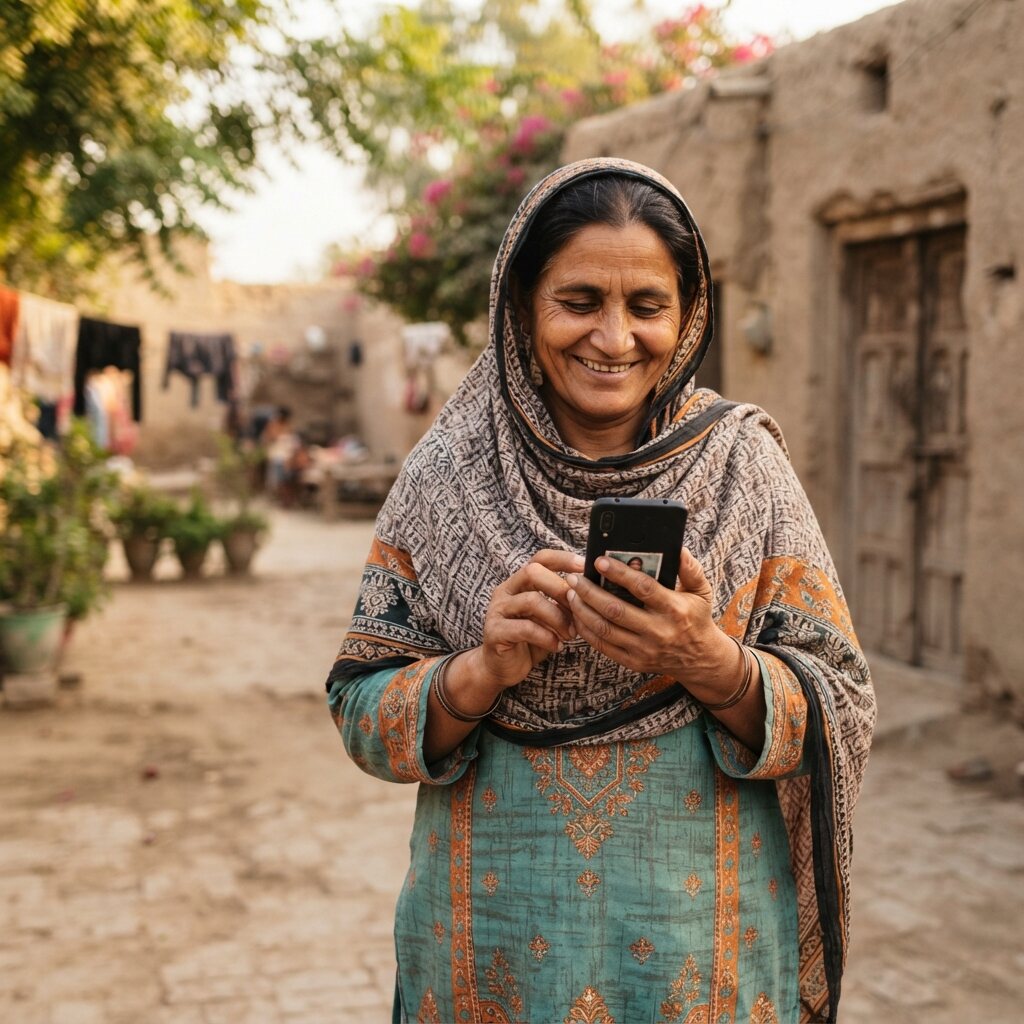
Imagine running out of milk, eggs, or a phone charger, and having it at your door in under 30 minutes, without leaving your home. For a growing number of urban Pakistanis, this is no longer a fantasy; it's a normal Tuesday. Quietly but rapidly, "quick commerce", ultra-fast delivery of groceries and everyday essentials, is transforming how people in Pakistan's big cities shop.
And it just took a major leap: global ride-hailing giant inDrive acquired Krave Mart, the startup that pioneered q-commerce in Pakistan, signaling that this fast-delivery model is becoming serious business. Here's what quick commerce actually is, the big news reshaping it, how the clever "dark store" model works, and an honest look at what it means for consumers, small retailers, and Pakistan's digital economy.
Let's start with the basics, because "q-commerce" is a term many haven't quite pinned down. Quick commerce is a model focused on delivering a limited range of everyday products, mainly groceries and daily essentials, extremely fast, typically within 10 to 30 minutes of ordering.
It's different from regular e-commerce (like Daraz), where you order a wide range of products and wait a day or several for delivery. Q-commerce trades vast selection for speed and immediacy: fewer products, but at your door almost instantly. The customer opens an app, orders daily items (milk, bread, snacks, toiletries, over-the-counter medicine), and receives them in minutes. It's built for the "I need it now" moments, when waiting a day isn't an option, or when a trip to the store is inconvenient. This immediacy is the whole value proposition, and it's proving genuinely appealing to Pakistan's increasingly time-pressed, smartphone-equipped urban consumers. As one q-commerce leader put it, the goal is to make 20-30 minute delivery "the new standard for convenience."
How is 30-minute (or even 10-minute) delivery actually possible? The answer is a clever piece of logistics called the "dark store," and understanding it demystifies the whole model. A dark store is a small warehouse or mini-fulfillment center located within a neighborhood, stocked with the most commonly ordered products, but closed to the public (hence "dark", no customers walk in).
Here's how it works. Q-commerce companies place many small dark stores strategically across a city, each serving a small surrounding radius (often just a few kilometers). When you order, the request goes to the nearest dark store, where staff quickly pick and pack your items, and a rider delivers them the short distance to your door, all within minutes. This "hub-and-spoke" model, many small, close hubs rather than one big distant warehouse, is what makes ultra-fast delivery physically possible. The closer the store to the customer, the faster the delivery. Krave Mart, for instance, built its model around dark stores serving small radiuses in Karachi. It's a genuinely smart adaptation of logistics to the demand for instant gratification, and it's the engine behind Pakistan's q-commerce boom.
Now the development that signals q-commerce is maturing in Pakistan, and it's significant. In 2026, global ride-hailing company inDrive (known worldwide for its bid-based pricing model) acquired Krave Mart, the Karachi-based startup widely credited as Pakistan's first quick-commerce firm. The all-stock deal received approval from the Competition Commission of Pakistan.
This acquisition matters for a few reasons. First, it shows international players see real potential in Pakistan's q-commerce market, worth a global company's investment. Second, it reflects a "super app" strategy: inDrive is expanding beyond ride-hailing into grocery delivery and everyday services, aiming to build an app where mobility, delivery, and daily needs live in one place (a model successful in other markets). Through the Krave Mart integration, inDrive's grocery service offers thousands of products with fast delivery, launching in Karachi and expanding to Lahore, Islamabad, and Rawalpindi through 2026. Krave Mart, founded in 2021 by former Daraz, Foodpanda, and Swvl executives, had pioneered the model and aimed to create thousands of jobs. Its acquisition by a global firm marks q-commerce's evolution from scrappy startup experiment to serious, scaling business in Pakistan.
Krave Mart (now under inDrive) isn't alone, this is a competitive, growing space, which is a sign of its potential. Several players are vying to win Pakistan's quick-commerce market.
The landscape includes Pandamart (the q-commerce arm of Foodpanda, a major food-delivery player leveraging its existing network), Krave Mart (now powering inDrive's grocery service), and various regional and emerging players. Some broader e-commerce and delivery companies (like Bazaar, Cheetay, and others) also offer fast-delivery elements, though not all are pure q-commerce. This competition is healthy, it signals a real market opportunity and pushes players to improve service, expand coverage, and compete on speed and price, ultimately benefiting consumers. The presence of both homegrown startups and global-backed players suggests q-commerce in Pakistan is being taken seriously as a significant future segment of the digital economy, not a passing fad. The race is on to become the go-to app for Pakistanis' instant daily needs.
For urban Pakistani consumers, the rise of q-commerce brings genuine benefits, which is why it's catching on so fast. The advantages are real and immediate.
Consider what it offers. Unmatched convenience: essentials at your door in minutes, saving trips to the store, invaluable for busy people, parents, the elderly, or anyone during bad weather or time crunches. Time savings: no traffic, parking, or queues for a quick grocery run. Growing selection: while limited versus full e-commerce, q-commerce catalogs are expanding (Krave Mart-inDrive offers 7,500+ products). And competitive pricing and deals: competition often means discounts and promotions. For Pakistan's increasingly urban, smartphone-savvy population (with over 80% of urban consumers now shopping online), this instant convenience genuinely improves daily life. It's easy to see why adoption is rising: once you've had milk delivered in 20 minutes, going back to a store trip for small items feels unnecessary. The consumer value is the clearest, strongest part of the q-commerce story.
Balance matters, so let's be honest about the significant challenges q-commerce faces, because this model is famously difficult to get right, even globally. Excitement shouldn't obscure the real hurdles.
Several are genuine. Profitability is hard: the ultra-fast model is expensive to run (many dark stores, lots of riders, small order values), and q-commerce companies worldwide have struggled to make money; Pakistan's earlier entrant Airlift, for instance, ceased operations in 2022. Logistics and infrastructure: Pakistan's traffic, address systems, and infrastructure make consistent fast delivery genuinely challenging (as Krave Mart's CEO himself acknowledged about the 10-minute goal). Rider safety: the intense speed pressure raises real concerns about delivery riders' safety, a serious ethical issue that responsible operators must address, and that was flagged by observers from the start. Limited to dense urban areas: the model works mainly in high-density cities, leaving out smaller towns and rural areas. And thin margins on groceries: grocery is a low-margin business, making the economics tough. These challenges are why q-commerce, despite its appeal, is a hard business, and why not every player will survive. The winners will be those who solve the profitability and logistics puzzle sustainably, and responsibly.
The q-commerce trend has broader significance for Pakistan.
For consumers, it brings genuine convenience and modernizes urban shopping, improving daily life for millions of city dwellers.
For jobs, q-commerce creates employment, riders, dark-store staff, and support roles (Krave Mart alone aimed to create around 8,000 jobs), meaningful in a country needing employment.
For the digital economy, it deepens Pakistan's e-commerce ecosystem, drawing more consumers into digital shopping and payments, and attracting investment (including from global players like inDrive).
For local suppliers and brands, q-commerce platforms create new distribution channels to reach urban consumers quickly, an opportunity for FMCG brands and suppliers.
For the startup ecosystem, a successful acquisition (Krave Mart by inDrive) is a positive signal, a Pakistani startup exit that validates the market and may encourage more investment and entrepreneurship.
The balanced view is that quick commerce represents a genuinely appealing evolution in how urban Pakistanis shop, delivering real convenience, but its long-term success hinges on solving the difficult economics and logistics sustainably and responsibly. The consumer demand is clearly there; the question is whether companies can serve it profitably without cutting dangerous corners (especially on rider safety).
For the ecosystem, the trajectory is promising but not guaranteed. The involvement of a serious global player like inDrive (with its super-app ambitions and resources) improves q-commerce's chances of scaling sustainably, deeper pockets and integrated services help absorb the model's costs. But history (Airlift's closure) and global experience show that q-commerce is unforgiving; speed alone doesn't build a viable business. The likely winners will combine genuine convenience with smart logistics (efficient dark-store networks), sustainable economics (adequate order values, integrated services), and responsible operations (rider welfare). For consumers, the near-term outlook is great, more convenience, more competition, better service. For the industry, it's a high-stakes race where execution matters enormously. For Pakistan, if q-commerce matures successfully, it could become a valuable, job-creating, convenience-enhancing pillar of the digital economy. The pieces are in place; now it's about building it right.
Expect q-commerce to keep expanding across Pakistan's major cities through 2026 and beyond, with inDrive-Krave Mart, Pandamart, and others competing hard, extending coverage and refining their models. Watch for the super-app trend (integrating rides, delivery, and daily needs) to deepen, and for consolidation (as with the Krave Mart acquisition) as stronger players absorb or outlast weaker ones. Profitability will remain the key test.
For consumers, the coming years should bring even more convenience and choice. For the industry, the focus will be on making the model sustainable, better logistics, smarter economics, and responsible operations. If successful, q-commerce could become a permanent, significant part of how urban Pakistan shops, and a meaningful contributor to jobs and the digital economy. The trend is clearly upward; the challenge is building it to last.
Quick commerce, groceries and essentials delivered in 10-30 minutes via neighborhood dark stores, is quietly reshaping how urban Pakistanis shop, and its recent leap (inDrive's acquisition of pioneer Krave Mart, and the super-app push) shows it's maturing into serious business. For consumers, the appeal is obvious and genuine: unmatched convenience, time savings, and instant access to daily needs, improving city life for millions. Real players (Krave Mart-inDrive, Pandamart, and others) are competing to win this promising market. But honest challenges, tough profitability, logistics hurdles, and crucial rider-safety concerns, mean not every player will survive, and success requires building the model sustainably and responsibly. The trajectory, though, is clearly upward: q-commerce is becoming a real, growing pillar of Pakistan's digital economy, creating jobs and convenience. For urban Pakistanis, the future of shopping increasingly means opening an app and having your essentials arrive before you've finished your chai. That future is already here, and it's only getting faster.
This article is for general informational purposes only and reflects developments and information available in 2026; company details, ownership, coverage, and figures are as reported by cited sources and may change. This is not investment or business advice.
Quick commerce (q-commerce) is a model delivering a limited range of everyday products, mainly groceries and daily essentials, extremely fast (typically 10-30 minutes), and it's growing rapidly in urban Pakistan. It differs from regular e-commerce (like Daraz, wide selection, slower delivery) by trading selection for speed.
How it works: via "dark stores", small neighborhood warehouses stocked with common products but closed to the public. Companies place many dark stores across a city, each serving a small radius; orders route to the nearest one, which picks/packs, and a rider delivers the short distance quickly. This "hub-and-spoke" model of many close hubs enables ultra-fast delivery.
Big news: in 2026, global ride-hailing company inDrive acquired Krave Mart (Pakistan's first q-commerce startup, founded 2021 by former Daraz/Foodpanda/Swvl executives) in an all-stock deal approved by the Competition Commission of Pakistan. inDrive is integrating it into a "super app" strategy (ride-hailing + delivery + daily needs), offering 7,500+ products, launching in Karachi and expanding to Lahore, Islamabad, and Rawalpindi through 2026. Other players include Pandamart (Foodpanda's q-commerce arm) and various regional competitors.
Consumer benefits: unmatched convenience (essentials in minutes), time savings, expanding selection, and competitive pricing, appealing to Pakistan's urban, smartphone-savvy population (80%+ of urban consumers shop online).
Honest challenges: profitability is hard (expensive dark-store/rider networks, low grocery margins, Pakistan's earlier entrant Airlift closed in 2022); logistics/traffic make consistent fast delivery difficult; rider safety is a serious concern under speed pressure; and the model works mainly in dense urban areas, not smaller towns/rural areas.
Significance for Pakistan: convenience, job creation (Krave Mart targeted ~8,000 jobs), deeper digital-economy engagement, new distribution channels for local suppliers, and