Pakistan and Google signed an agreement to expand tech cooperation, giving Pakistani students free one-year access to Google AI tools including Gemini and AI Plus. The deal also establishes an AI Center of Excellence in Islamabad, expands Google Career Certificates, and applies AI to agriculture and small businesses, aiming to boost digital skills and IT exports.
Here's a genuinely valuable opportunity for Pakistan's students: free access to some of the world's most powerful AI tools, for a full year. As part of a new agreement between Pakistan and Google, Pakistani students will get free access to Google's AI tools, including Gemini and AI Plus, potentially a significant boost for learning and skill-building at a time when AI fluency is becoming essential.
This is part of a broader deal that also includes an AI Center of Excellence, expanded free certifications, and cooperation across agriculture, business, and more. Coming right after Google formally opened its Pakistan office, it signals a deepening commitment. Here's what the agreement actually includes, with a focus on what students and young Pakistanis can get, how to benefit, and what it all means.
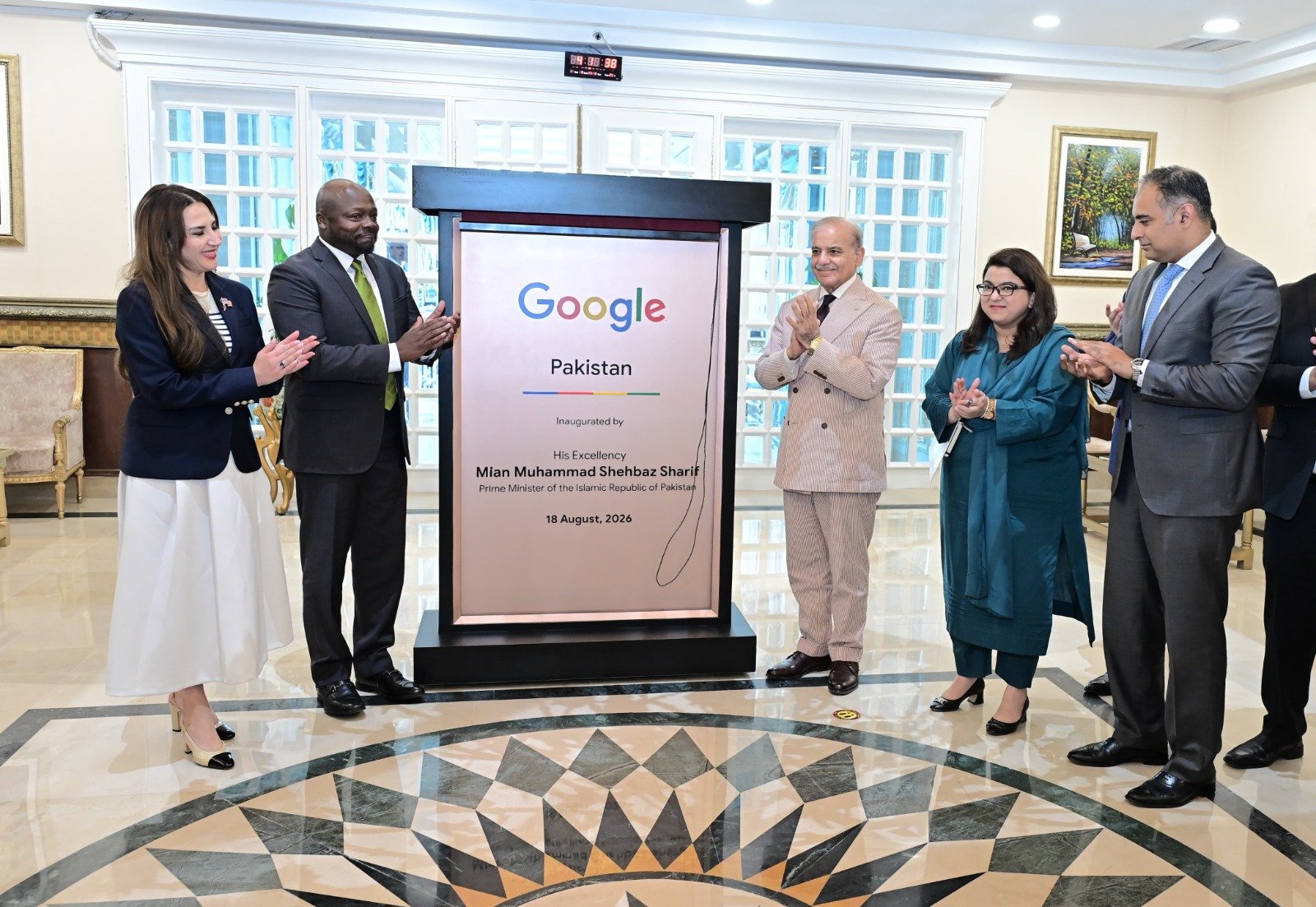
Let's start with the facts. Pakistan and Google signed a Memorandum of Understanding (MoU) to expand cooperation in digital transformation, artificial intelligence, digital skills, and IT. The agreement was signed during a reception hosted by Prime Minister Shehbaz Sharif for a Google delegation, signaling high-level backing.
The MoU is broad, covering several areas of cooperation. But the headline benefit for ordinary young Pakistanis is the AI access: under the planned cooperation, Pakistani students will receive free access, for one year, to Google AI Plus, Gemini, and other AI tools. Alongside this, the deal includes expanding Google's Career Certificates program (targeting 150,000 certificates in Pakistan during 2026), establishing an AI Center of Excellence in Islamabad, and applying AI across areas like agriculture and small business. It's a multi-pronged agreement, but the free AI-tool access for students is the part most directly and immediately valuable to individuals. Let's focus there first.
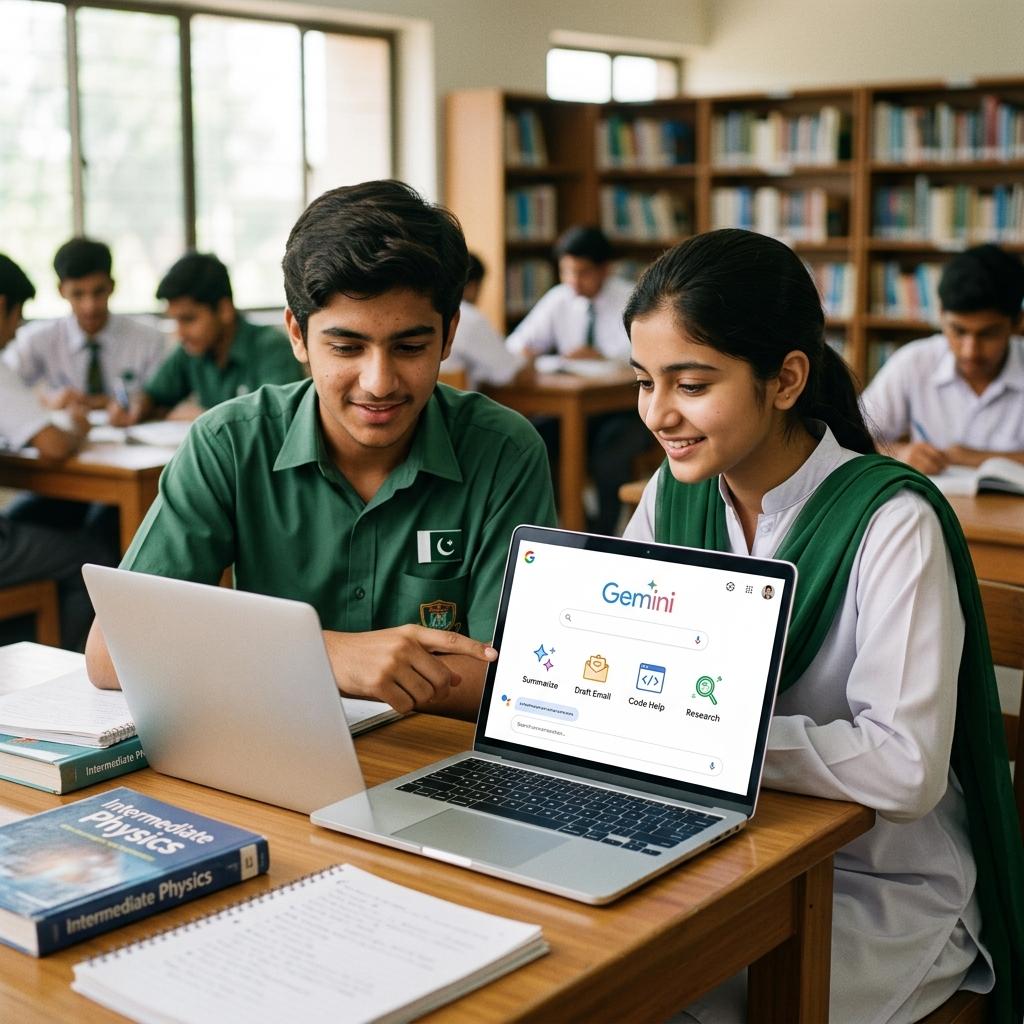
Here's the part students should pay attention to, because it's a genuinely valuable opportunity. Under this cooperation, Pakistani students are set to get free access to Google's AI tools, Gemini (Google's advanced AI assistant) and AI Plus, for one year.
Why does this matter so much? Because these are powerful, normally-paid tools that can meaningfully help with learning and productivity. Students can use AI to understand difficult concepts, get help with research and writing, practice problem-solving, learn to code, and build the AI fluency that's increasingly essential in the modern job market. Access to premium AI tools would normally cost money (often around $20/month), so a year of free access is real value, and more importantly, it removes a barrier for students who couldn't otherwise afford these tools. For a young person in Pakistan learning and preparing for their career, having free access to cutting-edge AI can be a genuine advantage, if they use it well to learn and build skills, rather than just as a shortcut. That last point matters, and we'll return to it.
Beyond individual tool access, the deal includes building institutional capacity, which matters for longer-term impact. The agreement provides for establishing an AI Center of Excellence in Islamabad.
The center's stated focus is training Pakistani youth and human resources in skills aligned with international market requirements, in other words, equipping young Pakistanis with AI and digital skills that are genuinely in demand globally, not just locally. This is significant because it addresses a real need: Pakistan produces many graduates, but a persistent gap has been practical, market-relevant skills (especially in AI). A dedicated center focused on training youth to international standards could help close that gap and make Pakistani talent more globally competitive. Combined with the free tool access and certificates, it reflects a layered approach: give students the tools, the training, and the credentials. If executed well, this institutional element could have lasting impact beyond any single year of free access.
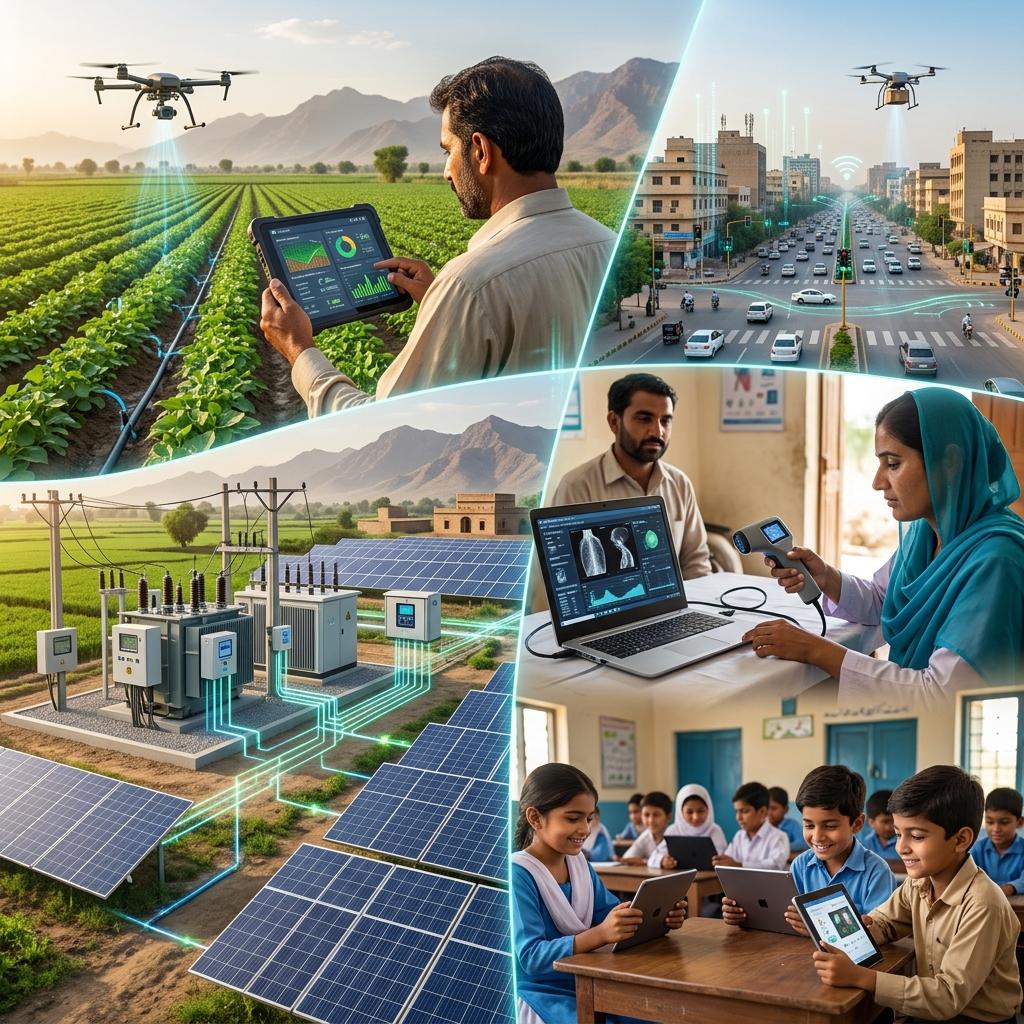
The MoU extends well beyond students and skills, into areas with broad economic potential. It's worth knowing the full scope. The agreement covers applying AI in agriculture, for crop monitoring, forecasting, and sustainable farming practices, which could benefit a sector that employs a huge share of Pakistanis. It extends cooperation to Pakistan's mobile application and gaming industries, and to digital payments and digital commerce. Digital platforms will be used to help small and medium-sized businesses (SMEs) access international markets, valuable for Pakistan's exporters. And notably, the government, Google, and other stakeholders will form a task force to prepare a roadmap for increasing Pakistan's IT exports and competitiveness, examining barriers and identifying growth opportunities.
This breadth shows the deal isn't just about education, it's about embedding AI and digital tools across Pakistan's economy, from farms to startups to exporters. Whether all these ambitions materialize depends on execution, but the scope is genuinely comprehensive.
If you're a student wanting to take advantage of the free AI access, here's practical guidance. While the exact rollout and access details will come through official channels, you can prepare to make the most of it.
First, watch for official announcements, keep an eye on Google's official channels, your educational institution, and government (MoITT) communications for how and when to access the free AI tools and any eligibility steps. Second, when you get access, use it to genuinely learn and build skills, not just to shortcut assignments: use AI to understand concepts more deeply, learn new skills (like coding or data analysis), practice, and create projects. Third, combine it with the free Google Career Certificates (also part of Google's Pakistan push) to build credentials alongside skills. Fourth, focus on developing real capabilities that make you employable and competitive, that's where the lasting value lies. The tool is an opportunity; the benefit comes from how purposefully you use it. Students who treat this as a chance to seriously level up their skills, rather than just a free perk, will gain the most.
Balance matters, so here's an honest perspective. Free access to powerful AI tools is genuinely valuable, but it's an enabler, not a guarantee of success, and how it's used determines its worth.
A few honest points. Access alone doesn't build skills, a student must actually engage, learn, and practice to benefit; passive access changes nothing. There's also a real risk of over-reliance: using AI to do your thinking for you (rather than to learn) can actually harm skill development, so the mindset of using it to learn matters enormously. Implementation will be key: the real impact depends on the tools actually reaching students smoothly and being accompanied by guidance on effective, ethical use. And as with any such initiative, the announcement is a starting point, the value is realized only if it's delivered well and used wisely. None of this diminishes the opportunity, which is real and welcome. But the honest framing is that this deal hands students a powerful enabler; turning it into genuine advancement is up to how they, and the education system, use it. That's worth keeping in mind amid the excitement.
This agreement carries real significance for Pakistan's digital future.
For students and youth, free access to premium AI tools plus training could meaningfully boost skills and employability, especially valuable for those who couldn't otherwise afford such tools, a genuine equalizer.
For Pakistan's skills gap, the AI Center of Excellence and expanded training directly target the shortage of market-relevant, AI-capable talent.
For the economy, embedding AI across agriculture, SMEs, and exports (plus the IT-exports task force) could support productivity and growth in multiple sectors.
For Pakistan's tech trajectory, deepening cooperation with a global tech leader like Google (following the office opening) reinforces Pakistan's growing integration into the global tech ecosystem, and its ambition to be a participant, not just a consumer.
The key insight about this deal is that it dramatically lowers a barrier, the cost and availability of world-class AI tools and training, but lowering the barrier is only the beginning. The real, lasting value comes from what young Pakistanis do with the access. This distinction, between opportunity provided and outcome achieved, is everything.
The encouraging reality is that access to cutting-edge AI, free training, and credentials is a genuinely powerful combination for a motivated young person, arguably one of the best opportunities available to build in-demand skills at no cost. The honest caveat is that these tools reward active, purposeful use and can be wasted (or even counterproductive) through passive or over-reliant use. So the advice to every Pakistani student is: seize this opportunity actively and wisely, use the free AI tools to genuinely learn and build real skills, pursue the certificates, engage with the training, and focus on becoming genuinely capable and competitive. As AI reshapes the global job market, those who learn to use it skillfully (not just access it) will have a real edge. Pakistan is being handed valuable tools and training; the generation that wields them purposefully is the one that will benefit. Access is the opportunity; skill is the outcome, and the outcome is up to you.
Watch for the rollout details, how and when students can access the free AI tools, the establishment and programs of the AI Center of Excellence, and progress on the broader cooperation (agriculture, SMEs, exports task force). The effectiveness will depend on smooth implementation and genuine uptake.
More broadly, this deal reinforces a clear trend: Pakistan is increasingly gaining access to world-class AI tools, training, and partnerships. Combined with Google's office opening and other initiatives, the opportunities for Pakistanis to build AI skills are expanding rapidly. The decisive factor, as always, will be whether people seize these opportunities and use them to build real capabilities. For a young, populous country, the potential upside is substantial if the access translates into genuine skill development at scale.
The new Google-Pakistan agreement is a genuinely valuable development, most immediately for students, who stand to gain free one-year access to powerful AI tools like Gemini and AI Plus, alongside an AI Center of Excellence, expanded free certificates, and broad cooperation across agriculture, business, and exports. For young Pakistanis, this is a real opportunity to access cutting-edge AI and build in-demand skills at no cost, a genuine equalizer in a world where AI fluency increasingly matters. The honest caveat is that these tools are enablers, not magic: their value depends entirely on using them actively and wisely to genuinely learn and build capabilities, not as shortcuts. So the message to students is simple and encouraging: when this access arrives, seize it purposefully. Use it to learn deeply, build real skills, and make yourself genuinely competitive. Pakistan is being handed powerful tools; the students who use them well will be the ones who turn this opportunity into real advantage. Watch for the rollout, and be ready to make the most of it.
This article is for general informational purposes only and reflects an agreement announced in 2026; specific details, eligibility, access methods, and timelines may evolve, verify through official Google and government (MoITT) channels, and beware of scams or unofficial sites. Disclosure: this article is written by Claude, made by Anthropic, a competitor to Google; it draws on independent reporting and treats the subject evenhandedly. This is not professional advice.
Pakistan and Google signed a Memorandum of Understanding (MoU) in August 2026 to expand cooperation in digital transformation, AI, digital skills, and IT, signed during a reception hosted by Prime Minister Shehbaz Sharif for a Google delegation. The headline benefit for individuals: Pakistani students will receive free one-year access to Google AI tools, including Gemini and AI Plus.
Key elements: (1) Free student access to Google AI Plus, Gemini, and other AI tools for one year, valuable for learning, research, coding, and building AI fluency (tools that normally cost money, removing a barrier for those who couldn't afford them). (2) An AI Center of Excellence in Islamabad, focused on training Pakistani youth in skills aligned with international market requirements. (3) Expanded Google Career Certificates (targeting 150,000 in Pakistan during 2026). (4) AI applications in agriculture (crop monitoring, forecasting, sustainable farming). (5) Cooperation in mobile apps, gaming, digital payments, and commerce. (6) Helping SMEs access international markets. (7) A joint government-Google task force to prepare a roadmap for increasing Pakistan's IT exports and competitiveness.
How students can benefit: watch official Google/MoITT/institutional channels for access and eligibility details (use official channels; beware scams); when accessed, use the tools to genuinely learn and build skills (not as shortcuts); combine with the free Career Certificates; and focus on real, employable capabilities.
Honest caveat: the tools are enablers, not magic. Access alone doesn't build skills, active, purposeful use is required, and over-reliance (using AI to avoid thinking) can harm skill development. Real impact depends on smooth implementation and wise use. The principle: access is the opportunity; skill is the outcome.