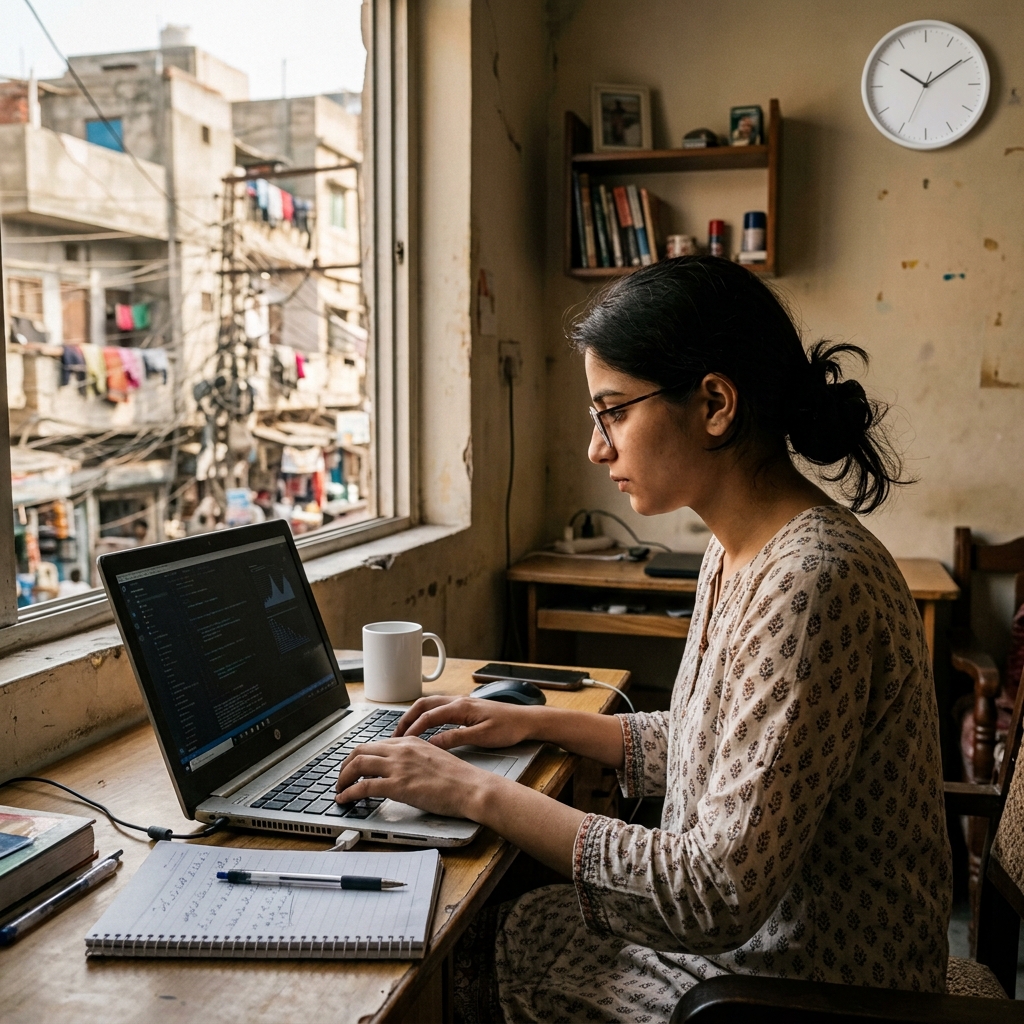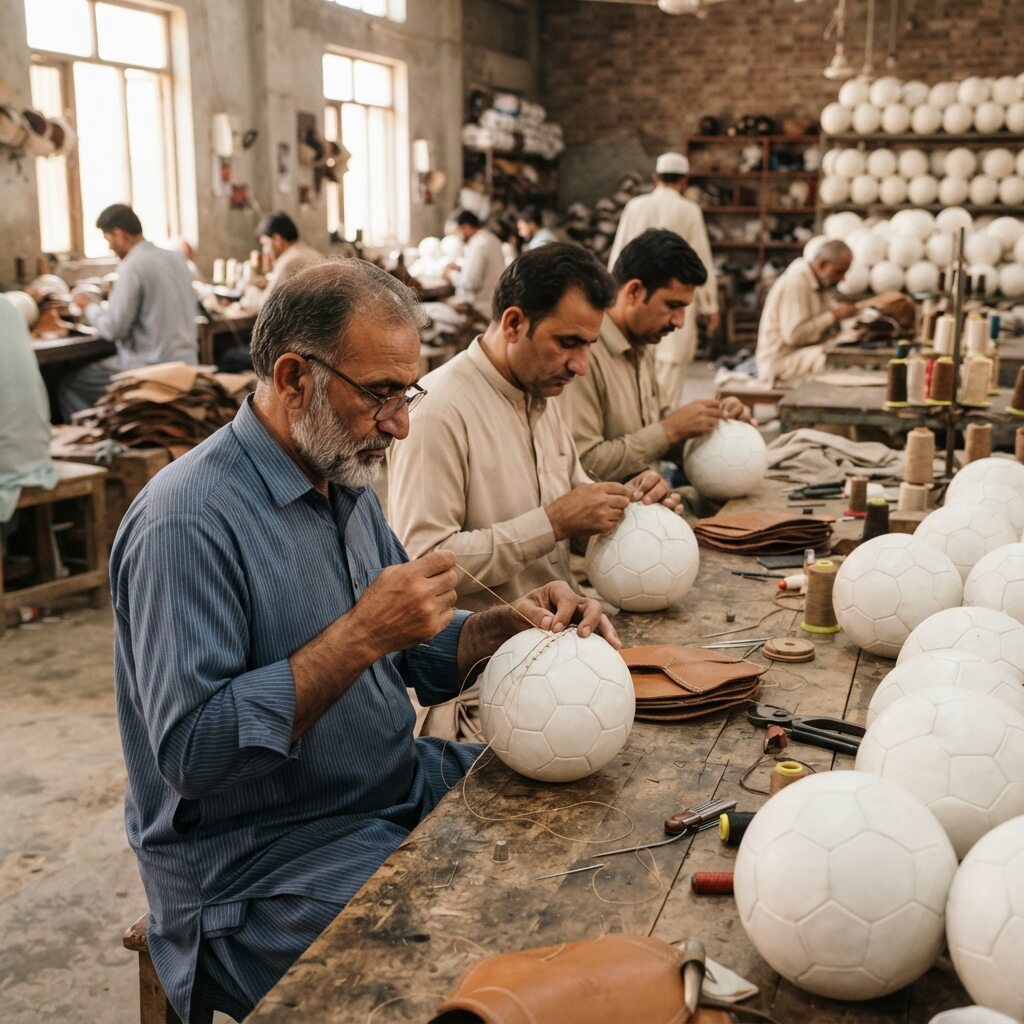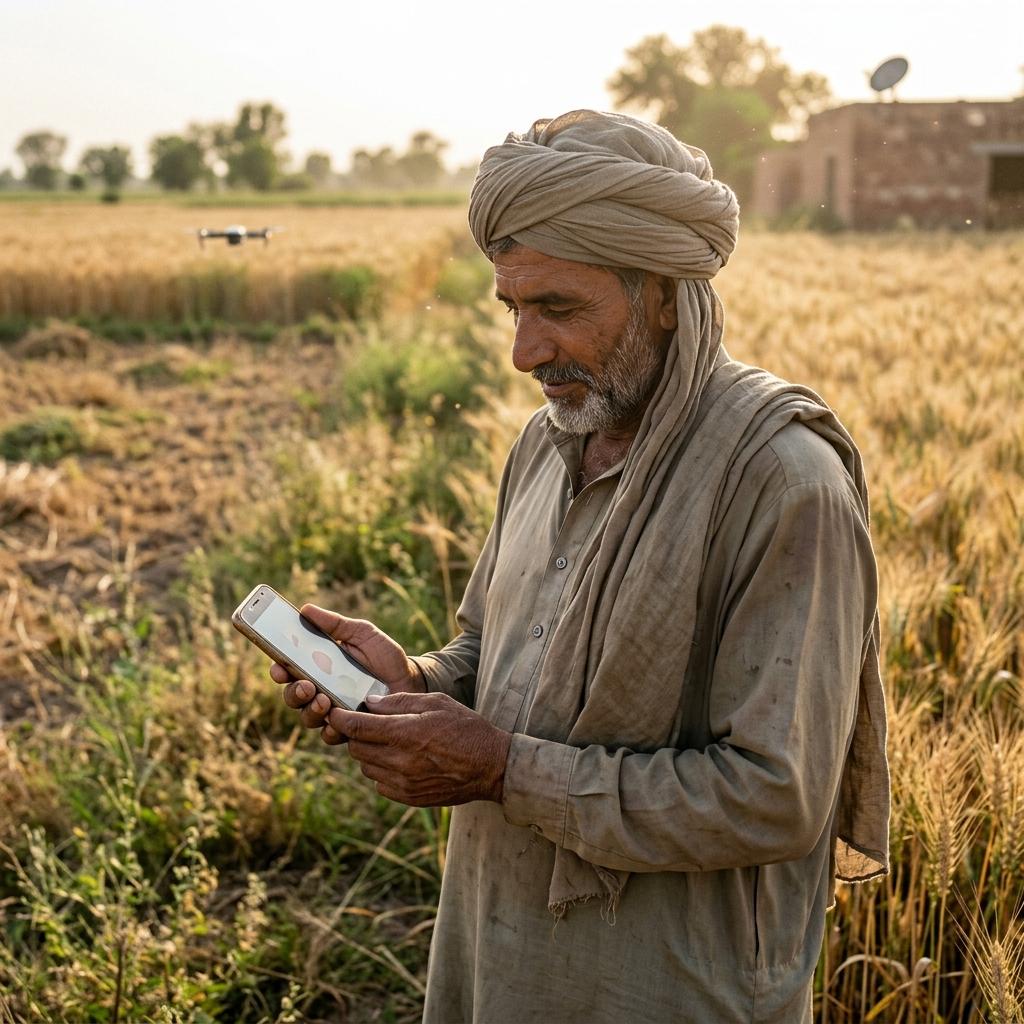
Pakistan's flashy AI ambitions keep underdelivering due to barriers like talent shortages, poor connectivity, siloed data, and scarce local-language data. Experts (including the World Bank) argue the real opportunity is "small," applied AI, purpose-built, low-cost tools solving real problems in agriculture, health, and finance, including Urdu-language models, that run on basic phones. The government is now funding exactly this.
When we talk about AI in Pakistan, the conversation often reaches for the flashy stuff: competing in the global AI race, building massive models, grand national ambitions. And yet, despite all the excitement, AI keeps underdelivering on the ground, so much so that the government itself recently had to explain why AI isn't working as hoped in Pakistan.
Here's the thing: the problem isn't that Pakistan needs more flashy AI. It's that the AI likely to genuinely transform Pakistan is the opposite of flashy, it's "boring," practical, applied AI solving real, local problems. Think crop-prediction tools for farmers, Urdu-language models, medical-imaging diagnostics, and credit scoring for the unbanked. This is a crucial reframe, and encouragingly, both experts (like the World Bank) and now the government are increasingly recognizing it. Here's why flashy AI struggles in Pakistan, why "boring" applied AI is the real opportunity, and what's finally being done about it.
Let's start with the honest diagnosis, because the government recently laid it out clearly. Despite genuine interest and talent, Pakistan has struggled to turn AI ambition into practical results, and the barriers are real and structural.
The key obstacles (per the government's own explanation and expert analysis): A shortage of skilled AI professionals, Pakistan produces talent, but many of its best AI specialists go abroad (brain drain), leaving local organizations short of experienced experts. Poor and unreliable connectivity, AI development needs constant, reliable internet (to access code libraries, cloud platforms, and tools); Pakistan's internet disruptions and throttling undermine this. Siloed and paper-based data, many organizations still keep records on paper or in disconnected systems, so there's no clean, usable data for AI to learn from (and AI is useless without good data). Scarce local-language data, there's very little Urdu (and other regional-language) training data, limiting AI tools that could serve most Pakistanis in their own languages. Infrastructure and energy constraints, unreliable electricity and limited computing infrastructure make running AI systems hard. And weak private-sector innovation and adoption, moving from old systems to AI requires investment, training, and changed workflows that many organizations haven't made. So the honest reality is that Pakistan's AI struggles aren't about a lack of interest or raw talent, they're about these structural gaps. Recognizing them clearly is the first step to addressing them, and to understanding why a different kind of AI makes more sense.
Here's the crucial insight that changes everything, and it's increasingly backed by serious analysis. Given Pakistan's constraints, the smartest path isn't to chase big, flashy, resource-hungry AI, but to focus on "small," practical, applied AI that solves specific real problems.
The World Bank recently made exactly this point: for emerging economies like Pakistan, the pragmatic path is "small AI", affordable, purpose-built applications designed to run on basic mobile devices with low bandwidth and intermittent power, serving concrete needs in agriculture, health, and education, without requiring expensive computing infrastructure. This reframe is powerful. Instead of trying to compete with Silicon Valley or China on massive, compute-hungry models (a race Pakistan realistically can't win soon, given its constraints), Pakistan can focus on applied AI that: solves real, high-impact local problems; works within Pakistan's actual constraints (basic phones, patchy connectivity, limited power); and delivers genuine value to ordinary people and the economy. "Boring" applied AI, less glamorous than building the next ChatGPT, but far more achievable and impactful for Pakistan. It plays to Pakistan's realities rather than against them. This is the mindset shift that could actually make AI work for the country: not flashier, but more practical and problem-focused.
Let's get concrete, because this is where it gets genuinely exciting (even if "boring"). Here are the real, high-impact areas where applied AI could transform Pakistan, solving problems that matter enormously.
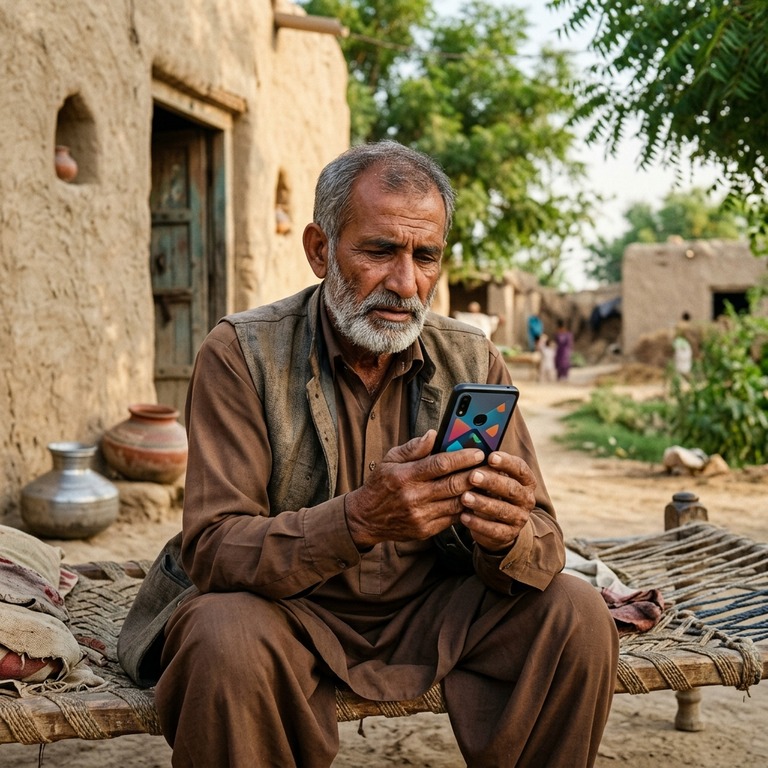
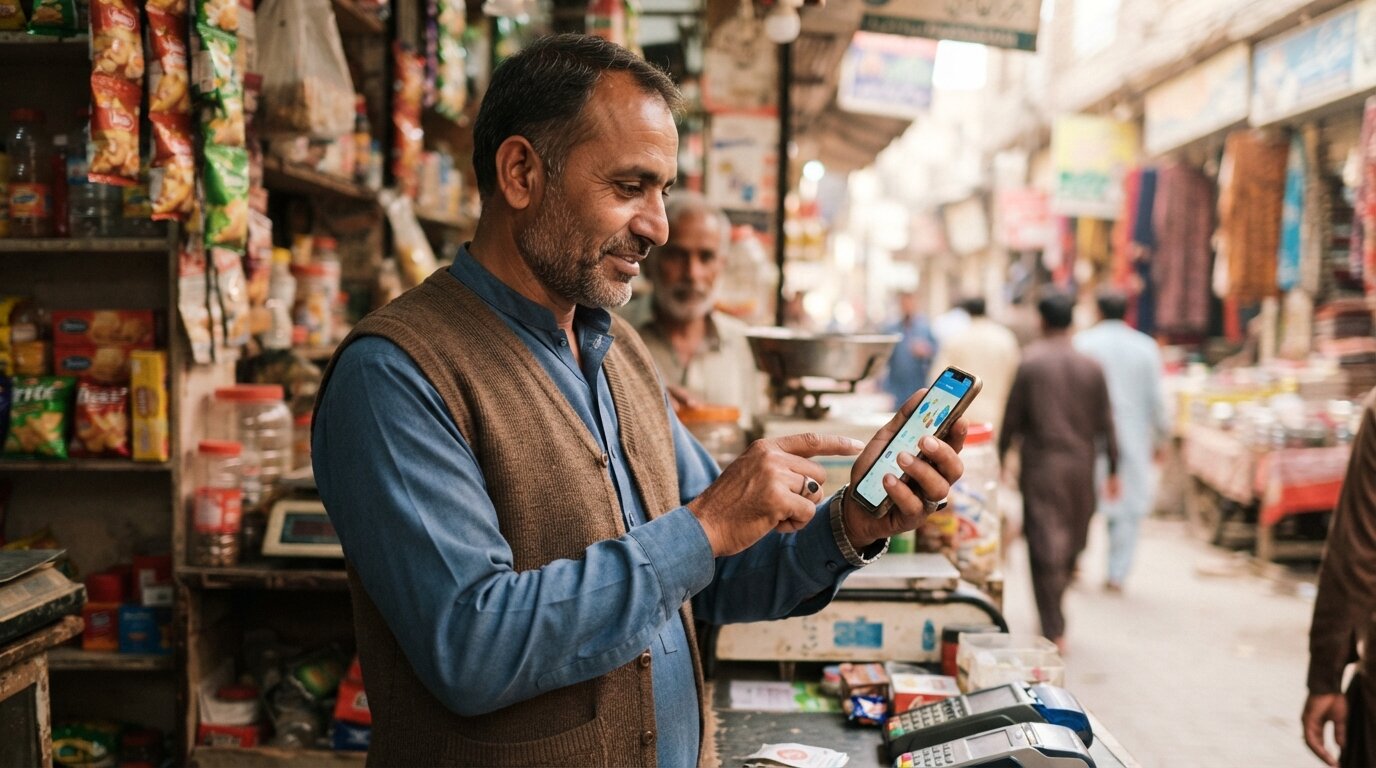
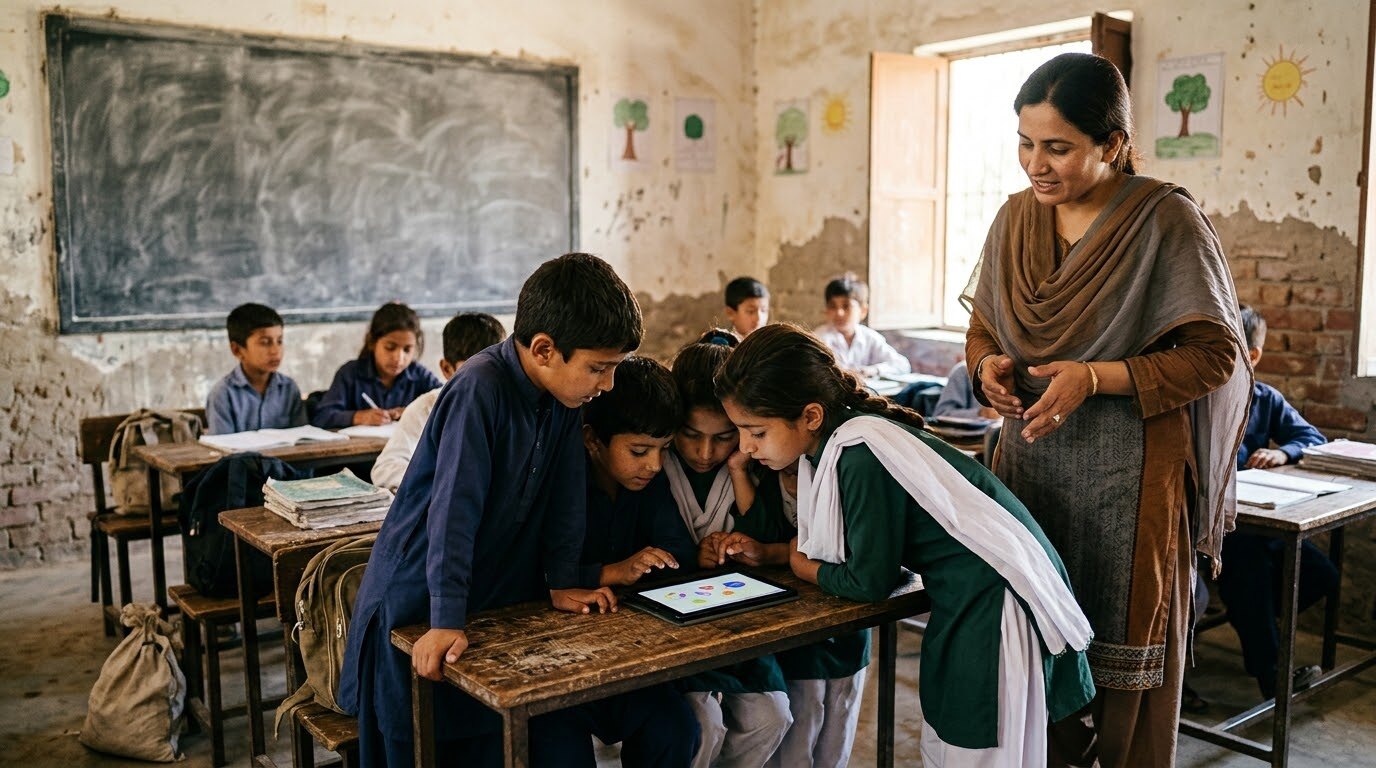
Consider these. Agriculture, this may be AI's biggest opportunity in Pakistan. Agriculture employs around 37% of the workforce but suffers yield inefficiencies costing the economy an estimated $8-12 billion a year. AI using satellite data, computer vision, IoT soil sensors, and predictive weather models can help farmers predict and prevent crop failures, optimize irrigation and inputs, detect pests early, and boost yields, genuinely life-changing for millions of farmers and hugely valuable economically. Urdu and regional-language AI, building AI models that work in Urdu, Punjabi, Sindhi, Pashto, and other local languages would make AI accessible to the majority of Pakistanis (not just English speakers), unlocking services in education, information, government, and more for the masses. Healthcare, AI for medical imaging and diagnostics could extend quality healthcare to underserved areas, helping detect diseases earlier where doctors are scarce. Financial inclusion, AI credit scoring using alternative data (like transaction history) could give the unbanked, a street vendor, a small shopkeeper, access to credit based on real data rather than a blank bank file (as we've explored). Education, AI tutors and tools (in local languages, on basic devices) could help address Pakistan's learning gaps. And government services, AI could improve public-service delivery and efficiency. Notice the pattern: these aren't flashy, but each solves a real, large-scale Pakistani problem, and most can work on modest infrastructure. That's the "boring" AI revolution worth pursuing.
Encouragingly, this isn't just a nice idea, the government is now putting real money behind exactly this applied-AI approach. This is a genuinely positive development worth highlighting.
Pakistan's Ignite National Technology Fund (under the Ministry of IT) has launched a PKR 5 billion Deep Tech Commercialisation Program, described as the largest government-backed deep-tech investment in Pakistan's history. Crucially, its focus is exactly the applied, high-impact AI that fits Pakistan: it targets 200 AI startup formations by 2028, with priority on precision agriculture AI, medical-imaging diagnostics, and Urdu/regional-language NLP models, precisely the "boring but transformative" areas. The program aims to turn research from Pakistan's engineering universities into real, venture-backed companies, across AI, agritech, healthtech, and more, in structured funding tiers (from research grants to seed funding to scale-up support). Separately, AI agritech startups have already been attracting significant funding (two reportedly securing $30 million for agriculture AI). So there's genuine momentum: the government is funding applied AI in exactly the right areas, and private capital is flowing toward practical AI solutions too. This alignment, recognizing that Pakistan's AI future lies in solving its own problems, and funding it, is exactly what's needed. It's a smart, encouraging shift from chasing hype to building practical value.
Let's underscore why this applied-AI path is genuinely the right strategy for Pakistan, because the logic is compelling. It aligns AI with Pakistan's realities and needs in a way flashy AI doesn't.
Several reasons it's smart. It works within constraints, applied, "small" AI doesn't require the massive compute, connectivity, and resources Pakistan lacks; it can run on basic infrastructure. It solves real problems, instead of chasing prestige, it delivers concrete value in agriculture, health, finance, and language, Pakistan's actual priorities. It's achievable, Pakistan can realistically build and deploy these solutions now, rather than waiting to "win" an unwinnable flashy AI race. It plays to strengths, Pakistan has the talent to build applied AI solutions, and deep local knowledge of the problems. It's inclusive, local-language and low-cost AI reaches ordinary Pakistanis, not just elites. And it builds real capability, developing applied AI builds genuine skills, companies, and IP (moving up the value chain) more surely than chasing hype. In short, applied AI is the path where Pakistan's AI ambitions and its realities actually meet, delivering genuine impact rather than disappointing hype. It's not settling for less; it's choosing the smarter, higher-impact path. That's why experts, and increasingly the government, are converging on it.
Balance matters, so a few honest notes, because even applied AI faces real challenges in Pakistan. The structural barriers (talent, connectivity, data, energy) still apply and must be addressed, applied AI is more achievable, but not effortless. In particular, the data problem is real: even "boring" AI needs good data (clean agricultural data, Urdu text, medical images), so building local datasets is essential groundwork. Talent retention matters too, Pakistan must keep enough skilled people to build these solutions. Execution and adoption are challenges, funding programs and startups must actually deliver working, adopted solutions, not just announcements. And it's not either/or, Pakistan can pursue applied AI as the priority while still building broader AI capability over time. So while applied AI is the smart, achievable path, it still requires addressing the fundamentals (data, talent, connectivity, execution) to succeed. The point isn't that applied AI is easy, but that it's far more achievable and impactful for Pakistan than chasing flashy AI, if the groundwork is done. Realistic optimism, grounded in effort.
This reframe and approach carry real stakes.
For economic impact, applied AI in agriculture, health, and finance could deliver enormous, concrete value (e.g., tackling billions in agricultural losses), far more than prestige AI projects.
For inclusion, local-language and low-cost applied AI can reach ordinary Pakistanis (farmers, patients, the unbanked), spreading AI's benefits widely rather than to a narrow elite.
For building real capability, focusing on achievable applied AI builds genuine skills, companies, and IP, developing Pakistan's AI industry on solid, practical foundations.
For AI strategy, recognizing that Pakistan's AI future lies in practical problem-solving (not flashy races) leads to smarter policy, funding, and effort, exactly the shift now beginning.
The essential wisdom is that Pakistan's AI success will come not from chasing flashy, prestige AI to compete globally, but from deploying practical, "small," applied AI to solve its own real problems, and the encouraging news is that both experts and the government are increasingly embracing this smarter path. The reframe is liberating: Pakistan doesn't need to "win" the global AI race (an unrealistic goal given its constraints) to benefit enormously from AI. It needs to apply AI, achievably and affordably, to agriculture, health, finance, language, and education, where the impact on ordinary Pakistanis and the economy would be transformative. "Boring" AI that helps a farmer save a crop, lets a villager use services in Urdu, helps diagnose a disease, or gives a street vendor access to credit, is worth far more to Pakistan than any prestige model.
The constructive path is clear and already beginning: prioritize and fund applied AI in high-impact local areas (as the Ignite program now does); build the essential groundwork (local-language datasets, clean data, talent retention, connectivity); support startups solving real Pakistani problems; and measure success by real impact, not hype. For Pakistan's technologists and founders, there's genuine opportunity here: building applied AI that solves local problems is both achievable and valuable (and increasingly funded). For the country, this practical approach is the one most likely to make AI genuinely deliver, improving lives and the economy, while building real AI capability over time. So the message is one of grounded optimism: stop measuring Pakistan's AI by flashy global standards, and start building, and celebrating, the practical, "boring" AI that actually transforms the country. Solve your own problems first, with AI that fits your reality, and the results will speak louder than any hype. That's the AI revolution Pakistan can actually win, and it's already starting.
Expect Pakistan's AI focus to shift increasingly toward applied, practical solutions, more agritech, healthtech, fintech, and local-language AI startups, backed by government funding (like the Ignite program) and growing private capital. Watch for progress on the groundwork (building Urdu and other datasets, retaining talent, improving connectivity) that applied AI needs, and for whether funded startups actually deliver adopted, impactful solutions.
If Pakistan stays on this practical path, addressing the fundamentals while building applied AI for real problems, it could see genuine, growing AI impact in agriculture, health, finance, and beyond over the coming years, improving lives and building real capability. The flashy global AI race will continue elsewhere, but Pakistan's smarter, winnable game is applied AI for its own needs. The encouraging shift toward this approach, by experts and government alike, bodes well. The "boring" AI revolution may be exactly what finally makes AI work for Pakistan.
Pakistan's AI ambitions have often reached for the flashy, grand national races and massive models, and consistently underdelivered, for honest, structural reasons: talent shortages, poor connectivity, siloed data, scarce local-language data, and infrastructure gaps. But the real opportunity, increasingly recognized by the World Bank, experts, and now the government, is the opposite of flashy: "small," practical, applied AI that solves Pakistan's own real problems. Crop-prediction tools that could help tackle billions in agricultural losses; Urdu and regional-language models that bring AI to the masses; medical-imaging diagnostics for underserved areas; credit scoring that includes the unbanked, these "boring" applications would be genuinely transformative, and they're achievable within Pakistan's actual constraints. Encouragingly, the government is now funding exactly this (a landmark PKR 5 billion deep-tech program targeting applied AI in agriculture, health, and Urdu NLP), and private capital is following. The reframe is both honest and hopeful: Pakistan doesn't need to win the flashy global AI race to benefit enormously; it needs to apply AI, practically and affordably, to its own problems, and that is within reach. So the smart path forward is clear: build the groundwork (data, talent, connectivity), fund and build applied AI for real local needs, and measure success by genuine impact, not hype. Forget the flashy AI. The kind that will actually transform Pakistan is "boring", and it's exactly the kind Pakistan can, and should, build. That's the AI revolution worth pursuing, and it's already beginning.
This article is an opinion and analysis piece for general informational purposes, based on reports and data available in 2026 (including government statements, a World Bank AI-readiness assessment, and the Ignite Deep Tech Commercialisation Program), which vary by source. Figures (funding amounts, economic estimates, targets) are as reported and may change. This is not investment, policy, or professional advice.
Pakistan's flashy AI ambitions keep underdelivering, and in October 2026 the government itself explained why. The barriers (per the Ministry of IT and expert/World Bank analysis): a shortage of skilled AI professionals (partly brain drain); poor, unreliable connectivity (which AI development needs for code libraries and cloud tools); siloed and paper-based data (AI needs clean, usable data); scarce local-language (Urdu and regional) training data; infrastructure/energy constraints; and weak private-sector AI adoption. The issue isn't lack of interest or talent, but structural gaps.
The reframe (increasingly backed by the World Bank and experts): instead of chasing big, flashy, resource-hungry AI, Pakistan should focus on "small," applied AI, affordable, purpose-built applications that run on basic mobile devices with low bandwidth and intermittent power, solving concrete local problems without expensive compute. This plays to Pakistan's realities rather than against them.
Where "boring" applied AI could transform Pakistan: Agriculture (the biggest opportunity, employs ~37% of the workforce, yield inefficiencies cost $8-12 billion/year; AI via satellite data, computer vision, IoT soil sensors, and weather prediction can prevent crop failures and boost yields); Urdu/regional-language AI (making AI accessible to the majority, not just English speakers); healthcare (medical-imaging diagnostics for underserved areas); financial inclusion (AI credit scoring via alternative data for the unbanked); education (AI tutors in local languages on basic devices); and government services.