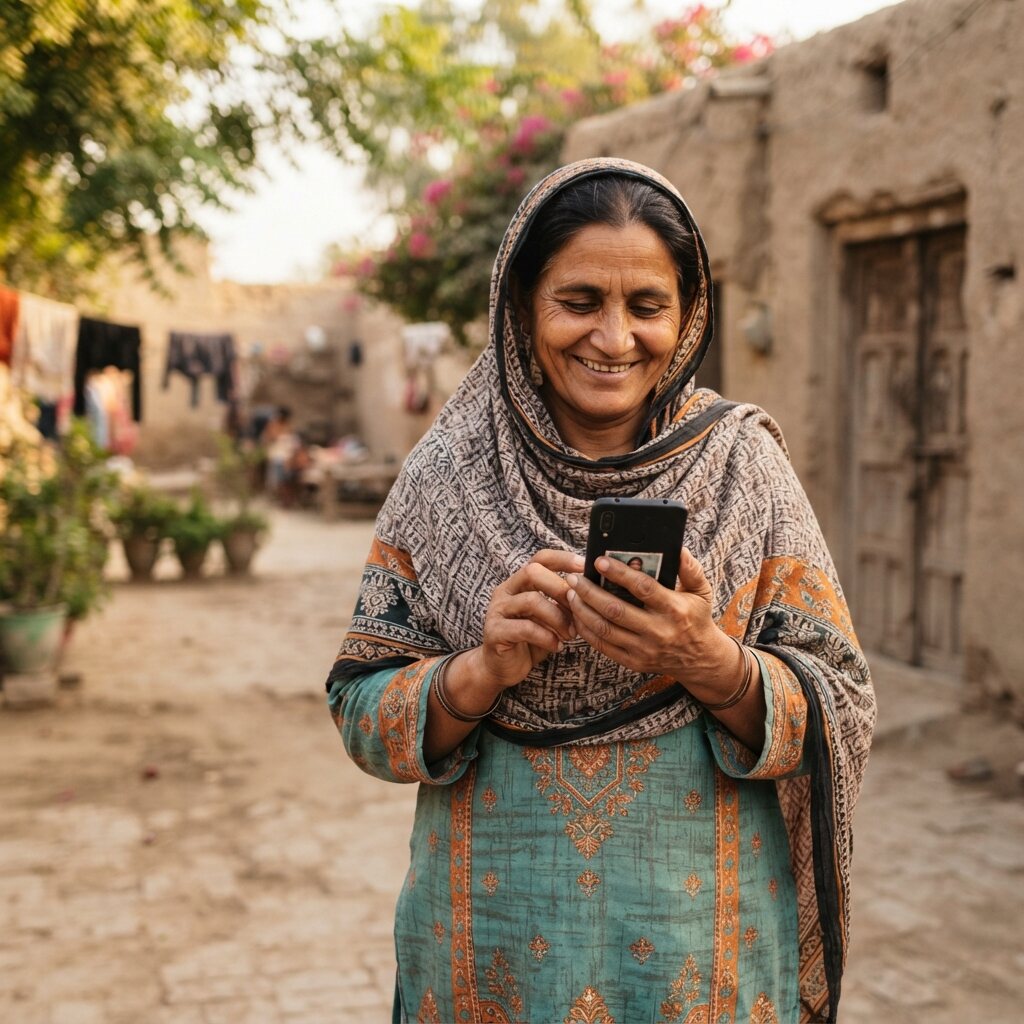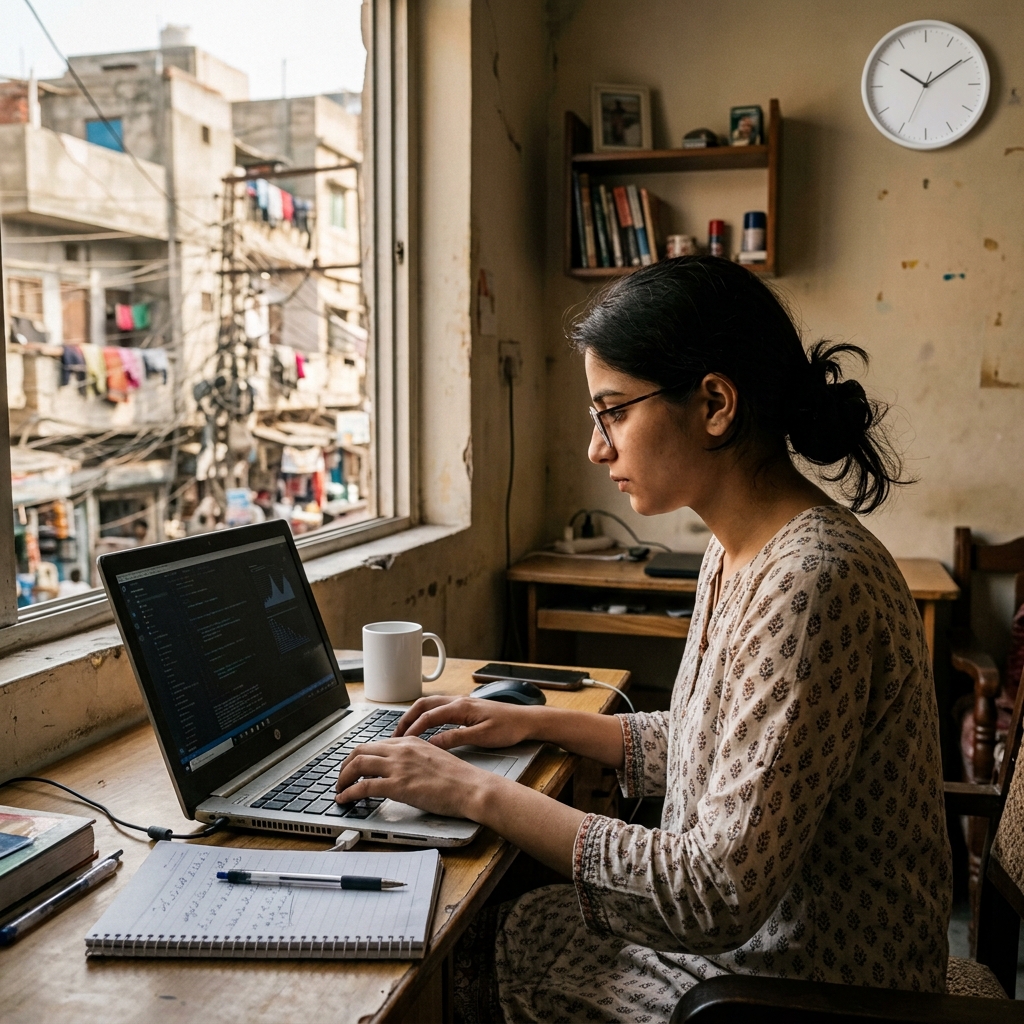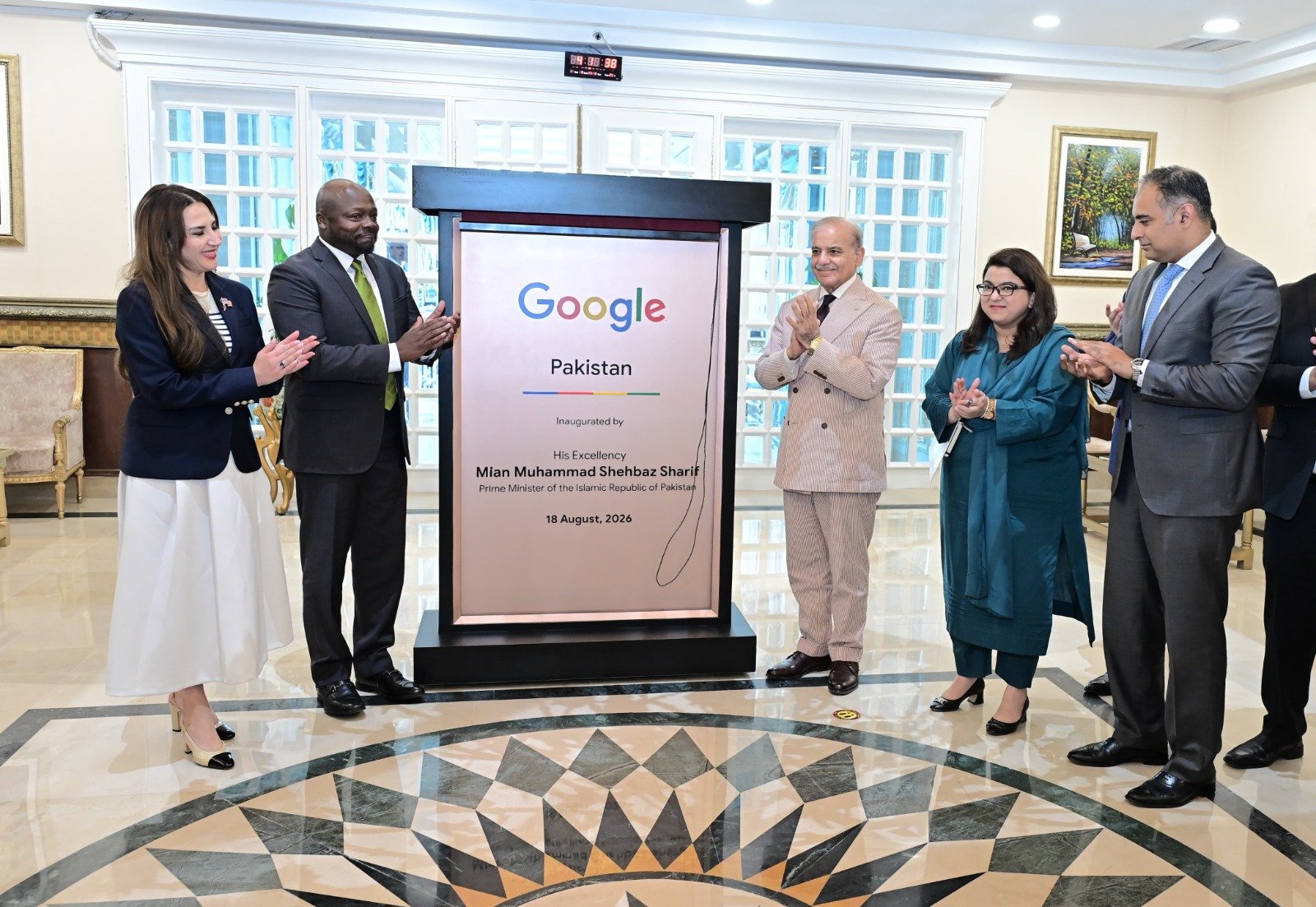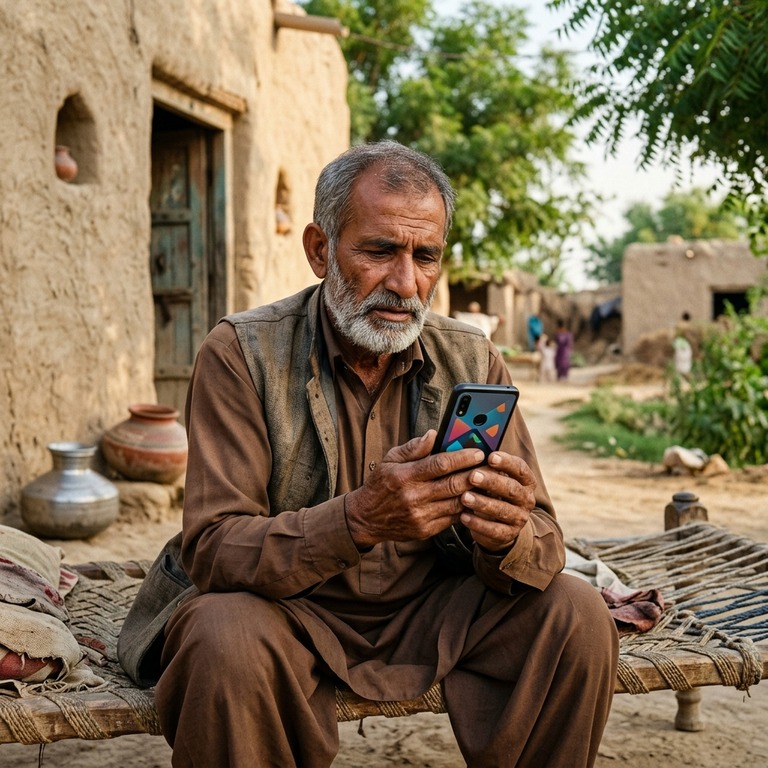
Around 140 million Pakistanis live in areas covered by mobile broadband but don't use mobile internet, one of the world's largest "usage gaps" (per GSMA 2026). This shows Pakistan's digital divide is no longer mainly about network coverage, but about affordability, digital literacy, relevant content, and devices. Closing it requires tackling these barriers, not just building more towers.
Here's a statistic that should reshape how Pakistan thinks about its digital future. According to the GSMA's State of Mobile Internet Connectivity 2026 report, around 140 million Pakistanis live in areas that have mobile broadband coverage, but they don't use mobile internet. Let that sink in: the network reaches them, but they're not online. This places Pakistan among the countries with the world's largest "usage gaps," alongside Nigeria (India tops the list at around 710 million).
This finding fundamentally reframes Pakistan's digital challenge. For years, the assumption was that connecting Pakistan meant building more network coverage. But this data reveals something different and more important: the bigger problem isn't coverage anymore, it's use. And that distinction changes everything about how Pakistan should approach digital inclusion. Here's what this "usage gap" really means, why it exists, and what genuinely closing it requires.
To understand the problem, you need to grasp a crucial distinction, one that changes the entire conversation. There are two different kinds of digital divide, and they require completely different solutions.
The first is the coverage gap: people who live in areas with no mobile broadband network at all, they can't get online even if they wanted to, because the infrastructure isn't there. The solution to this is building more towers and network infrastructure. The second, and for Pakistan far larger, is the usage gap: people who live in areas that do have network coverage, but who still don't use mobile internet. They could get online, but they don't. This is the 140 million figure. The critical insight is that these two gaps have entirely different causes and solutions. Pakistan has historically focused on the coverage gap (building networks), but the data now shows its dominant challenge is the usage gap, which building more towers won't fix. As the GSMA report itself notes, Pakistan's digital challenge is no longer limited to expanding coverage; it's about making internet access affordable, useful, and accessible. Recognizing this shift, from "can they connect?" to "why won't they connect?", is the key to actually solving Pakistan's digital divide.
This is the essential question, and the answers reveal the real barriers, which are human and economic, not just technical. If the network is there, why don't these 140 million Pakistanis use it? Several interconnected reasons.
The main barriers are well-understood globally. Affordability: for many Pakistanis, the cost of mobile data, and especially of a smartphone, remains prohibitive relative to their income, the single biggest barrier for many. Digital literacy and skills: many people don't know how to use the internet, smartphones, or digital services, or lack the confidence to; without the skills, coverage is useless. Relevance and awareness: some don't see why the internet is useful or relevant to their lives, or aren't aware of what it offers, especially if content isn't in their language or suited to their needs. Device access: you need a (working, affordable) smartphone to use mobile internet, and many still lack one. Language and content barriers: much online content is in English or not tailored to local needs, limiting relevance for many Pakistanis. And social and cultural factors: including significant gender gaps in access and use. So the usage gap isn't a technology problem, it's a human and economic one: affordability, skills, relevance, devices, and inclusion. That's why it can't be solved by infrastructure alone. Understanding these real barriers is the first step to addressing them.
This isn't just an academic distinction, it has major practical implications for Pakistan's entire digital strategy. Getting the diagnosis right is essential to prescribing the right solution.
Consider the stakes. If Pakistan believes its digital challenge is mainly about coverage, it will keep pouring resources into building networks, while 140 million people who already have coverage remain offline. That's solving the wrong problem. The reframe says: to actually connect these people, Pakistan must focus on the demand side, making internet affordable, teaching digital skills, creating relevant local content, and ensuring device access, not just the supply side (networks). This matters enormously because Pakistan's entire digital-economy ambition, its freelancers, digital services, e-governance, financial inclusion, and AI plans, depends on getting people actually online and using digital tools. Every one of those 140 million people offline is untapped potential: a possible digital worker, consumer, learner, or participant. Closing the usage gap could unlock enormous economic and social value. So this reframe isn't pessimistic, it's clarifying: it points Pakistan toward what will actually work. And it means digital inclusion is as much about education, affordability, and relevance as about technology.
This finding lands amid genuine, current concern about Pakistan's connectivity, which makes it especially timely. It's not an isolated statistic, it's part of a live national conversation.
The context is telling. In September 2026, Pakistan's National Assembly Standing Committee on IT expressed serious concern over poor mobile and internet services nationwide, with the chairman noting users often had to try calling three times before connecting, and summoned telecom companies to explain. The PTA chairman told a Senate committee that internet quality was expected to improve by October, following complaints of poor signals and disruptions in Lahore and elsewhere. So alongside the usage gap (people with coverage not using it), there are also real quality-of-service issues (unreliable networks even for those who do use them). Both matter: Pakistan needs its networks to work well AND needs to bring the offline majority online. Encouragingly, there's at least one bright spot in the data, Pakistan reportedly recorded one of the steepest drops in its mobile-ownership and mobile-internet gender gaps this year, suggesting progress on one important dimension of inclusion. But the overall picture is clear: Pakistan has serious, current work to do on both the quality and the usage of its internet.
Constructive analysis requires solutions, so here's what genuinely addressing Pakistan's usage gap would involve. None is a quick fix, but together they'd move the needle where it matters.
The levers are on the demand side. Affordability: making data and, crucially, smartphones more affordable, through cheaper local device manufacturing (which Pakistan is pursuing), financing schemes, targeted subsidies, and competitive data pricing. Digital literacy at scale: teaching people, especially in underserved and rural areas, how to use the internet and digital services usefully and safely (building on programs already underway). Relevant, local-language content and services: creating digital content, services, and applications genuinely useful to ordinary Pakistanis, in Urdu and local languages, so the internet is worth using. Device access initiatives: programs to get affordable smartphones into more hands (notably, initiatives like providing SIMs and digital wallets to women, as with BISP, show this can be done at scale). Closing the gender gap: continuing and accelerating efforts to bring women online, a huge portion of the usage gap. And improving service quality: so that when people do come online, the experience is reliable enough to keep them there. This is a multi-front effort spanning affordability, education, content, and inclusion, harder than building towers, but far more impactful for actually connecting Pakistan.
Closing the usage gap is genuinely important across Pakistan's priorities.
For the digital economy, bringing 140 million offline people online represents an enormous expansion of potential digital workers, consumers, and participants, unlocking huge economic potential.
For financial and social inclusion, digital access is increasingly the gateway to financial services, education, government services, and opportunity, closing the gap advances inclusion broadly.
For Pakistan's ambitions, every national digital goal (freelancing, e-governance, AI, fintech) depends on people actually being online and digitally capable, making the usage gap a foundational issue.
For equity, the usage gap falls hardest on the poor, rural populations, and women, so closing it is also about fairness and giving all Pakistanis access to digital opportunity.
The most valuable takeaway is a lesson in solving the right problem: Pakistan's digital divide has evolved, and so must its response. For years, the mental model was "connect Pakistan by building networks." But the data now shows that for 140 million Pakistanis, the network is already there, they're offline for other reasons. Continuing to focus mainly on coverage while ignoring the usage gap would be solving yesterday's problem. The clear-eyed response is to shift focus, substantially, toward the demand side: affordability, digital literacy, relevant content, device access, and inclusion.
The strategic wisdom is that connecting people is as much a human and economic challenge as a technical one, and Pakistan's future digital efforts should reflect that balance. This doesn't mean neglecting network quality (the current service complaints show that matters too), but it means recognizing that building more towers alone won't connect the offline majority. For policymakers, it argues for prioritizing affordability (especially of devices), massive digital-literacy efforts, local-language content, and inclusion programs. For the tech ecosystem, it highlights a huge opportunity: 140 million potential new users whose barriers (affordability, relevance, skills) are addressable, whoever solves them well unlocks an enormous market and does immense social good. And for Pakistan's digital ambitions overall, it's a reminder that the foundation isn't just networks, it's people who can afford, use, and benefit from being online. Solve that, and Pakistan's digital potential becomes real. Ignore it, and the grand digital plans will keep outrunning the reality on the ground. The path forward starts with correctly naming the problem: it's a usage gap, and closing it is now the real work.
Watch whether Pakistan's digital strategy genuinely shifts toward demand-side solutions, affordability, literacy, content, and inclusion, alongside its network and service-quality efforts. Progress on device affordability (via local manufacturing), digital-literacy programs, women's inclusion, and service quality will be the key indicators of whether the usage gap starts closing. The promised internet-quality improvements (by October, per the PTA) and ongoing policy attention are worth tracking.
If Pakistan successfully reframes and tackles the usage gap, it could bring tens of millions online over the coming years, a transformative expansion of its digital economy and inclusion. If it continues focusing mainly on coverage while neglecting the human barriers, the gap will persist, and Pakistan's digital ambitions will keep bumping against the reality that most potential users remain offline. The trajectory depends on getting the diagnosis, and the response, right. The encouraging news is that the barriers are known and addressable; the task is prioritizing them.
The finding that 140 million Pakistanis have mobile internet coverage but don't use it is one of the most important, and clarifying, facts about the country's digital future. It reveals that Pakistan's digital divide is no longer mainly about coverage, it's about use, driven by affordability, digital literacy, relevance, device access, and inclusion. This reframe matters enormously: it means connecting Pakistan requires not just more towers, but making the internet affordable, useful, and accessible to ordinary people, especially the poor, rural populations, and women who make up much of the offline majority. Every one of those 140 million represents untapped potential and a person deserving of digital opportunity. Closing this usage gap, through affordability, education, local content, and inclusion, is now the real work of connecting Pakistan, and it's foundational to every one of the country's digital ambitions. Pakistan built the networks; now it must bring its people onto them. Getting that right could unlock enormous economic and human potential. The first step is simply recognizing the real problem, and this data makes it impossible to ignore.
This article is for general informational purposes only and reflects data and reports available in 2026 (including the GSMA State of Mobile Internet Connectivity 2026 report); figures are as reported by cited sources and may vary by methodology. This is not policy or financial advice.
According to the GSMA State of Mobile Internet Connectivity 2026 report, around 140 million Pakistanis live in areas with mobile broadband coverage but don't use mobile internet, one of the world's largest "usage gaps" (Pakistan is alongside Nigeria; India leads at ~710 million). This reframes Pakistan's digital challenge: it's no longer mainly about network coverage, but about actual use.
Two different divides: the coverage gap (people with no network available, fixed by building infrastructure) versus the usage gap (people who have coverage but don't use mobile internet, fixed by addressing affordability, skills, relevance, and devices). Pakistan's dominant challenge is now the usage gap, which more towers won't solve. As GSMA notes, the challenge is making internet access affordable, useful, and accessible.
Why 140 million don't use available internet, the barriers are human/economic, not technical: affordability (data and especially smartphones cost too much relative to income, the biggest barrier for many); digital literacy/skills (many don't know how to use the internet or lack confidence); relevance/awareness (not seeing it as useful, or content not in their language); device access (lacking an affordable smartphone); language/content barriers; and social/cultural factors including gender gaps.
Why the reframe matters: focusing mainly on coverage while 140 million with coverage stay offline is solving the wrong problem. Connecting them requires demand-side focus, affordability, digital skills, relevant local content, device access, inclusion, not just networks. Pakistan's digital-economy ambitions (freelancing, e-governance, AI, fintech, financial inclusion) all depend on getting people actually online.
Current context: in September 2026, Pakistan's National Assembly IT committee expressed serious concern over poor mobile/internet services and summoned telecom firms; the PTA chairman said quality should improve by October. Also, Pakistan reportedl