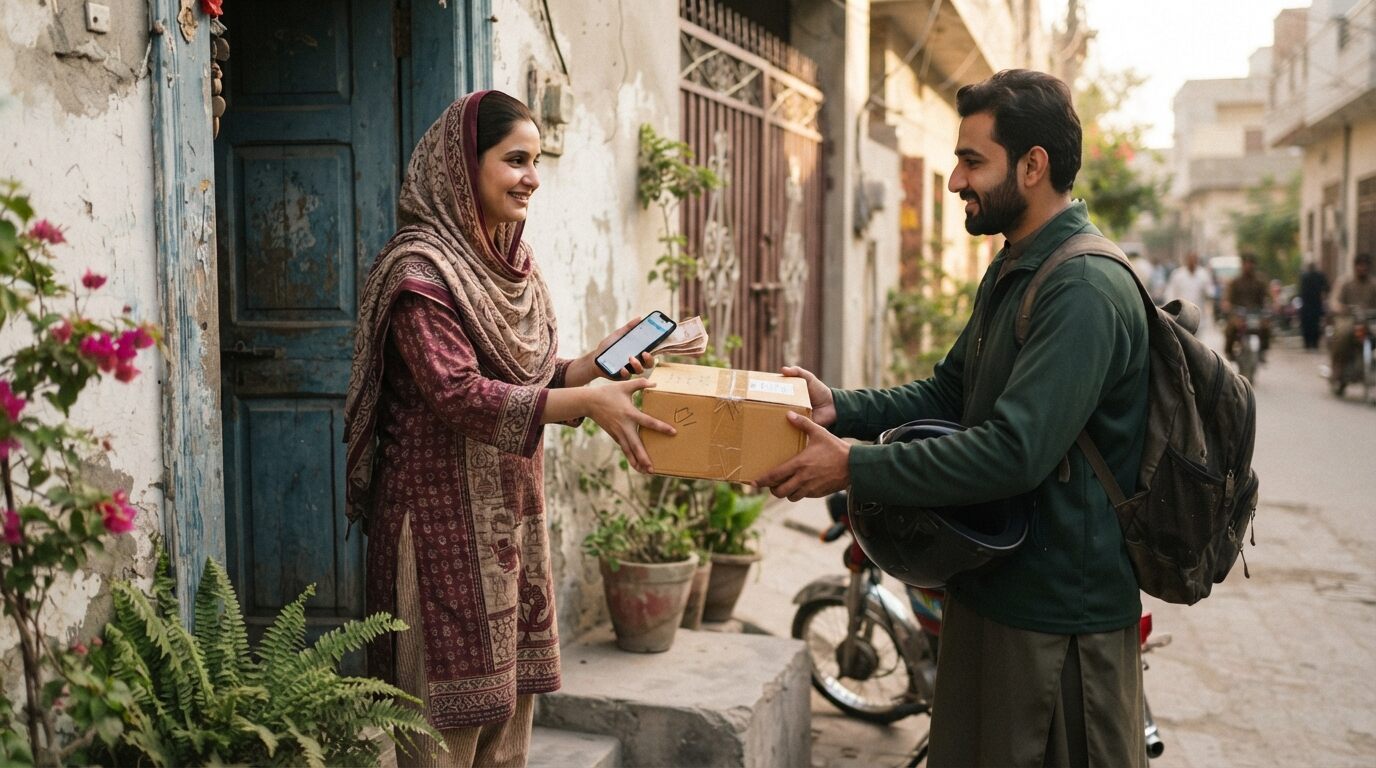
Pakistan's e-commerce "payment paradox": official data shows ~93% of online transactions are wallet/account-based, yet Cash on Delivery (COD) still dominates actual online shopping, driven by buyer trust issues and habit. COD carries real costs for sellers, including high return rates (25-35%) and cash-flow delays. Shifting buyers to prepaid through incentives and trust-building benefits sellers significantly.
Here's a genuine contradiction at the heart of Pakistani e-commerce. On one hand, the data looks like a cashless revolution: the State Bank of Pakistan reports that around 93% of online transactions are now wallet or account-based, with cards and cash making up tiny slivers. Sounds like Pakistan has gone almost fully digital. On the other hand, ask any online seller, and they'll tell you the opposite: Cash on Delivery (COD) still rules, most customers still want to pay cash when the parcel arrives.
So which is it? Is Pakistan cashless or cash-dependent? The answer is a fascinating paradox, and understanding it matters enormously, especially for sellers, because COD carries hidden costs that quietly eat into profits. Here's what's really going on, why cash persists despite the digital boom, what it costs, and what sellers can actually do about it.
Let's start by unpacking the contradiction, because both sides are "true" in a way, and the reconciliation is revealing. On paper, Pakistan's digital-payment numbers look spectacular. SBP data indicates roughly 93% of online transactions in a recent year were wallet or account-based, versus only about 7% card-based. On that measure, Pakistan looks like a fintech success story, overwhelmingly digital.
But sellers' lived experience tells a different story: Cash on Delivery remains dominant in actual online retail, with many reporting that a large majority of their orders are still COD. How can both be true? The key is in what's being measured and how. The reconciliation is nuanced: some "digital" transactions in the data include things like wallet payments made at the door on delivery (JazzCash/EasyPaisa on delivery), which is technically a digital transaction but functionally closer to COD, the customer still pays only when the parcel arrives, not prepaid in advance. So the headline "93% digital" figure can overstate how much is genuine prepaid digital payment. The real picture: digital rails are being used more (good), but the prepaid behavior sellers want, customers paying upfront online, is still far from universal, because COD (whether cash or wallet-on-delivery) persists. Understanding this distinction, digital rails vs. prepaid behavior, is the key to the paradox.
To solve a problem, understand its roots. Why, despite the digital-payment boom, do so many Pakistanis still insist on paying only when the parcel arrives? Several deep reasons.
The main drivers: Trust (the biggest one). Many Pakistani buyers simply don't trust online sellers enough to pay before receiving and inspecting the product, they've heard of (or experienced) scams, wrong items, or poor quality, so COD feels safer: "I'll pay when I see it's real and correct." Habit and culture. Cash has long been the default; paying on delivery is familiar and comfortable, and changing ingrained habits takes time. Fear of non-delivery or fraud. Buyers worry that if they prepay, the item might never arrive or be defective with no recourse, COD removes that risk for them. Limited (or distrusted) prepaid options for some. While wallets are widespread, some buyers are still wary of entering payment details online or lack confidence in refunds. And control. COD gives buyers the power to refuse the parcel at the door if something seems wrong, a control they value. So COD persists mainly because it protects the buyer from the risks of online shopping in a low-trust environment. It's a rational response to genuine trust gaps, not mere backwardness. That's why solving it is fundamentally about building trust.
Here's what many sellers underestimate, and it's crucial: Cash on Delivery is surprisingly costly, even though it feels "free." While COD helps win hesitant buyers, it quietly imposes significant costs on sellers. Understanding these is key.
The real costs of COD: High return/refusal rates. This is the big one, COD orders have far higher return rates (Pakistani e-commerce return rates are often cited around 25-35%, concentrated heavily in COD), because buyers with no money committed can easily refuse the parcel at the door (changed their mind, found it cheaper, or just weren't serious). Prepaid orders, by contrast, have dramatically lower return rates. Every refused COD order means wasted shipping (both ways), handling, and lost time. Cash-flow delays. With COD, sellers wait to receive their money until after delivery and courier reconciliation (often days or weeks later), hurting cash flow, versus prepaid, where money is in hand upfront. Cash-handling risk and cost. Managing cash collection, reconciliation, and the risk of discrepancies or theft adds overhead. Courier fees and complications. COD often involves additional courier charges and reconciliation complexity. And wasted inventory and logistics. High refusal rates mean products shipped, returned, and tied up, inefficient and costly. Add it up, and COD can seriously erode a seller's margins and cash flow. It's far from the "free" option it appears to be. For sellers, reducing COD (and boosting prepaid) is one of the most impactful ways to improve profitability.
Beyond individual sellers, the COD paradox has broader significance for Pakistan's e-commerce, worth appreciating. High COD dependence holds back the whole sector in several ways: it keeps return rates high (inefficient and costly across the industry), slows the full benefits of digital payments (and the data/credit/financial-inclusion advantages prepaid enables), reflects and perpetuates the trust gap that limits e-commerce growth, and complicates logistics and cash flow sector-wide. Conversely, shifting toward prepaid digital payments would make Pakistani e-commerce more efficient, trustworthy, and scalable, lower returns, better cash flow, richer data, and stronger financial inclusion. So moving beyond COD isn't just a seller's concern; it's important for the maturation of Pakistan's entire digital-commerce ecosystem. The good news: the digital rails (wallets, Raast) now exist; the remaining challenge is largely about trust and behavior, which sellers and the ecosystem can actively work on.
Here's the practical, valuable part for sellers: concrete ways to encourage prepaid payment and reduce costly COD, because it's genuinely achievable. The core theme is building trust and making prepaid more attractive.
Effective tactics: Build trust aggressively. Since COD is fundamentally about trust, earn it, show genuine reviews and testimonials, offer clear return/refund policies, display real contact info, be transparent and professional, and deliver reliably. Trusted sellers get more prepaid orders. Incentivize prepaid. Offer discounts, free shipping, or small bonuses for paying online in advance, a modest incentive often shifts behavior, and still costs less than a COD return. Make prepaid easy and safe. Offer convenient, familiar, secure payment options (JazzCash, EasyPaisa, Raast, cards) with a smooth checkout, and reassure buyers about security and refunds. Offer a great experience and guarantees. Strong return/refund guarantees reduce the buyer's fear that makes them want COD, "pay online, and if anything's wrong, we'll refund/replace, guaranteed." Confirm COD orders (if you must offer it). For COD orders, confirm via call/WhatsApp before shipping to filter out non-serious buyers and reduce refusals. Build a reputation and repeat customers. Returning, satisfied customers trust you and increasingly prepay, so focus on retention. And gradually nudge, don't force. Shifting ingrained habits takes patience, keep offering COD where needed while steadily making prepaid more attractive. Over time, these tactics meaningfully increase prepaid share, cutting returns and improving cash flow. It's one of the highest-return areas a seller can work on.
The COD paradox and the shift toward prepaid carry real stakes.
For sellers, reducing COD and boosting prepaid directly improves profitability (lower returns, better cash flow), one of the most impactful operational improvements possible.
For e-commerce growth, shifting toward prepaid makes the sector more efficient, trustworthy, and scalable, supporting its continued expansion.
For financial inclusion, more genuine prepaid digital payment deepens Pakistan's digital-finance adoption and the benefits (data, credit access, formalization) it enables.
For the trust gap, the whole issue highlights that building buyer trust is central to Pakistani e-commerce's maturation, a challenge sellers and platforms must keep addressing.
The deepest insight from Pakistan's payment paradox is that the barrier to prepaid digital commerce isn't technology, it's trust. The digital payment rails (wallets, Raast, cards) now exist and work; the reason COD persists is that many buyers still don't trust online sellers enough to pay before receiving their order. This reframes the challenge productively: sellers who want the benefits of prepaid (lower returns, better cash flow, efficiency) should focus not on payment technology (which is ready) but on earning trust, through reliability, transparency, reviews, guarantees, and great service. Trust is the currency that converts COD buyers into prepaid ones.
The practical wisdom for sellers is twofold. First, recognize COD's true cost, it feels free but isn't, driving high returns, cash-flow delays, and inefficiency that quietly erode margins. Reducing it is one of the highest-impact things a seller can do for profitability. Second, win the shift through trust and incentives, build a trustworthy reputation, incentivize prepaid, offer strong guarantees, make paying easy and safe, and patiently nudge buyers over time. Don't try to force it (you'll lose sales); earn it. For Pakistan's e-commerce ecosystem broadly, the trajectory is encouraging: as trust builds, sellers mature, and digital habits deepen, prepaid will gradually gain ground, making the whole sector more efficient and scalable. But that shift happens one trusted transaction at a time. For individual sellers, the opportunity is clear and actionable now: invest in trust, incentivize prepaid, reduce costly COD, and watch your returns drop and cash flow improve. In Pakistan's e-commerce, trust isn't just nice to have, it's the key that unlocks better economics. Build it, and the payment paradox starts resolving in your favor.
Expect COD to gradually decline as a share of Pakistani e-commerce over the coming years, as buyer trust builds, digital-payment habits deepen (aided by Raast, wallets, and BNPL), sellers mature and incentivize prepaid, and the ecosystem works on the trust gap. It won't vanish overnight, ingrained habits and trust gaps take time, but the direction is toward more prepaid.
For sellers, those who get ahead of this shift now, building trust and boosting prepaid, will enjoy better economics sooner and be well-positioned as the market matures. For the ecosystem, the move beyond COD dependence will make Pakistani e-commerce more efficient, trustworthy, and scalable. The payment rails are ready; the remaining work is largely about trust and behavior, which will keep improving. Pakistan's e-commerce is maturing, and resolving the COD paradox is a key part of that journey.
Pakistan's e-commerce payment paradox, overwhelmingly "digital" payment data alongside stubbornly dominant Cash on Delivery, is resolved once you see the distinction between digital rails (increasingly used) and prepaid behavior (still far from universal). COD persists mainly because of a genuine trust gap: many buyers don't trust online sellers enough to pay before receiving their order, so cash (or wallet) on delivery feels safer. But COD is costly for sellers, driving high return rates (often 25-35%), cash-flow delays, and inefficiency that quietly erode profits. The good news is that the solution is within sellers' control, and it's fundamentally about trust: build a trustworthy reputation, incentivize prepaid, offer strong guarantees, make paying easy and safe, and patiently nudge buyers toward paying online. Sellers who do this cut their returns, improve cash flow, and boost profitability, one of the highest-return operational improvements available. And as trust builds across the ecosystem, Pakistan's e-commerce will keep shifting toward efficient, scalable prepaid commerce. The payment rails are ready; the real work is earning trust. Do that, and the paradox resolves in your favor, one prepaid order at a time.
This article is for general informational purposes only and reflects data and trends available in 2026, which change over time. Figures (including payment-share and return-rate estimates) are as reported by cited sources (including SBP and industry reports) and vary by methodology and seller. This is not business, financial, or payment-processing advice; verify current data and consider your specific situation.
Pakistan's e-commerce has a "payment paradox": official State Bank of Pakistan data shows roughly 93% of online transactions are wallet/account-based (only ~7% card-based), suggesting a cashless boom, yet Cash on Delivery (COD) still dominates actual online shopping, with sellers reporting most orders are COD.
The reconciliation: it's about what's measured versus behavior. Some "digital" transactions include wallet payments made at the door on delivery (JazzCash/EasyPaisa on delivery), technically digital but functionally COD, the customer still pays only when the parcel arrives, not prepaid. So the "93% digital" figure overstates genuine prepaid payment. Digital rails are increasingly used (good), but prepaid behavior (paying upfront online) is still far from universal.
Why COD persists: mainly a trust gap, many Pakistani buyers don't trust online sellers enough to pay before receiving and inspecting the product (fear of scams, wrong items, poor quality, non-delivery), so paying on delivery feels safer. Also: ingrained cash habits, fear of fraud/non-delivery, some wariness of entering payment details online, and the control to refuse a parcel at the door. It's a rational response to genuine trust gaps.
The hidden cost of COD for sellers: high return/refusal rates (Pakistani e-commerce return rates often ~25-35%, concentrated in COD, since buyers with no money committed easily refuse parcels; prepaid orders have ~40-50% lower return rates); cash-flow delays (waiting for courier reconciliation); cash-handling risk/overhead; extra courier fees; and wasted logistics. COD quietly erodes margins, it's far from "free."
How sellers can shift buyers to prepaid: build trust aggressively (reviews, clear return policies, transparency, reliable delivery); incentivize prepaid (discounts, free shipping); make prepaid easy and safe (JazzCash, EasyPaisa, Raast, smooth secure checkout); offer strong return/refund guarantees (reducing the fear that drives COD); confirm CO