Major freelance platforms are struggling in 2026: Upwork's stock is down about 56%, Fiverr's down over 40% with its first-ever revenue decline forecast, both are losing buyers and raising fees, as AI erodes low-value gigs. For platform-dependent Pakistani freelancers, this is a warning to diversify clients and build direct relationships beyond single marketplaces.
For millions of Pakistani freelancers, platforms like Fiverr and Upwork aren't just websites, they're their entire livelihood, the source of nearly all their clients and income. So here's a genuinely uncomfortable question worth confronting honestly: what happens to those freelancers if these platforms themselves are in serious trouble? Because in 2026, they are.
This isn't fear-mongering, it's what the financial data shows. The big freelance marketplaces are struggling: falling stock prices, shrinking customer bases, worrying forecasts, and rising fees. For a country with over two million freelancers heavily dependent on these platforms, this deserves an honest look, not to spread panic, but to understand the risk and, crucially, what to do about it. Here's what's happening, what it means for Pakistan, and why every Pakistani freelancer needs a Plan B.
Let's start with the facts, because they're genuinely striking. The major freelance platforms are showing real financial strain in 2026, and this isn't speculation, it's in their own reported numbers.
Consider Upwork: its stock is down roughly 56% in 2026, and about 87% from its 2021 peak. It lost nearly 47,000 active clients in a year, the largest contraction in its history as a public company, and has cut staff. Fiverr is similarly pressured: its stock has fallen over 40% in 2026, its market value (around $415-445 million) has dropped below its 2019 IPO price, its active buyers fell 13.6% (to 3.1 million), and, most tellingly, it forecast its first-ever annual revenue decline (a projected 14-17% drop for 2026). Fiverr's CEO even spoke of returning to "startup mode," and other platforms like Freelancer.com show similar strain. These are the platforms Pakistani freelancers rely on, and they're clearly under serious pressure. That's a fact worth taking seriously.
To understand the risk, understand the cause, and it's the same force reshaping so much of tech: generative AI. The core reason these platforms are struggling is that AI is eroding demand for exactly the kind of work they're built on.
Here's the mechanism. Businesses that used to hire freelancers for basic tasks, simple content writing, translation, entry-level graphic design, basic coding, are increasingly using AI tools to do that work instead. Since platforms like Fiverr and Upwork earn a cut of freelance transactions, less demand for these gigs directly means less revenue for them. As Fiverr itself acknowledged, the decline is driven by weakness in "lower-complexity categories" like basic copywriting, simple design, and entry-level programming, precisely the commoditized work most exposed to AI. So the platforms' troubles are a direct symptom of AI reshaping freelance demand from the bottom up. The low-end, high-volume gig work that filled these marketplaces is shrinking, and it's taking a chunk of the platforms' business with it.
Here's a second problem that makes the situation worse for freelancers specifically, and it's important. As these platforms lose revenue, some are raising their fees on freelancers, meaning workers keep less of each payment even as jobs get scarcer.
For example, Upwork replaced its flat 10% freelancer fee with a variable structure that can reach 15% on many common service categories, a significant increase for the generalist freelancers who make up much of the platform. Think about the double squeeze this creates: platforms lose clients (so there are fewer jobs to compete for), and they raise their cut (so freelancers keep less of each job they do win). Freelancers end up competing for a smaller pool of work while paying more for the privilege. This is the real, immediate pain for platform-dependent freelancers, not some distant hypothetical, but higher costs and fewer opportunities right now. It sharpens the case for not relying entirely on these marketplaces.
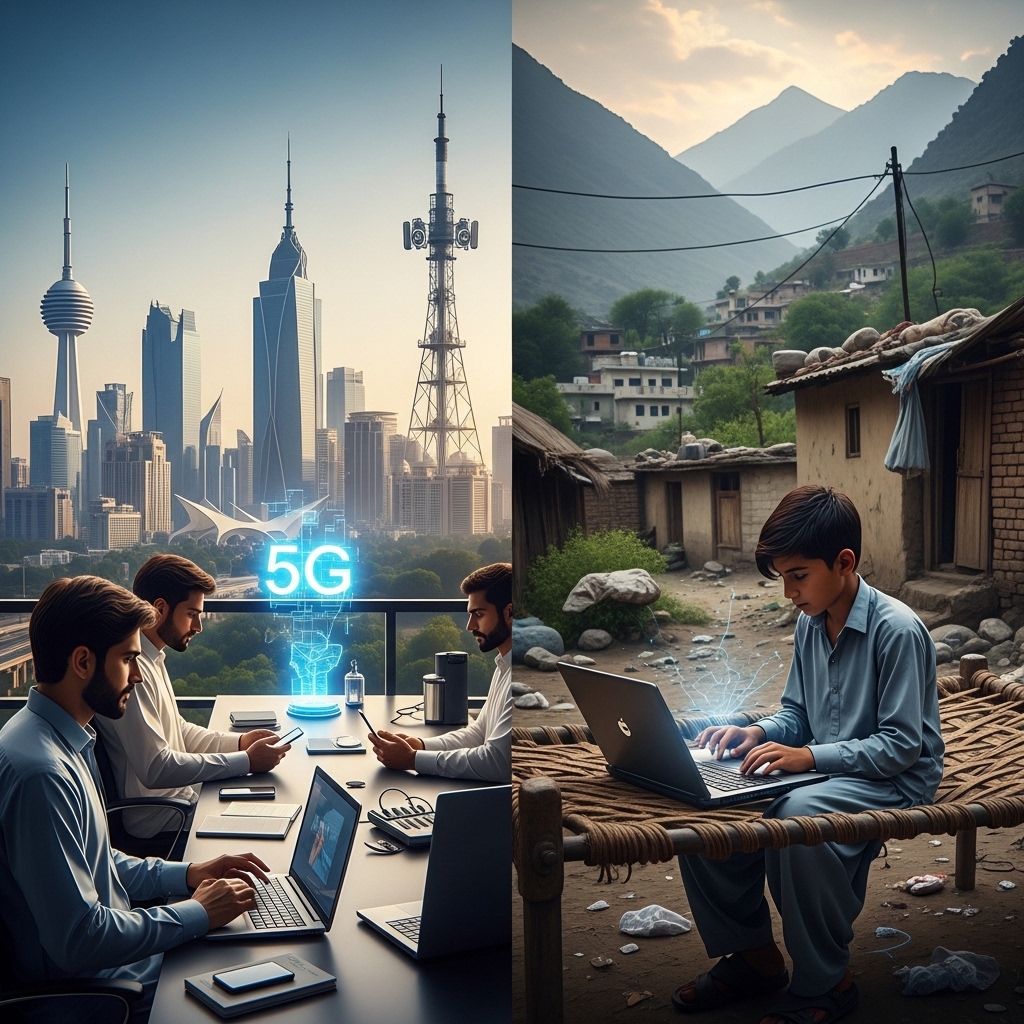
Now the crucial question: what does all this mean for Pakistan specifically? The stakes are genuinely high, because Pakistan has over two million freelancers, many heavily dependent on these exact platforms, and often concentrated in the very categories being hit hardest.
Here's the honest concern. Many Pakistani freelancers offer precisely the commoditized services (basic writing, simple design, data entry, entry-level coding) that AI is automating and that are declining on these platforms. So Pakistani freelancers face a double exposure: their type of work is shrinking, AND the platforms they depend on to sell it are struggling. If a freelancer's entire income comes from Fiverr or Upwork, and both their service category and the platform itself are under pressure, that's a genuinely risky position. This isn't to say Pakistani freelancing is doomed, far from it (more on the optimistic side below). But it does mean that freelancers who ignore this trend, and keep depending entirely on one struggling platform for one type of increasingly-automated work, are exposed. The wise response is to take this warning seriously and act on it.
Before anyone panics, let's inject essential balance, because the situation is serious but not hopeless, and doom would be both inaccurate and unhelpful. Freelancing is not dying; it's changing, and there's a clear path through.
Several honest points restore perspective. First, it's the low-end that's collapsing, not the whole thing: higher-skill, higher-trust, specialized services are holding up far better, the "ceiling is rising even as the floor collapses." Skilled freelancers who offer genuine expertise are often thriving. Second, the platforms aren't necessarily disappearing, they're struggling and pivoting (moving upmarket toward higher-value work and enterprise clients), not vanishing overnight; Fiverr and Upwork remain profitable and have cash. Third, freelancing itself remains a huge, viable opportunity for Pakistan, the sector still earns the country over a billion dollars, and demand for skilled work is strong. And fourth, this disruption creates opportunity for those who adapt, freelancers who move up the value chain and reduce platform dependence can thrive. So the accurate message isn't "freelancing is over", it's "the easy, low-end, single-platform freelancing model is at risk, and freelancers must evolve." That's a challenge, but a navigable one.
Here's the core takeaway, the single most important lesson every Pakistani freelancer should internalize from this. Depending entirely on one platform, or one type of commoditized work, has always been risky, and 2026 makes that risk concrete. The freelancers who will be resilient are those who diversify.
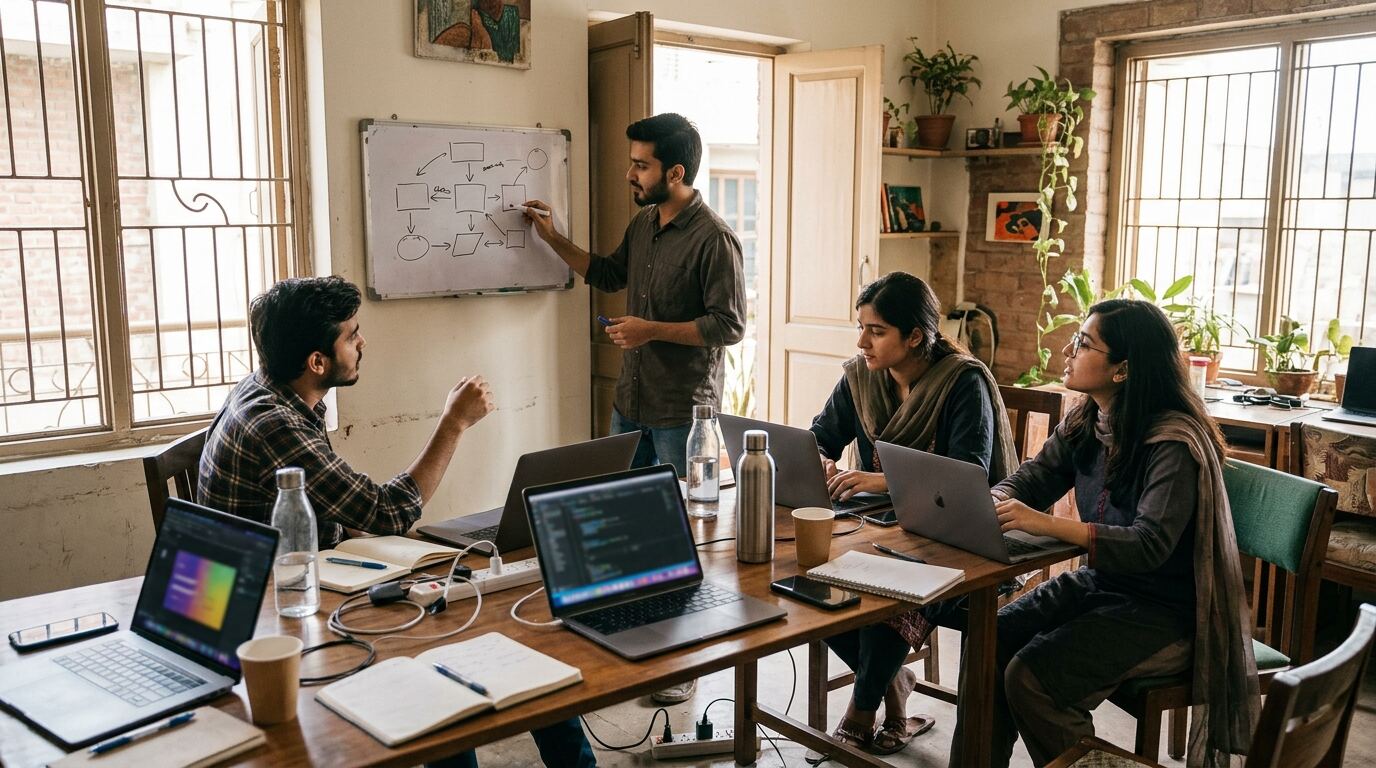
What does diversifying actually look like? Several concrete moves. Build direct client relationships: cultivate repeat clients you can work with outside (or alongside) the platforms, so you're not wholly dependent on the marketplace or its fees. Use multiple channels: don't rely solely on Fiverr or Upwork, build a presence on LinkedIn, your own website/portfolio, professional networks, and other platforms to find clients from many sources. Move up the value chain: shift from commoditized, easily-automated services toward specialized, high-value, high-trust work that AI can't replicate and clients pay well for. Build your own brand: a strong personal brand and reputation means clients come to you directly, reducing platform dependence. And consider full-time remote roles: explore stable employment with global companies (for example, via Employer of Record arrangements) as an alternative or complement to gig work. The unifying principle: reduce your dependence on any single platform or commoditized service, and build multiple, resilient income paths. That's how you protect yourself, whatever happens to Fiverr or Upwork.
This trend has real implications for Pakistan's economy and workforce.
For individual freelancers, it's a genuine wake-up call to diversify, upskill, and reduce platform dependence, action that protects their livelihoods.
For Pakistan's freelance economy, which earns the country over a billion dollars, the health of these platforms and the adaptability of freelancers directly affects national foreign-exchange earnings, making this a real economic concern.
For policy and training, it reinforces the urgency of reskilling programs helping freelancers move up the value chain and toward AI-augmented, higher-value work, exactly what initiatives are increasingly targeting.
For the future of work in Pakistan, it signals a needed evolution: from low-end, platform-dependent gig work toward specialized, diversified, resilient digital careers.
The balanced expert takeaway is that the struggles of Fiverr and Upwork are a genuine warning that platform-dependent, commoditized freelancing is at risk, but they are a wake-up call to adapt, not a funeral for freelancing. The freelancers who treat this as a signal to evolve, diversifying clients, specializing, moving up the value chain, will not just survive but often thrive; those who ignore it and cling to the old model are the ones truly at risk.
The deeper wisdom here applies beyond freelancing: never build your entire livelihood on a single platform you don't control. Platforms can change fees, lose customers, pivot, or decline, as we're seeing, and anyone wholly dependent on one is vulnerable. For Pakistani freelancers, the constructive response is clear and empowering: use the platforms while they're useful, but don't be trapped by them, actively build direct relationships, a personal brand, multiple income channels, and increasingly valuable, AI-resistant skills. This is honestly just good career strategy regardless of the platforms' fate. The freelancers who internalize this now, treating 2026's platform troubles as motivation to build resilience, will be far better positioned than those who wait until the risk becomes a crisis. The floor may be shifting, but for the prepared and adaptable, the opportunities remain real. Adapt now, on your own terms.
Expect the pressure on low-end freelance platforms and commoditized gig work to continue as AI capabilities grow, while demand for specialized, high-value freelance work holds up or grows. Watch how Fiverr, Upwork, and others navigate their pivots (upmarket, enterprise, AI tools), and how they treat freelancers (fees, support) in the process. The platforms will likely survive in some evolved form, but the freelancer experience on them is changing.
For Pakistani freelancers, the trajectory rewards adaptation: those who diversify, specialize, and build resilience will do well; those who don't face rising risk. Expect (and take advantage of) growing reskilling initiatives and alternative work models (like EOR employment). The freelance opportunity for Pakistan remains real and large, but it increasingly favors the skilled, diversified, and adaptable over the commoditized and platform-dependent. Position yourself accordingly.
The financial troubles of Fiverr and Upwork, falling stocks, shrinking buyers, first-ever revenue declines, and rising fees, are a genuine warning for Pakistan's millions of freelancers, especially those wholly dependent on these platforms for commoditized, AI-exposed work. But it's a warning to heed, not a catastrophe to fear. Freelancing isn't dying; the low-end, single-platform model is at risk, while skilled, specialized, diversified freelancing remains genuinely viable and even thriving. The essential lesson is timeless: never depend entirely on one platform you don't control. So use Fiverr and Upwork while they serve you, but build beyond them, cultivate direct clients, a personal brand, multiple income channels, higher-value skills, and consider stable remote employment too. Treat 2026's platform troubles as the wake-up call they are, and act now to build a resilient, diversified freelance career. The freelancers who adapt won't just survive whatever happens to the platforms, they'll come out stronger. Don't wait for the risk to become a crisis. Build your Plan B today.
Major freelance platforms are showing serious financial strain in 2026, a warning for Pakistan's 2 million+ freelancers who depend on them. Upwork's stock is down ~56% in 2026 (~87% from its 2021 peak), it lost ~47,000 active clients in a year (its largest contraction as a public company), and cut staff. Fiverr's stock is down 40%+, its market value (~$415-445M) fell below its 2019 IPO price, active buyers dropped 13.6% (to 3.1 million), and it forecast its first-ever annual revenue decline (14-17% projected for 2026); its CEO spoke of "startup mode." Freelancer.com shows similar strain.
Cause: generative AI is eroding demand for the low-complexity work these platforms depend on, basic writing, translation, simple graphic design, and entry-level coding, as businesses use AI tools instead. Since platforms earn a cut of transactions, falling demand for such gigs cuts their revenue. Compounding it, some platforms raised fees: Upwork replaced its flat 10% freelancer fee with a variable structure reaching 15%, so freelancers face fewer jobs AND a bigger cut taken.
Pakistan-specific risk: many Pakistani freelancers offer exactly the commoditized services being automated and declining, so they face double exposure (their work type is shrinking AND their platforms are struggling). Those wholly dependent on one platform for one type of AI-exposed work are most at risk.
Honest balance (not doom): it's the low end collapsing, not all freelancing, higher-skill, higher-trust, specialized services hold up well ("the ceiling is rising even as the floor collapses"). Platforms are pivoting upmarket, not vanishing, and remain profitable. Pakistan's freelance sector still earns $1B+. Freelancing remains viable for those who adapt.
The core lesson: never depend entirely on one platform you don't control. Diversify, build direct client relationships, use multiple channels (LinkedIn, own website, networks), move up the value chain to specialized AI-resistant work, build a per