In 2026, the global AI infrastructure race reached staggering scale: hyperscalers are spending nearly $700 billion on data centers, Anthropic committed roughly $71 billion to compute, and TSMC raised US investment to $265 billion. Driven by a persistent chip shortage, compute has become AI's defining battleground, widening the gap between a few nations and everyone else.
Some numbers are so large they stop feeling real. In 2026, the world's biggest technology companies are collectively spending close to $700 billion, more than most countries' entire economies, on the computing infrastructure to power artificial intelligence. This isn't a forecast for the distant future; it's happening right now.
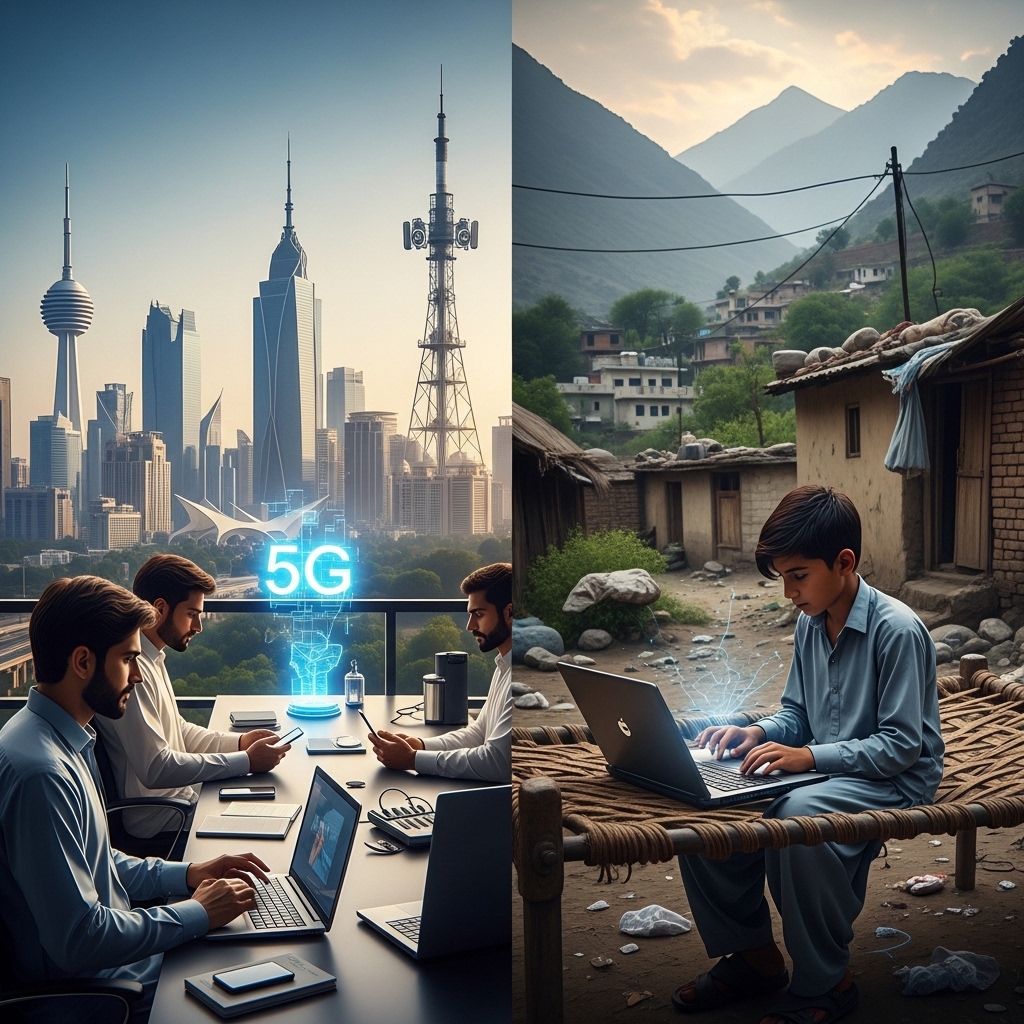
For a country like Pakistan, working hard to build its own AI ambitions, these numbers raise an urgent, honest question: what does an arms race at this scale mean for us? Is Pakistan simply priced out of the AI future, or is there a smart way to compete? Here's what's happening, why, and what it genuinely means for Pakistan.
(Disclosure: Anthropic, mentioned in this article, is the company that makes the Claude AI assistant. This piece is based on independent reporting and does not promote any company or product.)
Let's start with the scale, because it's central to the whole story. Across 2026, the biggest cloud and AI companies (the "hyperscalers") are on track to spend close to $700 billion on data centers. That figure alone dwarfs the economies of most nations on earth.
Individual commitments are just as striking. Reports indicate Anthropic has locked in roughly $71 billion in compute commitments, while chip-maker TSMC raised its US investment to a colossal $265 billion to expand manufacturing. These are not marketing numbers, they're real, binding capital being poured into chips, data centers, and power.
Taken together, the message is unmistakable: the AI industry believes that whoever controls the most computing power will win, and they're betting hundreds of billions on it. This is an infrastructure arms race unlike anything in recent technological history.
To understand what this means, you need to know why companies are spending so wildly. The answer is a persistent shortage of a critical resource: compute.
Training and running advanced AI models requires enormous amounts of specialized computing power, mainly high-end chips (most made by Nvidia, manufactured by TSMC) running in massive data centers that consume vast amounts of electricity. And there simply isn't enough of it. A persistent chip shortage means even companies worth hundreds of billions struggle to secure enough capacity.
This scarcity has made compute the central strategic priority of the entire industry. It's why Anthropic is committing tens of billions to compute while reportedly building its own chips, why TSMC is investing hundreds of billions in new manufacturing, and why the hyperscalers are spending enormously on data centers. When a resource is both essential and scarce, those who can afford to secure it gain a decisive advantage. Compute, in short, has become the new oil of the AI economy.
Here's the part that matters most for countries like Pakistan, and it requires honesty. This spending race is dramatically widening the gap between the handful of players who can afford it and everyone else.
When frontier AI requires hundreds of billions in infrastructure, it concentrates power among a few US and Chinese giants and the wealthy nations that host them. Developing economies cannot possibly match this spending, Pakistan's entire annual IT export earnings, around $4.6 billion, are a rounding error next to a single company's $71 billion compute commitment. This is the "AI divide" that international bodies increasingly warn about: a world split between those who build AI and those who merely consume it.
Pretending Pakistan can win a spending race against $700 billion would be dishonest and unhelpful. It can't, and neither can any single developing nation. But, and this is the crucial point, that's the wrong race to try to win. Recognizing that clearly is the first step to a smart strategy.
This is where honesty turns constructive, because being priced out of one race doesn't mean being out of the game. Pakistan's realistic and genuinely valuable AI strategy lies in areas that don't require hundreds of billions in compute.
Build talent, not just infrastructure. The single most valuable, affordable investment is people. AI engineers, data scientists, and skilled users are in global demand, and Pakistan's large young population is a real asset. Training a million people in AI skills (a stated national goal) costs a fraction of one data center and pays off for decades. Talent is exportable, employable, and doesn't depend on owning frontier compute.
Apply AI, don't just build it. Enormous value comes from using existing AI tools cleverly to solve local problems, in agriculture, healthcare, education, fintech, and Urdu-language applications, rather than trying to build frontier models from scratch. A startup applying AI to Pakistani crop yields or local-language services creates real value without a $71 billion budget.
Share and rent infrastructure. Pakistan doesn't need to own frontier-scale compute; it needs access. This is exactly why the country's recent moves, its first AI data centers like Sky47, cloud programs, and international partnerships, matter: they provide access to compute without matching global spending. Renting and sharing capacity is the pragmatic path.
Specialize. Rather than competing broadly, Pakistan can focus on niches where it has an edge, cost-effective AI services, specific industry applications, or regional and language-specific solutions.
Even far from Silicon Valley, this race affects Pakistanis directly.
For AI users and businesses, the compute shortage is why AI services have usage limits and subscription tiers, the scarcity you feel using these tools traces directly to this global crunch.
For freelancers and developers, the lesson is clarity: the highest-value skills aren't building frontier models (impossible without vast compute) but applying AI expertly to real problems, which anyone with talent can do.
For founders, the opportunity is in the application layer, building useful products on top of existing AI, not competing at the infrastructure level.
For policymakers, the message is to invest where Pakistan can actually win, talent, education, local applications, and shared infrastructure access, rather than chasing an unwinnable spending race.
The clearest strategic insight is that trying to compete head-on in compute spending is a losing game for any developing nation, so the smart move is to play a different game entirely. History offers encouragement: countries have repeatedly built thriving tech sectors without owning the underlying hardware layer, by excelling in software, services, talent, and applications.
India built a massive IT industry largely on services and talent, not chip factories. Pakistan can pursue a similar logic in the AI era: become indispensable in the layers of AI that don't require hundreds of billions, skilled people, smart applications, and cost-effective services, while securing compute access through partnerships and shared facilities. The nations that will benefit from AI aren't only those building it, but those cleverest at using it. That's a game Pakistan can genuinely play, and win a meaningful place in.
The honest caveat remains: this requires focus, investment in education, stable policy, and reliable infrastructure like electricity and connectivity. Pakistan's constraints are real. But the strategy is sound and achievable in a way that matching $700 billion never could be.
Expect the compute race to intensify further, with spending, chip investment, and data-center construction climbing, and compute access remaining the defining constraint of frontier AI. The gap between AI builders and consumers will likely widen before global efforts (and cheaper, more efficient models) begin to narrow it.
For Pakistan, watch whether the country doubles down on the winnable strategy, mass AI skilling, support for applied-AI startups, and expanding domestic and shared compute access. Those choices, not the global spending headlines, will determine whether Pakistan claims a real place in the AI economy.
This article is for general informational purposes only and reflects reports available in 2026. Figures are as reported by independent sources and may change. Disclosure: Anthropic, mentioned here, develops the Claude AI assistant. This is not investment advice.
In 2026, the global AI infrastructure race reached unprecedented scale. The biggest cloud and AI companies (hyperscalers) are on track to spend close to $700 billion on data centers. Anthropic locked in roughly $71 billion in compute commitments (while reportedly building its own chips), and TSMC raised its US investment to $265 billion to expand chip manufacturing. These are real, binding capital commitments.
The driver is a persistent chip shortage: advanced AI requires enormous specialized computing power (high-end chips, mostly made by Nvidia and manufactured by TSMC, in power-hungry data centers), and there isn't enough capacity, so even giant companies struggle to secure it. Compute has become the central strategic priority and defining battleground of AI, "the new oil."
Consequence: this widens the "AI divide" between the few US and Chinese giants (and wealthy host nations) that can afford frontier infrastructure and everyone else who mainly consumes AI. Pakistan cannot match this, its entire ~$4.6B annual IT exports are dwarfed by a single company's $71B compute commitment.
The constructive thesis: matching the spending is the wrong race. Pakistan's realistic, winnable AI strategy: (1) build talent, training a million people in AI skills costs a fraction of one data center and pays off for decades; (2) apply existing AI to local problems (agriculture, healthcare, education, fintech, Urdu-language tools) rather than building frontier models; (3) secure compute access through data centers (like Sky47), cloud programs, and partnerships rather than ownership; (4) specialize in cost-effective or language-specific niches. Like India's services-and-talent-led IT rise, Pakistan can thrive by using AI cleverly, not owning the hardware layer, provided it invests in education, stable policy, and reliable infrastructure.
Disclosure: Anthropic develops the Claude AI assistant. Informational only; figures as reported; not investment advice.