Pakistan’s National Cyber Crime Investigation Agency (NCCIA) warns citizens to keep four personal details private: CNIC numbers, bank and account details, passwords, and OTPs. Sharing these with strangers or on suspicious links fuels fraud and identity theft. More broadly, avoid oversharing personal information (routines, documents, location) online, and only share sensitive data with trusted, verified sources.
How much of your personal information is floating around online? For many Pakistanis, the answer is “more than they realize”, and that’s a genuine risk to your money and identity. Recognizing this, Pakistan’s National Cyber Crime Investigation Agency (NCCIA) recently issued a public advisory urging citizens to keep certain personal details private, warning that careless disclosure can lead directly to fraud, identity theft, and financial losses.
This matters for everyone. In an age of constant online activity, social media, messaging, online shopping, and digital banking, the personal information we share (or overshare) can be exploited by criminals. The good news is that protecting yourself is largely about awareness and a few sensible habits. So here’s a practical guide: the specific details you should never share online (per the official advisory and beyond), why they’re so dangerous in the wrong hands, and how to protect your personal information, identity, and money. A quick note: this is a protective awareness guide, not legal or security advice, and if you’re ever a victim, report it to the FIA/NCCIA cybercrime channels (more below).
Let’s start with the specific warning, because it’s clear and important. In its advisory, the NCCIA urged Pakistanis to keep four key personal details private, and to never share them with strangers or unverified online sources. These are the “crown jewels” that criminals most want.
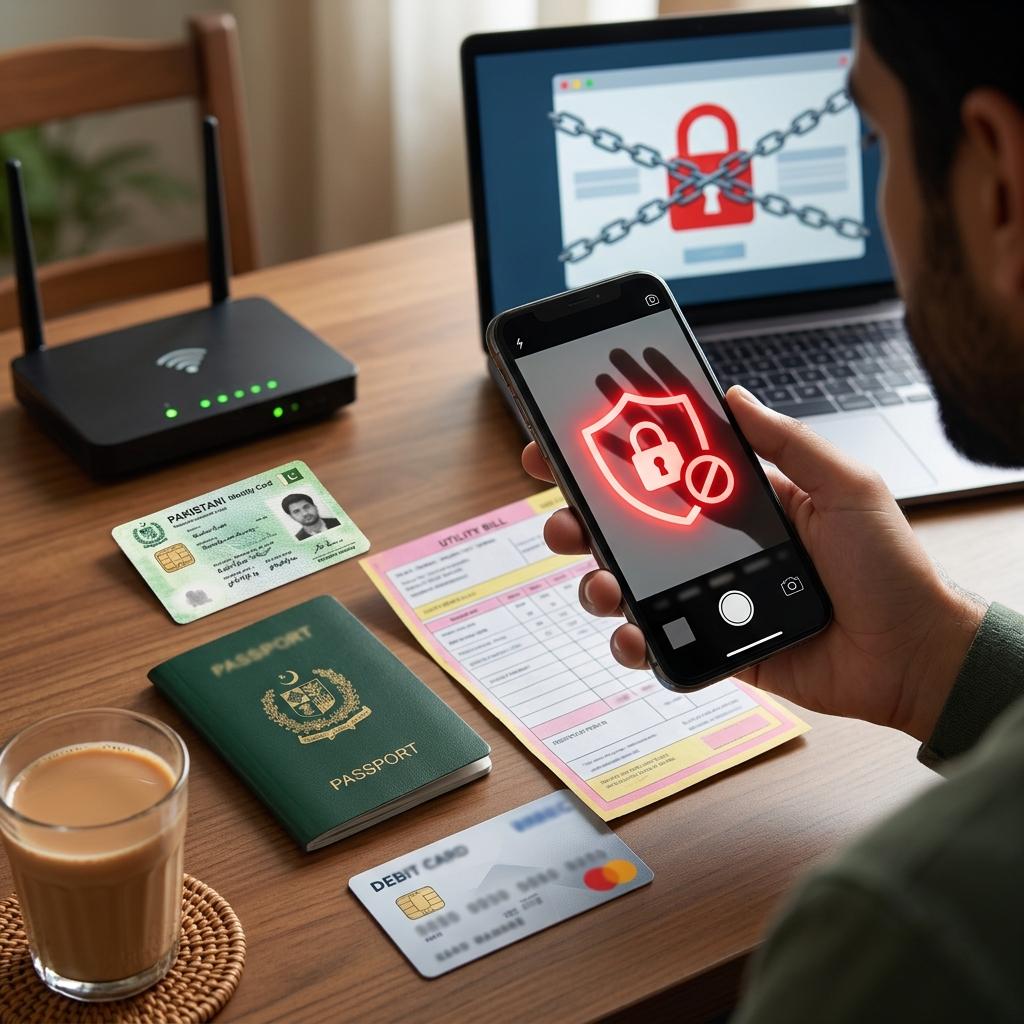
The four to protect: Your CNIC (Computerised National Identity Card) number: your CNIC is one of the most valuable pieces of personal information you have in Pakistan (more on why below), never share it carelessly. Your bank details and account information: account numbers, banking details, and related financial information should be kept private, in the wrong hands, they enable financial fraud. Your passwords: never share passwords for your accounts (banking, email, social media, anything) with anyone. And your OTPs (One-Time Passwords): never share the one-time verification codes sent to your phone, with anyone, including people claiming to be from your bank or an organization. This is critical, because OTPs are the final key criminals need to access your accounts. The agency specifically warned against sharing passwords and OTPs with anyone, even individuals claiming to represent banks or other organizations, because no legitimate bank or service will ever ask you for these. So these four, your CNIC, bank details, passwords, and OTPs, are the absolute essentials to guard. Treat them as secrets you never hand over in response to a call, message, link, or request. Protecting just these four dramatically reduces your fraud risk.
Let’s single out the CNIC, because it deserves special emphasis, it’s uniquely powerful and uniquely dangerous if misused. Your CNIC number is essentially the master key to your identity in Pakistan, so protecting it is especially important.
Here’s why it matters so much. Your CNIC is used for almost everything official: opening bank accounts, registering SIMs, applying for loans, verifying your identity, and accessing many services. Because it’s tied to so much, a criminal with your CNIC (especially combined with other details) can potentially impersonate you, open accounts or register SIMs in your name, attempt financial fraud, or commit crimes using your identity, causing you serious financial and legal trouble. Identity theft using your CNIC and personal details is a real and damaging crime (and it’s punishable under Pakistani law). So your CNIC isn’t just a number; it’s the key to your identity and many of your accounts and services. That’s exactly why you should never share your CNIC number (or images/copies of your CNIC) carelessly, on social media, with unknown people, on unverified websites, or in response to unsolicited requests. Only share it with genuinely trusted, verified entities (your bank through official channels, official NADRA or SIM-registration centers, verified government services) when truly necessary. Guard your CNIC as fiercely as you would the keys to your home, because in a sense, it is exactly that for your digital and financial identity.
The official four are the essentials, but protecting yourself goes further, because everyday oversharing on social media also fuels identity theft and scams, often without people realizing it. Being mindful of this broader oversharing matters a lot.
Here’s the issue. Many people share far more personal information publicly than they realize, photos, phone numbers, family details, educational and workplace information, daily routines, travel plans, and more, across social media. Criminals use this publicly available information to build a profile of you, which helps them impersonate you, answer your security questions, craft convincing personalized scams (that seem to “know” you), target you when you’re away (travel plans), or piece together enough to commit identity theft or fraud. So the broader habits to be careful with include: avoid posting images or copies of personal documents (CNIC, passport, tickets, utility bills, anything with personal data); be cautious about publicly sharing your phone number, home address, or detailed personal information; don’t broadcast your daily routine, location, or travel plans publicly (this can aid both scams and physical risks); be wary of quizzes, games, and apps that ask for personal information (they may be harvesting your data); limit the personal details on your public profiles; and think before you share, “could this information help someone impersonate or target me?” The principle: the less personal information about you is publicly available, the harder it is for criminals to exploit you. So beyond guarding the critical four, practice general “data minimalism”, share less personal information publicly, and you reduce your risk substantially. Your digital footprint is worth protecting.
To protect yourself, it helps to understand how criminals actually get people to hand over these details, because they rely on clever manipulation, not just random luck. Recognizing their tactics is a strong defense.
Common tricks include: Impersonation: pretending to be your bank, a government body, a company, or even a family member, by call, SMS, WhatsApp, email, or fake social-media accounts, to seem trustworthy and request your details. Urgency and fear: creating panic (“your account will be blocked,” “suspicious activity detected,” “verify now or lose access”) to rush you into sharing without thinking. Too-good-to-be-true offers: fake prizes, lotteries, jobs, or rewards that ask for your details (or a fee) to “claim” them. Fake links and websites: sending links to counterfeit bank or government websites that look real but are designed to steal whatever you enter. Fake apps: tricking you into downloading malicious apps that harvest your data. Requests for “verification”: asking you to “confirm” your CNIC, OTP, or password under some pretext. And exploiting trust: using information gleaned from your social media to seem like they genuinely know you. The common thread: criminals manipulate your emotions (fear, urgency, greed, trust) to trick you into voluntarily sharing details or clicking malicious links. Knowing these tactics helps you recognize and resist them. The defense against all of them is the same: slow down, be skeptical, and verify independently before sharing anything, which brings us to how to protect yourself.
Here’s the practical, empowering part, concrete habits that protect your personal information, identity, and money. These are simple but genuinely effective. Build them in.
Key protective habits: Never share your CNIC, bank details, passwords, or OTPs in response to any unsolicited call, message, or link, no matter who the sender claims to be. No legitimate bank or organization will ever ask for your OTP, PIN, or password. Verify independently before sharing: if someone claiming to be your bank (or anyone) asks for information or action, don’t comply directly, independently contact the organization through its official number/app/website to verify first. Only share sensitive info with trusted, verified sources, when necessary: share your CNIC or financial details only with genuinely verified, official entities (your bank officially, NADRA, verified services), and only when truly needed. Be skeptical of links and never enter details on suspicious sites: don’t click links in unsolicited messages; go directly to official websites/apps yourself, and always check a website’s address before entering any personal information. Practice social-media data minimalism: limit the personal information you share publicly (documents, routines, location, contact details), and review your privacy settings. Use strong, unique passwords and two-factor authentication: so even if some info is compromised, your accounts have extra protection (app-based 2FA is best). Be wary of data-harvesting quizzes/apps: don’t hand over personal details to untrusted quizzes, games, or apps. Keep devices and apps updated and secure: to protect against malware that steals data. And above all, slow down and don’t let urgency rush you: criminals rely on panic; pausing to think and verify defeats most scams. The golden rule: guard your critical details fiercely, share personal information sparingly and only with trusted sources, and always verify before acting on any request. These habits are your strongest protection, and they cost nothing but a little mindfulness.
If you suspect your personal information has been misused, or you’ve been defrauded, acting correctly matters, so it’s good to know the steps in advance. Here’s what to do.
If compromised or defrauded: Act quickly to secure accounts: if banking details, passwords, or OTPs may be compromised, immediately contact your bank (via official channels) to secure or freeze accounts, and change passwords from a secure device. Report to the authorities: report cybercrime, fraud, or identity theft to Pakistan’s cybercrime authorities, the National Cyber Crime Investigation Agency (NCCIA) / FIA cybercrime wing (which has a complaint process and a helpline). Reporting helps you and others. Preserve evidence: keep records, screenshots of messages, communications, and details (even from blocked numbers, screenshot before blocking), which help investigations. Alert others if your identity is misused: if someone is impersonating you, warn your contacts and relevant platforms. And monitor your accounts and identity: watch for unauthorized transactions or accounts, and act fast on anything suspicious. Importantly, if you’re a victim, it’s not your fault, criminals are skilled manipulators, but acting quickly (securing accounts, reporting, preserving evidence) is your best protection and recourse. Knowing these steps in advance means you can respond calmly and effectively if the worst happens. Pakistan has legal protections and reporting channels for identity theft and cyber fraud, so use them.
This issue of personal-data protection carries real significance for Pakistan.
For consumers: as more Pakistanis come online and use digital banking, protecting personal information becomes essential to prevent the fraud and identity theft that cost real people real money.
For digital trust: widespread fraud and identity theft erode trust in digital services, so individual data-protection habits (alongside institutional security) help sustain Pakistan’s digital-economy growth.
For digital literacy: this highlights the broader need for digital-literacy and privacy awareness among Pakistanis, so people understand what to protect and how, a genuine national need.
For the data-protection landscape: it underscores why Pakistan is working toward stronger data-protection laws and cybercrime enforcement, while individual vigilance remains the frontline defense today.
The key insight is that in today’s digital world, protecting your personal information, especially your CNIC, bank details, passwords, and OTPs, is one of the most important things you can do to safeguard your money and identity, and the good news is that doing so is largely within your control through simple awareness and habits. Pakistan’s NCCIA advisory is a timely, valuable reminder: careless sharing of sensitive personal details is a leading cause of fraud, identity theft, and financial loss, and much of it is preventable. The core principle is straightforward, guard your critical details fiercely and share personal information sparingly, only with trusted, verified sources, and only when genuinely necessary. Treat your CNIC as the master key to your identity that it is; never hand over OTPs, passwords, or banking details to anyone, no matter how convincing their request; and practice data minimalism on social media, the less personal information about you is publicly available, the safer you are.
The practical wisdom centers on a mindset and a few habits. The mindset: be appropriately skeptical and never let urgency or a convincing story rush you into sharing sensitive information, because criminals rely precisely on manipulating your emotions (fear, trust, greed) to extract details. The habits: never share your CNIC, bank info, passwords, or OTPs in response to unsolicited requests; verify independently through official channels before sharing anything; share sensitive data only with genuinely trusted sources when necessary; be cautious with links, suspicious sites, and data-harvesting quizzes; limit your public personal information; use strong passwords and two-factor authentication; and slow down and verify before acting. These simple, cost-free habits dramatically reduce your risk. And if you are ever targeted or compromised, act quickly, secure your accounts, report to the NCCIA/FIA cybercrime channels, and preserve evidence, remembering that being targeted isn’t your fault. For Pakistan broadly, as digital adoption grows, so does the importance of personal-data protection, both through stronger laws and enforcement and, crucially, through everyday citizens’ awareness and habits, which are the frontline defense. So the empowering message to every Pakistani is: your personal information is valuable, and protecting it is largely in your hands. Guard your critical details, share with care, verify before you trust, and limit your digital footprint, and you’ll go a long way toward keeping your identity and money safe in the digital age. A little mindfulness about what you share is one of the most powerful protections you have. Guard your identity; share with care.
Expect personal-data protection to become increasingly important in Pakistan as digital adoption grows and fraud tactics (including AI-powered scams) get more sophisticated. This makes the privacy habits discussed here, guarding critical details, sharing sparingly, and verifying before trusting, more essential over time, and worth building into daily life. Expect continued awareness efforts from authorities (like the NCCIA advisory), and progress toward stronger data-protection laws and enforcement in Pakistan.
For individuals, the trajectory means ongoing vigilance about personal information will remain key, and those who build strong privacy habits now will be well-protected as threats evolve. On the hopeful side, awareness is growing, protections are improving, and the core habits are simple and effective, so Pakistanis can genuinely protect themselves. The broader lesson: Pakistan’s welcome digital growth must be matched by equally strong attention to personal-data protection, from institutions (laws, enforcement, security) and individuals (awareness, habits) alike. Guard your personal information wisely, stay aware of evolving scams, and you can participate in Pakistan’s digital future safely. Your privacy and identity are worth protecting, and with simple habits, you genuinely can.
In Pakistan’s increasingly digital world, protecting your personal information is one of the most important things you can do to safeguard your money and identity, and Pakistan’s NCCIA advisory is a timely reminder of exactly which details to guard. Keep your four crown jewels private, your CNIC number, bank and account details, passwords, and OTPs, and never share them with strangers, on suspicious links, or in response to unsolicited requests, because no legitimate bank or organization will ever ask for your OTP, PIN, or password. Treat your CNIC especially carefully: it’s the master key to your identity in Pakistan (used for bank accounts, SIMs, loans, and verification), so a criminal who gets it can do serious damage. Beyond those essentials, practice broader data minimalism: avoid oversharing personal documents, routines, location, and contact details on social media, since criminals exploit publicly available information to impersonate and target you. Understand that scammers manipulate emotions, urgency, fear, trust, greed, to trick you into sharing, so the universal defense is to slow down, be skeptical, and verify independently through official channels before sharing anything or clicking any link. Build the simple habits, never share critical details on request, verify before trusting, share sensitive info only with trusted sources, limit your public footprint, use strong passwords and two-factor authentication, and these cost-free practices will dramatically reduce your risk. And if you’re ever compromised, act fast, secure accounts, report to the NCCIA/FIA cybercrime channels, preserve evidence, and know it’s not your fault. The empowering truth is that protecting your identity and money online is largely in your hands: guard your personal information wisely, share with care, and verify before you trust. In the digital age, your mindfulness about what you share is one of your most powerful shields. So protect your CNIC, guard your details, share sparingly, and stay safe, your identity and your money are worth it.
This article is for general awareness and informational purposes only, to help readers protect their personal information online. It is not legal, security, or financial advice. Threats and best practices evolve, verify current guidance and any specific situation through official and credible sources (NADRA, your bank, the State Bank of Pakistan, National CERT, and the NCCIA/FIA cybercrime wing). If your information is compromised or you are defrauded, contact your bank and report to the relevant cybercrime authorities immediately, preserve evidence, and only use official channels. Never share your CNIC carelessly, and never share passwords, PINs, or OTPs with anyone. Being targeted by fraud or identity theft is not the victim’s fault.
Pakistan’s National Cyber Crime Investigation Agency (NCCIA) issued a public advisory (November 9, 2026) urging citizens to keep certain personal details private, warning that careless disclosure leads to fraud, identity theft, and financial losses. This is a protective awareness guide.
The four key details to keep private (per the NCCIA): (1) your CNIC (Computerised National Identity Card) number; (2) your bank details and account information; (3) your passwords; and (4) your OTPs (one-time passwords). Never share these with strangers or unverified sources, and never with anyone claiming to represent a bank or organization, no legitimate entity will ask for your OTP, PIN, or password. Don’t enter personal details on suspicious links, unknown websites, or unverified platforms.
Why the CNIC is especially critical: it’s the master key to your identity in Pakistan, used to open bank accounts, register SIMs, apply for loans, and verify identity. A criminal with your CNIC (plus other details) can impersonate you, open accounts or register SIMs in your name, attempt financial fraud, or commit crimes using your identity. Identity-information misuse is a crime under Pakistan’s PECA (Section 16, up to 3 years and/or up to Rs 5 million fine). Only share your CNIC with genuinely verified official entities (bank official channels, NADRA, verified services) when necessary.
Beyond the four, avoid oversharing on social media: many people publicly share photos, phone numbers, family details, educational/workplace info, daily routines, and travel plans. Criminals use this publicly available information to build a profile, impersonate you, answer your security questions, craft convincing personalized scams, target you when away, or commit identity theft. Practice “data minimalism”: avoid posting personal documents (CNIC, passport, tickets, bills); limit public sharing of phone number, address, routines, and location; be wary of quizzes/games/apps harvesting data; and review privacy settings.
How criminals trick people: impersonation (bank, government, company, family); urgency/fear (“account will be blocked, verify now”); too-good-to-be-true offers (prizes, jobs); fake links/websites; fake apps; requests to “verify” CNIC/OTP/password; and exploiting trust using social-media info. They manipulate emotions (fear, urgency, greed, trust).
How to protect yourself: never share CNIC, bank details, passwords, or OTPs in response to unsolicited requests; verify independently through official channels before sharing; share sensitive info only with trusted sources when necessary; be skeptical of links and check website addresses; practice social-media data minimalism; use strong unique passwords and two-factor authentication; beware data-harvesting quizzes/apps; keep devices/apps updated; and slow down, don’t let urgency rush you.
If compromised: secure accounts immediately (contact your bank via official channels, change passwords from a secure device); report to the NCCIA/FIA cybercrime wing; preserve evidence (screenshot messages, even before blocking); alert contacts if impersonated; and monitor accounts. Being targeted isn’t the victim’s fault. Takeaway: protecting your personal information (especially CNIC, bank details, passwords, OTPs) is largely in your hands, guard critical details, share with care, verify before you trust, and limit your digital footprint. Awareness guide; not legal/security advice; verify via official sources; report to NCCIA/FIA.