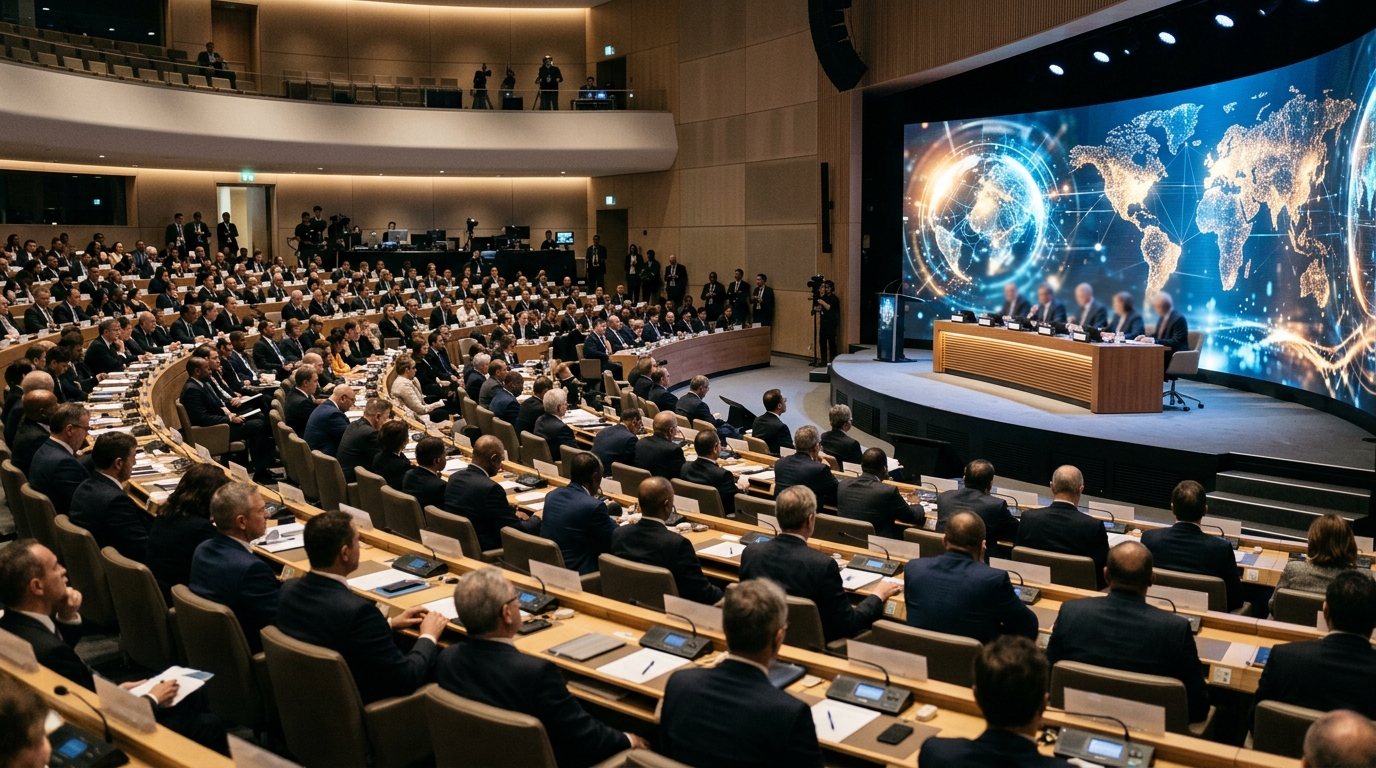
At a UN Security Council session on AI, Pakistan warned against "AI-driven inequality" and a competitive AI race "no one can win safely." Deputy PM Ishaq Dar argued AI's risks, as a dual-use technology affecting peace and security, can't be managed by a handful of companies or countries alone, and called for inclusive, non-fragmented global AI governance.
When we think about who shapes the global conversation on artificial intelligence, we usually picture the US, China, the EU, and big tech companies. So it's genuinely notable when Pakistan steps onto the world's most prominent diplomatic stage, the UN Security Council, to make its voice heard on AI. That's exactly what happened recently, when Pakistan issued a pointed warning about the risks of AI, including "AI-driven inequality" and a dangerous global AI race.
Why is Pakistan weighing in on global AI governance at the UN? What did it actually say, and does it matter? This isn't just diplomatic ceremony, it reflects real concerns and a real strategic positioning that affects Pakistan's, and the developing world's, place in the AI age. Here's what Pakistan said, why it's significant, and what it reveals.
Let's start with the substance, because the statement was thoughtful, not just symbolic. At a UN Security Council session on artificial intelligence, convened by France (the Council's president for September), Pakistan's Deputy Prime Minister and Foreign Minister, Ishaq Dar, delivered a notable warning about AI's risks to international peace and stability.
His key points were substantive. He described AI as a "force multiplier" and a "cross-cutting dual-use technology", meaning it can be used for both beneficial and harmful (including military) purposes, whose impact on international and regional peace and stability is sharply evident. Crucially, he warned that "competitive pressures are driving a race that no one can win safely", a pointed critique of the rush to develop ever-more-powerful AI without adequate safeguards. He argued that "the risks of uncontrolled AI would be borne by all," so decisions on managing them "cannot rest with a handful of companies or capitals", a clear call against letting a few tech giants and powerful nations dominate AI governance. And he called for avoiding "fragmentation in AI development and governance," urging that AI's development, deployment, and broader implications be addressed comprehensively and inclusively. In short: AI is powerful and dangerous, its risks are global, and governing it must be inclusive, not dominated by the few. That's a serious, coherent position.
You might wonder: why is Pakistan, not a leading AI power, speaking up on global AI governance? The answer reveals genuine strategic thinking, and it matters. There are several real reasons Pakistan's voice here is both logical and important.
Consider the motivations. AI affects everyone, not just AI powers: AI's impact, on economies, jobs, security, and inequality, will be felt globally, including by developing nations like Pakistan, so they have a legitimate stake in how it's governed. Fear of being left behind: if AI governance is decided only by the US, China, the EU, and big tech, the rules may serve their interests while the Global South bears the downsides, a real concern Pakistan is right to raise. The inequality risk is genuine: AI could dramatically widen the gap between AI-capable rich nations/companies and everyone else (a theme we've explored, the risk of a world of AI "creators" versus mere "consumers"), and Pakistan is warning against exactly this. Pakistan's own AI ambitions: Pakistan is actively building its AI capabilities and wants a seat at the table shaping the global framework it will operate within. And security concerns: as a country in a sensitive region, Pakistan has real stakes in how AI affects military balance and stability. So Pakistan weighing in isn't posturing, it's a developing nation legitimately asserting that AI governance must include voices like its own. That's both principled and self-interested in a reasonable way.
Let's focus on the most resonant part of Pakistan's warning, because it's genuinely important and relevant to every Pakistani. The concern about "AI-driven inequality" isn't abstract, it's one of the defining risks of the AI age, and Pakistan is right to highlight it.
Here's the worry. AI's benefits and power are currently concentrated among a handful of wealthy countries and giant tech companies that control the models, the computing power, the data, and the talent. If this continues unchecked, AI could massively widen global inequality: rich, AI-capable nations and firms race ahead in productivity, wealth, and power, while developing countries fall further behind, becoming dependent consumers of others' AI rather than participants. Within countries too, AI could concentrate wealth among those who own and control it while displacing workers. For a developing nation like Pakistan, this is an existential economic concern: will AI be a tool that helps it leapfrop and develop, or a force that entrenches its disadvantage? Pakistan's warning is essentially a plea that AI's development be inclusive and its governance democratic, so that the technology narrows rather than widens the global divide. That's a genuinely important message, and one the Global South is increasingly, and rightly, raising.
So beyond the statement itself, why does Pakistan's UN intervention genuinely matter? For several real reasons, it's more significant than a routine diplomatic remark. Let's be clear about the substance.
It matters because: it puts the Global South's concerns on record at the highest level, helping ensure AI governance discussions include developing-world perspectives, not just those of AI superpowers. It reflects a legitimate, growing global debate, the tension between racing to develop AI and governing it safely and inclusively is one of the defining issues of our time, and Pakistan is engaging with it seriously. It signals Pakistan's intent to be an active participant in shaping the AI era, not a passive bystander, consistent with its domestic AI ambitions. It aligns Pakistan with important global efforts around AI safety and ethical governance. And it raises genuinely valid concerns (inequality, the unsafe race, concentration of power) that even AI-leading nations and experts share. Of course, a warning at the UN doesn't by itself change anything, global AI governance remains fragmented and dominated by the powerful, and Pakistan's influence is limited. But adding its voice, and the Global South's, to the conversation is a legitimate and worthwhile contribution to an issue that will shape everyone's future. It's a small but real assertion of agency in the AI age.
Honesty requires balance, so let's assess this clearly, because both the value and the limits are real. Pakistan's intervention deserves recognition, but also realistic perspective.
On the positive side: the concerns Pakistan raised are genuinely valid and important, AI-driven inequality, the unsafe competitive race, and the concentration of AI power are real risks acknowledged by experts worldwide, and it's right for a developing nation to voice them. It's also strategically sensible for Pakistan to seek a place in shaping global AI governance rather than passively accepting whatever framework the powerful design. On the realistic side: a statement at the UN, however sound, has limited immediate impact, global AI governance is still driven largely by the US, China, the EU, and major companies, and developing nations have modest influence. There's also a fair question of whether Pakistan can back its global advocacy with domestic action, building real AI capabilities, sound local AI governance, and inclusion at home, so its voice carries credibility. And warnings are easier than solutions; the hard work is actually building inclusive AI governance and helping developing nations genuinely participate. So the honest view is that Pakistan's warning is valuable and valid, a worthwhile assertion of the Global South's stake, while recognizing that turning such concerns into real change requires sustained effort, credibility, and coalition-building far beyond a single statement. It's a good and legitimate start, not a solution.
This development connects to Pakistan's broader interests and trajectory.
For Pakistan's global positioning, actively engaging on AI governance asserts Pakistan as a serious, thoughtful player in the defining technology debate, enhancing its diplomatic and tech credibility.
For Pakistan's AI future, advocating for inclusive global governance aligns with Pakistan's interest in accessing AI's benefits and not being left behind or dominated, directly relevant to its development.
For the inequality concern, raising AI-driven inequality internationally supports the broader effort (which benefits Pakistan) to ensure AI narrows rather than widens the global divide.
For domestic policy, Pakistan's global stance should ideally reinforce serious domestic action, building AI capabilities, ethical governance, and inclusion at home, so its advocacy is credible and its people actually benefit.
The key insight is that Pakistan's warning at the UN represents a legitimate and important assertion of the Global South's stake in the AI age, and its real value depends on backing such advocacy with genuine domestic action and coalition-building. The concerns Pakistan raised, AI-driven inequality, the unsafe race for ever-more-powerful AI, and the dangerous concentration of AI power among a few companies and countries, are among the most serious challenges of our era, and they're often underweighted in a discourse dominated by AI's boosters and the powerful nations racing ahead. A developing country insisting that these risks be taken seriously, and that AI governance be inclusive rather than dictated by the few, is making a genuinely valuable contribution.
The deeper wisdom, though, is that voice must be paired with substance. For Pakistan's advocacy to carry real weight, it should be matched by credible domestic action: genuinely building AI capabilities and talent, establishing sound and ethical AI governance at home, ensuring its own people (not just elites) benefit from AI, and working with other developing nations to build collective influence. Advocacy plus action is what turns a warning into leadership. For Pakistanis, the encouraging takeaway is that their country is thinking seriously about AI's global stakes and trying to secure a fair place in the AI future, which matters, because the alternative (passively accepting a world where AI's benefits accrue to a few while the rest fall behind) would be genuinely damaging. The AI age will be shaped by those who show up and engage. Pakistan showing up at the UN on this issue, while a small step, is the right instinct, and one worth building on with real, sustained effort at home and in coalition abroad. The goal is a future where AI helps countries like Pakistan rise, not one where it leaves them behind. Advocating for that is worthwhile, and delivering on it is the real work.
Expect global debate over AI governance, safety, and equity to intensify, and developing nations like Pakistan to keep pushing for inclusive frameworks that don't leave them behind. Watch whether Pakistan pairs its international advocacy with credible domestic AI development and governance, and whether the Global South builds collective influence on these issues. The tension between the AI race and safe, inclusive governance will remain a defining global challenge.
For Pakistan, the trajectory of engaging seriously on AI, both domestically and globally, is positive and necessary. Whether its warnings translate into real influence depends on sustained effort, credibility, and coalitions. But asserting its stake now, rather than passively accepting others' rules, positions Pakistan better for the AI future. The broader hope is a global AI order that's inclusive and equitable, and Pakistan adding its voice, and hopefully its action, is a contribution toward that goal.
Pakistan warning the UN Security Council about AI, its risks, the unsafe competitive race, and especially "AI-driven inequality", is a genuinely notable and worthwhile development. It reflects a developing nation legitimately asserting that AI governance must be inclusive, that AI's global risks can't be left to a handful of companies and powerful countries, and that the world must guard against AI widening the gap between the AI-capable few and everyone else. These are valid, important concerns, and it's right for Pakistan to raise them, both on principle and in its own interest. The honest caveat is that a UN statement, however sound, has limited immediate impact, and its real value depends on Pakistan backing such advocacy with credible domestic AI action and coalition-building. But the instinct is exactly right: in the AI age, countries that show up, engage, and assert their stake will fare far better than those that passively accept whatever the powerful decide. Pakistan is choosing to have a voice on the defining technology of our time, and to insist the developing world isn't left behind. That's a small but meaningful step, and one worth building on. The future of AI should lift countries like Pakistan up, not leave them behind, and that future is worth fighting for, at the UN, and at home.
This article is for general informational purposes only and reflects statements and events reported in 2026. It presents balanced analysis of a policy and diplomatic development; statements are attributed to their sources. This is not political or policy advice, and it aims to inform rather than take a partisan position.
At a UN Security Council session on artificial intelligence (convened by France, the Council president for September 2026), Pakistan issued a notable warning about AI's risks. Deputy Prime Minister and Foreign Minister Ishaq Dar described AI as a "force multiplier" and "cross-cutting dual-use technology" whose impact on international and regional peace and stability is sharply evident. He warned that "competitive pressures are driving a race that no one can win safely," that "the risks of uncontrolled AI would be borne by all" so decisions "cannot rest with a handful of companies or capitals," and called for avoiding "fragmentation in AI development and governance", urging inclusive, comprehensive global AI governance.
Why Pakistan is weighing in: AI affects everyone (including developing nations), so Pakistan has a legitimate stake; fear of the Global South being left behind if AI rules are set only by AI superpowers and big tech; the genuine risk of "AI-driven inequality"; Pakistan's own AI ambitions and desire for a seat at the table; and security concerns as AI affects military balance.
"AI-driven inequality" explained: AI's power is concentrated among a few wealthy countries and giant tech firms controlling models, compute, data, and talent. Unchecked, this could widen global inequality, AI-capable nations racing ahead while developing countries become dependent consumers, and concentrate wealth among AI owners while displacing workers. Pakistan urged AI to narrow, not widen, the divide.
Why it matters: it puts the Global South's concerns on record at the highest level, engages seriously with a defining global debate (racing to build AI vs. governing it safely and inclusively), signals Pakistan's intent to be an active participant not a bystander, and raises valid concerns shared by experts worldwide.
Balanced view: the concerns are genuinely valid and important, but a UN statement has limited immediate impact (governance is still dominated by the U