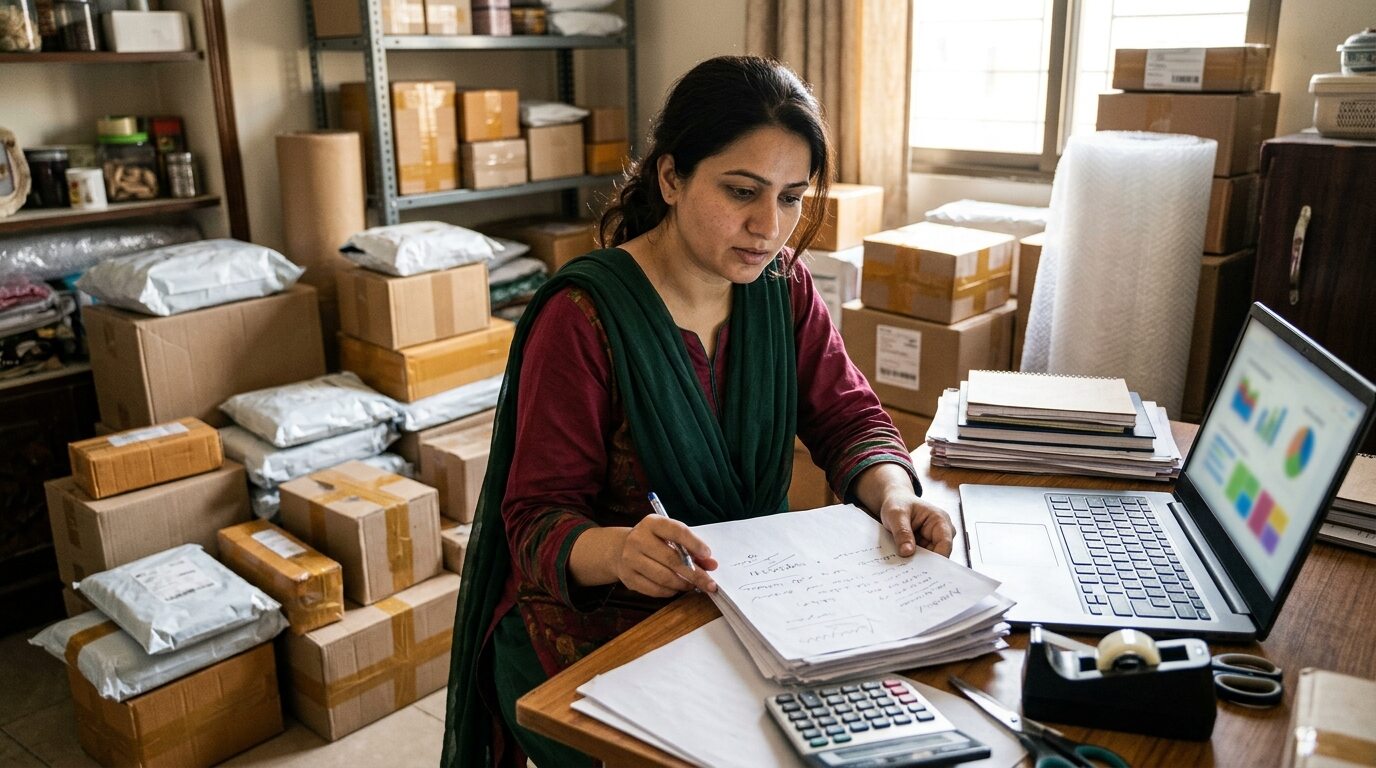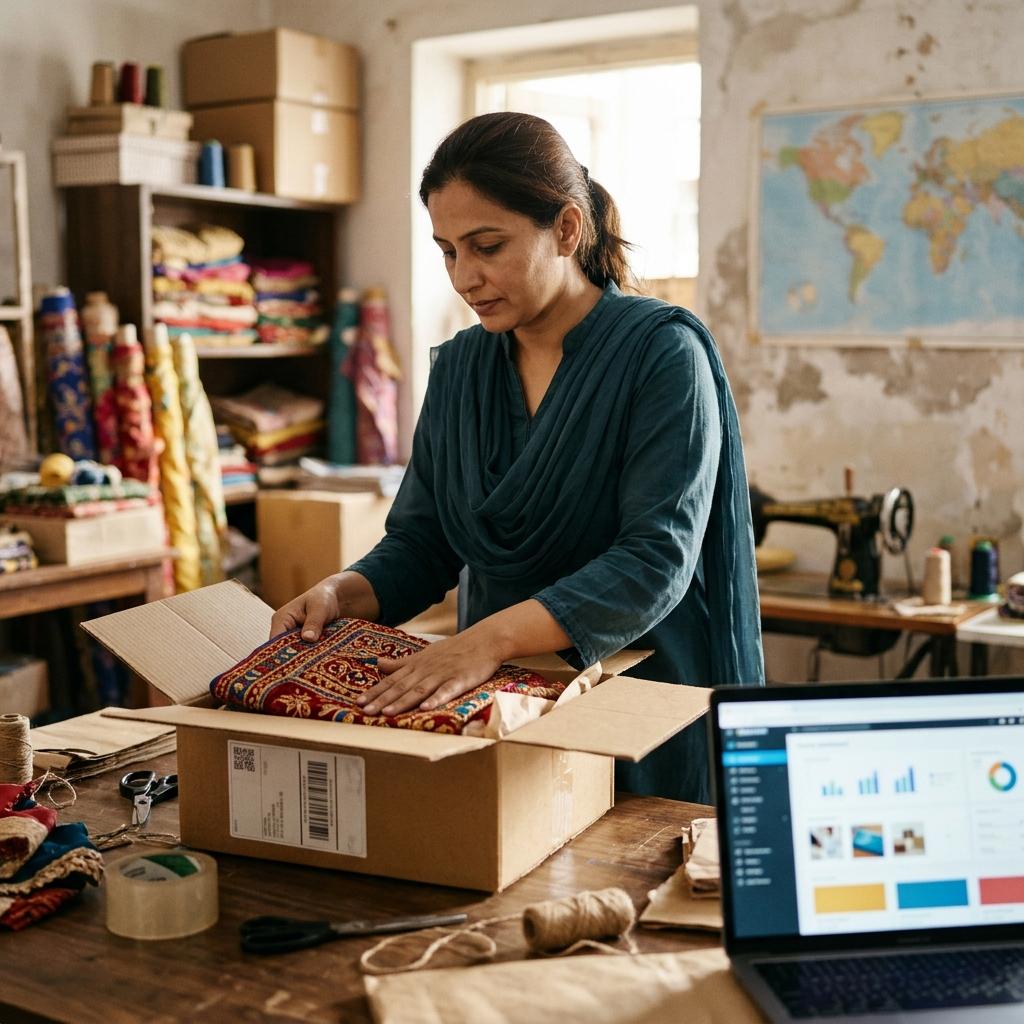
Pakistani sellers can sell their products to global customers through e-commerce exports, using platforms like Amazon (which added Pakistan to approved sellers in 2021), Shopify (for direct-to-consumer brands, often targeting the diaspora), and international marketplaces. This lets them earn in foreign currency and reach far larger markets, though it requires handling cross-border payments, logistics, and quality standards.
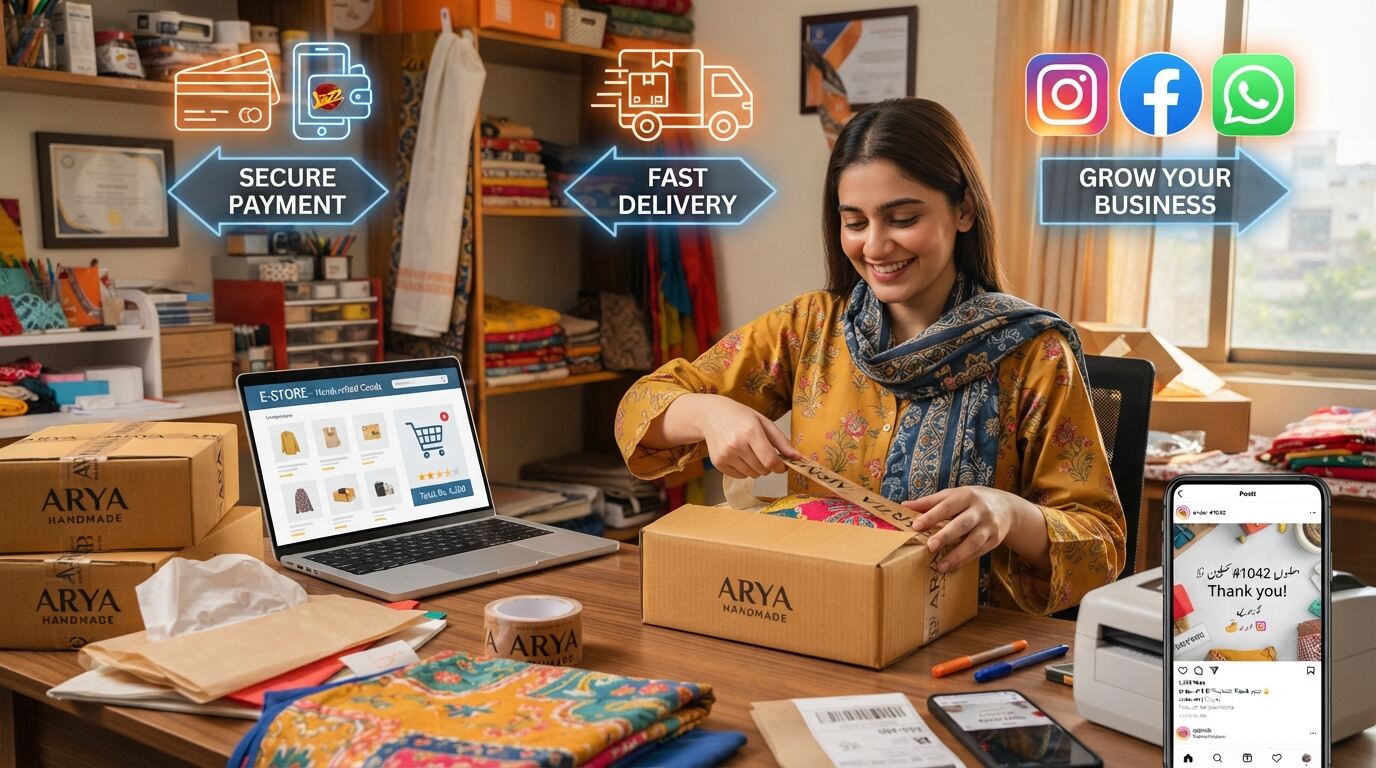
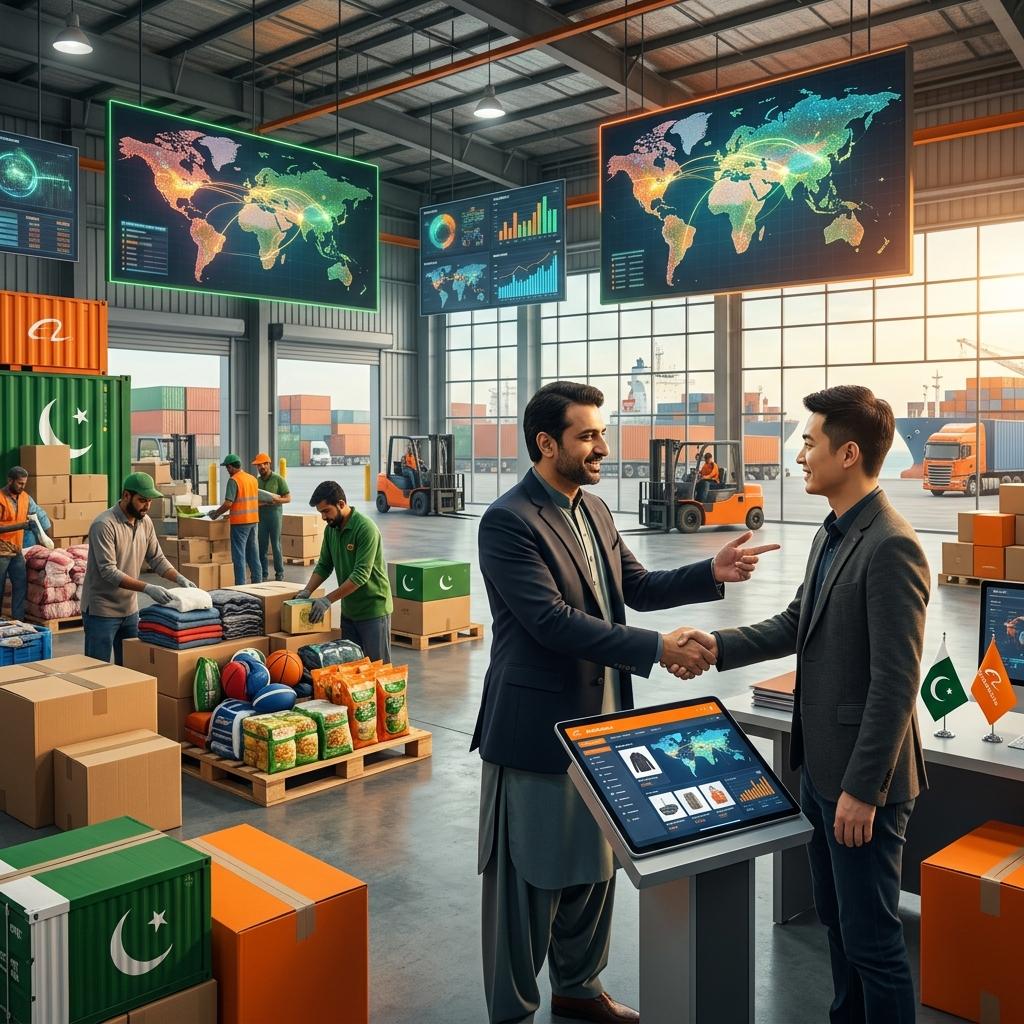
Here’s a mindset shift that could transform a Pakistani online business: stop thinking of your market as just Pakistan. Most Pakistani sellers, whether on Daraz, Instagram, or their own stores, focus entirely on domestic customers. And that’s fine, the local e-commerce market is growing. But it’s also a fraction of what’s possible. Because the same internet that lets you sell to a customer in Karachi can let you sell to a customer in New York, London, Dubai, or Toronto. E-commerce isn’t just a way to sell locally; it’s an export channel through which Pakistani products can reach the entire world.
This is a genuinely big opportunity, and an underused one. Pakistani products (fashion, textiles, handicrafts, leather goods, and more) have real global appeal, there’s a large Pakistani diaspora hungry for home products, and selling internationally means earning in valuable foreign currency. And it’s more accessible than many realize: Amazon now allows Pakistani sellers, Shopify powers Pakistani brands selling worldwide, and the infrastructure keeps improving. So how can Pakistani sellers actually sell their products to the world? Here’s a practical guide: the opportunity, the platforms and routes, how to start, how to handle payments and logistics, and the honest challenges to prepare for.
Let’s start with why this matters, because the case for going global is compelling. Selling internationally through e-commerce opens opportunities far beyond what the domestic market offers.
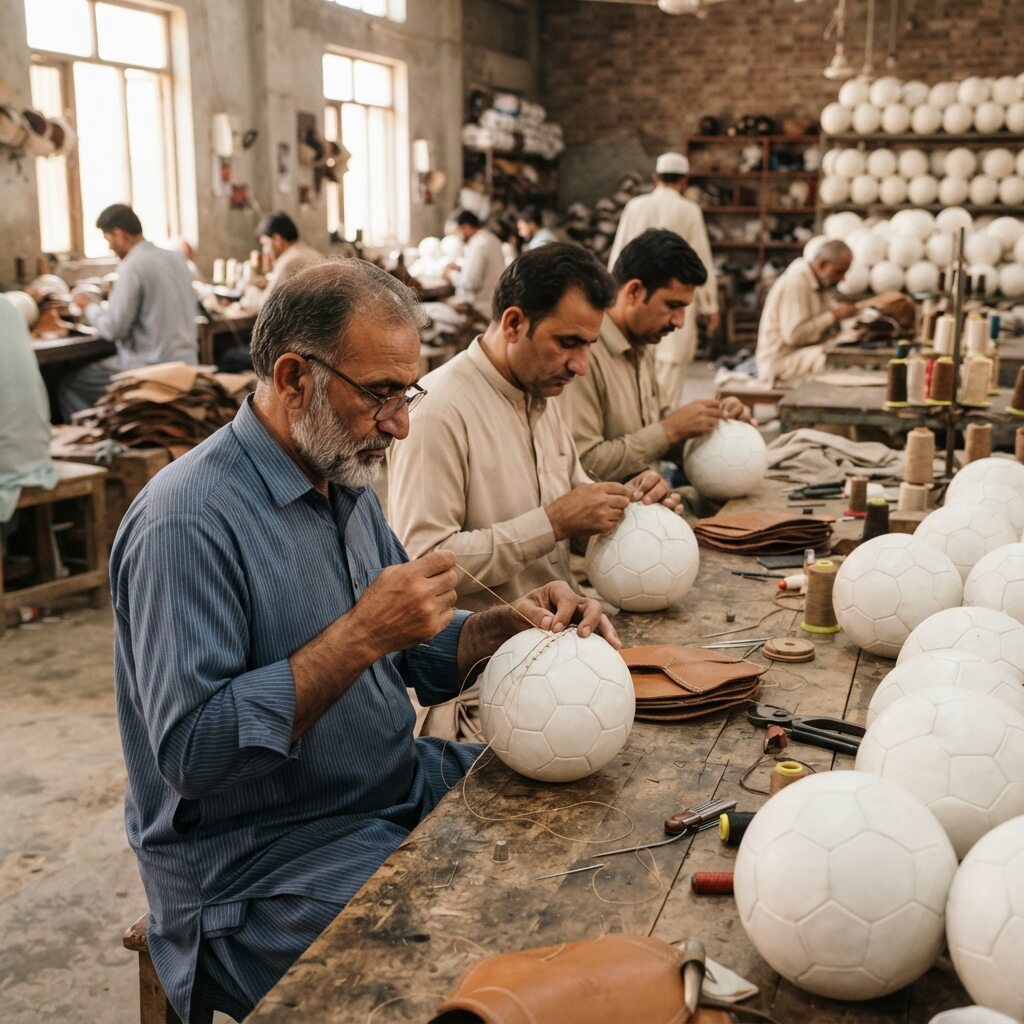
Consider the advantages. Vastly larger markets: Pakistan’s online-shopping market, while growing, is a fraction of global e-commerce; selling internationally gives you access to enormous customer bases in wealthy markets (the US, UK, Europe, the Gulf, and beyond). Higher spending power: customers in many export markets have far greater purchasing power than local buyers, so you can often command higher prices and margins. Earning in foreign currency: international sales mean earning in dollars, pounds, euros, or dirhams, valuable given Pakistan’s exchange rate, and genuinely helpful foreign exchange for you and the country. The diaspora advantage: there’s a large, global Pakistani diaspora (in the US, UK, UAE, Canada, and elsewhere) who actively want Pakistani products, clothing, food items, cultural goods, giving Pakistani sellers a natural, ready international audience (this is exactly why brands like Khaadi and Sana Safinaz target expats via their global Shopify stores). Genuine product appeal: Pakistani fashion, textiles, handicrafts, leather goods, sports goods, and more have real quality and appeal in global markets. Diversification and resilience: selling in multiple markets reduces dependence on the local economy alone. And national benefit: e-commerce exports bring foreign exchange into Pakistan and help small businesses grow, exactly what the economy needs (and why policymakers increasingly frame e-commerce as an export channel). So the opportunity is genuinely large: bigger markets, higher margins, foreign currency, a ready diaspora audience, and real product appeal. For ambitious Pakistani sellers, going global isn’t just possible; it’s a major growth opportunity worth pursuing.
So how do you actually reach global customers? There are several real platforms and routes, each suited to different sellers and products. Let’s map them out.
The main options. Amazon (for broad global reach): Amazon added Pakistan to its list of approved seller countries in 2021, so Pakistani sellers can now sell on international Amazon marketplaces (Amazon US, UK, etc.), reaching massive global customer bases. Amazon offers huge reach and fulfillment options (like FBA, Fulfillment by Amazon, where Amazon stores and ships your products), but has complex onboarding, strict policies, and high competition. Best for scaling internationally. Shopify (for your own global brand store): Shopify lets you build your own branded online store that sells worldwide, ideal for building a direct-to-consumer (DTC) brand and targeting specific audiences like the diaspora (as Khaadi, Sana Safinaz, and Gul Ahmed do). It uses USD-based pricing and integrates with international payment and shipping tools. Best for brand-builders. eBay and Etsy (for specific niches): eBay suits broad international selling, and Etsy is ideal for handmade, vintage, and niche craft items, a great fit for Pakistani artisans and handicraft makers targeting global buyers. Daraz (local-first, then regional): Daraz is primarily for the domestic (and regional) market, so it’s a good starting point to build before expanding internationally, rather than a global-export channel itself. Other cross-border marketplaces and local export tools: there are additional international marketplaces, plus Pakistan’s own export-facilitation efforts (like the WeBOC e-commerce export clearance system) to ease cross-border shipping. The key: match the platform to your product and goal, Amazon or eBay for broad reach, Etsy for handmade/niche, Shopify for your own brand (especially diaspora-focused), starting local on Daraz and scaling to exports as you grow. A common, smart roadmap is: validate locally (social media/Daraz), then launch a Shopify store or Amazon listing for exports once your product and quality are proven.
Let’s get practical, how does a Pakistani seller actually begin selling internationally? Here’s a sensible step-by-step path, so it feels achievable rather than overwhelming.
A practical roadmap. First, have a product with global appeal: ensure your product is something international customers (or the diaspora) genuinely want, with quality that meets global standards, Pakistani fashion, textiles, handicrafts, leather, and cultural goods are strong candidates. Second, start by validating (locally or small): test your product and build some track record (even locally, via social media or Daraz) before investing heavily in exports. Third, choose your export platform and market: pick the right platform (Amazon, Shopify, Etsy, etc.) and target market based on your product and audience (e.g., Shopify targeting the US/UK diaspora, or Amazon US for broad reach). Fourth, set up properly: create your seller account/store, handle the registration and requirements (Amazon’s onboarding, or building your Shopify store), and ensure you meet platform and (where relevant) export rules. Fifth, sort out payments: set up a reliable way to receive international payments (Payoneer, Wise where available, or platform payouts), understanding the fees and currency conversion (as with freelancing, this is a key consideration). Sixth, solve logistics and fulfillment: plan how products reach international customers, options include shipping directly (via couriers/post, using tools like WeBOC for clearance), or using fulfillment services (like Amazon FBA, where you send stock to Amazon and they ship it). Seventh, price for the market: price appropriately for the target market (factoring in costs, shipping, fees, and competition), you can often command higher prices internationally. Eighth, market your products: use the platform’s tools, ads, SEO, and social media to drive traffic and sales (especially important on competitive platforms like Amazon). And ninth, start small, learn, and scale: begin with a focused product/market, learn the ropes (listings, fulfillment, customer service, returns), and scale as you gain experience and traction. The key mindset: you don’t need to do everything at once, start with one product, one platform, one market, prove it works, and grow. Many successful Pakistani export sellers started exactly this way. It’s a learnable, step-by-step journey.
Two practical areas deserve special attention, because they’re where cross-border selling gets genuinely tricky: payments and logistics. Getting these right is essential.
On payments: selling internationally means receiving money from abroad, which (as Pakistani freelancers know well) involves real friction, PayPal doesn’t operate in Pakistan, and alternatives (Payoneer, Wise where available, platform payouts, bank transfers) involve fees and currency-conversion costs (often 1-4%). So plan how you’ll receive and repatriate your earnings efficiently, minimize fees, and factor these costs into your pricing. (Encouragingly, this is an area of active improvement in Pakistan, and emerging solutions, even potentially stablecoins in future, may ease it over time.) On logistics and fulfillment: getting products to international customers reliably and affordably is a real challenge. Options include: shipping directly from Pakistan (via international couriers like DHL/FedEx or postal services, using Pakistan’s WeBOC e-commerce export clearance to streamline customs), which gives control but can be slow/costly for individual orders; or using fulfillment services like Amazon FBA (send your stock in bulk to Amazon’s fulfillment centers abroad, and they store, pack, and ship to customers, faster delivery and less hassle, but with fees and upfront logistics). Plan your logistics carefully, factoring in shipping times, costs, customs, and returns (international returns can be complex and costly). Be transparent with customers about shipping times (especially for direct-from-Pakistan shipping). Mastering payments and logistics, the two biggest practical hurdles, is what separates sellers who successfully export from those who struggle. Invest effort here; it’s worth it.
In keeping with honest analysis, let’s be clear about the real difficulties, because selling internationally is a genuine opportunity but not an easy one. Prepare for these challenges.
The honest hurdles. Cross-border payments friction: as noted, receiving international payments efficiently (with fees and no PayPal) is a real challenge. International logistics and shipping: reliable, affordable, timely delivery to global customers (and handling returns) is genuinely hard and can eat into margins. Platform complexity and competition: platforms like Amazon have complex onboarding, strict policies, and intense global competition, standing out takes effort, good products, and marketing. Meeting global standards: international customers expect high quality, professional presentation, good service, and fast shipping, you must meet these standards to succeed. Quality and consistency: maintaining consistent quality and reliable fulfillment at a distance is demanding. Building trust and reviews: new international sellers must build credibility and reviews, which takes time. Upfront investment and learning curve: exporting (especially via FBA or building a brand store) requires some investment and learning. And regulatory and tax considerations: understand the export, tax, and compliance requirements (in Pakistan and the target market). So selling internationally is genuinely rewarding but genuinely demanding, it requires quality products, effort, learning, investment, and mastering payments and logistics. It’s not a quick or easy path, but for committed sellers with good products, it’s a highly worthwhile one. Go in with realistic expectations and a willingness to learn.
E-commerce exports carry real significance beyond individual sellers.
For sellers and businesses: going global opens vastly larger markets, higher margins, and foreign-currency earnings, a major growth opportunity for Pakistani businesses, from small artisans to established brands.
For foreign exchange: e-commerce exports bring valuable foreign currency into Pakistan, helping the economy and the country’s external position, which is exactly why policymakers increasingly emphasize e-commerce as an export channel.
For SMEs and artisans: it lets small businesses, home-based entrepreneurs, and artisans reach global markets without huge investment, democratizing export opportunity.
For economic diversification: growing e-commerce exports adds a valuable, scalable dimension to Pakistan’s exports (alongside traditional goods and IT/freelancing), supporting broader economic goals.
The key insight is that Pakistani sellers should expand their ambition beyond the domestic market and recognize e-commerce as a genuine export channel to the world, a major, underused opportunity to reach vastly larger markets, earn foreign currency, and grow, provided they approach it smartly, with good products and a willingness to master the real hurdles of cross-border payments and logistics. Too many Pakistani online businesses think only locally, competing for a share of a growing but still-limited domestic market, when the same skills and (often) the same products could reach customers worldwide. The opportunity is real and increasingly accessible: Amazon now allows Pakistani sellers, Shopify powers Pakistani brands selling globally (especially to the large, eager diaspora), platforms like Etsy suit artisans, and Pakistan’s export infrastructure keeps improving. Pakistani products, fashion, textiles, handicrafts, leather, cultural goods, have genuine global appeal, and selling them internationally means higher margins, foreign-exchange earnings, and far greater growth potential than the domestic market alone.
The practical wisdom is “think global, start smart.” Think global by recognizing and pursuing the export opportunity, don’t limit your business to Pakistan when the world is reachable. Start smart by being strategic and realistic: choose the right platform and market for your product (Shopify for a diaspora-focused brand, Amazon for broad reach, Etsy for handmade), start small with one product and market to learn the ropes, master the two biggest practical hurdles (cross-border payments and international logistics), meet global quality and service standards, and scale as you gain traction. Be prepared for genuine challenges, payment friction, shipping complexity, competition, and the learning curve, but don’t let them deter you; they’re surmountable with effort and good products, and successful Pakistani export sellers (from big brands to small artisans) have shown it’s doable. For Pakistan’s sellers, this is a genuine invitation to grow beyond local: your products can reach the world, earn you foreign currency, and build a far bigger business, if you think global and start smart. And for Pakistan, every seller who successfully exports adds valuable foreign exchange and strengthens the economy. So to Pakistan’s online sellers: stop just selling locally. The world is your market, start reaching it, one product, one platform, one country at a time. The opportunity is real, accessible, and waiting. Go global, wisely.
Expect e-commerce exports from Pakistan to grow as more sellers recognize the opportunity, platforms and infrastructure improve, and payment and logistics solutions get easier. Watch for better cross-border payment options (a key enabler), improved export logistics and facilitation, and more Pakistani brands and sellers (from artisans to established companies) successfully reaching global markets, especially the diaspora. Government emphasis on e-commerce as an export channel should further support this.
For sellers, the trajectory is encouraging: going global is becoming more accessible and will likely keep getting easier, so those who start building international selling capabilities now will be well-positioned as the opportunity grows. For Pakistan, rising e-commerce exports could become a meaningful, scalable source of foreign exchange and SME growth. The key enablers to watch are payments and logistics, as these improve, the barriers fall and the opportunity expands. The direction is clearly toward more Pakistani products reaching more of the world online. Sellers who think global and start smart now will be ahead of the curve. The future of Pakistani e-commerce isn’t just domestic; it’s increasingly global, and that’s a genuinely exciting opportunity.
For Pakistan’s online sellers, there’s a world of opportunity, literally, beyond the domestic market. E-commerce isn’t just a way to sell to customers in Pakistan; it’s an export channel through which Pakistani products can reach global customers, from the vast markets of the US, UK, Europe, and the Gulf to the large, eager Pakistani diaspora worldwide. The opportunity is genuinely big: vastly larger and higher-spending markets, valuable foreign-currency earnings, a ready diaspora audience, and real global appeal for Pakistani fashion, textiles, handicrafts, leather, and cultural goods. And it’s increasingly accessible, Amazon now allows Pakistani sellers, Shopify powers Pakistani brands selling worldwide, Etsy suits artisans, and the infrastructure keeps improving. Getting started is a learnable, step-by-step journey: have a globally-appealing quality product, choose the right platform and market, set up properly, sort out payments and logistics (the two biggest practical hurdles), price for the market, market well, and start small then scale. The honest challenges are real, cross-border payment friction, international logistics, platform competition, quality standards, and a learning curve, so go in with realistic expectations and a willingness to learn. But for committed sellers with good products, e-commerce exports are a genuinely powerful path to growth, far bigger than the local market alone, and a valuable source of foreign exchange for Pakistan. So here’s the invitation: stop just selling locally. Think global, start smart, and begin reaching the world, one product, one platform, one country at a time. Your products can travel far further than you might imagine, and the global market is more within reach than ever. Go global, wisely, and grow.
This article is for general informational and guidance purposes only, based on information available in 2026, which changes over time. Platform policies, seller eligibility, fees, payment options, export rules, and tax requirements vary and change, always verify current details directly with the relevant platforms (Amazon, Shopify, etc.), payment providers, and Pakistani authorities (such as the SBP, FBR, and export facilitation bodies), and comply with all applicable rules in Pakistan and your target markets. Mentions of platforms and brands are illustrative, not endorsements. This is not business, financial, legal, or tax advice; consult qualified professionals for your specific situation.
Most Pakistani online sellers focus only on the domestic market, but a major underused opportunity is e-commerce exports, selling Pakistani products to global customers (and the large Pakistani diaspora) through international platforms, earning in foreign currency. As a Pakistani op-ed framed it, e-commerce should be recognized “not merely as a convenient way to buy and sell goods, but as an export channel through which Pakistani products can reach global markets.”
Why sell globally: vastly larger markets (global e-commerce dwarfs Pakistan’s domestic market); higher spending power and margins in wealthy markets (US, UK, Europe, Gulf); earning in foreign currency (dollars, pounds, dirhams, valuable given the exchange rate and for the economy); the diaspora advantage (a large global Pakistani population eager for home products, clothing, food, cultural goods, which is why Khaadi, Sana Safinaz, and Gul Ahmed target expats via global Shopify stores); genuine product appeal (Pakistani fashion, textiles, handicrafts, leather, sports goods); diversification; and national benefit (foreign exchange, SME growth).
Platforms and routes: Amazon (added Pakistan to approved seller countries in May 2021; Pakistanis can sell on international Amazon marketplaces with huge reach and FBA fulfillment, but complex onboarding, strict policies, high competition, best for scaling); Shopify (build your own global DTC brand store, great for diaspora-focused brands, USD pricing); eBay (broad international selling) and Etsy (handmade/vintage/niche, ideal for artisans); Daraz (local-first, a starting point before export); and Pakistan’s WeBOC e-commerce export clearance to ease cross-border shipping. Match platform to product/goal. Common roadmap: validate locally (social/Daraz), then launch Shopify or Amazon for exports once quality is proven.
How to start: have a globally-appealing quality product; validate small first; choose the right platform and target market; set up properly (accounts, requirements, export rules); sort out international payments (Payoneer, Wise, platform payouts, since PayPal doesn’t work in Pakistan, watch 1-4% conversion fees); solve logistics (ship directly via DHL/FedEx/post with WeBOC clearance, or use Amazon FBA); price for the market; market via ads/SEO/social; and start small then scale.
Honest challenges: cross-border payment friction (fees, no PayPal, currency conversion); international logistics/shipping and returns; platform complexity and intense competition (Amazon); meeting high global quality/service/shipping standards; building trust and reviews; upfront investment and learning curve; and export/tax/compliance requirements. It’s rewarding but demanding.
Takeaway: “Think global, start smart.” Pakistani sellers should pursue e-commerce exports as a genuine, increasingly accessible path to bigger markets, foreign-currency earnings, and growth, choosing the right platform, starting small, mastering payments and logistics, meeting global standards, and scaling. Every successful exporter also brings foreign exchange to Pakistan. Informational/guidance; verify current platform policies, fees, payment options, and export/tax rules; platforms mentioned illustratively, not endorsed; not business/financial/legal/tax advice.