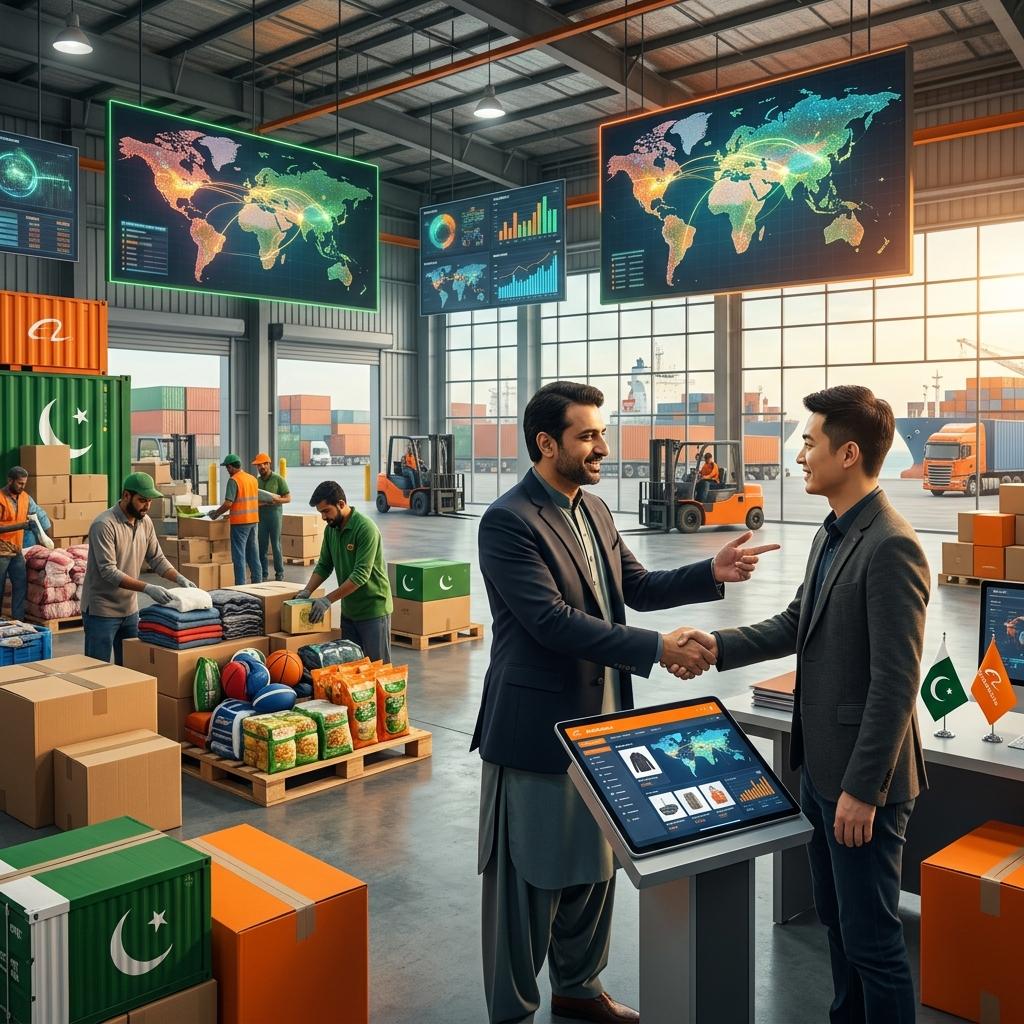
Pakistan is deepening cooperation with Alibaba (which already owns Daraz, Pakistan's largest marketplace) on e-commerce, digital payments, tax reform, the Pakistan Single Window, and exporting Pakistani agricultural goods to China via Alibaba's network. It's a major opportunity, access to the world's largest e-commerce ecosystem and export markets, but raises honest questions about dependence on a single foreign giant.
Here's a development with big implications for Pakistan's digital economy. Pakistan is actively courting Alibaba, the Chinese e-commerce and technology giant, to deepen cooperation across online commerce, digital payments, and trade. In October 2026, Pakistan's Finance Minister met Alibaba's international commerce leadership in Bangkok (on the sidelines of the World Bank-IMF meetings) to explore a wide-ranging partnership, from reforming e-commerce taxation to exporting Pakistani goods to China through Alibaba's vast retail network.
On one hand, this could be a huge opportunity: plugging Pakistan into the world's largest e-commerce ecosystem, opening export markets, and modernizing its digital trade. On the other, it raises an honest question worth asking: with Alibaba already owning Daraz (Pakistan's biggest online marketplace), is Pakistan gaining a powerful partner, or deepening its dependence on a single foreign giant that could shape its digital economy? Here's a balanced look at what's happening, the genuine opportunity, the honest risks, and how Pakistan can get the most from this without handing over the keys.
Let's start with the specifics, because the scope is genuinely wide-ranging. Pakistan's Finance Minister met the leadership of Alibaba International Digital Commerce (AIDC) to discuss cooperation across several areas of Pakistan's digital economy.
The talks reportedly covered: E-commerce taxation reform, Pakistan invited Alibaba to propose changes to how it taxes online commerce, aiming to rationalize e-commerce taxes while bringing more businesses into the tax net (potentially reshaping how millions of online sellers are taxed, possibly before the next budget). Digital payments and cashless transactions, cooperation on expanding digital payments, including the transparent delivery of social-protection payments and subsidies. The Pakistan Single Window (PSW), accelerating and improving Pakistan's digital trade-facilitation platform (and its e-commerce capabilities). Pakistan Post modernization, upgrading Pakistan Post's sorting and logistics systems (crucial for e-commerce delivery). Agricultural exports to China, exploring how Pakistani agricultural products could reach Chinese consumers through Alibaba's massive retail network, a potentially significant export opportunity. And cloud and AI infrastructure, broader technology cooperation. So this isn't a narrow deal; it's a wide-ranging exploration of Alibaba helping modernize and expand Pakistan's entire digital-trade and e-commerce ecosystem. The ambition is substantial.
Let's give the opportunity its full due, because it's real and significant. Partnering with Alibaba could bring Pakistan genuine, valuable benefits across its digital economy.
Consider the upside. Access to the world's largest e-commerce ecosystem, Alibaba operates some of the biggest e-commerce and digital-trade platforms on earth, so partnering could plug Pakistani businesses into enormous markets, tools, and expertise. Export markets (especially China), the prospect of selling Pakistani products, particularly agricultural goods, to Chinese consumers via Alibaba's network could open a huge export channel, valuable for Pakistan's exports and foreign exchange. E-commerce infrastructure and expertise, Alibaba's world-class capabilities in logistics, payments, cloud, and platforms could help modernize Pakistan's digital-trade infrastructure (PSW, Pakistan Post, payments) far faster than Pakistan could alone. Smarter tax reform, input from a global e-commerce leader could help Pakistan design better, more sensible e-commerce taxation (a genuine pain point, as we've discussed with Temu and COD). SME and seller empowerment, better platforms, payments, and export access could genuinely help Pakistani SMEs and online sellers reach bigger markets. And digital-economy acceleration, overall, the partnership could meaningfully accelerate Pakistan's digital-trade ambitions. So the opportunity is substantial and real: Alibaba could be a powerful accelerant for Pakistan's e-commerce, exports, and digital modernization. Pursuing it makes genuine sense.
Now the essential counterbalance, because deepening reliance on Alibaba raises legitimate questions worth confronting honestly and evenhandedly. The concern isn't about Alibaba being Chinese or foreign per se; it's about concentration, dependence, and who controls Pakistan's digital-economy infrastructure and rules.
Here's the worry, stated fairly. Alibaba already owns Daraz, Pakistan's largest online marketplace, so it already has a dominant position in Pakistani e-commerce. Deepening the relationship, letting Alibaba shape e-commerce tax policy, build/influence digital-trade infrastructure (PSW, payments, logistics), and dominate export channels, could concentrate enormous influence over Pakistan's digital economy in one foreign company's hands. Specific concerns include: letting a single foreign giant influence Pakistan's own tax rules (even if well-intentioned, it's a sensitive sovereignty question); over-reliance on one platform/company for critical e-commerce and export infrastructure (creating dependence and reducing Pakistan's leverage); potential disadvantaging of local platforms and competitors if one giant's position deepens; data and digital-sovereignty questions around critical infrastructure; and the risk that Pakistan becomes a market/supplier within Alibaba's ecosystem rather than building its own digital-economy capability. None of this means the partnership is bad, cooperation with capable global players is often smart. But it means Pakistan should engage thoughtfully, ensuring it gains genuine benefit and retains control, rather than ceding undue influence over its digital economy to a single foreign giant. The dependence question is legitimate and worth taking seriously.
This tension should feel familiar, because it echoes a recurring theme in Pakistan's tech story, which helps frame it wisely. As we've explored with AI cooperation (and the "cooperate to build, not just to buy" principle), Pakistan repeatedly faces the same strategic question: how to benefit from powerful global partners and platforms without becoming dependent on them or ceding control.
The Alibaba situation is another instance of this. On one side: engaging with capable global players (Alibaba, and others) brings real resources, expertise, markets, and acceleration Pakistan can't easily replicate alone, and isolation would be self-defeating. On the other: over-dependence on foreign giants for critical infrastructure, rules, and markets can erode Pakistan's control, leverage, and ability to build its own lasting capability. The wise path, as with AI, is balance: embrace valuable cooperation while deliberately protecting sovereignty and building domestic capability, ensuring partnerships are genuine two-way value exchanges that strengthen (not supplant) Pakistan's own digital economy. The goal should be to use Alibaba's capabilities to accelerate Pakistan's digital trade and exports while keeping Pakistan in the driver's seat of its own digital economy, not becoming merely a node in Alibaba's. Recognizing this familiar pattern helps Pakistan engage with eyes open: enthusiastically, but strategically and on balanced terms.
Given the opportunity and the concern, here's what would make this partnership genuinely beneficial rather than a dependence trap. Several principles matter.
Key priorities: Keep control of policy, welcome Alibaba's input on e-commerce tax reform, but ensure Pakistan's government (not a foreign company) makes the final rules, in Pakistan's own interest and that of all players (not just Alibaba/Daraz). Protect fair competition, ensure the partnership doesn't unfairly entrench Alibaba/Daraz's dominance or disadvantage local platforms and sellers; a level playing field matters. Secure genuine two-way value, structure cooperation so Pakistan gains real benefits (export access, infrastructure, capability, jobs), not just becoming a market and supplier for Alibaba. Diversify partnerships, engage Alibaba, but also other global and regional players (and build local capability), to avoid over-dependence on any single giant. Safeguard data and digital sovereignty, maintain appropriate control and security over critical digital-trade infrastructure and data. Prioritize the export opportunity, push hard on the genuinely valuable agri-export-to-China channel, which offers clear benefit to Pakistani farmers and exporters. And build local capability alongside, use the partnership to strengthen (not replace) Pakistan's own digital-economy capabilities. Done with these principles, the Alibaba partnership could be a powerful accelerant that genuinely benefits Pakistan while keeping it in control. Done carelessly, it risks dependence. The difference is in the terms and the strategy.
This development carries real stakes for Pakistan.
For e-commerce and SMEs, the partnership could bring better platforms, payments, and especially export access, genuinely benefiting Pakistani online sellers and small businesses, if structured well.
For exports, the agri-export-to-China channel via Alibaba's network could open a significant new export market, valuable for farmers, exporters, and foreign exchange.
For tax and policy, how Pakistan handles Alibaba's input on e-commerce taxation will shape the rules for millions of online sellers, and test whether Pakistan keeps control of its own policy.
For digital sovereignty, the partnership tests Pakistan's ability to benefit from global giants while protecting its control, competition, and capability, a defining challenge for its digital future.
The balanced takeaway is that Pakistan's deepening engagement with Alibaba is a genuinely valuable opportunity worth pursuing enthusiastically, but it should be pursued strategically and on balanced terms that keep Pakistan in control of its own digital economy, rather than ceding undue influence to a single foreign giant. The opportunity is real and substantial: access to the world's largest e-commerce ecosystem, a potentially huge export channel to China (especially for agriculture), world-class infrastructure and expertise to modernize Pakistan's digital trade, and smarter tax reform. For a country working to grow its digital economy and exports, partnering with a capable global leader like Alibaba could be a powerful accelerant, and refusing such cooperation would be self-defeating.
But the honest caution matters equally: Alibaba already dominates Pakistani e-commerce through Daraz, so deepening the relationship, especially letting it shape tax rules and critical infrastructure, risks concentrating too much influence over Pakistan's digital economy in one foreign company's hands. The wise path, echoing the broader lesson of Pakistan's tech cooperation (benefit from partners while protecting sovereignty and building capability), is to embrace the partnership's genuine value while ensuring: Pakistan keeps control of its own policy; competition stays fair; the value exchange is genuinely two-way; partnerships are diversified; data and digital sovereignty are protected; and Pakistan builds its own capability alongside. The goal is to use Alibaba to accelerate Pakistan's digital economy while keeping Pakistan in the driver's seat, not to become merely a node in Alibaba's empire. For Pakistan, the smart move is clear: pursue this opportunity with genuine enthusiasm and open eyes, capturing the real benefits (exports, infrastructure, modernization) while negotiating from strength and safeguarding its control, competition, and long-term capability. Embrace Alibaba, yes, but on Pakistan's terms. That's how a powerful partnership becomes a genuine win rather than a dependence trap. The opportunity is real; capturing it wisely is the task.
Watch whether the Pakistan-Alibaba cooperation translates into concrete outcomes, e-commerce tax reform (possibly before the next budget), progress on the Pakistan Single Window and Pakistan Post, expanded digital payments, and especially the agri-export-to-China channel. Watch too how Pakistan balances the opportunity with safeguards: keeping policy control, protecting competition, and avoiding over-dependence.
If Pakistan engages strategically, capturing the benefits while retaining control, the partnership could meaningfully accelerate its digital economy and exports. If it cedes too much influence, it risks dependence on a single foreign giant. The trajectory depends on how wisely Pakistan negotiates and structures the relationship. More broadly, this reflects Pakistan's ongoing navigation of how to benefit from powerful global tech players while building and protecting its own digital economy, a defining challenge. Handled well, Alibaba could be a valuable accelerant; the key is engaging on balanced terms that serve Pakistan's lasting interests.
Pakistan courting Alibaba, to cooperate on e-commerce, digital payments, tax reform, infrastructure, and exporting Pakistani goods to China, is a genuinely significant opportunity for its digital economy. The upside is real and substantial: access to the world's largest e-commerce ecosystem, a potentially huge agri-export channel to China, world-class infrastructure and expertise to modernize Pakistan's digital trade, and smarter tax reform. Pursuing it makes genuine sense; isolation would be self-defeating. But the honest concern is equally real: Alibaba already owns Daraz and dominates Pakistani e-commerce, so deepening the relationship, especially letting it influence Pakistan's own tax rules and critical infrastructure, risks concentrating too much control over Pakistan's digital economy in one foreign giant's hands. This echoes Pakistan's recurring strategic challenge: how to benefit from powerful global partners without becoming dependent on them. The wise path is balance: embrace the partnership's genuine value enthusiastically, while ensuring Pakistan keeps control of its policy, protects fair competition, secures genuine two-way value, diversifies its partnerships, safeguards digital sovereignty, and builds its own capability alongside. The goal is to use Alibaba to accelerate Pakistan's digital economy while keeping Pakistan firmly in the driver's seat, not becoming merely a node in Alibaba's empire. Embrace the opportunity, yes, but on Pakistan's terms. Done wisely, the Alibaba partnership could be a powerful win for Pakistan's e-commerce, exports, and digital future. The keys are worth keeping; the opportunity is worth seizing, carefully.
This article is an opinion and analysis piece for general informational purposes, based on reports available in 2026, which may change. Details of the Pakistan-Alibaba discussions are as reported by cited sources and remain exploratory. This article presents the topic non-partisanly, focusing on the economic dimension, and is not taking geopolitical sides. This is not investment, policy, or business advice.
Pakistan is deepening engagement with Alibaba, the Chinese e-commerce and technology giant. On October 15, 2026, Pakistan's Finance Minister Muhammad Aurangzeb met Alibaba International Digital Commerce (AIDC) leadership in Bangkok (on the sidelines of the World Bank-IMF Annual Meetings 2026) to explore wide-ranging cooperation across Pakistan's digital economy.
What was discussed: reforming e-commerce taxation (Pakistan invited Alibaba to propose changes, aiming to rationalize e-commerce taxes while broadening the tax net, possibly before the next budget); digital payments and cashless transactions (including transparent delivery of social-protection payments/subsidies); accelerating the Pakistan Single Window (PSW) digital trade platform; modernizing Pakistan Post's sorting/logistics; exporting Pakistani agricultural products to Chinese consumers via Alibaba's retail network; and cloud/AI infrastructure.
The opportunity: access to the world's largest e-commerce ecosystem; a potentially huge export channel to China (especially agriculture); world-class infrastructure/expertise to modernize Pakistan's digital trade; smarter tax reform informed by a global leader; SME/seller empowerment; and overall digital-economy acceleration.
The honest concern (dependence/control): Alibaba already owns Daraz, Pakistan's largest online marketplace, so it's already dominant in Pakistani e-commerce. Deepening the relationship, especially letting it shape e-commerce tax policy and critical digital-trade infrastructure, could concentrate enormous influence over Pakistan's digital economy in one foreign company. Specific worries: a foreign giant influencing Pakistan's own tax rules (a sovereignty question); over-reliance on one platform/company; potential disadvantaging of local competitors; data/digital-sovereignty questions; and Pakistan becoming a node/supplier in Alibaba's ecosystem rather than building its own capability.