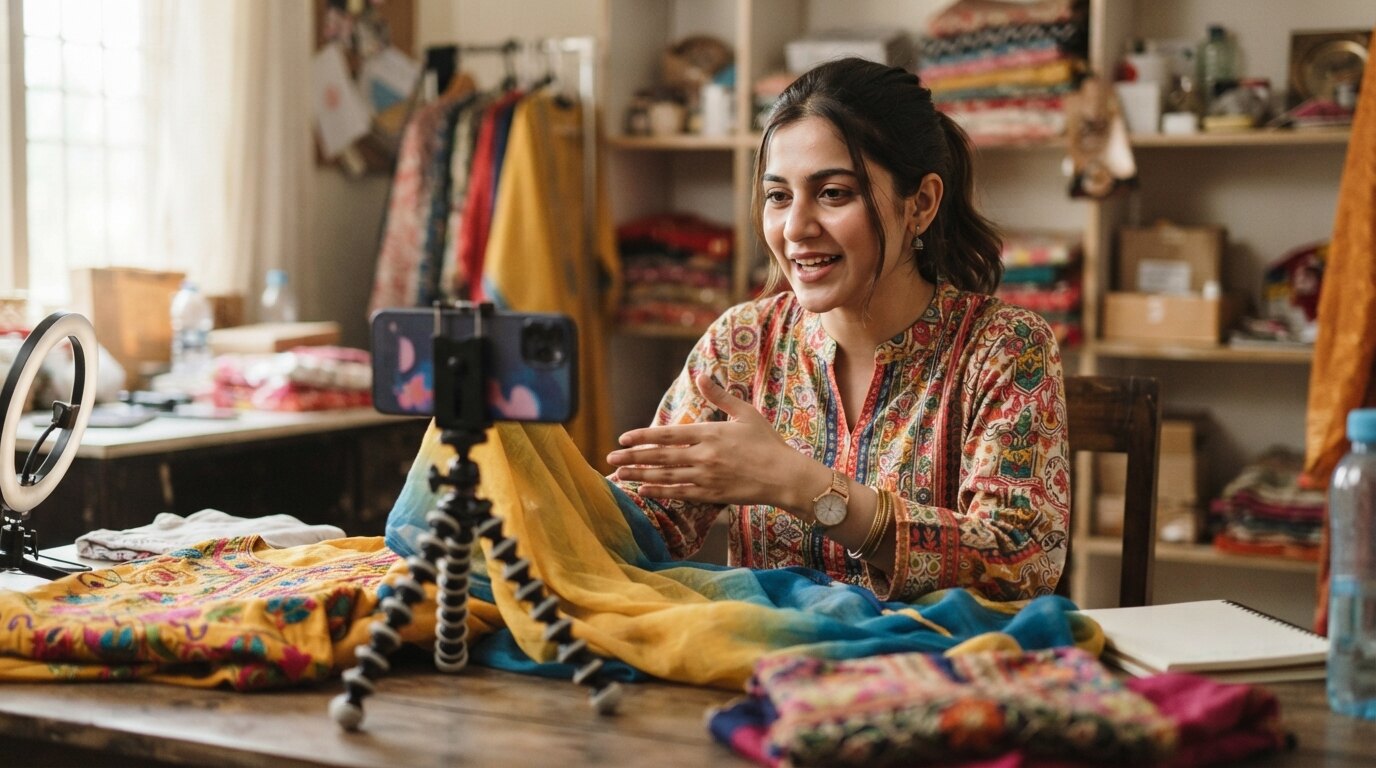
Social commerce, selling directly through social platforms like TikTok, Instagram, and Facebook, is rapidly becoming a dominant force in Pakistani e-commerce. Driven by mobile-first, video-loving young consumers, "social media is now the front of the store." If TikTok Shop launches full checkout in Pakistan, the sector could grow dramatically. Sellers should build a social presence alongside marketplaces.
Something fundamental is shifting in how Pakistanis shop. For years, "online shopping" meant going to a marketplace like Daraz, searching for a product, and buying it. But increasingly, that's not where the action is. Today, a huge and growing share of shopping starts, and finishes, on social media: a TikTok video, an Instagram reel, a Facebook post. As one industry observer put it bluntly, "social media is no longer about marketing; it is the front of the store."
This rise of "social commerce" is one of the most important trends reshaping Pakistani e-commerce in 2026, and it has major implications for anyone selling online. Is social media overtaking traditional marketplaces? What happens if TikTok Shop fully launches here? And most importantly, how should sellers respond? Here's a clear look at the trend and the strategy it demands.
Let's define it clearly, because it's more than just "marketing on social media." Social commerce is when the entire shopping journey, discovery, engagement, and often the purchase itself, happens directly on social platforms like TikTok, Instagram, and Facebook, rather than a separate e-commerce website.
Here's the distinction. Traditional e-commerce: you see an ad, then go to a website (like Daraz) to browse and buy. Social commerce: you discover a product in a TikTok video or Instagram reel, engage with the seller in comments or DMs, and buy, often without ever leaving the app (or via a quick WhatsApp order). The social platform isn't just advertising the store; it is the store. In Pakistan, much of this happens through creators and small businesses selling via videos, live sessions, Instagram shops, and Facebook pages, with orders frequently completed over WhatsApp or DMs and paid via cash on delivery or mobile wallets. It's shopping woven directly into the content and social experience people already spend hours in daily. That seamless blend of content, community, and commerce is what makes social commerce so powerful, and so different.
Social commerce isn't growing by accident, Pakistan is almost perfectly suited for it, and understanding why explains the momentum. Several factors make Pakistan fertile ground.
Consider the drivers. Mobile-first population: over 85-90% of Pakistani online orders come from mobile devices, and social apps are where people spend their mobile time, so commerce naturally follows. A young, video-loving audience: Pakistan's huge Gen Z and young population lives on TikTok, Instagram, and Facebook, discovering products through video and creators they trust. The power of creators and trust: Pakistanis increasingly buy based on recommendations from creators and relatable sellers, social commerce turns that trust directly into sales, addressing the trust barrier that has long challenged online shopping. Low barrier to entry for sellers: anyone with a phone and a social account can start selling, no website or big marketplace setup needed, unleashing countless small and home-based businesses (many women-led). Familiar payment and ordering: orders via WhatsApp/DMs with cash on delivery or mobile wallets fit how Pakistanis already transact. And the entertainment factor: shopping via engaging videos and live sessions is fun and interactive in a way that browsing a marketplace isn't. Together, these make social commerce a natural fit, which is why it's growing so fast.
Here's a development that could dramatically accelerate everything, and it's worth watching closely. Much of Pakistan's current social commerce happens informally, discovery on social, but the actual transaction completed off-platform (via WhatsApp, DMs, cash on delivery). The big shift would come if platforms enable full in-app checkout, and the most-watched possibility is TikTok Shop.
TikTok Shop lets users buy products directly within TikTok, in a few taps, without leaving the app, turning viral videos and live sessions instantly into completed sales. It has been transformative in other markets (like Southeast Asia). Analysts watching Pakistan have noted that if TikTok Shop turns on full checkout here, the social-commerce vertical could essentially "double overnight." That's a striking prediction, and plausible, given Pakistan's massive TikTok usage. Full in-app checkout would remove the friction of the current informal process, making impulse buying seamless and supercharging creator-driven selling. Whether and exactly when TikTok Shop fully launches in Pakistan remains to be seen (regulatory, payment, and logistics factors all play in), but it represents a potential inflection point every seller should be prepared for. The sellers who've already built a social presence will be best positioned to capitalize when it arrives.
An important question, and the answer is nuanced, because it's not simply "social commerce replaces marketplaces." Both have distinct strengths, and the smart view is coexistence, not total replacement.
Here's the balanced picture. Marketplaces like Daraz remain powerful: they offer massive reach, established trust, search-based buying (when people know what they want), logistics infrastructure, and a destination for considered purchases (electronics, appliances). Daraz still dominates general merchandise, and Pakistan's overall e-commerce market is large and growing (projected into the double-digit billions). Social commerce, meanwhile, excels at discovery-driven, impulse, and trust-based buying, fashion, beauty, accessories, niche and creator products, things people didn't know they wanted until they saw them. So they serve different modes of shopping: marketplaces for "I know what I want, let me find it"; social for "I didn't know I wanted this until I saw it." Rather than one killing the other, Pakistan's e-commerce is fragmenting into multiple channels, and the two increasingly overlap (marketplaces add social/video features; social adds checkout). For sellers, this means it's not "either/or", it's understanding which channel fits your product and customer, and often using several.
This is the practical heart, how should you, as a seller, actually respond to this shift? The answer is to embrace social commerce strategically while thinking multi-channel. Here's how.
Several moves matter. Build a genuine social presence now: don't wait, start creating engaging content (especially video) on the platforms where your customers are (TikTok, Instagram, Facebook), building an audience and trust before TikTok Shop or full-checkout tools arrive. Master video and creators: video content and creator partnerships/influencer collaborations are the engine of social commerce, invest in them. Choose channels by product and customer: fashion, beauty, and impulse/lifestyle products thrive on social; considered, search-driven purchases suit marketplaces, use the right channel for what you sell (and often both). Prepare for in-app checkout: get ready to plug into TikTok Shop or similar when it launches, having your catalog, content, and audience ready. Nail the fundamentals: even on social, trust, good product photos/videos, responsive customer service (fast DM/WhatsApp replies), reliable delivery, and easy payment (COD/wallets) win. Don't abandon marketplaces or your own store: use marketplaces for reach and your own store/social for margin and relationship, a multi-channel approach is the resilient strategy. The core idea: meet customers where they increasingly are (social), while keeping a smart presence across channels. Adapt now, and you'll be ahead as the shift accelerates.
Balance matters, so here are the genuine challenges of social commerce, because it's not all easy money. Being aware of these helps you navigate them.
Several real issues. Trust and scams: informal social selling has a reputation problem, fake sellers, poor-quality products, and scams have made some buyers wary, so building genuine trust (reviews, transparency, reliability) is essential. Logistics and fulfillment: individual social sellers must handle delivery, returns, and cash-on-delivery reconciliation themselves, which is operationally hard at scale. Platform dependence: building your business entirely on one platform (like TikTok) is risky, algorithm changes, or platform bans/restrictions (which have happened) can wipe out your reach overnight, so diversify. Standing out: as everyone floods into social selling, competition for attention is fierce; you need genuinely engaging content. Payment and returns friction: cash on delivery dominates but brings costs and return headaches. And regulation: the rules around social commerce, taxation, and consumer protection are still evolving. None of these are dealbreakers, but they're real, and the sellers who succeed will manage them thoughtfully rather than assuming social commerce is effortless.
The rise of social commerce carries broad significance.
For small businesses and entrepreneurs, it dramatically lowers the barrier to selling online, anyone with a phone can start, empowering countless small, home-based, and women-led businesses across Pakistan.
For the e-commerce sector, social commerce is expanding the market and bringing new sellers and buyers online, deepening Pakistan's digital economy.
For creators, it turns influence into income, letting Pakistani content creators monetize directly through selling, strengthening the creator economy.
For Pakistan's economy, more people selling and buying online (including in smaller towns reached via mobile/social) supports digital and financial inclusion and economic activity, though formalizing and regulating this growing informal sector will be important.
The core strategic wisdom is timeless but urgent: meet your customers where they are, and increasingly, in Pakistan, they are on social media, discovering and buying through content. Sellers who recognize this shift and adapt, building genuine social presences, mastering video and creator-driven selling, and preparing for full in-app commerce, will thrive as the trend accelerates. Those clinging only to old models (or treating social as mere advertising) risk being left behind as "the front of the store" moves into the social feed.
But the deeper wisdom is to be strategic, not reactive. Social commerce is powerful but not a magic guarantee, and it comes with real challenges (trust, logistics, platform dependence, competition). The smartest sellers will embrace social commerce as a major, growing channel while thinking multi-channel, using social for discovery and relationship, marketplaces for reach, and their own store for control and margin, and managing the risks thoughtfully. For Pakistan's countless small businesses and aspiring entrepreneurs, this shift is genuinely empowering: it's never been easier or cheaper to start selling to a large audience. The opportunity is real and growing, especially as tools like TikTok Shop loom. So the advice is clear: don't watch this shift from the sidelines. Start building your social selling presence now, learn the craft of engaging content, prepare for the checkout revolution, and position yourself to win as social media becomes Pakistan's biggest store. The future of selling is social, and the time to adapt is now.
Expect social commerce to keep growing rapidly in Pakistan, with more selling shifting onto TikTok, Instagram, and Facebook, more creators monetizing through commerce, and, potentially, the game-changing arrival of full in-app checkout via TikTok Shop or similar, which could dramatically accelerate the sector. Watch for platforms to add more commerce features, and for the lines between social, marketplace, and messaging-based selling to keep blurring.
For sellers, the trajectory rewards those who adapt early and build genuine social presences and content skills now. Expect also gradual formalization (regulation, taxation, consumer protection) as the sector matures. Pakistan's e-commerce future is increasingly multi-channel and social-first, and the businesses that embrace this, while managing the risks and staying multi-channel, will be best positioned to thrive. The shift is underway; the smart move is to ride it deliberately.
Social commerce, selling directly through TikTok, Instagram, and Facebook, is rapidly becoming a dominant force in Pakistani e-commerce, to the point that "social media is now the front of the store." Driven by a mobile-first, video-loving young population and the trust of creators, it's exploding, and if TikTok Shop turns on full in-app checkout, the sector could grow dramatically. But this doesn't simply kill marketplaces like Daraz; rather, Pakistan's e-commerce is fragmenting into multiple channels that serve different shopping modes. For sellers, the winning response isn't to pick one channel, but to embrace social commerce strategically while thinking multi-channel: build a genuine social presence and content now, master video and creator-driven selling, prepare for full in-app checkout, nail the fundamentals of trust and service, and keep a smart presence across social, marketplaces, and your own store, all while managing the real risks of trust, logistics, and platform dependence. The barrier to selling online has never been lower, and the opportunity never bigger, especially for Pakistan's small and home-based businesses. Social media is becoming Pakistan's biggest store. The sellers who adapt now will own a place in it.
Social commerce, selling directly through social platforms like TikTok, Instagram, and Facebook (rather than a separate website), is rapidly becoming a dominant force in Pakistani e-commerce in 2026, to the point that "social media is now the front of the store." Unlike traditional e-commerce (see an ad, go to a website like Daraz to buy), social commerce means discovering a product in a video/reel, engaging with the seller in comments/DMs, and buying, often without leaving the app or via WhatsApp, typically paid by cash on delivery or mobile wallets.
Why it's exploding in Pakistan: a mobile-first population (85-90% of orders from mobile); a huge young, video-loving audience on TikTok/Instagram/Facebook; the power of creators and trust (buying on recommendation, addressing the online-trust barrier); low barriers for sellers (just a phone and account, empowering small and women-led businesses); familiar WhatsApp/COD/wallet ordering; and the entertainment factor of video and live selling.
The TikTok Shop factor: much of Pakistan's social commerce is currently informal (discovery on social, purchase off-platform). Full in-app checkout, most watched via TikTok Shop, would remove friction and turn viral videos/lives into instant sales. Analysts note that if TikTok Shop turns on full checkout in Pakistan, the social-commerce vertical could "double overnight." Its launch timing depends on regulatory, payment, and logistics factors, but it's a potential inflection point.
Does this kill Daraz? No, coexistence, not replacement. Marketplaces (Daraz) remain strong for search-based, considered purchases (electronics, appliances) with reach and logistics; social commerce excels at discovery-driven, impulse, trust-based buying (fashion, beauty, creator products). Pakistan's e-commerce is fragmenting into multiple channels that increasingly overlap.
Seller strategy: build a genuine social presence now (especially video); master creator-driven selling; choose channels by