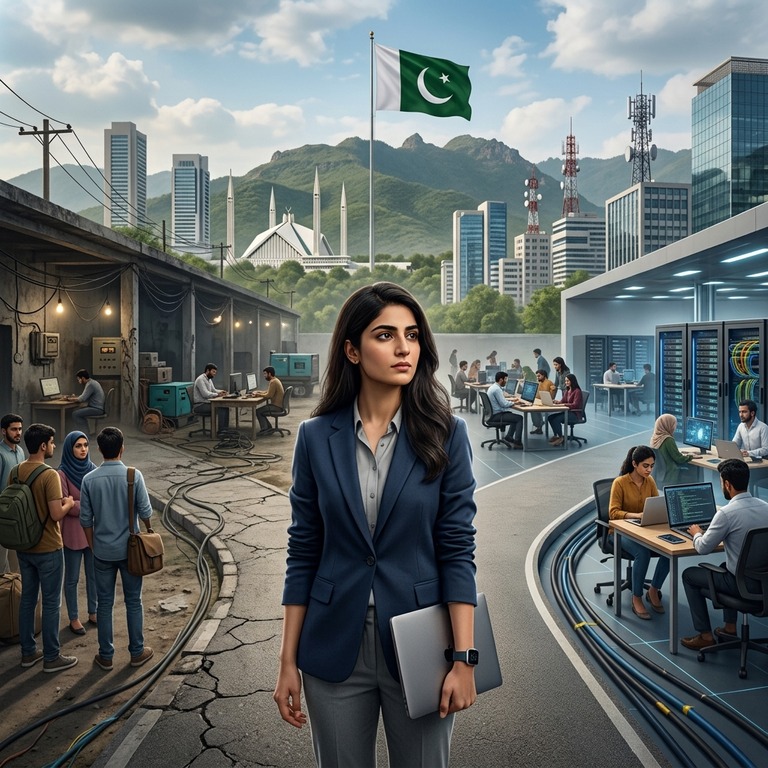
At 79, Pakistan's tech story is genuinely mixed: real progress (record $4.6B IT exports, a $1B+ freelance economy, new AI hubs and data centers) sits alongside hard gaps (no unicorn, massive skilled emigration, a falling human development ranking, and a widening AI divide with peers). The honest verdict: real momentum, but not yet matching the challenge.
Every Independence Day invites reflection, and for anyone who cares about Pakistan's future, one question matters more each year: where do we truly stand in technology? It's tempting to answer with either flag-waving optimism or resigned pessimism. Both are easy. Both are wrong.
The honest answer, at 79, is that Pakistan's tech story is genuinely mixed, real, hard-won progress running alongside real, uncomfortable gaps. Telling that story honestly, neither cheerleading nor doom-mongering, is the most useful thing we can do on a day meant for reflection. So let's take an honest look at where Pakistan really stands, what's genuinely working, what isn't, and what the numbers are trying to tell us.
Let's start with what's real and good, because there's a lot of it, and dismissing it would be as dishonest as ignoring the problems. Pakistan's technology sector has achieved concrete, measurable wins recently.
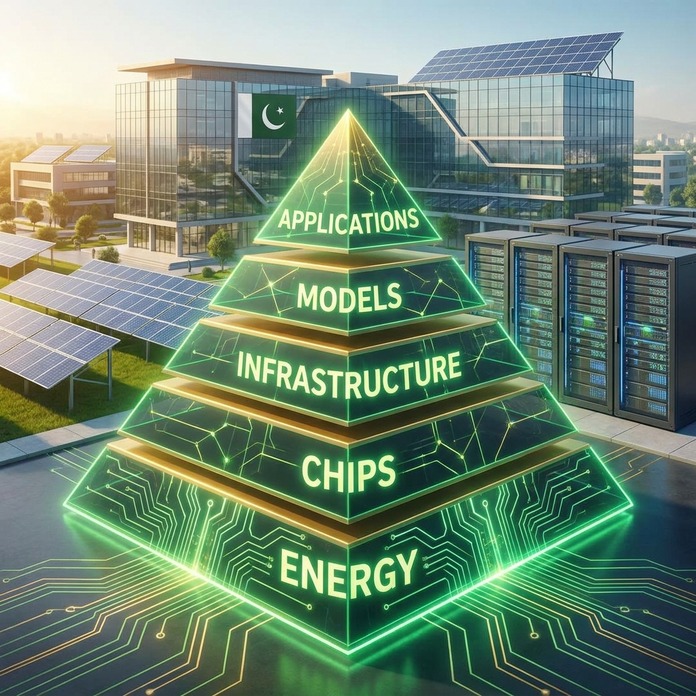
The headline numbers are strong. IT exports hit a record of roughly $4.6 billion, and the freelance economy crossed $1 billion for the first time, with non-IT freelancing alone surging nearly 190%. The AI infrastructure story is suddenly tangible too: the country launched new AI hubs under the NAAI initiative, saw its first data centers come online, and even received its first shipments of high-end NVIDIA AI chips. Digital payments through Raast have grown explosively, and a young, hungry population keeps producing talented founders and freelancers who compete globally.
This is genuine momentum, not spin. A decade ago, much of this would have been unthinkable. Anyone who says Pakistan is doing nothing in tech simply isn't paying attention. Credit where it's due.
But honesty cuts both ways, and the gaps are just as real, and just as important to name. Alongside the wins sit some genuinely sobering facts.
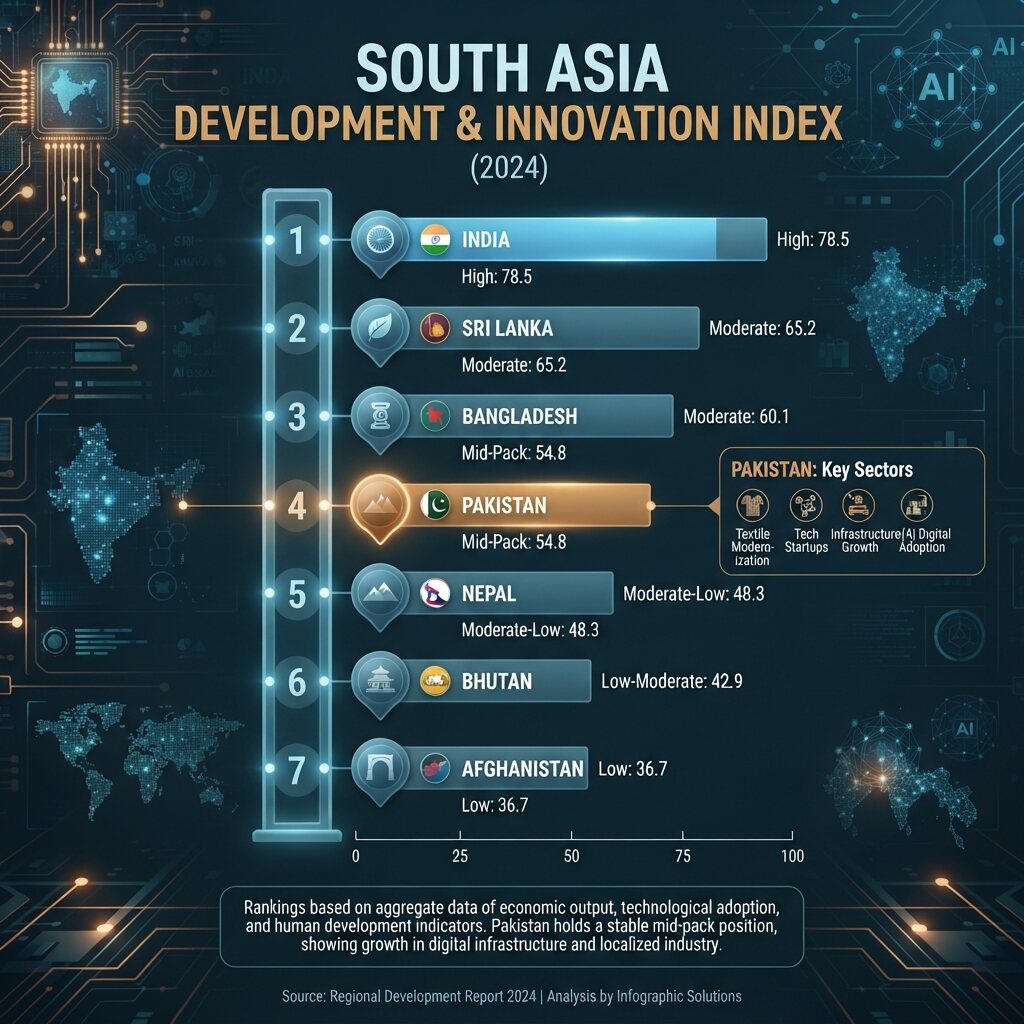
Pakistan still has no unicorn, no privately-held startup valued at $1 billion or more, and its startup ecosystem, while active with over 1,100 tracked startups, operates with far less capital than the 2021 boom, with 2025 funding around $74 million. More troubling, the country's human development ranking has been falling, from 161st in 2020 to 168th in 2025, one of the steepest declines globally, even as regional peers like India, Bangladesh, and Sri Lanka improve. And the brain drain is staggering in scale: the Bureau of Emigration recorded 317,436 Pakistanis leaving for overseas jobs in just the first six months of 2026, with the cumulative skilled outflow expected to exceed 1.5 million by year-end.
These aren't minor caveats. They're structural signals that, for all the visible progress, the foundations, human development, capital, talent retention, still have serious cracks. Pretending otherwise helps no one.
If one comparison captures Pakistan's core challenge, it's this one, and it's worth sitting with. In the first half of 2026, China registered roughly 55,000 new generative-AI companies. In the same period, Pakistan's flagship NAAI initiative targets 560 AI startups, over two years.
That's roughly a 100-to-1 gap in pace with just one country, and while comparing Pakistan directly to China isn't entirely fair (vastly different scale and resources), the ratio still says something vital. The issue isn't that Pakistan isn't moving, it is. The issue is that the pace of progress isn't matching the pace of the challenge, or the pace of competitors. In technology, where advantages compound and winners pull away fast, moving in the right direction isn't enough if you're moving too slowly. The world isn't waiting.
This is the honest crux: Pakistan's problem isn't a lack of motion, it's a gap between the speed it's moving and the speed the moment demands.
Understanding why helps point toward solutions, and the reasons are consistent. Several structural issues keep capping Pakistan's tech potential below what its talent deserves.
There's the talent paradox: Pakistan produces skilled people, then loses many of them to emigration, and even domestically, there's a shortage of current AI expertise, universities graduate many computer scientists but relatively few with cutting-edge machine-learning skills. There's policy inconsistency: promising initiatives often change with each administration rather than being treated as permanent national infrastructure, undermining the long-term continuity tech requires. There's the capital gap: without deep local investment or a breakout success, startups struggle to scale. And there are the persistent basics, unreliable electricity, internet disruptions, and infrastructure gaps that quietly sabotage digital work.
None of these are mysteries, and none are unfixable. But they require sustained, consistent effort over years, which is precisely what's been hardest to maintain.
Here's the framing that makes sense of it all. Pakistan isn't simply "winning" or "losing" in tech. It's at a genuine crossroads, with real momentum in one direction and real drag in the other, and the outcome isn't yet decided.
The optimistic path is visible: if Pakistan can retain more talent, sustain consistent policy, deepen investment, and accelerate its AI and digital initiatives, its young population and proven talent could power a genuine transformation. The worrying path is equally visible: if brain drain continues, policies keep shifting, and progress stays slower than the challenge, the country risks falling further behind peers while its best minds build other nations' futures. Both futures are possible. That's what a crossroads means, and it's why this moment matters.
The encouraging truth is that the ingredients for the better path, talent, youth, ambition, and the beginnings of real infrastructure, genuinely exist. What's needed is the will to move faster and more consistently.
This isn't an abstract debate, it shapes real lives and livelihoods. For the freelancer, founder, or student reading this, the direction of Pakistan's tech ecosystem determines the opportunities available at home, whether you can build a career here or feel forced to leave.
For the economy, technology is one of Pakistan's brightest sources of exports, jobs, and foreign exchange, arguably its most promising path to prosperity. Whether that potential is realized affects everyone, not just the tech sector. And for the country's global standing, its ability to compete in the defining technology of the era, AI, will significantly shape its future economic and strategic position. In short, getting this right isn't optional; it's central to Pakistan's future. Every citizen has a stake in whether the country takes the better path at this crossroads.
The most valuable thing on a reflective day like this isn't false comfort or despair, it's clear-eyed honesty, because you can't fix what you won't name. The mature position holds both truths at once: genuine pride in real achievements, and genuine urgency about real gaps.
The consistent expert view is that Pakistan's constraint has never been its people, its talent is proven, repeatedly, on the global stage. The constraint is the system around them: retention, consistency, capital, and infrastructure. That's actually good news, because it means the problem is solvable through better choices, not limited by any lack of human potential. The path forward isn't mysterious: treat technology as permanent national infrastructure rather than a rotating initiative, invest seriously in retaining and upskilling talent, ensure policy consistency across administrations, and move with the urgency the moment demands. Pakistan has done hard things before. The question is whether it can now do them faster, and keep doing them.
The coming years will be decisive. Watch the signals that matter most: whether skilled emigration slows, whether AI and startup initiatives translate into real companies and jobs, whether policy stays consistent long enough to compound, and whether Pakistan produces the breakout success that resets its ambitions. These, more than any single announcement, will reveal which path the country is taking.
The trajectory is not predetermined. Pakistan has genuine momentum and genuine talent; it also has genuine challenges and a closing window. What happens next depends less on potential, which is abundant, and more on execution, consistency, and speed.
At 79, Pakistan stands at a real crossroads in technology, and honesty about that is the most patriotic stance available. The progress is genuine and worth celebrating: record exports, a booming freelance economy, emerging AI infrastructure, and a generation of world-class talent. The gaps are equally genuine and worth confronting: brain drain, a falling development ranking, thin capital, and a pace of progress that isn't yet matching the challenge. Neither pride nor despair alone tells the truth; both together do. The good news is that Pakistan's greatest asset, its people, has never been in doubt. The task is to build a country worthy of them, fast enough and consistently enough to matter. If Pakistan can do that, its next Independence Days could celebrate not just potential, but its realization. The crossroads is here. The direction is still ours to choose.
This article is an opinion and analysis piece for general informational purposes, reflecting data and commentary reported around August 2026. It presents a perspective on Pakistan's technology landscape and is not a prediction or professional advice. Statistics are as reported by cited sources and may vary.
On Pakistan's 79th Independence Day (August 2026), an honest assessment shows the country at a genuine crossroads in technology, real progress alongside real gaps. This opinion/analysis argues the core issue isn't lack of motion but a gap between Pakistan's pace and the challenge's pace.
Genuine progress: IT exports hit a record ~$4.6 billion; the freelance economy crossed $1 billion (non-IT freelancing surged nearly 190%); the NAAI initiative launched AI hubs; first data centers came online; the country received its first high-end NVIDIA AI chips; and Raast digital payments grew explosively. A young, talented population keeps producing globally competitive founders and freelancers.
Uncomfortable gaps: Pakistan still has no unicorn; ~1,114 tracked startups operate with far less capital than the 2021 boom (2025 funding ~$74 million); its human development ranking fell from 161st (2020) to 168th (2025), one of the steepest global declines, while India, Bangladesh, and Sri Lanka improved; and brain drain is severe, 317,436 Pakistanis left for overseas jobs in H1 2026 alone, with cumulative skilled outflow expected to exceed 1.5 million by year-end.
The defining comparison: China registered ~55,000 new generative-AI companies in H1 2026 versus Pakistan's NAAI target of 560 startups over two years (roughly 100:1). Though scale differs vastly, it highlights that Pakistan's pace isn't matching competitors or the challenge.
Why the gap persists: talent loss and a shortage of current AI expertise; policy inconsistency across administrations (tech treated as rotating initiative, not permanent infrastructure); thin capital; and infrastructure basics (electricity, internet). The expert consensus: the constraint isn't Pakistan's people (proven globally) but the system around them, retention, consistency, capital, infrastructure, which better choices can fix.
Opinion/analysis; figures as reported and may vary; not professional advice.