Usman Gul, co-founder of Airlift (a Pakistani startup that raised $120 million before collapsing in 2022), has returned with a new AI startup, Metal. In September 2026, Metal raised $4.5 million in seed funding led by a16z Speedrun and Y Combinator, marking one of the most notable Pakistani founder comebacks and a lesson in resilience.
Failure is the part of entrepreneurship nobody likes to talk about, especially public, spectacular failure. So here's a story worth telling: the founder of Airlift, arguably Pakistan's most famous startup collapse, hasn't just recovered. He's back with a new AI company, and two of Silicon Valley's most prestigious investors, Andreessen Horowitz (a16z) and Y Combinator, just backed him.
This is more than a funding announcement. It's a genuine comeback story, and a powerful lesson about failure, resilience, and second chances in Pakistan's startup ecosystem. Here's the full arc: the dramatic rise and fall of Airlift, what Usman Gul is building now, why top investors are betting on him again, and what every aspiring Pakistani entrepreneur can learn from it. Let's start where it began.
To appreciate the comeback, you have to understand the fall, and it was a big one. Usman Gul co-founded Airlift in Pakistan in 2019. It began as a bus-hailing service (mass transit booked via app) and later pivoted to quick-commerce, ultra-fast grocery and essentials delivery.
Airlift became one of Pakistan's most prominent, well-funded startups. Over roughly three years, it raised around $120 million from global investors, a huge sum for a Pakistani startup, and expanded aggressively to eight cities in Pakistan and even into South Africa. It was a poster child for Pakistani startup ambition. And then, in July 2022, it shut down, completely. The instant-delivery business proved brutally difficult economically (thin margins, high costs, a tough funding climate), and Airlift couldn't survive it. For Pakistan's startup scene, it was a shocking, high-profile collapse, one that became a cautionary tale about the punishing economics of quick commerce and the risks of aggressive scaling. For Gul, it meant a very public failure at significant scale. Most founders take years to recover from something like that, if they recover at all.
Here's where the story turns, and it's genuinely impressive. Rather than disappearing, Usman Gul built something new: Metal, a Pakistan-based AI startup. And in September 2026, Metal announced it had raised $4.5 million in seed funding, led by a16z Speedrun (Andreessen Horowitz's early-stage program) and Y Combinator, two of the most respected names in global tech investing.
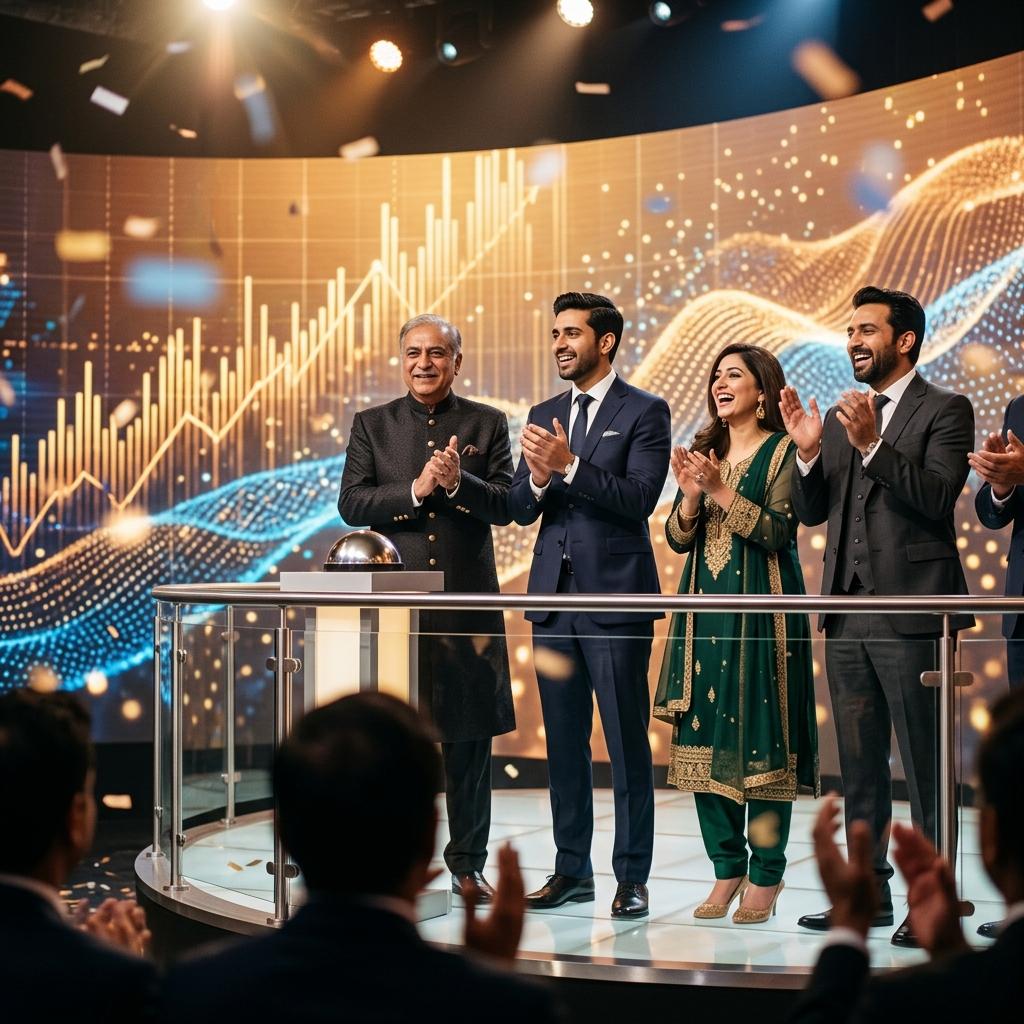
The backing is remarkable. a16z and Y Combinator are Silicon Valley royalty; their involvement is a strong signal of confidence in Gul and his new venture. The round also drew a notable roster of other investors, Pioneer Fund, Rebel Fund, Gaingels, Indus Valley Capital, Team Ignite Ventures, and Phaze Ventures, spanning global and regional ecosystems. Observers called it one of the most closely watched Pakistani founder comebacks in recent memory, and for good reason: a founder returning from a $120 million failure to attract top-tier global backing for a new company is a genuinely rare and impressive feat. It speaks to something investors clearly saw in Gul despite (or perhaps because of) the Airlift experience.
So what is Gul building this time? Metal is, in its own words, an "AI-native operating system for capital formation", and interestingly, it's designed to solve a problem Gul experienced firsthand during Airlift. In plain terms, Metal is an AI platform that helps startup founders raise money more efficiently.
Here's the insight behind it. During Airlift, Gul raised $120 million over three years, and in the process spoke with around 300 investors, mostly through warm introductions. But by his account, roughly 80% of those investors weren't actually a fit for Airlift's stage, sector, geography, or check size at the time, a massive waste of time and effort. That painful, firsthand experience of fundraising inefficiency became the seed of Metal. The platform uses AI to give founders "deep intelligence and automation" for their funding rounds, helping them identify and engage the right investors, manage investor relations, and navigate venture-capital workflows, rather than blindly pitching hundreds of mismatched investors. Metal aims to become core infrastructure for the entire capital-formation process, used by founders, and eventually venture firms, fundraising consultants, and more. It's a classic case of a founder turning their own hard-won pain into a product.
Beyond the personal redemption arc, this story carries deeper significance, especially for Pakistan. Metal isn't just any startup; it's tackling a problem that's particularly acute for founders in places like Pakistan.
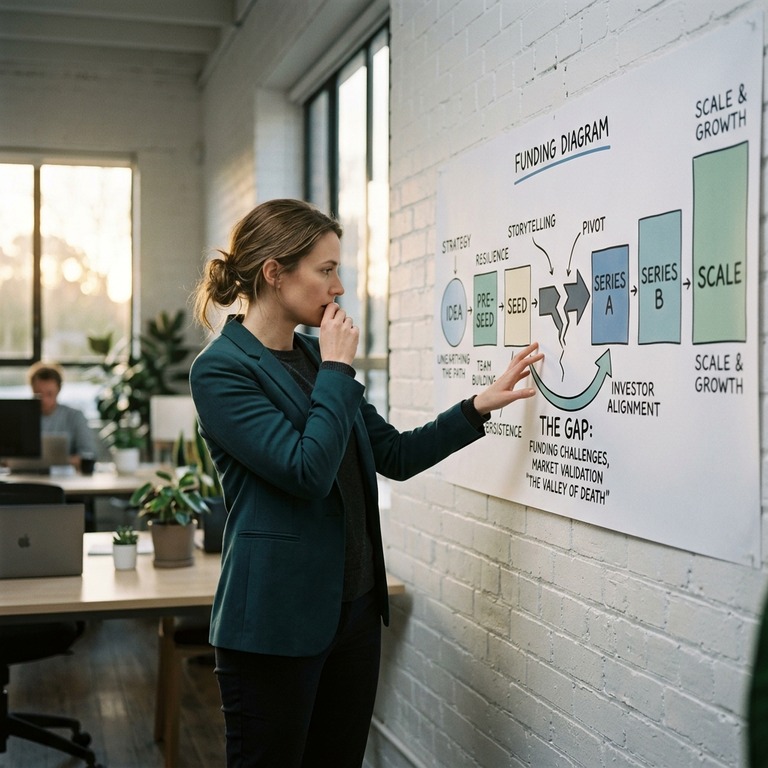
Consider the connection. As we've discussed before, Pakistani startups struggle with a "scale-up gap", they find it hard to access the right growth capital, partly because founders here face real geographical and network disadvantages in reaching the right global investors. Metal is explicitly designed to help any founder (including those in Pakistan and other emerging markets) navigate the global venture ecosystem and connect with suitable investors, exactly the barrier that holds many Pakistani founders back. So there's a poetic and practical dimension: a Pakistani founder who personally experienced the pain of fundraising (and the collapse that can follow when capital and economics don't align) is now building a tool to make fundraising smarter for founders everywhere, potentially including the next generation of Pakistani entrepreneurs. It's a comeback that could, indirectly, help others avoid some of the pitfalls he faced.
An important point that separates this from hype: Metal isn't just a story, it's showing genuine business results. This matters, because a compelling founder narrative means little without substance behind it.
The numbers are encouraging. According to Gul, Metal is tracking to close fiscal year 2026 with multi-million-dollar annual revenue, and has recorded six consecutive quarters of 30% to 80% quarter-on-quarter growth, a strong, sustained trajectory for an early-stage company. To put the funding in context, at $4.5 million, the seed round reportedly ranked in the top 8% of comparable US seed rounds in its category. Metal has also published a thesis on how private capital markets will evolve, a move to help define the category it's building in. So this isn't a sympathy investment or a comeback purely on reputation; there's a real, growing business with strong metrics underneath. That combination, a resilient founder AND genuine traction, is exactly what attracted serious investors. It grounds the inspiring story in solid substance.
This story carries real significance for Pakistan's entrepreneurial landscape.
For founders and aspiring entrepreneurs, it's a powerful, morale-boosting example that failure, even massive, public failure, isn't the end; resilience and learning can lead to a stronger comeback.
For Pakistan's startup ecosystem, a prominent founder attracting top-tier global investment (a16z, YC) again shines a positive light on Pakistani talent and draws valuable attention and credibility to the ecosystem.
For the funding challenge, Metal's very product, helping founders raise capital efficiently, could benefit Pakistani startups struggling with the scale-up gap and investor access.
For the culture of entrepreneurship, it helps normalize failure as part of the journey (not a permanent stigma), a healthy cultural shift for a maturing startup ecosystem that needs founders willing to take risks.
The most valuable lesson from this story is one every entrepreneur, and every person, should internalize: failure, even at a large and public scale, does not have to be the end of your story; it can be a chapter that makes the next one stronger. Usman Gul's journey from a $120 million collapse to an a16z- and YC-backed comeback embodies this. Crucially, he didn't just bounce back with a random new idea, he turned the specific pain of his failure (fundraising inefficiency) into the foundation of his new venture. That's the deeper lesson: failure, examined honestly, contains valuable knowledge that can power what comes next.
For Pakistani entrepreneurs especially, this carries real weight. Startup culture in Pakistan (and many places) can stigmatize failure, discouraging risk-taking and making failed founders feel finished. Gul's comeback challenges that, demonstrating that experienced founders, precisely because they've learned hard lessons, can be excellent bets. The wisdom to draw: if you're building something and it fails, that experience isn't wasted, it's education, resilience, and often the seed of your next, better idea. Investors increasingly value founders who've been through the fire and learned. So take smart risks, and if you fail, learn deeply, recover, and go again, your comeback could be your best work. And for the ecosystem, celebrating comebacks like this (not just successes) builds the healthy, risk-embracing culture that produces breakthrough companies. Failure handled well isn't the opposite of success; it's often the path to it.
Watch how Metal develops, whether it delivers on its ambition to become core infrastructure for capital formation, continues its strong growth, and (fittingly) helps founders, including Pakistani ones, raise capital more effectively. Its trajectory will be worth following as both a business and a symbol.
More broadly, expect stories like this to gradually reshape attitudes toward failure and resilience in Pakistan's startup culture, encouraging more founders to take risks and persist. As Pakistan's ecosystem matures, the presence of experienced, battle-tested founders (including those who've failed and returned) strengthens it. Usman Gul's comeback is one high-profile example; a healthy ecosystem will produce many more second acts. For aspiring entrepreneurs, the enduring message is one of hope and grit: the road is hard, failure is possible, but it's survivable, and often the foundation of something better.
The story of Usman Gul, from co-founding Airlift, raising $120 million, and watching it collapse in 2022, to launching Metal and securing $4.5 million from a16z and Y Combinator in 2026, is one of the most inspiring entrepreneurial arcs to come out of Pakistan recently. It's a genuine comeback, grounded not in luck but in resilience, learning, and real traction (six straight quarters of strong growth). And it carries a profound, universal lesson: failure, even large and public, is a chapter, not the end. Gul turned his hardest experience into his next venture, and top global investors bet on him again. For every Pakistani entrepreneur afraid of failure, or recovering from one, this story is a powerful reminder: take the risk, learn from setbacks, and keep going. Your failure doesn't define you; what you build next can. Pakistan's startup ecosystem grows stronger with every founder who dares, falls, learns, and returns. Usman Gul just showed how it's done.
This article is for general informational purposes only and reflects information reported in 2026; company details, funding, and figures are as reported by cited sources and may change. Nothing here is investment advice regarding any company or investor. Startup outcomes are uncertain and most startups face significant risk. This is not financial or business advice.
Usman Gul, co-founder of Airlift, has made a notable comeback with a new AI startup, Metal, which raised $4.5 million in seed funding on September 2, 2026, led by a16z Speedrun (Andreessen Horowitz's early-stage program) and Y Combinator, with participation from Pioneer Fund, Rebel Fund, Gaingels, Indus Valley Capital, Team Ignite Ventures, and Phaze Ventures. It's described as one of the most closely watched Pakistani founder comebacks in recent memory.
The backstory: Gul co-founded Airlift in Pakistan in 2019. It began as a bus-hailing service, pivoted to quick-commerce (fast grocery delivery), raised about $120 million from global investors, and expanded to eight cities in Pakistan plus South Africa. In July 2022, it shut down completely, unable to survive the brutal economics of instant delivery amid a tough funding climate, becoming a famous cautionary tale. Before Airlift, Gul was on the early teams at DoorDash and Marqeta.
What Metal does: it's an "AI-native operating system for capital formation", an AI platform helping startup founders raise money more efficiently by identifying and engaging the right investors, automating fundraising workflows, and managing investor relations. It was inspired by Gul's own Airlift experience: he spoke with ~300 investors while raising $120M, but ~80% weren't a fit for his stage, sector, geography, or check size, a painful inefficiency Metal aims to solve. Metal is designed to help founders (including those in Pakistan and other emerging markets) navigate the global venture ecosystem, addressing the geographic/network disadvantages Pakistani founders face (relevant to Pakistan's "scale-up gap").
Traction: Metal is tracking to close FY2026 with multi-million-dollar annual revenue, with six consecutive quarters of 30-80% quarter-on-quarter growth; the round ranked in the top 8% of comparable US seed rounds.
The lesson: failure, even large and public, is a chapter, not the end. Gul turned his hardest experience into