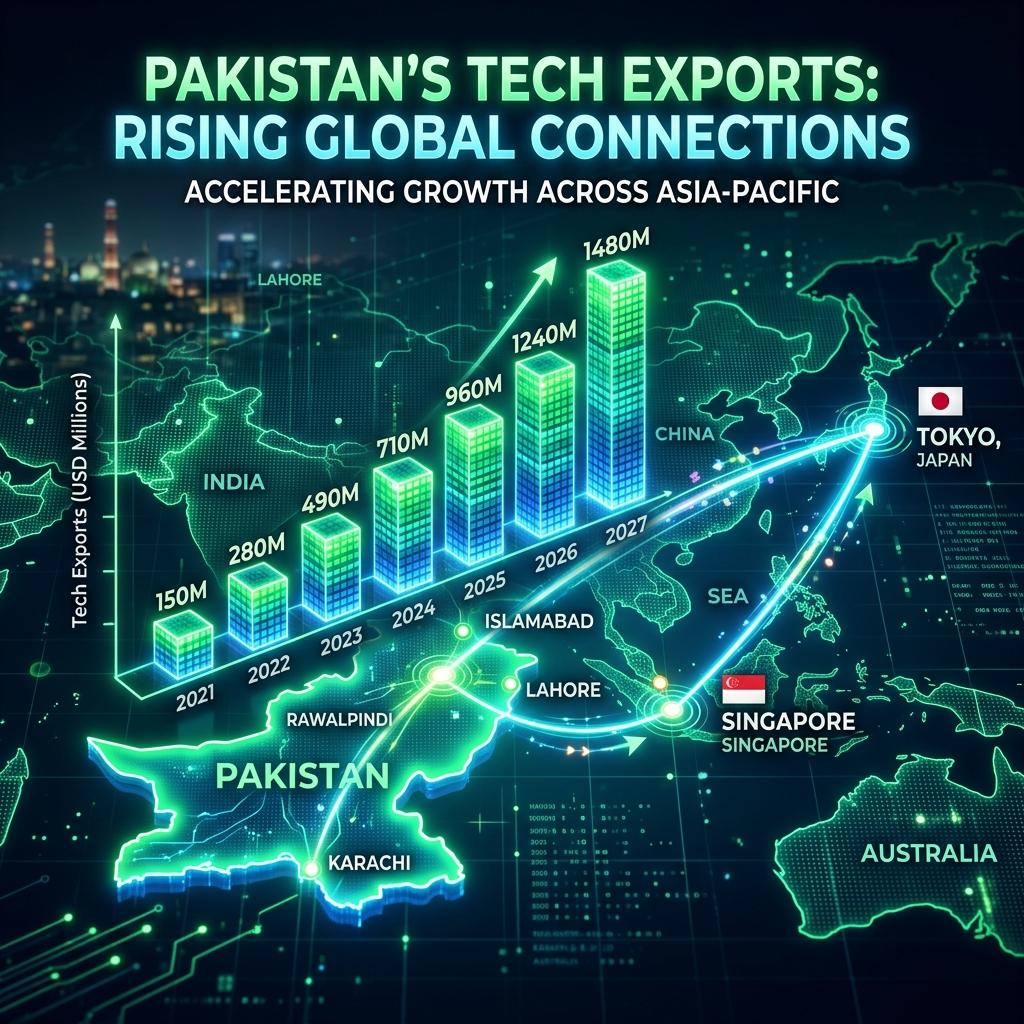
Pakistan's IT exports reached a record $4.5 billion in FY2025-26, up about 29% from $3.475 billion the previous year. The growth was driven by software development, business process outsourcing (BPO), SaaS, and gaming, with Pakistani firms notably expanding into Asia-Pacific markets like Japan and Singapore beyond traditional US and European clients.
Pakistan's technology sector has hit a historic high. The country's IT exports reached a record $4.5 billion in the last fiscal year, a milestone that cements technology as one of the brightest spots in Pakistan's economy. For a country working hard to boost its foreign exchange earnings, this is genuinely good news.
But the headline number is only part of the story. Behind it lies an important shift in how and where Pakistan sells its tech services, one that could make the whole sector stronger for years to come. Here is what the record means, what drove it, and why it matters for the industry, freelancers, and the economy.
The figures are official and impressive. Pakistan's information technology exports rose to a record $4.5 billion in the fiscal year ending June 2026, up about 29 percent from a year earlier, as reported by state broadcaster Radio Pakistan.
To appreciate the jump, it helps to see the comparison. The total marks a 29 percent increase from the $3.475 billion recorded in the previous fiscal year. Growing by nearly a third in a single year, despite a challenging economic environment, is a serious achievement.
This performance has made technology a standout sector. The IT sector has become the country's largest services exporter and a key source of foreign exchange as Pakistan seeks to diversify exports beyond traditional industries such as textiles.
The boom was not driven by one thing, but by strength across several areas. Officials credited the increase to strong growth in software development, business process outsourcing (BPO), Software-as-a-Service (SaaS), and the gaming sector.
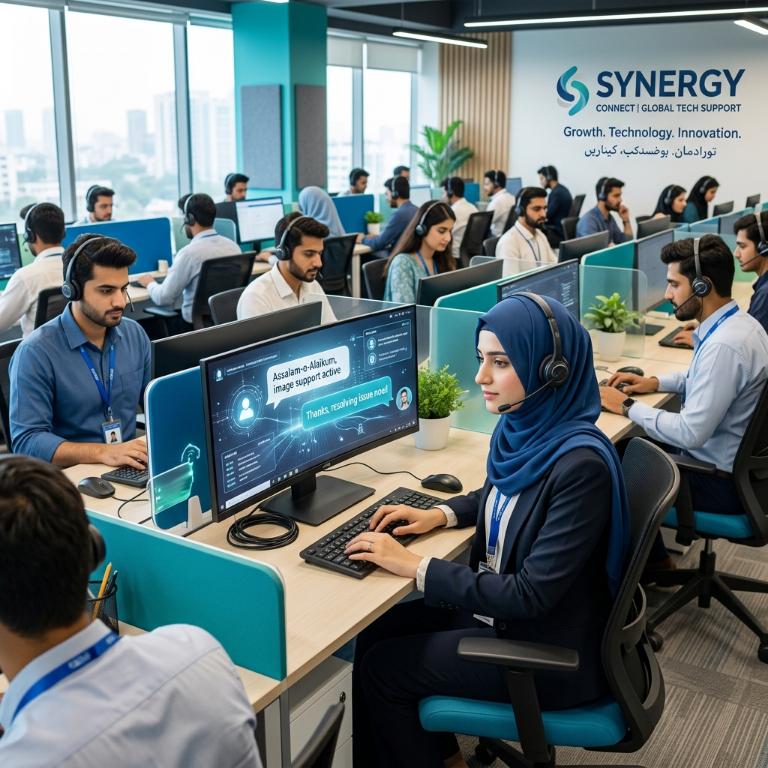
Each of these is significant. Software development remains the biggest export category, the core of Pakistan's tech services. BPO covers services like customer support and back-office work handled for foreign companies. SaaS, software delivered online through subscriptions rather than one-time sales, is a rapidly growing global model. And the gaming industry has emerged as a real contributor, showing the sector's expanding range.
Global demand also played a role, particularly rising international appetite for digital services, AI integration, cloud migration, and cybersecurity, areas Pakistani firms are increasingly building expertise in.
Perhaps the most strategically important part of this story is not the amount, but the direction. Pakistani tech firms are expanding into new markets.
Traditionally, Pakistan's IT exports leaned heavily on the United States and Europe. Now that is changing. Pakistani IT companies boosted export revenues by expanding their access to Asia-Pacific markets, including Japan and Singapore. This marks a deliberate diversification beyond the country's traditional North American, European, and Gulf clients.
Why does this matter so much? Because relying on just one or two regions is risky. If the US economy slows, exports dependent on it suffer. By spreading their client base across many countries, Pakistani firms make their income more stable and resilient. As one industry expert noted, this strategy protects firms if one region slows down, reflecting a smarter, more mature approach to global business.
This milestone has wide-reaching benefits.
For the economy, $4.5 billion in clean foreign exchange strengthens the rupee and supports national reserves at a crucial time. It shows Pakistan can build a modern, high-value export industry beyond traditional sectors.
For IT companies and founders, the record and the market diversification signal genuine opportunity. Firms that expand into new regions and high-growth services like SaaS, gaming, and AI are best positioned to grow.
For freelancers, the picture is bright too. Pakistani freelancers earned strongly in foreign exchange this year, with AI-related work commanding higher rates. The same shift toward higher-value, AI-enabled services is lifting both companies and individual freelancers.
For young Pakistanis, it reinforces a powerful message: the tech sector is where the opportunity is. Building digital skills opens the door to a growing, globally connected industry.
Analysts see this as more than a good year, it is a sign of a maturing sector. Pakistan's digital export economy is entering a more strategically diversified phase. The move into multiple markets and higher-value services reflects an industry growing up.
Payment infrastructure is part of this story. Expanding into new regions like Asia-Pacific requires handling different currencies and payment systems, and services that support multi-currency payments for Pakistani exporters are helping firms manage this complexity and get paid smoothly across borders.
There are honest challenges too. Global expansion brings increased operational complexity, adapting to distinct local markets and payment ecosystems. The sector also still faces domestic hurdles like infrastructure reliability and the need to keep moving up the value chain from basic services to owned products. But the direction is clearly positive.
The government has ambitious targets, and this record puts them within closer reach. With continued growth in AI services, SaaS, gaming, and market diversification, Pakistan's IT exports could climb significantly higher in the coming years.
The key will be sustaining the shift toward higher-value work and new markets, while investing in skills, infrastructure, and the move from providing services to building products. If Pakistan maintains this momentum, technology could become an even larger pillar of the national economy.
Pakistan's record $4.5 billion in IT exports is a proud milestone and a hopeful sign for the country's economic future. More impressive than the number itself is the smart, strategic shift behind it, diversifying into Asian markets and scaling higher-value services like SaaS and gaming. This is what a maturing, resilient tech industry looks like. For Pakistan's companies, freelancers, and young talent, the message is clear: the digital economy is growing, going global, and full of opportunity. The challenge now is to keep the momentum going and climb even higher.
This article is for general informational purposes only and reflects official figures reported in July 2026. Economic data and industry conditions can change; figures are based on government and state-broadcaster reporting.
Pakistan's information technology exports reached a record $4.5 billion in fiscal year 2025-26 (ending June 2026), up about 29% from $3.475 billion the previous year, per official data reported by state broadcaster Radio Pakistan and compiled by the Pakistan Bureau of Statistics. IT is now Pakistan's largest services exporter and a key source of foreign exchange, as the country diversifies beyond traditional exports like textiles.
Growth drivers: strong performance in software development (the biggest category), business process outsourcing (BPO), Software-as-a-Service (SaaS), and the gaming industry, alongside rising global demand for digital services including AI integration, cloud migration, and cybersecurity.
A key strategic theme is market diversification: Pakistani IT firms are expanding into Asia-Pacific markets, notably Japan and Singapore, moving beyond their traditional reliance on the US, Europe, and the Gulf. This spreads their client base across regions, making revenue more stable and resilient, a sign of a maturing industry. Payoneer's APAC head Nagesh Devata noted the momentum reflects sustained global demand and smart multi-market revenue strategies; expanding into new regions requires handling multiple currencies and local payment ecosystems.
Freelancers benefited too, earning strongly in foreign exchange (H1 FY26 freelance earnings rose sharply), with AI-adjacent work commanding higher rates, a dual-track growth pattern across both enterprises and freelancers.
Honest challenges include the operational complexity of global expansion, domestic infrastructure reliability, and the ongoing need to climb from basic services toward owned products. The government projects continued growth toward higher targets.
This is informational, not investment advice; figures are based on official reporting and can be revised.