Pakistan's call centre and BPO export earnings crossed $300 million in FY2025-26, reaching $322 million from July to May, a 19% year-on-year rise. According to the State Bank of Pakistan, growth is largely driven by AI-powered customer support tools that improve efficiency, cut costs, and enable round-the-clock multilingual service for global clients.
Pakistan's outsourcing industry just hit an important milestone. The country's call centre and business process outsourcing (BPO) sector earned more than $300 million from exports this fiscal year, one of the fastest-growing parts of Pakistan's IT economy. And the biggest force behind this growth is artificial intelligence.
This is a story with an interesting twist. Around the world, people worry that AI will destroy call centre jobs. But in Pakistan, AI is currently helping the industry grow and earn more. Here is what is happening, why it matters, and how Pakistan can keep the momentum going.
The growth is clear and officially recorded. Pakistan's call centre and BPO industry earned foreign exchange exceeding $300 million in the first eleven months of fiscal year 2025-26, reflecting rising international demand and greater use of AI-powered customer support.
The exact figures show strong momentum. According to the State Bank of Pakistan, export earnings from call centres reached $322 million during July-May FY2025-26, compared to $269 million in the same period the previous year. That is an increase of $53 million, or 19% year-on-year.
Growing by nearly a fifth in a single year, despite tough global economic conditions, is a serious achievement for the sector.
BPO stands for Business Process Outsourcing. In simple terms, it means companies abroad hire Pakistani firms to handle tasks like customer support, technical help, sales calls, and back-office work.
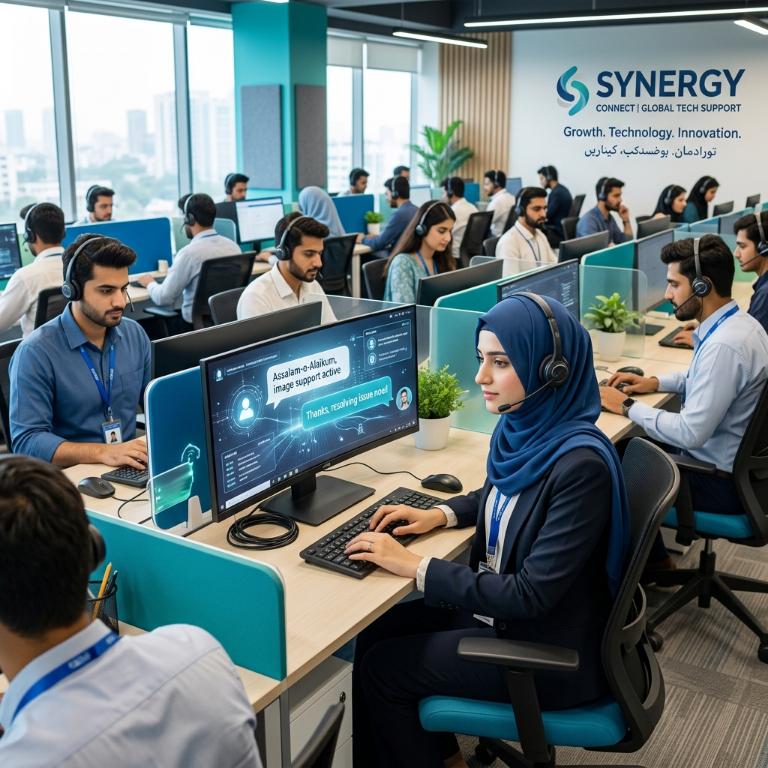
The scale is bigger than many realize. Pakistan has more than 1,000 call centres registered with the Pakistan Software Export Board (PSEB), with an estimated 500 additional medium and large call centres operating independently across major cities. On top of that, many smaller customer-support teams work inside software houses, marketing agencies, and e-commerce businesses.
This industry employs a large number of Pakistanis and brings valuable foreign exchange into the country, making it an important pillar of the digital economy.
The key to this year's jump is technology. Industry experts credit much of the growth to the integration of AI into customer support.
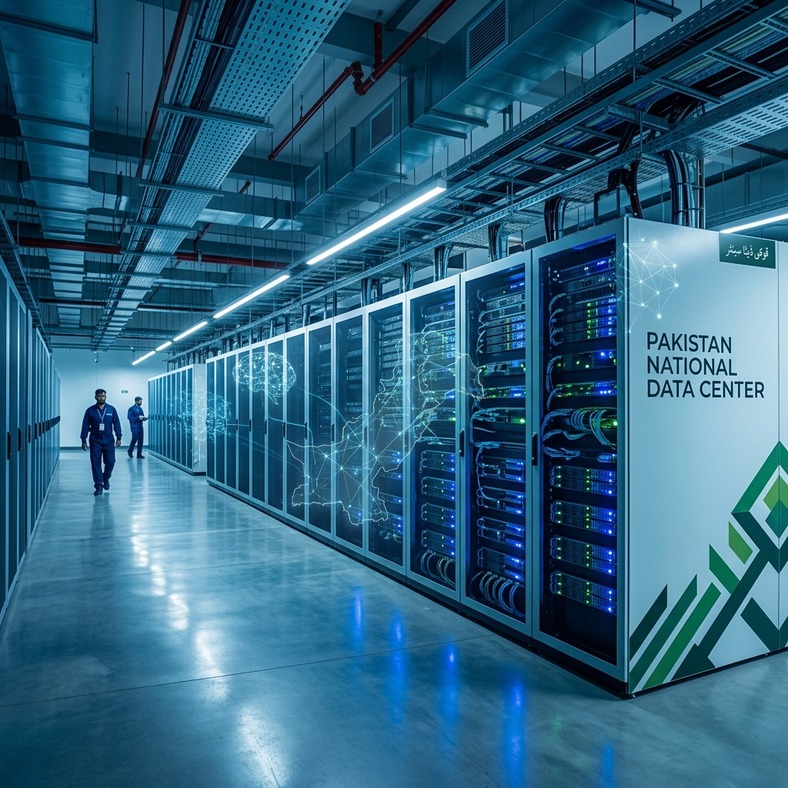
AI tools are making Pakistani call centres faster, smarter, and more competitive. AI-powered tools increasingly help companies automate routine tasks, improve response times, analyse customer behaviour, and provide round-the-clock multilingual support. This makes Pakistani providers more attractive to international clients.
An AI integration researcher explained the shift, noting that AI-driven solutions are reshaping the global outsourcing industry by improving efficiency, reducing operational costs, and enhancing service quality. In other words, AI lets a Pakistani call centre do more, faster, and at lower cost, which wins more international business.
This is the concern on everyone's mind, and it deserves an honest answer. Globally, some companies have used AI to cut call centre jobs. So is Pakistan's BPO workforce at risk?
The experts leading this industry offer a reassuring but realistic view. The future belongs to AI-assisted professionals, not AI replacing professionals, said Dr Noman Ahmed Said, CEO of SI Global Solutions. His point is that countries with large, trainable workforces stand to benefit the most from this transformation.
The idea is that AI handles the boring, repetitive parts, while humans handle the complex, emotional, and high-value conversations. A worker supported by AI becomes more productive and more valuable, not obsolete. But this only holds true if workers are trained to use these new tools, which makes upskilling essential.
This milestone has wide benefits across the economy.
For the economy, $322 million in export earnings is clean foreign exchange that strengthens the rupee and supports the national IT export target.
For workers and job seekers, a growing BPO sector means more employment, especially for young people with good communication and language skills. AI training becomes a valuable career advantage.
For businesses and founders, experts see room to grow. Encouraging startups and SMEs in the BPO ecosystem can accelerate employment and increase foreign exchange earnings. This is a sector where new companies can still enter and succeed.
For Pakistan's global image, it positions the country as a modern, AI-enabled outsourcing destination, not just a low-cost one.
Industry leaders believe Pakistan can capture a much larger slice of the global outsourcing market, which is worth many billions of dollars. But it requires the right investments.
The future of outsourcing belongs to countries that successfully combine skilled human capital with artificial intelligence, said Dr Noman Ahmed Said, adding that Pakistan has both the talent and the entrepreneurial spirit to become a leading AI-enabled BPO destination.
To get there, experts point to continued investment in AI, cybersecurity, cloud infrastructure, language training, and digital skills. These upgrades would let Pakistan handle more complex, higher-value outsourcing work, moving up the value chain rather than competing only on price.
It is worth being realistic. The same AI that helps today could pressure basic roles tomorrow if workers are not upskilled. Global competition is fierce, with countries like India and the Philippines well established. And Pakistan still faces infrastructure issues like power reliability and internet quality that can affect 24/7 operations.
The winning strategy is to invest in people and technology together. Pakistan's edge is its large, young, trainable workforce, but that edge only pays off with serious training and infrastructure support.
The direction is promising. With global companies increasingly outsourcing customer support to cost-effective destinations, Pakistan's BPO sector has real room to expand further. If the country keeps investing in AI skills, language training, and reliable infrastructure, this $300 million milestone could grow much larger in the coming years.
The key is to treat AI as a tool for growth and to prepare the workforce to use it well. Done right, Pakistan can turn a global disruption into a national advantage.
Pakistan's call centre and BPO exports crossing $300 million is a strong, encouraging milestone, and a rare case where AI is helping an industry grow rather than shrink it. The lesson is clear: AI works best alongside skilled people, not instead of them. If Pakistan invests in training its workforce and upgrading its infrastructure, its outsourcing industry could become a major global player and a lasting source of jobs and foreign exchange. The foundation is strong. Now the focus must be on skills, quality, and smart use of technology.
This article is for general informational purposes only and reflects data available as of mid-2026. Figures are based on State Bank of Pakistan reporting; industry conditions may change.
Pakistan's call centre and BPO (Business Process Outsourcing) export earnings crossed $300 million in FY2025-26, reaching $322 million during July-May, up 19% year-on-year from $269 million, per State Bank of Pakistan data.
Growth is largely driven by AI adoption in customer support: AI tools automate routine tasks, improve response times, analyze customer behavior, and enable 24/7 multilingual service, making Pakistani providers more globally competitive.
Pakistan has 1,000+ PSEB-registered call centres plus an estimated 500 independent medium/large centres and many smaller support teams. On the AI-vs-jobs question, industry leaders frame AI as augmentation not replacement: Dr Noman Ahmed Said (CEO, SI Global Solutions) said "the future belongs to AI-assisted professionals, not AI replacing professionals," noting countries with large, trainable workforces benefit most; AI researcher Dr Munawar Javed Ahmad said AI is reshaping global outsourcing by improving efficiency, cutting costs, and enhancing quality.
To become a leading AI-enabled BPO hub, experts urge investment in AI, cybersecurity, cloud infrastructure, language training, and digital skills to move up the value chain. Honest challenges: risk to basic roles without upskilling, strong competition from India and the Philippines, and infrastructure issues (power, internet reliability). Context fits Pakistan's broader IT export growth and national AI push. This is informational, not investment advice.