AI is disrupting freelancing in Pakistan as platforms like Fiverr and Upwork decline. Fiverr lost over 60% of its stock value in a year, and businesses increasingly use AI instead of hiring for basic tasks. But freelancers who learn AI tools, specialize in high-value work, and build their own products can still thrive.
There is a hard conversation happening in Pakistan's freelance community, and it deserves an honest answer rather than empty comfort. The question is simple: is artificial intelligence killing freelancing?
The short answer is that AI is not killing all freelancing, but it is rapidly ending one type of it, the basic, low-cost gig work that many Pakistanis depend on. This is not a reason to panic. It is a reason to adapt, quickly and smartly. Let's look at what is really happening and, more importantly, what you can do about it.
For years, the big freelance marketplaces felt unstoppable. Now the numbers tell a different story. Fiverr, the marketplace where millions of Pakistani freelancers sell their services, has lost over 60% of its stock value in the past twelve months.
The cause is not a mystery. The reason is simple: businesses that used to hire freelancers for design, writing, and coding are now using AI tools instead.
Upwork shows the same pattern. The stock dropped 17% in a single day after its Q4 2025 earnings call, where the company projected a decline in Gross Services Volume for 2026. Both platforms are now trying to pivot toward AI-enabled services, but the old model is clearly under pressure.
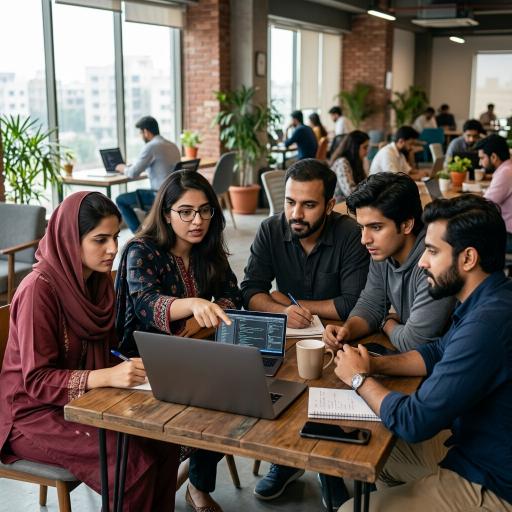
Pakistan is one of the largest freelance markets in the world, which means it has a lot to lose. Our 2.3 million freelancers are invisible. They work from bedrooms in Sahiwal and apartments in Karachi. No contracts. No severance. No union.
This invisibility is the real danger. When gig income falls, there is no official record or warning. When their orders stop coming, there is no event. No headline. No political crisis. Just quiet income loss, household by household, with no one tracking it.
The old advantage was price. The value proposition of Pakistani freelancing was always world-class quality at developing-world prices. AI has changed the denominator to near-zero. When a business can get a basic logo or article from AI for almost nothing, competing on low price alone no longer works.
This is where the story turns from fear to opportunity, because the same AI that threatens basic gigs also creates new advantages.
AI makes skilled people far more productive. A 2025 study of 4,867 developers, conducted with participants from Microsoft and Accenture among others, found that access to GitHub Copilot increased completed tasks by 26.08 per cent in ordinary business settings.
There is also a lesson in what happens when companies fire humans too fast. Klarna, a global firm, replaced many support agents with AI, then reversed course. By May 2025, Klarna's CEO admitted they had gone too far. Quality had dropped. They began rehiring human agents. The message is clear: human judgment, quality, and trust still matter.
The biggest opportunity is a change in mindset. The future rewards builders, not just task-doers. The old freelance model rewards availability and speed, while the next one rewards ownership.
Years of client work have given Pakistani freelancers deep knowledge of real problems. That knowledge is now a launchpad. People who have spent years solving the same client problems are now better positioned to turn that experience into niche software products, AI-enabled automation services and remote-first ventures with recurring revenue models.
In other words, instead of selling the same fix one client at a time, a freelancer can package it into a product that sells again and again. A freelancer who once sold the same fix again and again can now package that knowledge into something that scales.
This shift affects the whole country. Freelancing was not just income, it was social progress. It opened doors for women especially. Freelancing was a revolution for women in this country. It allowed participation in the economy without leaving home, without navigating unsafe commutes, without fighting cultural barriers.
Protecting and evolving this sector is therefore about more than money. It is about keeping millions of people, many of them young and many of them women, connected to the global economy. If Pakistan helps its freelancers move up the value chain, the gains ripple across families, cities, and the national economy.
Worry is natural, but action is better. Here is a clear path based on where the industry is heading.
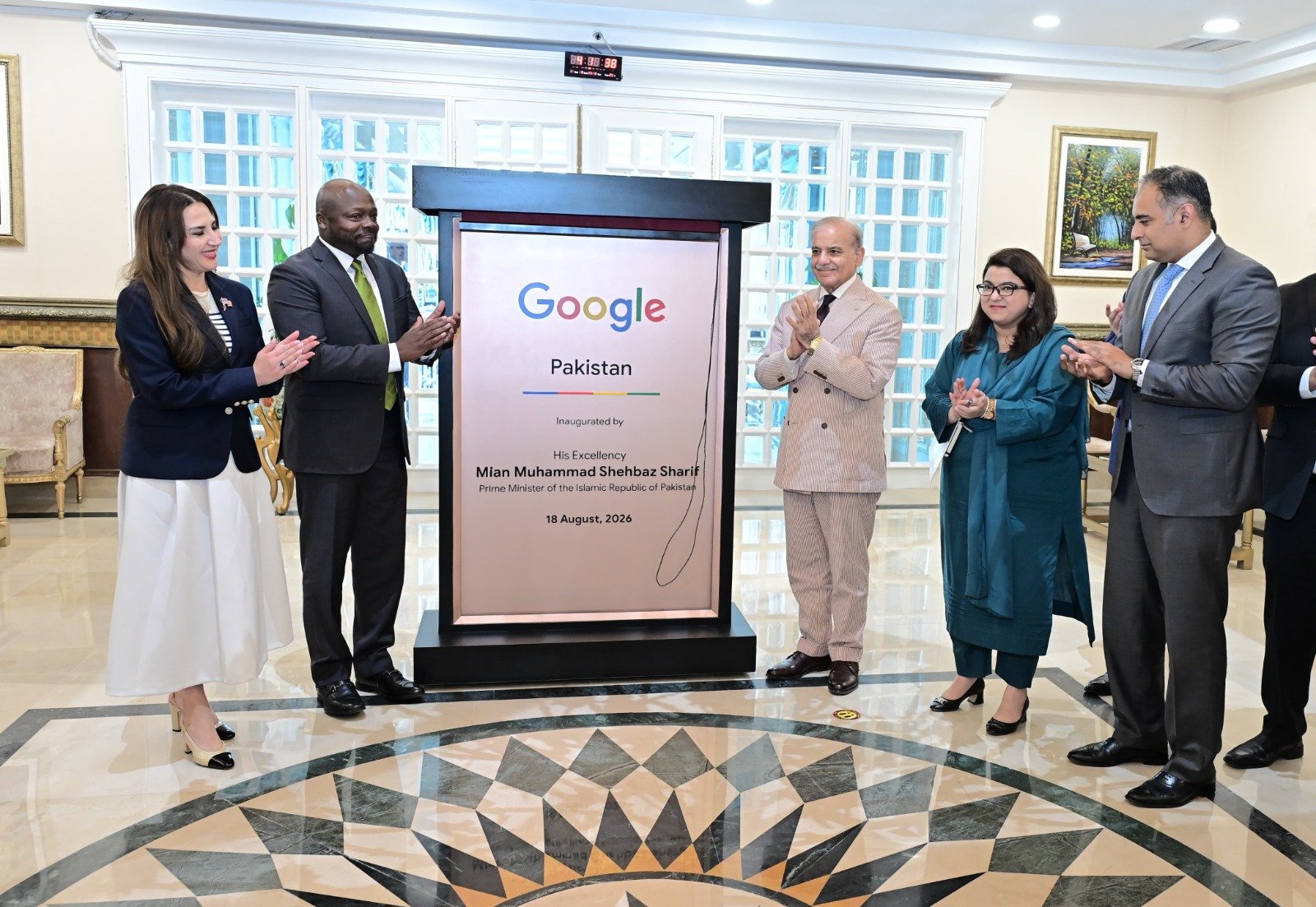
First, learn AI tools immediately. Do not fear them, use them. Tools like ChatGPT, Copilot, and AI design tools make you faster and more valuable. Free programs like AI Seekho, backed by Google and the Ministry of IT, exist exactly for this.
Second, specialize and go high-value. Move away from generic gigs anyone can order from AI. Offer strategy, complex problem-solving, AI integration, or deep expertise in a niche. These are hard for AI to replace.
Third, start building, not just serving. Turn your repeated client work into a small product, template, automation, or service with recurring income. Even one small product changes your economics.
Fourth, stay compliant and registered. Register with PSEB for lower taxes and use proper payment channels. A real business survives shocks better than scattered gig income.
Industry leaders see this moment as a necessary evolution, not an ending. As Hisham Sarwar put it during the AI Seekho launch, "Having already established our excellence and a global reputation within the freelance economy, it is now time to evolve." His point is that Pakistan must move from being a workforce to becoming creators.
This matches the government's bigger plan: a National AI Policy, a $1 billion AI investment target by 2030, and national upskilling. The tools and intent are appearing. Execution is now the test.
The traditional, low-cost gig model will keep shrinking. That part is likely permanent. But freelancing itself is not ending, it is changing shape. The freelancers who thrive in the coming years will look more like small businesses and product builders than task-takers. Those who adapt early will not just survive, they will earn more than before.
So, is AI killing freelancing in Pakistan? It is killing the easy, low-value version of it. But for those willing to learn, specialize, and build, AI is opening a bigger door than the one it is closing. The honest truth is that the comfortable old path is fading, and the smarter new path pays better. The choice for every Pakistani freelancer now is simple: adapt and rise, or wait and fall behind. The talent is already here. The time to evolve is now.
This article is for general informational purposes only and reflects industry data and trends as of 2026. It is not financial or career advice; individual situations vary.
AI is disrupting Pakistan's freelance economy by automating low-value gig work. Fiverr lost over 60% of its stock value in twelve months (trading around $12.35, below its 2019 IPO price, valued ~$445M, with 25% workforce laid off and active buyers down from 3.6M to 3.1M); Upwork's stock fell 17% post-Q4 2025 earnings and it projected declining Gross Services Volume for 2026. Cause: businesses replace freelancers with AI for basic design, writing, and coding. Pakistan has ~2.3 million freelancers, many without contracts or safety nets, making income loss invisible. However, AI also boosts skilled workers (a 2025 study of 4,867 developers found GitHub Copilot raised completed tasks ~26%), and over-automation backfired for firms like Klarna, which rehired humans after quality dropped. The strategic shift is from doing tasks to owning products: freelancers can package repeated client solutions into niche software, automation services, and recurring-revenue ventures. Recommended actions: learn AI tools (e.g., free AI Seekho program backed by Google and Pakistan's Ministry of IT), specialize in high-value work, build products, and stay PSEB-registered/compliant. Freelancing isn't ending but transforming; adapters can earn more. Context: Pakistan's National AI Policy and $1 billion AI-by-2030 plan support the transition. Freelancing has been especially important for women's economic participation. This is informational, not career or financial advice.