Non-IT freelance earnings in Pakistan grew 188% in FY26, reaching $592 million from $205 million, outpacing IT freelancing's 49% growth. The top categories are content writing, digital marketing, graphic design, virtual assistance, and finance/business support, skills needing far less technical training than software development, making them the fastest entry point for beginners.
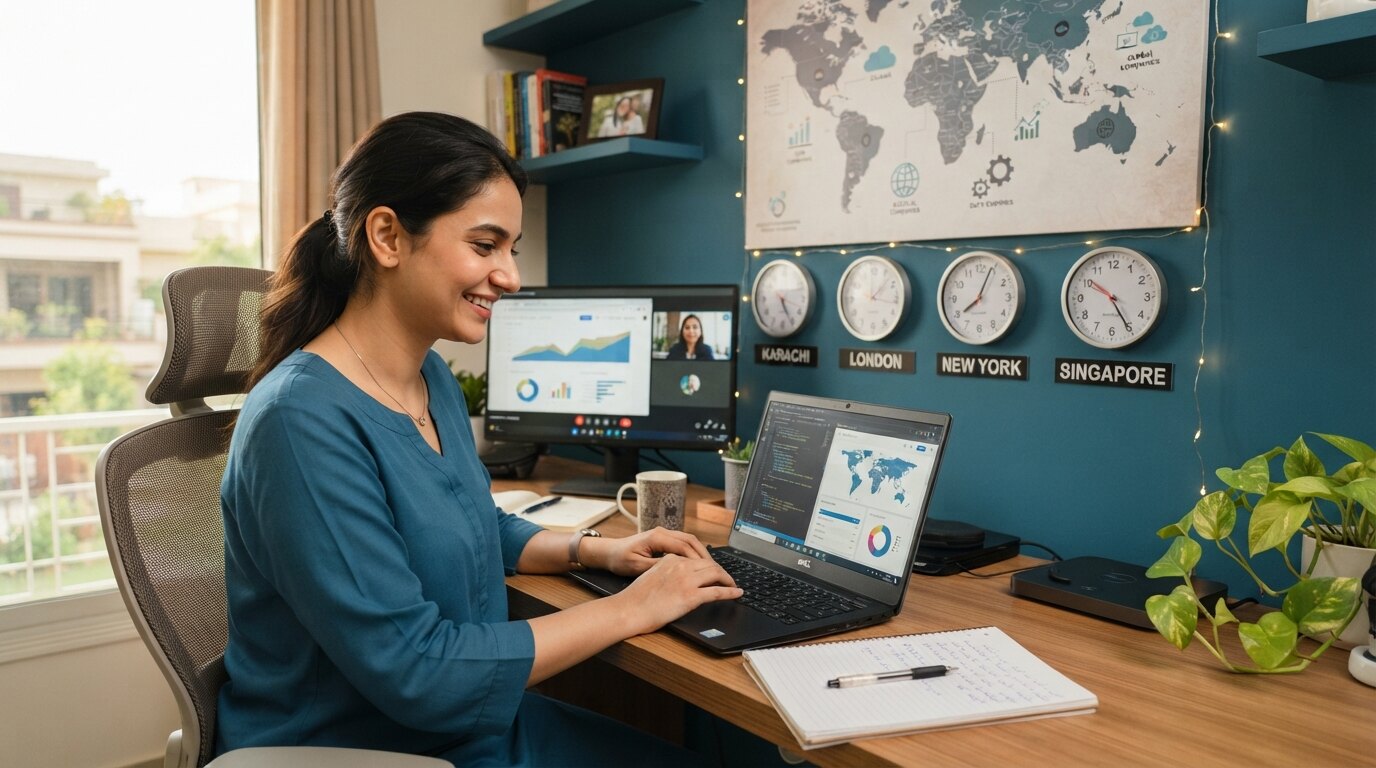
If you've ever thought "I'd love to freelance and earn in dollars, but I can't code", here's news that should change your mind. In Pakistan, the fastest-growing part of the freelance economy right now isn't software development at all. It's the non-technical skills: writing, design, marketing, and virtual assistance.
Fresh data reveals that non-IT freelancing exploded in the last year, growing far faster than even the booming IT side. This is genuinely good news for the millions of Pakistanis who have skills, or can learn them, that have nothing to do with programming. Here's what the numbers show, which skills are driving the boom, and how you can realistically start.
Let's start with the data, because it's genuinely surprising. Non-IT freelance earnings in Pakistan grew 188% in FY26, jumping to $592 million from $205 million the year before.
Now compare that to the IT side. IT freelancing, software development, web development, and technical work, grew a healthy 49% in the same period. That's strong growth by any measure. But non-IT freelancing grew nearly four times faster.
Let that sink in: the non-technical skills, the ones you don't need a computer science background for, are the fastest-growing segment of Pakistan's entire freelance export economy. This challenges the common assumption that "real" online earning requires coding. The data says otherwise.
So what exactly is this non-IT category? Five skill areas are driving the surge, and each is genuinely accessible.
Content writing covers blog posts, articles, website copy, product descriptions, and more, if you can write clearly in English, there's demand. Digital marketing includes SEO, paid ads management, and social media strategy, helping businesses grow online. Graphic design spans social media graphics, logos, branding, and marketing materials, increasingly accessible through tools like Canva. Virtual assistance involves administrative support, email management, scheduling, and research for busy businesses and entrepreneurs. And finance or business support includes bookkeeping, financial analysis, and business consulting for small companies.
The common thread is important: all of these need far less upfront technical training than software development, making them the fastest realistic entry point into freelancing for beginners right now. You can become competent in months, not years.
Understanding why helps you position yourself. Several forces are driving this surge.
First, small businesses worldwide need these services but can't afford in-house teams. SEO, paid ads, and social media planning are consistently among the highest-demand categories precisely because a small business would rather hire a freelancer than build an in-house marketing department. That's a massive, global client base.
Second, the barrier to entry is low but the work is genuinely valuable. A skilled content writer or social media manager delivers real business results without needing years of technical education. Third, AI tools have amplified these roles, a writer or designer using AI can now produce more, faster, making them more competitive and productive (though the human skill still matters). And fourth, Pakistan's large, English-speaking, young population is naturally suited to these communication- and creativity-driven roles.
Together, these make non-IT freelancing a natural fit for Pakistani talent, and the numbers reflect it.
Balance matters here, so let's be honest about both sides. The great advantage of non-IT skills is accessibility, you can start faster, with less training and no technical degree. That's real and valuable, especially for beginners and career-changers.
But there's a trade-off worth understanding. Earnings in freelancing vary sharply by skill and specialization. More accessible categories like basic writing, simple design, and data entry often provide more modest earnings, while high-demand niches, whether specialized IT work like web development, or specialized non-IT work like expert SEO, e-commerce strategy, or high-level consulting, yield several times higher incomes.
The lesson isn't "avoid non-IT." It's that within non-IT, specialization is where the real money is. A generic "I write articles" freelancer competes on price; a specialist "I write conversion-focused SaaS email sequences" freelancer commands premium rates. Start accessible, then specialize deeply. That's the path from modest beginnings to serious income.
Here's a practical route into non-IT freelancing. First, pick one skill from the five categories based on your interests and strengths, if you enjoy writing, start there; if you're visual, try design. Don't spread yourself thin.
Then learn it properly using free resources, YouTube, free courses, and government programs like DigiSkills have trained hundreds of thousands of Pakistanis in exactly these skills. Build a small portfolio of sample work (even self-created samples count when starting out) to show clients what you can do. Create profiles on platforms like Fiverr and Upwork, and price per project rather than per word or hour until you have reviews, then raise rates as your reputation grows. Finally, set up Payoneer or a freelancer bank account to receive international payments smoothly.
The key mindset: start small, deliver quality, gather reviews, then specialize and raise your prices. Your first clients are the hardest; momentum builds from there.
This non-IT boom carries real significance for the country. It dramatically widens who can participate in the digital economy. Not everyone can or wants to become a programmer, but far more people can write, design, market, or provide business support. This inclusivity means more Pakistanis, including those from non-technical backgrounds, women, and people in smaller cities, can earn global incomes.
It also strengthens Pakistan's overall freelance export earnings, which are already a vital source of foreign exchange. And it feeds a positive cycle: many freelancers eventually grow into micro-agencies, hiring others and multiplying the employment impact. For a young country with high underemployment, accessible online earning across diverse skills is a genuinely powerful economic force. The non-IT surge means the freelance opportunity is broader than ever.
The biggest takeaway is that the myth "you must code to succeed online" is now demonstrably false. The data proves that communication, creativity, and business skills are not just viable but the fastest-growing path in Pakistani freelancing.
That said, the experts' consistent advice applies here too: accessibility gets you in the door, but specialization builds real income. The freelancers who thrive don't stay generic, they develop deep expertise in a specific niche, build a strong reputation, and use tools (including AI) to deliver more value. Whether your skill is technical or not matters less than how skilled, specialized, and reliable you become at it. The opportunity is genuinely open to non-coders; the winners will be those who treat their non-IT skill as seriously as a developer treats code.
Expect non-IT freelancing to keep growing as global demand for content, marketing, design, and business support continues, and as AI tools make skilled non-technical freelancers even more productive. The bar will rise too, as more people enter these accessible fields, specialization and quality will increasingly separate high earners from the crowd.
For Pakistan, this trend broadens the freelance economy's foundation, making it more inclusive and resilient. The Pakistanis who pick a non-IT skill now, learn it well, and commit to specializing will be well-positioned in a rapidly expanding market.
The 188% surge in non-IT freelancing is one of the most encouraging trends in Pakistan's digital economy, because it means the door to global earning is open far wider than many believed. You don't need to code to build a real freelance income. Writing, design, marketing, virtual assistance, and business support are booming, accessible, and genuinely valuable to clients worldwide. The honest caveat is that accessibility is the start, not the finish: to earn well, pick a skill, learn it seriously, and specialize deeply. But the fundamental message is liberating, whatever your background, if you can communicate, create, or organize, there's a place for you in Pakistan's freelance boom. The only question is which skill you'll start with.
This article is for general informational purposes only and reflects data reported in 2026. Earnings vary widely by skill, specialization, and effort, no income is guaranteed. Statistics are as reported by cited sources. This is not financial advice.
Non-IT freelancing in Pakistan grew 188% in FY26, jumping to $592 million from $205 million the previous year, outpacing IT freelancing's still-strong 49% growth. This challenges the assumption that online earning requires coding, non-technical skills are the fastest-growing segment of Pakistan's freelance export economy.
The five categories driving the boom: (1) content writing (blogs, articles, copy, product descriptions); (2) digital marketing (SEO, paid ads, social media strategy); (3) graphic design (logos, branding, social graphics, accessible via tools like Canva); (4) virtual assistance (admin, email, scheduling, research); (5) finance/business support (bookkeeping, analysis, consulting). All need far less upfront technical training than software development, making them the fastest realistic entry point for beginners.
Why it's booming: small businesses worldwide need these services but can't afford in-house teams (SEO, paid ads, social media planning are top-demand); low entry barrier but genuinely valuable work; AI tools amplify these roles; and Pakistan's large, young, English-speaking population suits communication/creativity-driven work.
Honest trade-off: non-IT skills are more accessible (faster to start, no technical degree) but often have a lower ceiling. Earnings vary sharply, basic writing/design/data entry provide modest income, while specialized niches (expert SEO, e-commerce strategy, consulting) earn several times more. Within non-IT, specialization is where the real money is.
Beginner path: pick one skill, learn via free resources (YouTube, DigiSkills), build a portfolio, use Fiverr/Upwork pricing per project until reviews accumulate, set up Payoneer, then specialize and raise rates. Context: Pakistan has ~3 million freelancers; freelancing earned $1.76B (or $1.1-1.16B via IT specifically) in FY26.
Informational only; earnings vary and aren't guaranteed; not financial advice.