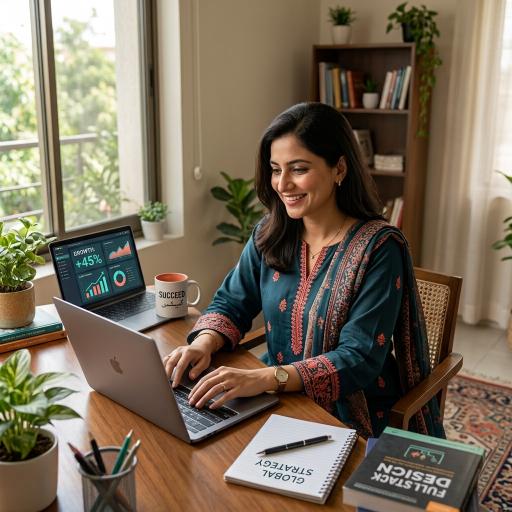
Pakistani women are increasingly succeeding in tech and freelancing, often earning equal or slightly higher hourly rates than men, reversing the global gender gap. Though women make up only 15-25% of freelancers, their participation is rising fast, driven by remote work's flexibility, government laptop and training schemes, and growing digital access across the country.
Something quietly powerful is happening in Pakistan. In a country that ranks near the bottom globally for women's workforce participation, a growing number of women are building thriving careers, and earning in dollars, through technology and freelancing. And here is the surprising part: in freelancing, Pakistani women often out-earn men per hour.
This is one of the most hopeful stories in Pakistan's digital economy. It is not a story of everything being solved, real barriers remain. But it is a genuine story of women using technology to rewrite what is possible for them. Here is what is actually happening, backed by real data, and what it means.
Let's start with the statistic that upends expectations. Around the world, women typically earn less than men for the same work. In Pakistani freelancing, the opposite is often true.
Research on Pakistan's freelance economy found that while Pakistani women make up only about 15 to 25% of freelancers, they often earn equal or slightly higher hourly rates than men, a reversal of global gender gaps. On the world's freelance platforms, a Pakistani woman's skill is judged by her work, not her gender, and many are competing and winning on merit.
This matters enormously. It means the digital economy offers Pakistani women something the traditional economy often has not: a level playing field where talent, not bias, determines income. That is a genuinely revolutionary shift.
The reasons behind this success are practical and powerful. Freelancing and remote work solve several specific barriers that have long limited Pakistani women's economic participation.
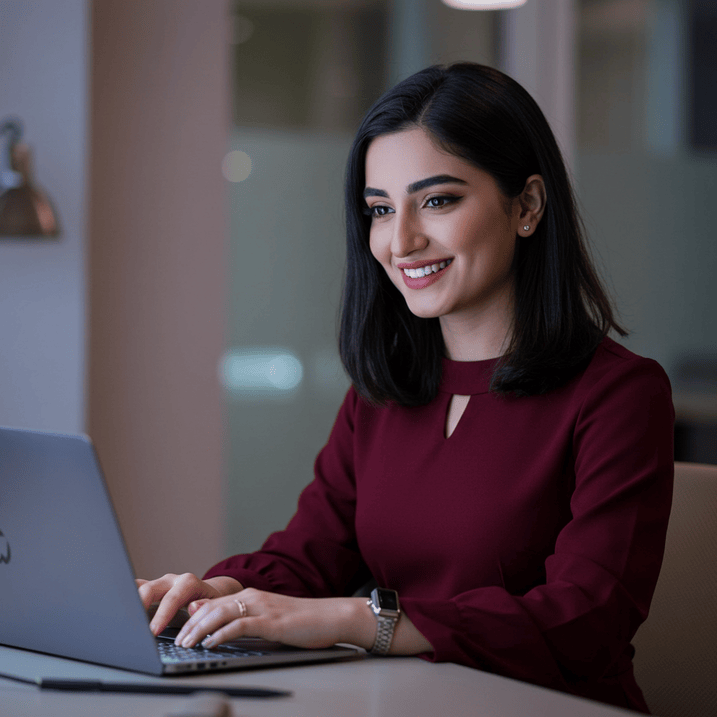
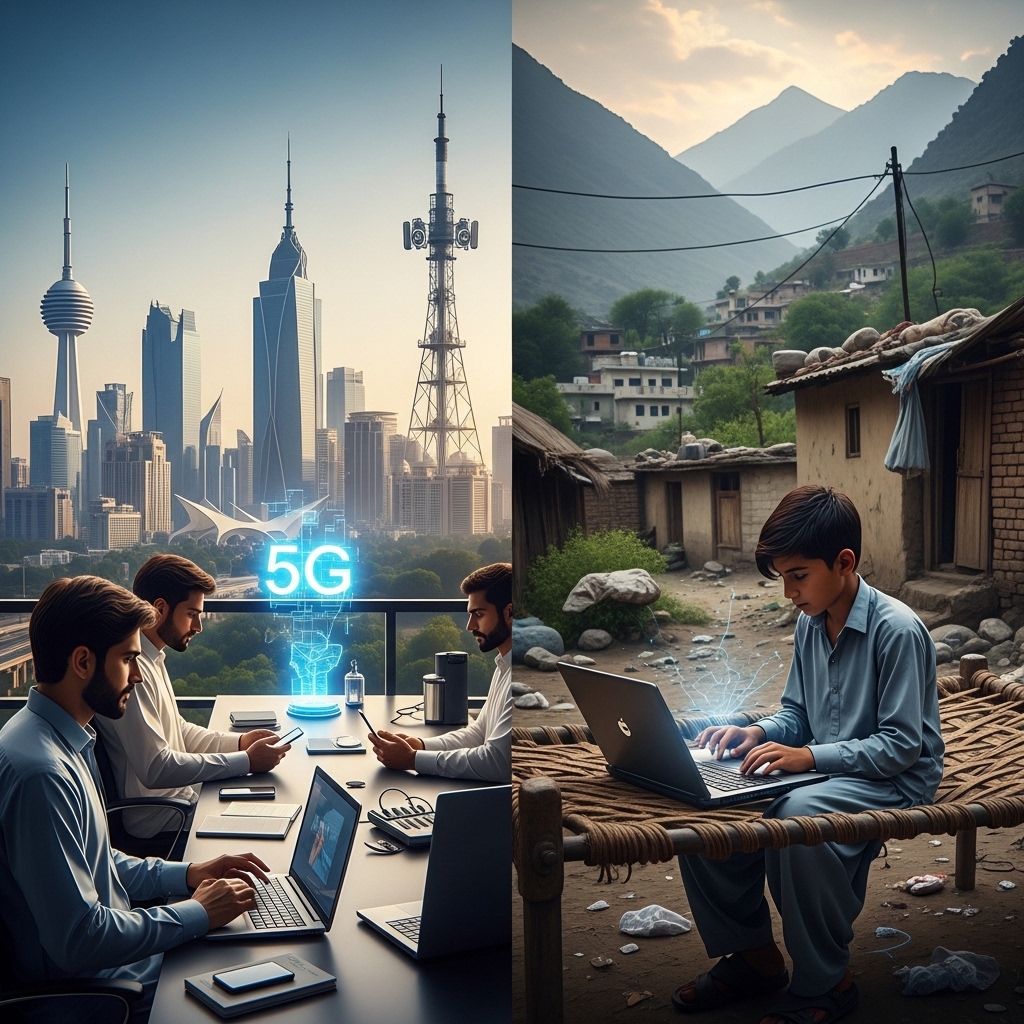
The biggest is flexibility and location independence. Remote work enables participation from semi-urban and rural areas, reducing barriers linked to mobility and cultural constraints. A woman who cannot easily commute to an office, due to distance, safety concerns, or family responsibilities, can work from home and still earn a global income. Technology removes the physical barrier entirely.
It also offers control over time, allowing women to balance work with family responsibilities that still often fall disproportionately on them. And it provides dignity and independence, a way to earn and contribute financially without conflicting with personal or family circumstances. For many Pakistani women, freelancing is not just a job, it is a door that was previously closed.
Beyond freelancing, women's participation in Pakistan's broader digital economy is rising measurably.
One striking recent figure comes from education. Women emerged as the biggest beneficiaries of Pakistan's flagship digital education initiative, with female students accounting for 54% of participants in the Prime Minister's Youth Laptop Scheme as of April 2026. When women get the tools, they show up in force, more than half of the recipients of a national tech scheme were women.
Interest in tech education is also climbing. The share of women enrolled in IT-related courses has been rising over the years, and millions of Pakistani women are coming online annually, narrowing the longstanding gender gap in mobile internet adoption and opening new pathways for commerce, learning, and networking. Every woman who comes online is a potential new participant in the digital economy.
The story is not only about women finding work, it is increasingly about women building companies and creating jobs for others.
Across Pakistan, female founders are launching real, scalable businesses in technology sectors. Recent profiles of Pakistan's leading female entrepreneurs include women building companies in fintech, edtech, healthtech, agritech, e-commerce, and digital services, some employing hundreds of people and exporting internationally.
Consider the range: founders using AI and satellite imagery to help farmers, women running digital agencies and hosting companies, entrepreneurs building freelancing platforms specifically for other women, and social enterprises employing flood-affected women to make products for export. These are not token examples, they represent a genuine and growing cohort of women moving from participants to leaders in Pakistan's tech economy.
Celebrating progress honestly means acknowledging how far there is still to go, and the barriers are real.
The headline reality is sobering. Pakistan ranks near the very bottom globally, around 145th of 146 countries, on economic participation and opportunity for women, and overall female labor force participation sits at roughly 21 to 24%, well below regional and global averages. The digital wins are real, but they exist within a much larger challenge.
Specific barriers persist. Digital access is uneven, with a continuing gender gap in internet and technology access, especially in rural areas. Social and cultural constraints still limit many women's choices, with family support, safety concerns, and societal expectations playing a decisive role in whether women can pursue this work. And within tech companies, women remain underrepresented in senior roles, with relatively few reaching general management despite years of experience.
Being honest about these challenges is not pessimism, it is the necessary context that makes the progress meaningful and shows where work still needs to happen.
Women's rising participation in tech is not just a matter of fairness, it is an economic imperative.
For the economy, bringing more women into the workforce is one of the biggest growth opportunities Pakistan has. Every woman earning in dollars adds to household income, foreign exchange, and national output. Women's freelance income, often uncounted in official statistics, is likely already contributing more than the data captures.
For families and communities, women's earnings tend to be reinvested heavily in children's education, health, and wellbeing, multiplying the benefit across generations.
For the tech sector, greater diversity brings different perspectives, skills, and ideas, strengthening the whole ecosystem. And crucially, for the next generation, every visible successful woman becomes a role model, showing girls that these careers are possible for them too.
The clearest lesson from the data is simple: when Pakistani women get access, tools, training, connectivity, and a fair platform, they succeed, often beyond expectations. The 54% female share in the laptop scheme and the reversed gender pay gap in freelancing both point to the same conclusion: the limiting factor has been opportunity, not ability.
This is exactly why initiatives that expand access matter so much: government schemes providing laptops and training, programs teaching digital and AI skills, women-focused freelancing communities, and mentorship networks. Connected Pakistan's own SheCan initiative reflects this belief, that empowering women with skills, confidence, and community unlocks enormous potential. The evidence strongly supports it.
The path forward is to keep widening access, especially in rural and underserved areas, while working on the deeper social and infrastructural barriers.
The trajectory is genuinely encouraging. As internet access expands, digital literacy grows, and more success stories inspire others, women's participation in Pakistan's tech and freelance economy is likely to keep rising. Government focus on women's digital inclusion, combined with the natural fit between remote work and women's circumstances, creates real momentum.
The bigger opportunity is to translate freelancing success into broader gains: more women in formal tech employment, more female founders scaling companies, and more women reaching leadership. Each success makes the next one easier.
This article is for general informational purposes only and reflects data and reports available in 2026. Statistics vary by source and methodology. Individual outcomes depend on skills, circumstances, and effort.
Pakistani women are increasingly succeeding in technology and freelancing, one of the most hopeful trends in the country's digital economy. A striking finding from research on Pakistan's freelance economy: although women make up only about 15-25% of Pakistani freelancers, they often earn equal or slightly higher hourly rates than men, reversing the global gender pay gap, because international freelance platforms judge work on merit rather than gender.
Freelancing suits women's circumstances well: remote work enables participation from semi-urban and rural areas, reducing barriers linked to mobility, safety, and cultural constraints, while allowing balance with family responsibilities and providing financial independence. Participation is rising: women were 54% of beneficiaries in the PM's Youth Laptop Scheme (April 2026), IT-course enrolment among women has grown, and millions of women come online yearly, narrowing the mobile-internet gender gap.
Women are also building companies, with female founders profiled in 2026 across fintech, edtech, healthtech, agritech, e-commerce, and digital agencies, some employing hundreds and exporting internationally.
Honest challenges remain: Pakistan ranks around 145th of 146 on the WEF's economic participation subindex, with overall female labour force participation at roughly 21-24% (well below averages). There's a persistent gender gap in digital access (especially rural), women remain underrepresented in senior tech roles, and social/cultural constraints (family support, safety, societal expectations) still shape women's choices.
Key lesson: when Pakistani women get access, tools, training, connectivity, and a fair platform, they succeed, the limiting factor has been opportunity, not ability, underscoring the value of laptop schemes, skills training, and women-focused communities.
This is informational; statistics vary by source and individual outcomes vary.