On July 8, 2026, Apple announced a multiyear agreement with Broadcom exceeding $30 billion to produce over 15 billion US-made chips through at least 2031. It is Apple's largest commitment under its American Manufacturing Program, includes a $1.5 billion expansion of Broadcom's Fort Collins, Colorado facility, and is part of Apple's $600 billion US investment.
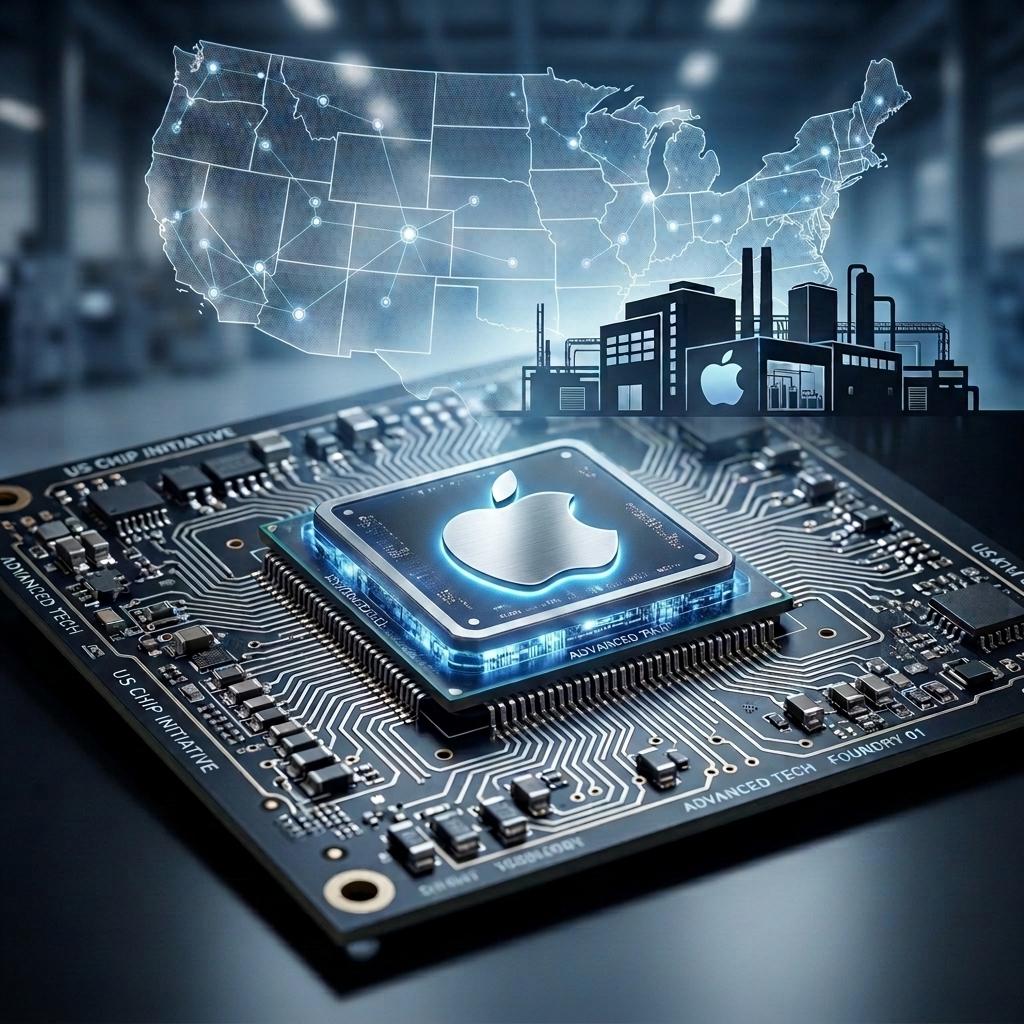
Apple has just made its biggest bet yet on manufacturing chips in America. On July 8, 2026, the company announced a multiyear agreement with Broadcom worth more than $30 billion to produce custom silicon and wireless components in the United States. It is the largest single deal Apple has ever made to build technology on American soil.
While this is a US story, it matters far beyond America. Chips power everything, from the phone in your hand to the AI systems reshaping economies. A move this big by the world's most valuable company sends ripples across the entire global tech industry, including for countries like Pakistan that are building their own tech ambitions. Here is what the deal means and why you should care.
The numbers are staggering. The new agreement, expected to exceed $30 billion, will lead to the production of more than 15 billion U.S.-made chips and support hundreds of American jobs. The deal runs for multiple years, supplying custom silicon for Apple products through at least 2031.
At the center is a factory upgrade. Broadcom will invest $1.5 billion to expand and modernize its manufacturing facility in Fort Collins, Colorado. There, it will make advanced radio frequency components, including FBAR filters, and cutting-edge wireless connectivity technologies used across Apple's devices.
In plain terms, these are the specialized chips that help your iPhone connect to networks, WiFi, and Bluetooth reliably. Apple wants more of them made in America.
This deal does not stand alone. It is the single largest piece of a historic spending commitment. The agreement is part of Apple's $600 billion pledge to invest in the U.S. economy over four years, covering manufacturing, research, jobs, and technology development.
It also sits within a specific program. Broadcom is part of Apple's American Manufacturing Program (AMP), launched in 2025 to accelerate US manufacturing across Apple's supply chain. This Broadcom agreement is now the biggest commitment under that program to date.
There is a clear political backdrop too. Apple has been working closely with the US administration, which has pushed hard for companies to reshore manufacturing and create American jobs. This deal is partly a response to that pressure.
Two big forces are driving this move. The first is supply-chain security. The COVID era and rising global tensions exposed how fragile chip supply chains can be. By building an end-to-end silicon supply chain in America, Apple reduces its dependence on any single region and protects itself from future shocks.
The second is politics and strategy. Reshoring manufacturing is a major priority for the current US administration, and Apple, as America's most iconic tech company, is under pressure to lead by example. Making chips at home earns goodwill and reduces political risk.
There is also a technology angle. Many of these custom chips, known as ASICs, are increasingly used for artificial intelligence workloads. Controlling their production gives Apple an edge as AI becomes central to every device.
This deal reshapes more than one company's supply chain.
For the global chip industry, it accelerates a worldwide trend of "reshoring", bringing chip production back to home countries rather than concentrating it in a few Asian hubs. Expect more such deals from other tech giants.
For Broadcom, it is a massive win. Its shares jumped after the announcement, reflecting the value of a guaranteed, multi-year, multi-billion-dollar customer.
For consumers worldwide, more resilient chip supply could mean fewer shortages and more reliable device availability over time, though it may also keep costs higher, since US manufacturing is more expensive than some Asian alternatives.
For the AI race, securing custom silicon production strengthens Apple's hand as it builds more AI features into its products.
For readers in Pakistan, this story is a useful mirror. It shows how seriously the world's biggest economies now treat control over technology manufacturing and supply chains.
Pakistan is at a much earlier stage, but the underlying lesson is the same one local experts keep raising: real tech power comes from building and owning infrastructure, not just providing services. Pakistan's own moves, its National AI Policy, the push for sovereign AI, and new data centers, echo the same instinct Apple is acting on, that owning the deeper layers of technology matters.
Pakistan will not be manufacturing advanced chips soon; that requires enormous capital and expertise. But the principle applies at every level: whether it is a freelancer moving from basic gigs to owning a product, or a country moving from outsourcing to building AI, the winners increasingly are those who control what they create. Apple spending $30 billion to control its chips is the same logic at a global scale.
Analysts see this as part of a defining shift of the 2020s. For years, the tech world optimized for cost, making things wherever it was cheapest, usually in Asia. Now, security, resilience, and national strategy are reshaping those decisions.
Apple's outgoing CEO Tim Cook framed the Broadcom agreement as a new phase in a decades-long partnership that accelerates Apple's commitment to American manufacturing and innovation. Broadcom's leadership echoed the pride in expanding US production. The message from both is clear: the future of chips is being pulled closer to home.
This does not mean globalization is over. Apple still relies on global partners, including for final assembly. But the strategic core, chip design and production, is increasingly something companies and countries want to control themselves.
Expect this trend to grow. More reshoring deals, more government incentives for local chip production, and more competition to secure AI-capable silicon are all likely in the coming years. The companies and countries that build strong domestic tech foundations will hold real advantages.
For Pakistan and other emerging tech nations, the takeaway is not to copy Apple, but to internalize the principle: invest in owning your technology layers, whatever your current stage. That is how lasting tech strength is built.
Apple's $30 billion Broadcom deal is more than a headline about chips. It is a signal of how the global tech landscape is changing, toward security, self-reliance, and control over the technologies that matter most. For the world, it marks a deepening of the reshoring era. For Pakistan, it is a powerful reminder that the path to real tech strength runs through building and owning, not just serving. As AI reshapes everything, the value increasingly lies in who controls the foundations. Apple just spent $30 billion to make sure it does.
This article is for general informational purposes only and reflects reports and announcements available as of July 2026. It is not financial or investment advice; company plans and figures can change.
On July 8, 2026, Apple announced a multiyear agreement with Broadcom worth more than $30 billion to design and produce custom silicon and advanced wireless connectivity components in the United States. It is Apple's largest-ever commitment under its American Manufacturing Program (AMP), which was launched in 2025.
The deal will produce more than 15 billion US-made chips through at least 2031 and support hundreds of American jobs. As part of it, Broadcom will invest $1.5 billion to expand and modernize its facility in Fort Collins, Colorado, producing custom ASIC silicon and advanced radio frequency components including FBAR filters. Broadcom had confirmed the long-term contracts in an SEC filing on July 6, 2026, and its shares rose nearly 5% after the announcement.
The agreement is the single largest piece of Apple's broader $600 billion, four-year pledge to invest in the US economy across manufacturing, R&D, and jobs. It also reflects pressure from the US administration on major companies to reshore manufacturing, a priority championed by outgoing Apple CEO Tim Cook, with Broadcom CEO Hock Tan citing the companies' decades-long partnership.
Strategically, the move is driven by supply-chain security (reducing dependence on Asian chip hubs), political alignment with US reshoring goals, and the growing importance of custom ASIC chips for AI workloads.