To earn your first income with AI tools in Pakistan: pick one skill (writing, design, or video), learn a free AI tool like ChatGPT or Canva, package a simple service, create samples, offer it on Fiverr or locally, and set up Payoneer for payments. Start with free tools, avoid instant-income scams, and focus on real value.
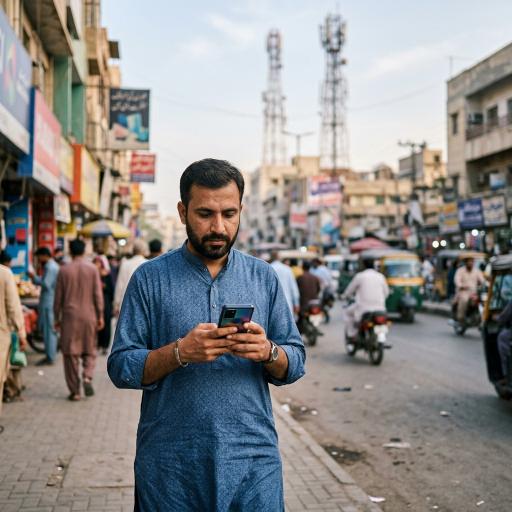
Artificial intelligence has genuinely lowered the barrier to earning online. Today, a student in Multan or a job-seeker in Peshawar can use free AI tools to offer real services to clients worldwide, using just a smartphone or laptop. This isn't hype: thousands of Pakistanis are already doing it.
But let's be honest from the start: AI is not a magic money button. You won't get rich overnight, and anyone promising "instant income" is selling a scam. What AI does do is make you faster and more capable, letting a beginner deliver quality work and build a real income with effort and consistency. This step-by-step guide shows you exactly how to earn your first income with AI tools, realistically, starting from zero.
Before the steps, set the right expectation, because it will save you from disappointment and scams. AI is a tool that amplifies your work; it doesn't replace the need for skill, effort, and judgment. The people earning with AI aren't just typing prompts and collecting cash, they're using AI to deliver genuine value faster, then building a reputation over time.
So approach this as building a real (if small) business, not a get-rich-quick scheme. Start with free tools, avoid promises of instant income, and focus on proof, samples, and repeatable delivery. Your first earning might be modest, a few thousand rupees, but it proves the model works, and you grow from there. With that honest foundation, here's the method.
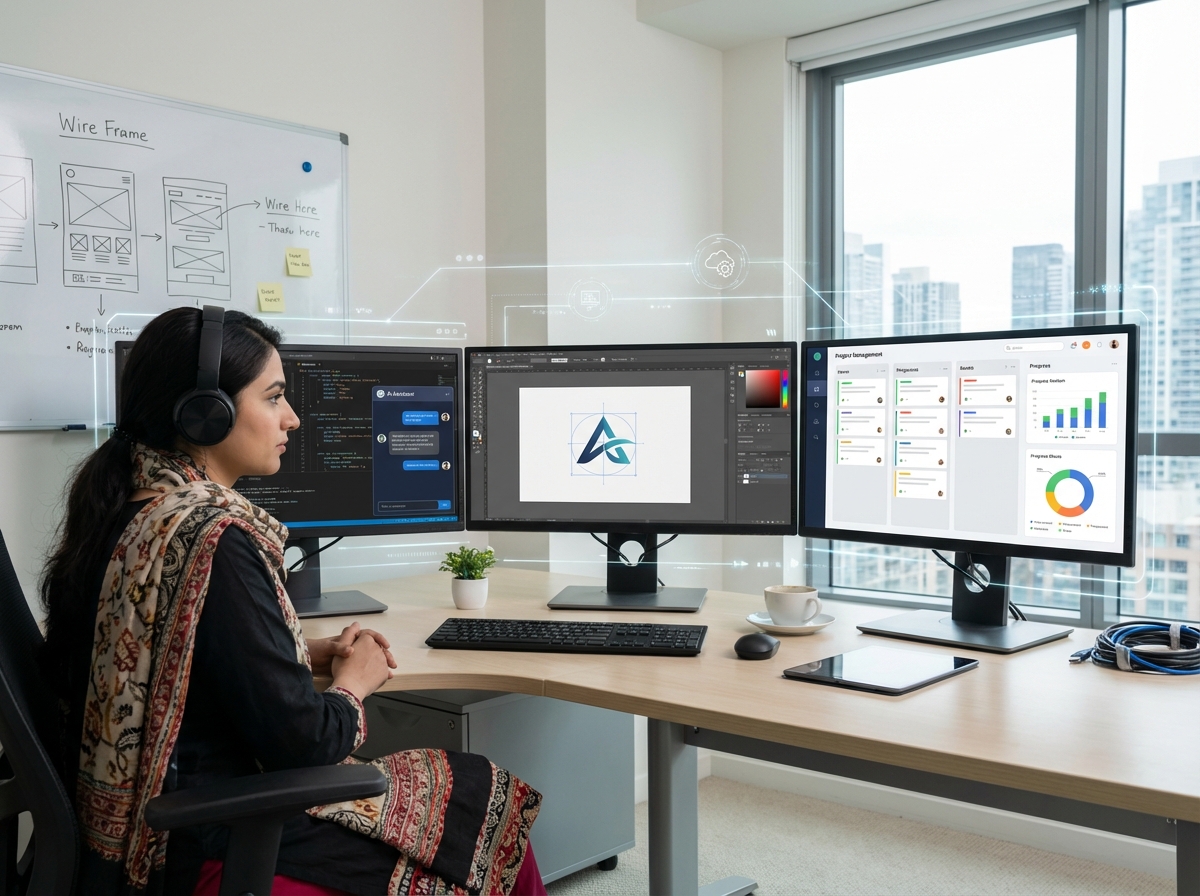
Don't try to do everything, that's the most common beginner mistake. Choose a single skill where AI can help you deliver a service people pay for. Good beginner-friendly options include content writing (blogs, product descriptions, social captions), graphic design (social posts, logos, thumbnails), video editing (shorts, reels, simple edits), and virtual assistance or research.
Pick based on what interests you and what you can start learning today. The goal is to become genuinely good at one thing, using AI to do it faster and better, rather than being mediocre at many. You can always expand later. For most beginners, writing or basic design is the easiest entry point.
Now learn the right AI tool for your chosen skill, and start with free versions. You don't need paid subscriptions to begin.
Match the tool to your skill. For writing, learn ChatGPT or Claude, use them to draft, refine, and speed up content (while you edit for quality and add human insight). For design, learn Canva (including its AI features for image generation, background removal, and magic resize), it's free, beginner-friendly, and hugely in demand. For video, learn CapCut or similar free editors with AI features. For research/VA work, learn ChatGPT plus a tool like Perplexity for sourced research.
Spend a week or two genuinely practicing, watch free YouTube tutorials, and use the tool daily. Basic competence comes quickly; the key is hands-on practice, not just reading about it.
Here's where many beginners go wrong, they offer something vague. Instead, package one clear, specific service you can deliver reliably. "I write SEO-optimized 500-word product descriptions" beats "I do writing." "I design 5 Instagram posts in your brand style" beats "I do graphics."
A specific, well-defined service is easier to sell, easier to price, and easier to deliver consistently. Start with a small, fixed-price offer, something a client can say yes to easily, like product description writing, YouTube title and thumbnail packages, or a set of social media captions. Specificity builds trust and makes you look professional, even as a beginner.
No one hires a beginner with nothing to show, so create your own proof. Before you have any clients, use your AI tool to produce three to five strong samples of your service. If you write, create sample product descriptions or blog intros. If you design, create sample social media posts or logos. If you edit video, edit a few short sample clips.
These samples are your portfolio, they show clients exactly what they'll get. Put them somewhere shareable: a simple portfolio on Behance, a Google Drive folder, a Notion page, or even a dedicated Instagram/Facebook page showcasing your work. This step is what turns "trust me" into "look what I can do," and it's essential.
Now, get your service in front of people who'll pay. You have several routes, and beginners should try more than one.
Freelance platforms like Fiverr and Upwork are the classic starting point, create a professional profile, list your specific service as a "gig," and use your samples. Local and social selling works too: offer your service to local businesses (many small Pakistani businesses need social media content and don't know about AI), and post about your service on your own social media and in relevant Facebook groups. Your network matters: tell friends, family, and contacts what you now offer, your first client often comes from someone who already knows you.
Don't wait for clients to find you, actively reach out. Your first few clients are the hardest; after that, referrals and reviews build momentum. Deliver excellent work on early jobs even if the pay is small, because reviews and repeat clients are worth more than the first fee.
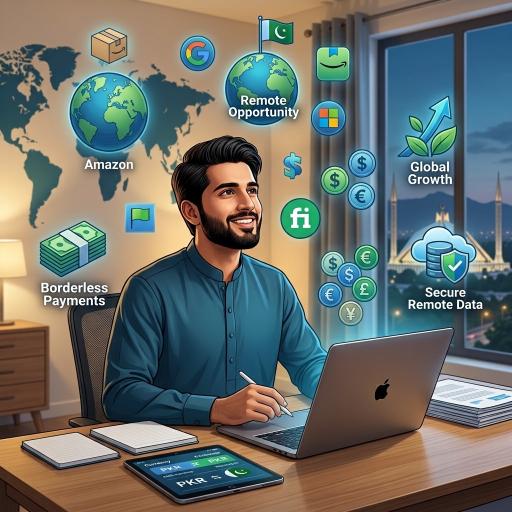
To actually receive money, especially from international clients, sort out your payment method early. Most Pakistani freelancers use Payoneer to receive international payments and withdraw to their local bank account; some also use Wise or local options like Elevate Pay. For local Pakistani clients, bank transfer, JazzCash, and EasyPaisa work directly.
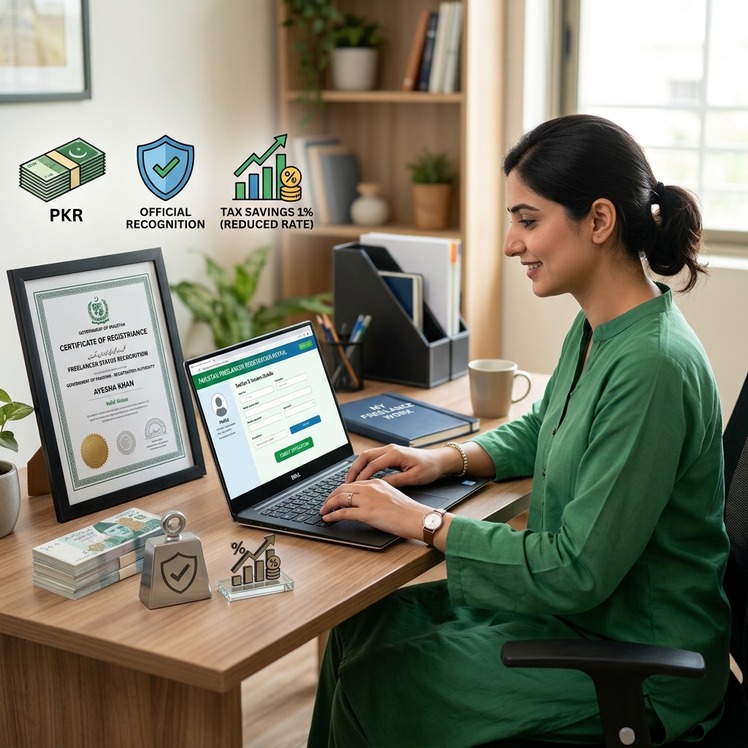
Set this up before you land your first client so you're ready to get paid smoothly. As your income grows, remember to register with the FBR and become a tax filer, operating formally brings real benefits and keeps you compliant. Getting the payment piece right early prevents a frustrating scramble later.
Let's be honest about numbers, because realistic expectations matter. As a beginner, your first income might be modest, perhaps a few thousand rupees from early gigs. That's normal and good, it proves the model works.
As you build samples, reviews, and skills, earnings grow. Many Pakistani beginners reach a steady side income of tens of thousands of rupees per month within several months of consistent effort, and some scale much higher into full-time incomes. The trajectory depends on your skill, consistency, and how well you serve clients. AI gives you an edge, but your reliability and quality build the income. Think months, not days, and steady growth, not overnight riches.
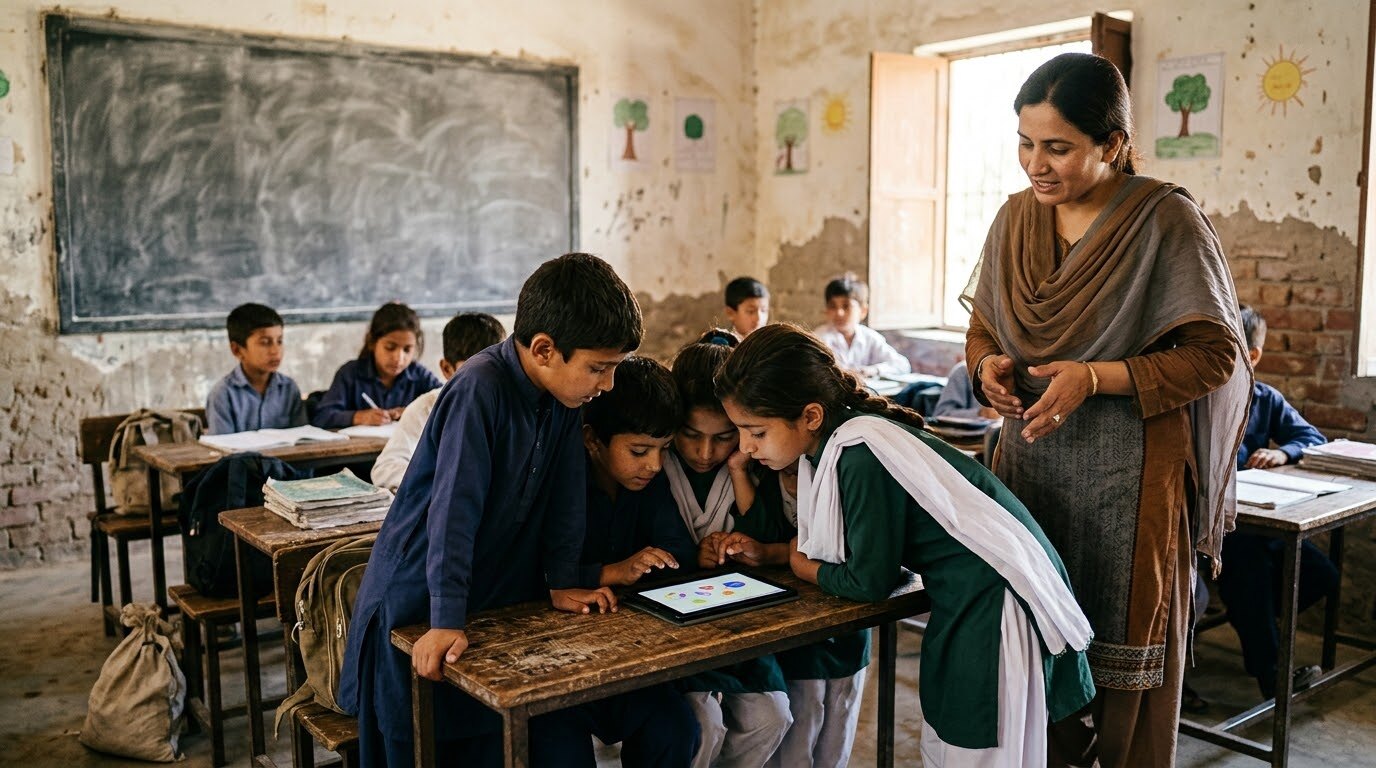
This accessibility is genuinely powerful for Pakistan. With AI tools lowering the barrier to online earning, opportunity opens up for people who were previously shut out, students without capital, women working from home, young people in smaller cities, anyone with a phone and determination.
Pakistan is already a global freelancing hotspot, with millions of freelancers earning over a billion dollars annually. AI can extend this further, letting more people participate and helping existing freelancers deliver more. Every person who builds an AI-powered income adds to household earnings, brings in foreign exchange, and strengthens Pakistan's digital economy. The democratizing effect, real skills and income accessible to almost anyone, is one of AI's most positive impacts here.
The formula that actually works is simple but requires discipline. It's not "AI = money." It's real skill, amplified by AI tools, delivered consistently to clients who value it. The beginners who succeed treat AI as a productivity multiplier while focusing on genuine quality, reliability, and customer service.
The common failure modes are predictable: chasing "instant income" scams, spreading across too many services, giving up after a few rejections, or submitting low-quality AI output without human review (clients notice, and it kills your reputation). Avoid those, pick one skill, master one tool, deliver real value, stay consistent, and treat early low-paid jobs as reputation-building investments. Do that, and a genuine AI-powered income is realistically within reach.
AI tools will keep getting more powerful and accessible, further lowering the barrier to earning. Demand for AI-assisted services, content, design, automation, will keep growing as businesses everywhere seek efficient, affordable help. The Pakistanis who build these skills now will be well ahead.
Expect the bar to rise too: as more people use AI, simply using it won't be enough, the winners will combine AI with genuine skill, specialization, and reliability. Continuous learning remains key. But the fundamental opportunity, earning real income with accessible tools, will only expand.
Earning your first income with AI tools in Pakistan is genuinely achievable, with no investment, no advanced skills, and just a phone or laptop to start. The path is clear: pick one skill, learn one free AI tool, package a specific service, create samples, find clients, and set up payments. Keep your expectations honest, AI amplifies your effort, it doesn't replace it, and your first earnings prove a model you can grow. Avoid the scams, focus on real value, stay consistent, and treat this as building something real. Thousands of Pakistanis have already turned AI tools into genuine income. With the steps above and steady effort, you can too. Start today, pick your skill, and take the first step toward your first AI-powered rupee.
This article is for general informational purposes only and reflects tools, platforms, and conditions in 2026, which change frequently. Earnings vary widely based on skill, effort, and market factors, no income is guaranteed. Verify platform and payment details independently, and be cautious of scams. This is not financial advice.
This beginner tutorial explains how to earn a first income with AI tools in Pakistan, with no investment and just a smartphone or laptop. Honest framing: AI amplifies work but doesn't replace skill, effort, and quality control; avoid "instant income" scams and expect gradual growth, not overnight riches.
Six steps: (1) Pick ONE skill, content writing, graphic design, video editing, or virtual assistance/research. (2) Learn ONE free AI tool for it, ChatGPT or Claude for writing, Canva for design, CapCut for video, Perplexity for research, starting with free versions and daily practice. (3) Package a specific, simple service (e.g., "SEO product descriptions" or "5 branded Instagram posts") rather than a vague offer. (4) Create 3–5 samples as a portfolio (shared via Behance, Google Drive, Notion, or a dedicated social page) to prove capability. (5) Find first clients via Fiverr/Upwork, local businesses, social media, Facebook groups, and personal network, reaching out actively and delivering excellent work for reviews. (6) Set up payments: Payoneer (or Wise/Elevate Pay) for international clients withdrawing to local banks; JazzCash/EasyPaisa/bank transfer for local; register with FBR as income grows.
Realistic earnings: first income may be a few thousand rupees; with consistent effort, samples, and reviews, many beginners reach tens of thousands of rupees monthly within months, some scaling to full-time income. Success formula: real skill + AI tools + consistency + client value.
Common failures to avoid: chasing instant-income scams, spreading across too many services, quitting after early rejections, and submitting unreviewed low-quality AI output. Context: Pakistan is a global freelancing hotspot (millions of freelancers, $1B+ earned annually); AI democratizes earning for students, women, and people in smaller cities.
Informational only; earnings vary and aren't guaranteed; not financial advice.