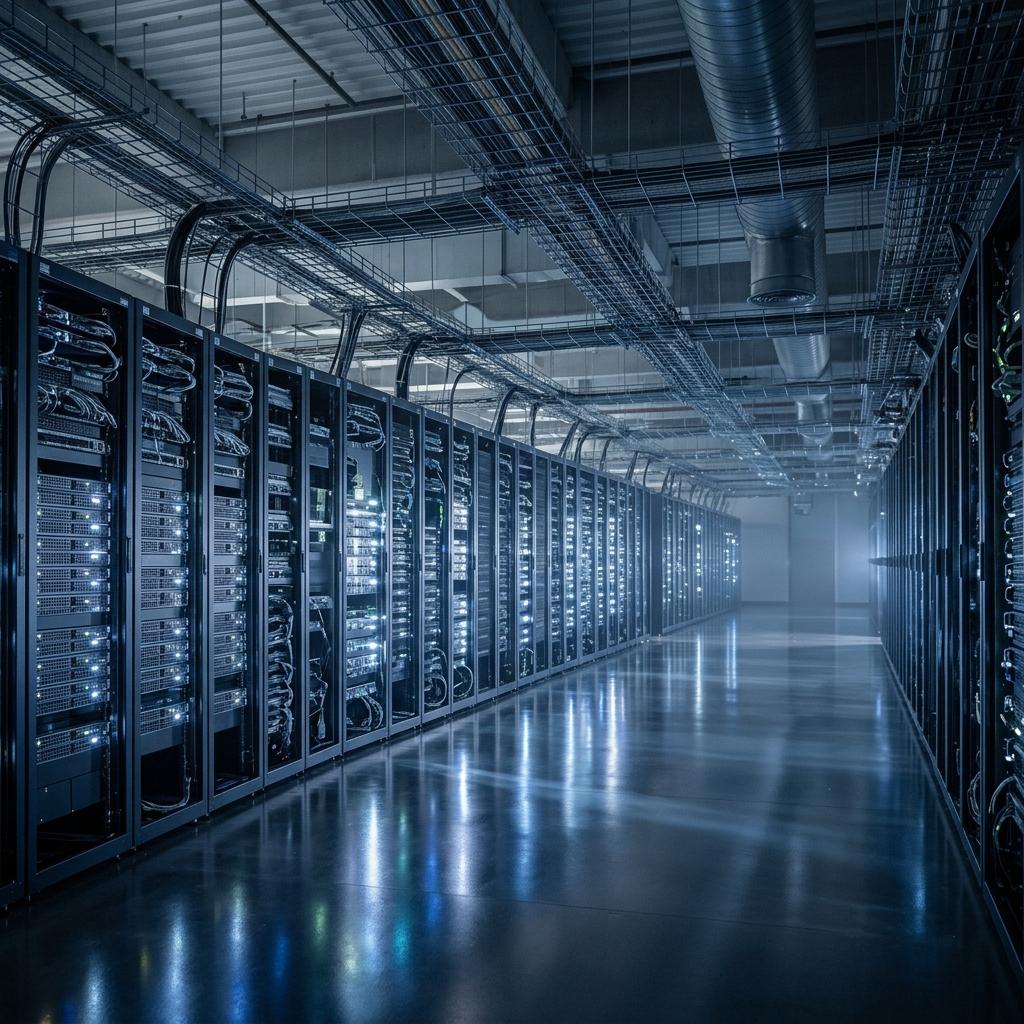
Quantum Global Data Centre (QGDC), a venture of Gul Ahmed Energy Group, is building Pakistan’s largest data center with Huawei Pakistan. The 80MW Tier III facility, backed by a 136MW captive power plant on a 30-acre site, carries an initial $230 million investment that could reach $600 million, with operations targeted for 2027. (52 words)
When you think of Gul Ahmed, you probably think of fabric and fashion, not artificial intelligence. So the news that a Gul Ahmed venture is building Pakistan’s largest data center, in partnership with Huawei, might sound surprising at first.
But look closer and it makes a lot of sense. Pakistan is spending hundreds of millions of dollars every year to rent computing power from abroad. Someone had to start building that capacity at home. This is the story of that project, and the bigger reason it matters for the country’s digital future.
The project is led by Quantum Global Data Centre, usually shortened to QGDC, which is a venture of the Gul Ahmed Energy Group. QGDC has signed a strategic partnership with Huawei Pakistan to develop both the data center and a co-located science and technology park.
The scale is significant for Pakistan. The facility is planned as an 80MW Tier III data center, built on a 30-acre site inside Gul Ahmed Energy’s campus. It will be backed by a captive power plant of around 136MW, which matters a great deal in a country where reliable electricity is a constant challenge for technology infrastructure.
The investment starts at $230 million and could scale up to as much as $600 million over the next three to four years as demand grows. Commercial operations are targeted for 2027.
You will see the term Tier III repeated in coverage of this project, so it is worth understanding.
Tier III is an international standard for data center reliability. It refers to a facility designed for very high uptime, around 99.982%, which translates to minimal downtime over a year. In practical terms, a Tier III data center has redundant power and cooling systems, so maintenance can happen without shutting services down.
For businesses, banks, and government bodies that cannot afford their systems going offline, this reliability is the whole point. It is the difference between a data center you can trust with critical national records and one you cannot.
Here is the part that explains the whole project. According to QGDC Chairman Danish Iqbal, Pakistan already spends an estimated $700 to $800 million every year on computing capacity and services from abroad.
Think about what that means. Every time a Pakistani company uses foreign cloud services to run an app, store data, or train an AI model, money leaves the country. And the capacity sits on servers in other nations, outside Pakistan’s control.
As AI adoption grows, that spending and that dependence will only increase. Iqbal warned that without domestic data centers, Pakistan could become increasingly dependent on imported computing. Building local capacity is how a country keeps that money, and that control, at home.
The Huawei side framed the deal in similar terms. Huawei Pakistan’s cloud business leader described it as a step toward digital sovereignty, the idea that a country should own and control the infrastructure its digital economy runs on.
For Pakistan’s economy, local data centers mean less money flowing out for foreign computing, and potentially new revenue if the country can host data for regional clients too. It is the same logic as any import-substitution: build it here, keep the value here.
For businesses and startups, having a large, reliable, Tier III facility inside Pakistan can mean faster, cheaper, and more compliant hosting. Some organizations, especially banks and government bodies, are required or strongly prefer to keep sensitive data within national borders. A domestic data center makes that possible.
For the technology sector, this is infrastructure that the AI ambition depends on. Pakistan has announced big goals around AI skills and investment. None of that works without the computing power to back it. Data centers are the physical foundation under all the AI headlines.
For the wider business world, it is also a sign of how Pakistani conglomerates are diversifying. A group rooted in textiles and energy moving into digital infrastructure shows that serious domestic capital sees the data economy as the next big opportunity.
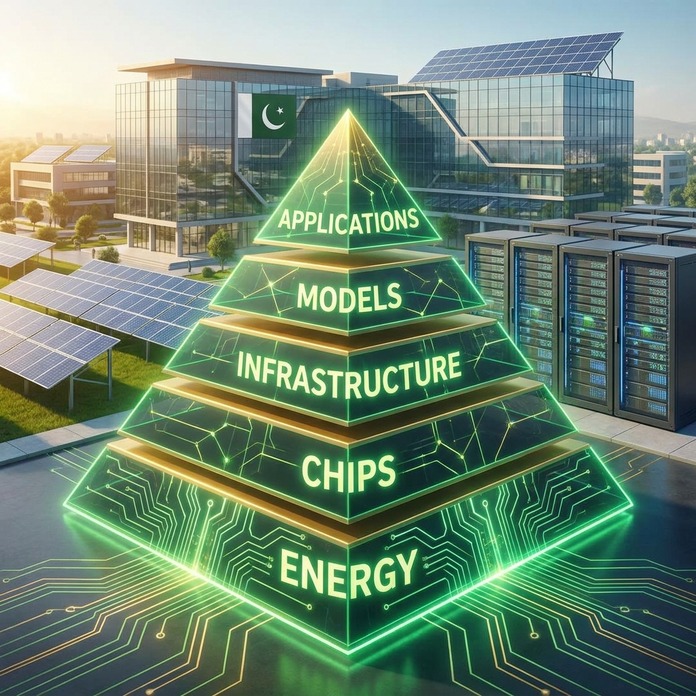
AI skills and apps get the headlines, but infrastructure is what actually decides whether a digital economy can grow. You cannot run large AI workloads, host national cloud services, or keep sensitive data at home without data centers. In that sense, projects like this are more foundational than any single app or startup.
That said, a few honest caveats are worth keeping in mind. First, announcements are not operations. The facility is targeted for 2027, and large infrastructure projects can face delays. Second, dependence on a single foreign technology partner, in this case Huawei, is a different kind of dependence than renting foreign cloud, and worth watching. Third, “largest in Pakistan” is a claim that several projects have made recently, as the country races to build capacity, so the title may keep changing hands.
None of that diminishes the core point. Pakistan needs domestic computing capacity, and serious players are now building it. That is a genuinely positive shift, even if the exact rankings and timelines move around.
Expect more of these projects, not fewer. As AI demand rises, the gap between what Pakistan consumes in computing and what it produces locally is a clear opportunity. More conglomerates, telecom operators, and energy companies are likely to enter the data center business, often with international technology partners.
The key things to watch are whether these facilities actually come online on schedule, whether they attract real customers including global cloud providers, and whether Pakistan can build enough reliable power to support them. If those pieces fall into place, the country could shift over the coming years from renting computing abroad to hosting it at home, and even selling that capacity to the region. If they do not, the announcements will outpace the reality.
A Gul Ahmed venture building Pakistan’s largest data center with Huawei is more than a corporate headline. It is a response to a real problem: a country spending hundreds of millions a year on foreign computing while trying to build an AI-driven future on borrowed infrastructure.
The 80MW Tier III facility, with its dedicated power and 2027 target, is one of the clearest signs yet that Pakistan is starting to build the physical foundation of its digital economy. The ambitions around AI skills and investment only become real if the computing power exists to support them. Projects like this are where that future is quietly being built, one server rack at a time.
This article is for general information only and is not investment advice. Project details, figures, and timelines are based on reported announcements and may change.
Quantum Global Data Centre (QGDC), a venture of Pakistan’s Gul Ahmed Energy Group, is building the country’s largest data center in partnership with Huawei Pakistan. The facility is planned as an 80MW Tier III data center, backed by a dedicated 136MW captive power plant, on a 30-acre site inside Gul Ahmed Energy’s campus, with a co-located science and technology park. The initial investment is $230 million, potentially scaling to $600 million over three to four years, with commercial operations targeted for 2027. Tier III means high reliability (about 99.982% uptime) through redundant power and cooling. The strategic rationale: QGDC Chairman Danish Iqbal said Pakistan spends an estimated $700 to $800 million annually on foreign computing capacity, and without domestic data centers the country risks growing dependence on imported computing as AI adoption rises. Huawei framed the deal as a step toward digital sovereignty. For Pakistan, local data centers keep money and control at home, enable data residency for banks and government, and provide the physical foundation for the country’s AI ambitions. Honest caveats: announcements are not operations (2027 target, possible delays), reliance on a single foreign tech partner is its own dependence, and several projects claim the “largest” title as Pakistan races to build capacity. The core shift is positive: serious domestic capital is now building the infrastructure under Pakistan’s digital economy. This is general information, not investment advice; figures and timelines may change.