As AI reshapes the job market, experts say Pakistan has a chance to move beyond traditional software services into “industrial AI” / “Edge AI”, using AI and sensors to monitor and maintain physical machines and factories (predictive maintenance). Applied to Pakistan’s textile, rice, and manufacturing industries, it could raise competitiveness and create new, higher-value technical jobs.
For years, Pakistan’s tech success story has been about software: freelancers coding for global clients, IT firms exporting software services, app developers, and so on. That’s been genuinely valuable. But there’s a growing recognition, voiced recently by academics and industry experts, that Pakistan’s next big tech opportunity might lie somewhere unexpected: not in more software, but in AI on the factory floor.
The idea is “industrial AI” (or “Edge AI”): using artificial intelligence and sensors to monitor, maintain, and optimize physical machines, equipment, and industrial operations. As one Lahore academic put it, this could allow Pakistan to build expertise beyond traditional software services. It’s a fresh, forward-looking angle, and a potentially important one, because it points to a way for Pakistan to move up the value chain, strengthen its industries, and create new high-value jobs, exactly when AI is pressuring the commodity software work Pakistan has relied on. So what is industrial AI, why is it a genuine opportunity for Pakistan, what does it require, and what should students and the country do about it? Let’s explore.
To understand the opportunity, start with the problem it responds to. Pakistan’s tech economy has been built heavily on software services, freelancing, outsourcing, app and web development, and IT services for global clients. This has brought real benefits (exports, jobs, foreign exchange). But it faces a growing challenge.
As we’ve discussed, AI is increasingly able to do routine software and knowledge work, which is putting pressure on exactly the kind of commodity software services and entry-level coding that much of Pakistan’s tech economy relies on. Reports already note shrinking entry-level tech hiring and AI automating routine delivery work. In this environment, simply doing “more of the same” (more commodity software services) is a shaky long-term strategy, because that’s the work most exposed to AI and to global price competition. Pakistan needs ways to move “up the value chain”, toward higher-value, less-easily-automated, more defensible work (a theme running through our coverage of the IT-export ambition and the skills challenge). Industrial AI is one genuinely promising answer to that question. It represents a different, higher-value frontier, applying AI not to commodity software tasks, but to the physical, industrial world, where Pakistan has real industries and real problems to solve, and where the expertise is harder to commoditize. So the case for industrial AI starts with the recognition that Pakistan’s software-services model, while valuable, needs to evolve, and this is one compelling direction.
Let’s define the concept clearly, because it may be unfamiliar. “Industrial AI” means applying artificial intelligence to industrial and physical operations, factories, machines, equipment, and production processes, rather than just to software, apps, or digital services. “Edge AI” is a closely related term: it means running AI directly on or near the physical device or machine (at the “edge,” where the action is), rather than only in distant data centers, which is important for real-time industrial monitoring.
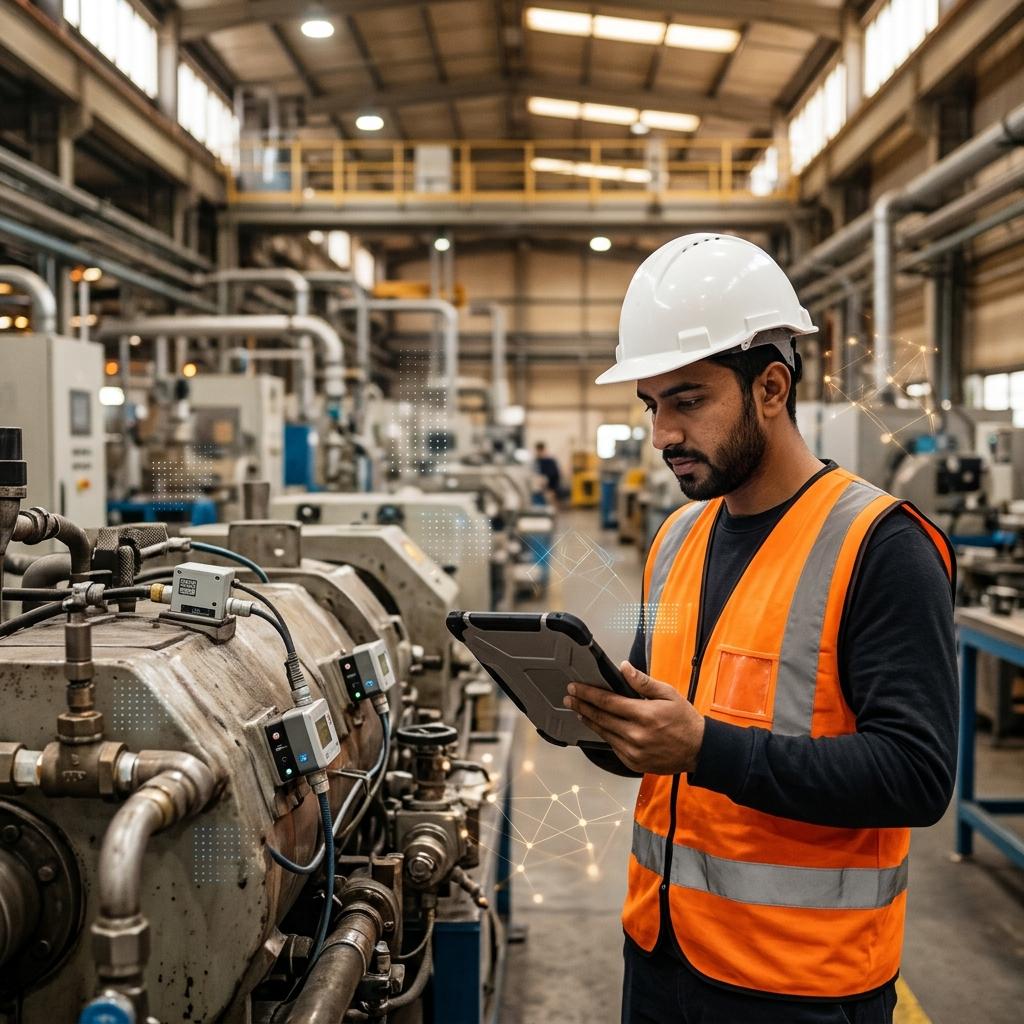
In practical terms, industrial/Edge AI involves things like: using sensors on industrial machines to collect data (on vibration, temperature, performance, etc.); using AI to analyze that data in real time to understand how the equipment is behaving; detecting problems, inefficiencies, or early signs of failure automatically; and enabling smarter, automated, optimized industrial operations. The key difference from “normal” software is that industrial AI lives in the physical world, it’s about making machines and factories smarter, safer, more efficient, and more reliable, using AI and sensors. It sits at the intersection of AI, electronics/sensors, and industrial engineering. This is a genuinely different kind of expertise from writing a web app or a mobile application, and that difference is precisely what makes it a distinct, higher-value opportunity. It’s AI applied where Pakistan actually makes things.
To make this concrete, consider the single most compelling application, one that illustrates the whole opportunity: predictive maintenance. It’s a perfect example of industrial AI’s value, and it’s genuinely relevant to Pakistan.
Here’s the idea. In most industries, machines break down unexpectedly, causing costly downtime (production stops, orders are delayed, money is lost). Traditionally, businesses deal with this through either reactive repair (fix it after it breaks, too late) or fixed-schedule maintenance (service it on a calendar, often too early or too late). Predictive maintenance is smarter: industrial sensors and AI-based monitoring continuously watch the equipment, detecting early signs of wear, vibration anomalies, overheating, or other warning signals, and predict when a machine is likely to fail, so businesses can schedule maintenance before a breakdown occurs. The benefits are substantial: it reduces unexpected downtime and the heavy economic costs that come with it, extends equipment life, improves efficiency and product quality, and saves money. For Pakistan, this matters enormously, because most Pakistani industries still rely on reactive or fixed-schedule maintenance, leading to frequent breakdowns, production losses, and inconsistent quality. Adopting AI-driven predictive maintenance could meaningfully improve the competitiveness of Pakistan’s industries. It’s a clear, high-value, practical application of industrial AI, and a great illustration of why this frontier matters for Pakistan specifically.
Let’s make the case for why industrial AI is particularly promising for Pakistan, because it connects to the country’s real economic situation. Several factors make it a genuine fit.
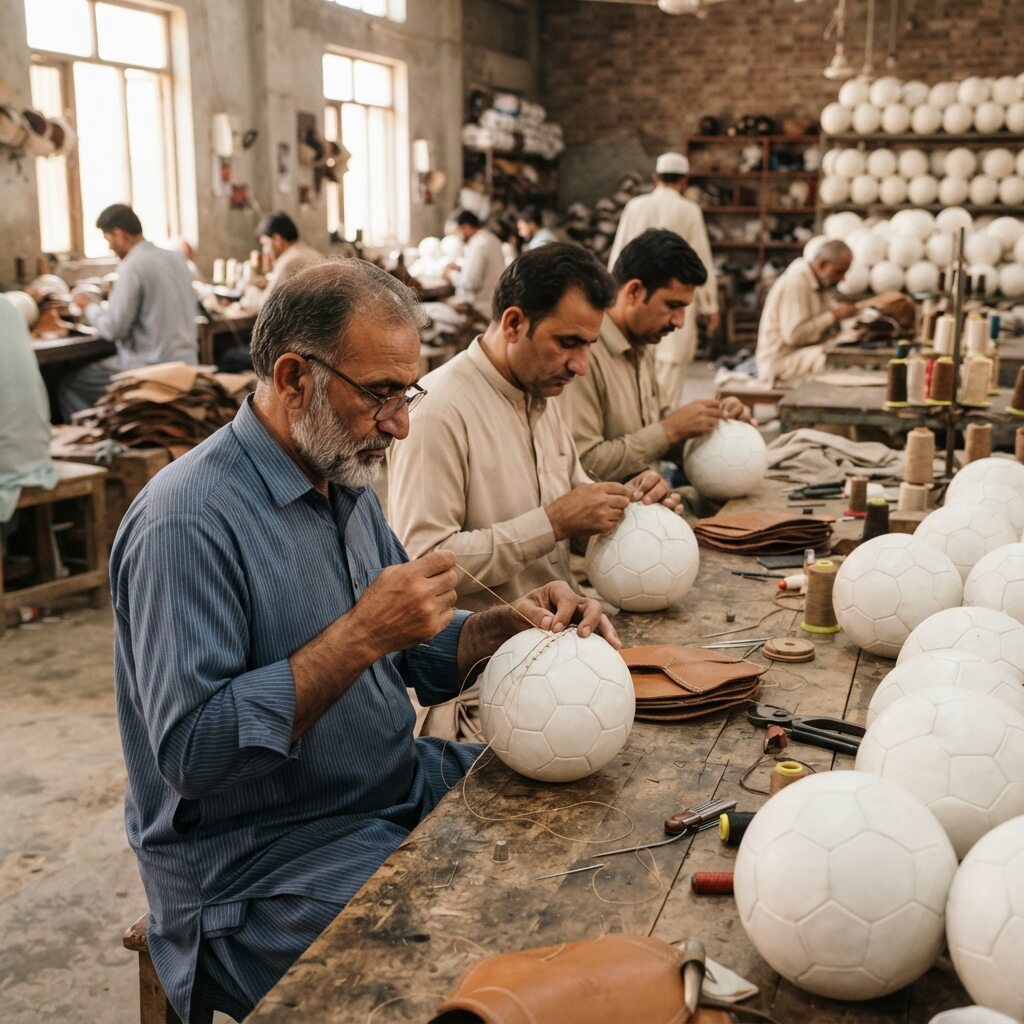
Consider them. Pakistan has real industries to apply it to: unlike purely digital plays, Pakistan has significant physical industries, textile mills (especially in Faisalabad), rice-processing units in Punjab, sports-goods manufacturers in Sialkot, and more, that could directly benefit from industrial AI and predictive maintenance. The problem is real and large: Pakistani industries genuinely suffer from outdated maintenance practices, breakdowns, inefficiency, and quality issues, so there’s a large, real market for industrial-AI solutions at home. It boosts export competitiveness: improving the efficiency, reliability, and quality of Pakistan’s manufacturing (through industrial AI) could help its export industries meet the standards and benchmarks demanded by high-value markets (like the USA and EU), unlocking better export access. It’s higher-value and harder to commoditize: industrial AI expertise (combining AI, sensors, and industrial domain knowledge) is more specialized, defensible, and valuable than commodity software coding, exactly the “up the value chain” move Pakistan needs. It creates new, high-value jobs: it opens a new class of technical careers (more below) that didn’t exist before, beyond the pressured software-services roles. And it’s globally relevant: industrial AI is a growing global field, so Pakistani expertise could serve not just local industry but international markets too. So industrial AI isn’t a random idea, it’s well-matched to Pakistan’s actual industries, problems, and need to move up the value chain. That alignment is what makes it a genuine, promising opportunity.
A crucial part of this opportunity is the new kinds of careers it could open, which matters hugely given the pressure AI is putting on traditional tech jobs. Industrial AI creates demand for a new class of skilled professionals.
As the field grows, it needs people who can: work with industrial sensors and sensing systems (collecting and handling machine data); apply AI and machine learning to industrial data (building the models that monitor and predict); understand and maintain automated industrial systems; bridge AI/software with industrial engineering and operations; monitor equipment and systems and act on AI insights; and tackle the technical challenges of increasingly automated industrial operations. These are genuinely new, valuable, higher-skilled roles, graduates trained in industrial sensing, AI, and automation could help monitor equipment, maintain systems, and solve the technical problems of modern industry. Importantly, these jobs sit at the intersection of AI and the physical/industrial world, which makes them less easily automated and more defensible than routine coding, and directly relevant to Pakistan’s manufacturing base. So industrial AI isn’t just an industrial-upgrade story; it’s a jobs-and-careers story, offering a path to new, high-value employment for Pakistan’s young technical talent at exactly the moment traditional software roles are under pressure. For students wondering where the good future jobs will be, this is a genuinely promising direction to consider.
In keeping with honest analysis, let’s be clear that realizing this opportunity requires real effort and has genuine prerequisites, because it won’t happen automatically. Several things are needed.
The honest requirements: new skills and education, Pakistan needs to train people in industrial AI, sensing, and automation, which means education that goes beyond theoretical instruction to practical, hands-on application (industry-academia collaboration, updated curricula, applied training). This is a real gap to fill. Industry adoption and investment, Pakistani industries need to actually adopt industrial AI and predictive maintenance, which requires investment, awareness, and willingness to modernize, not guaranteed, especially for traditional, cost-sensitive industries. Infrastructure and enablers, deploying industrial AI needs supporting infrastructure (sensors, connectivity, computing, reliable power, areas where Pakistan has gaps, as we’ve discussed). Bridging a knowledge gap, it requires combining expertise across AI, electronics, and industrial domains, which is genuinely harder than single-discipline software work. And overcoming inertia, many industries are used to old ways and may resist change, so adoption takes demonstration of value and a shift in mindset. So while the opportunity is real and promising, it’s not a given, it requires deliberate investment in skills, education, industry adoption, and infrastructure. Acknowledging this honestly is important: industrial AI is a genuine opportunity, but seizing it takes real work on multiple fronts. It’s a direction to build toward, not a windfall to wait for.
The industrial-AI opportunity carries real significance.
For moving up the value chain, industrial AI offers Pakistan a concrete path beyond commodity software services toward higher-value, more defensible, specialized tech work, exactly what the economy needs.
For industrial competitiveness, applying AI (like predictive maintenance) to Pakistan’s manufacturing could improve efficiency, quality, and reliability, boosting export competitiveness in high-value markets.
For jobs, it creates a new class of valuable technical careers (industrial sensing, AI, automation) at a time when traditional software roles are under AI pressure, a genuine opportunity for young talent.
For the broader economy, strengthening Pakistan’s physical industries with AI (not just its software sector) could have wide economic benefits, given how central manufacturing and exports are to the country.
The key insight is that Pakistan should seriously pursue industrial AI as a strategic opportunity to move beyond its software-services model, because it aligns uniquely well with the country’s real industries, its need to climb the value chain, and the shifting AI job market, but seizing it requires deliberate investment in the right skills, education, and industry adoption. For years, Pakistan’s tech identity has centered on software, coding, apps, IT services, freelancing. That’s been valuable, but it’s increasingly commoditized and AI-pressured. Industrial AI offers a genuinely different, higher-value frontier: applying AI to the physical, industrial world where Pakistan actually makes things (textiles, rice, sports goods, and more), solving real problems like costly equipment breakdowns through predictive maintenance, improving competitiveness, and creating new, defensible, high-skilled jobs. The alignment is striking, Pakistan has the industries, the problems, the need to move up the value chain, and the young talent, making industrial AI a particularly well-matched opportunity.
But the honest wisdom is that this won’t happen on its own. Realizing it requires concrete action: educating and training people in industrial AI, sensing, and automation (with practical, hands-on, industry-linked learning, not just theory); encouraging and enabling Pakistani industries to actually adopt these technologies; and building the supporting infrastructure and cross-disciplinary expertise. For students and young professionals, the practical takeaway is encouraging and actionable: as traditional software roles face AI pressure, industrial AI represents a promising, higher-value direction to build skills toward, combining AI with sensing, electronics, and industrial knowledge opens doors to new, valuable careers less exposed to automation. For educators and industry, the imperative is to collaborate on practical, applied training and to drive adoption. And for Pakistan broadly, industrial AI is a genuine chance to upgrade not just its tech sector but its whole industrial base, moving from “doing commodity software for the world” toward “making Pakistan’s industries (and exports) smarter and more competitive with AI”, while creating better jobs. The frontier isn’t just the keyboard anymore; it’s increasingly the factory floor. Pakistan, with its real industries and talented young people, is well-positioned to build toward it, if it invests deliberately. This is a forward-looking opportunity genuinely worth pursuing, and a hopeful direction for Pakistan’s tech and industrial future. Build toward it, wisely and deliberately, starting now.
Expect industrial AI and Edge AI to grow as global and Pakistani trends, with increasing recognition of their value for upgrading industries and creating higher-value tech work. Watch whether Pakistan invests in the necessary skills and education (practical, applied, industry-linked training in industrial AI, sensing, and automation), whether its industries begin adopting predictive maintenance and smart-manufacturing technologies, and whether supporting infrastructure improves. These factors will determine how fully Pakistan seizes this opportunity.
If Pakistan builds the skills, drives industry adoption, and develops the ecosystem, industrial AI could meaningfully upgrade its manufacturing competitiveness, open higher-value export markets, create valuable new jobs, and help its tech sector move up the value chain, a genuinely significant positive trajectory. If it neglects this (sticking only to commodity software), it risks missing a strategic opportunity and remaining exposed to the AI pressure on its current model. The direction is promising and well-matched to Pakistan’s realities; the task is deliberate investment in skills, adoption, and infrastructure. For Pakistan’s students, industries, and economy, industrial AI is a forward-looking frontier well worth building toward. The opportunity is real; realizing it is the work ahead.
Pakistan’s next big tech opportunity may not be more of the software services it’s known for, but something different and higher-value: industrial AI, applying artificial intelligence and sensors to the physical, industrial world of machines, equipment, and factories. As AI increasingly pressures commodity software work, industrial AI offers Pakistan a genuine path to move up the value chain, and it’s uniquely well-matched to the country’s realities. Pakistan has real industries (textile mills in Faisalabad, rice-processing in Punjab, sports-goods makers in Sialkot, and more) that genuinely suffer from outdated maintenance and inefficiency, so applications like AI-driven predictive maintenance (fixing machines before they break, cutting costly downtime) could meaningfully boost their competitiveness and export access. Crucially, industrial AI also creates a new class of valuable, higher-skilled, less-automatable jobs (industrial sensing, AI, automation) for Pakistan’s young talent, exactly when traditional software roles are under pressure. The honest caveat is that seizing this opportunity isn’t automatic: it requires deliberate investment in practical, applied skills and education, real industry adoption, and supporting infrastructure. But the opportunity is genuine and promising, and the alignment with Pakistan’s industries, needs, and talent is compelling. So the forward-looking message is clear: Pakistan should build toward the factory floor, not just the keyboard. For students, industrial AI is a promising direction to develop skills toward; for industries, a competitiveness upgrade worth adopting; and for the country, a strategic chance to make its whole industrial base smarter while moving its tech sector up the value chain. The frontier is shifting from pure software toward AI in the physical world, and Pakistan, with its real industries and capable young people, is well-placed to seize it, if it invests wisely and starts now. This is a genuinely hopeful opportunity for Pakistan’s tech and industrial future. Let’s build toward it.
This article is an analysis and opinion piece for general informational purposes, based on expert commentary and reports available in 2026 (including views shared by academics on industrial/Edge AI). It reflects a forward-looking opportunity, outcomes depend on investment, adoption, skills, and execution. This is not career, investment, or professional advice; individuals should research and consider their own circumstances.
As AI reshapes the global job market and pressures commodity software work, experts say Pakistan has an opportunity to move beyond traditional software services into “industrial AI” (also called “Edge AI”), applying AI and sensors to monitor and maintain physical machines, equipment, and factories, rather than just writing software. This was argued by LUMS-linked academics (reported November 2, 2026).
Why “more software” isn’t enough: AI increasingly does routine software/knowledge work, pressuring the commodity software services, outsourcing, and entry-level coding Pakistan’s tech economy relies on (entry-level tech hiring is already shrinking). Pakistan needs to move “up the value chain” toward higher-value, less-automatable work, and industrial AI is one promising direction.
What industrial/Edge AI is: applying AI to industrial/physical operations (factories, machines, production), with “Edge AI” meaning running AI on or near the machine for real-time monitoring. In practice: sensors collect machine data (vibration, temperature, performance); AI analyzes it in real time to understand equipment behavior, detect problems/inefficiencies/early failure signs, and enable smarter, optimized operations. It sits at the intersection of AI, sensors/electronics, and industrial engineering, a different, higher-value expertise than web/app coding. Killer application, predictive maintenance: industrial sensors and AI continuously monitor equipment, detect early signs of wear/failure, and predict breakdowns so businesses fix machines BEFORE they fail. This cuts costly downtime, extends equipment life, and improves efficiency/quality. It matters for Pakistan because most industries still use reactive or fixed-schedule maintenance, causing frequent breakdowns and losses.