To start selling online in Pakistan, choose a channel: Daraz for instant reach and traffic, your own Shopify or WooCommerce store for control and branding, or social selling (Instagram, Facebook, WhatsApp) for the lowest-cost start. Pakistan's e-commerce market exceeds PKR 1.2 trillion, most orders come from mobile, and cash on delivery still dominates.
Selling online in Pakistan has never been more accessible, or more confusing. The opportunity is huge: the market is worth over a trillion rupees and growing fast. But a first-time seller faces an immediate, paralyzing question: where do I actually sell? On Daraz? Build my own website? Just use Instagram and WhatsApp?
Each path has real trade-offs, and picking wrong wastes time and money. This honest guide breaks down the three main ways to sell online in Pakistan in 2026, with real costs, the local realities like cash on delivery, and a clear recommendation on where to start. Let's turn your product idea into an actual online business.
Before choosing a channel, understand the landscape you're selling into, because it shapes everything. Pakistan's e-commerce market is booming, with online sales expected to surpass PKR 1.2 trillion, driven by rising smartphone use and social selling.
A few realities define how selling works here. It's overwhelmingly mobile-first, over 85% of orders are placed on mobile devices, so everything you do must look and work perfectly on a phone. Cash on delivery still rules, depending on the category, roughly 60% to 95% of orders are paid by COD, meaning customers pay cash when the product arrives, not online in advance. And social commerce is exploding, selling directly through Instagram, Facebook, TikTok, and WhatsApp is projected to reach up to 35% of online retail sales.
These realities, mobile-first, COD-heavy, social-driven, make Pakistan's market distinct. Strategies copied from Western e-commerce guides often fail here because they ignore them.
Daraz is Pakistan's largest online marketplace, and for many sellers it's the obvious starting point. As the dominant platform, it offers something powerful: instant access to millions of existing shoppers who are already there, searching and ready to buy.
The advantages are significant. You get built-in traffic (no need to attract visitors yourself), established trust (buyers already trust Daraz), logistics support (Daraz can handle delivery and COD collection through its network), and a relatively simple setup. For someone with a product but no audience, this is the fastest way to start selling.
The trade-offs are real too. You compete with countless other sellers, often on price, in a crowded marketplace. You pay commissions and fees on every sale. You have limited control over branding, you're a seller on Daraz, not building your own brand. And counterfeit competition and price wars are common in popular categories.
Best for: beginners who want to start selling quickly with minimal setup, and sellers of competitively-priced products who value reach over brand-building.
If you want to build a real brand rather than just move units, your own online store is the path. Here you have two main routes.
Shopify is the fast, polished option, easy to set up, mobile-optimized, and professional, with local payment gateway support (JazzCash, EasyPaisa). It charges a monthly fee but gets you a beautiful store quickly, ideal if you value speed and design over cost. WooCommerce (WordPress-based) offers the most control and lower long-term costs, plus superior SEO for ranking on Google over time, but it requires more technical effort to set up and manage.
The advantages of your own store are full control over branding and customer experience, no marketplace commissions eating your margins, direct customer relationships and data, and the ability to build a lasting brand asset you own. The trade-offs: you must drive your own traffic (through social media, ads, SEO), handle your own logistics and COD arrangements, and invest more time and money upfront. A store with no visitors sells nothing, so this path demands marketing effort.
Best for: sellers with a distinct brand or product, those thinking long-term, and anyone who already has an audience to direct to their store.
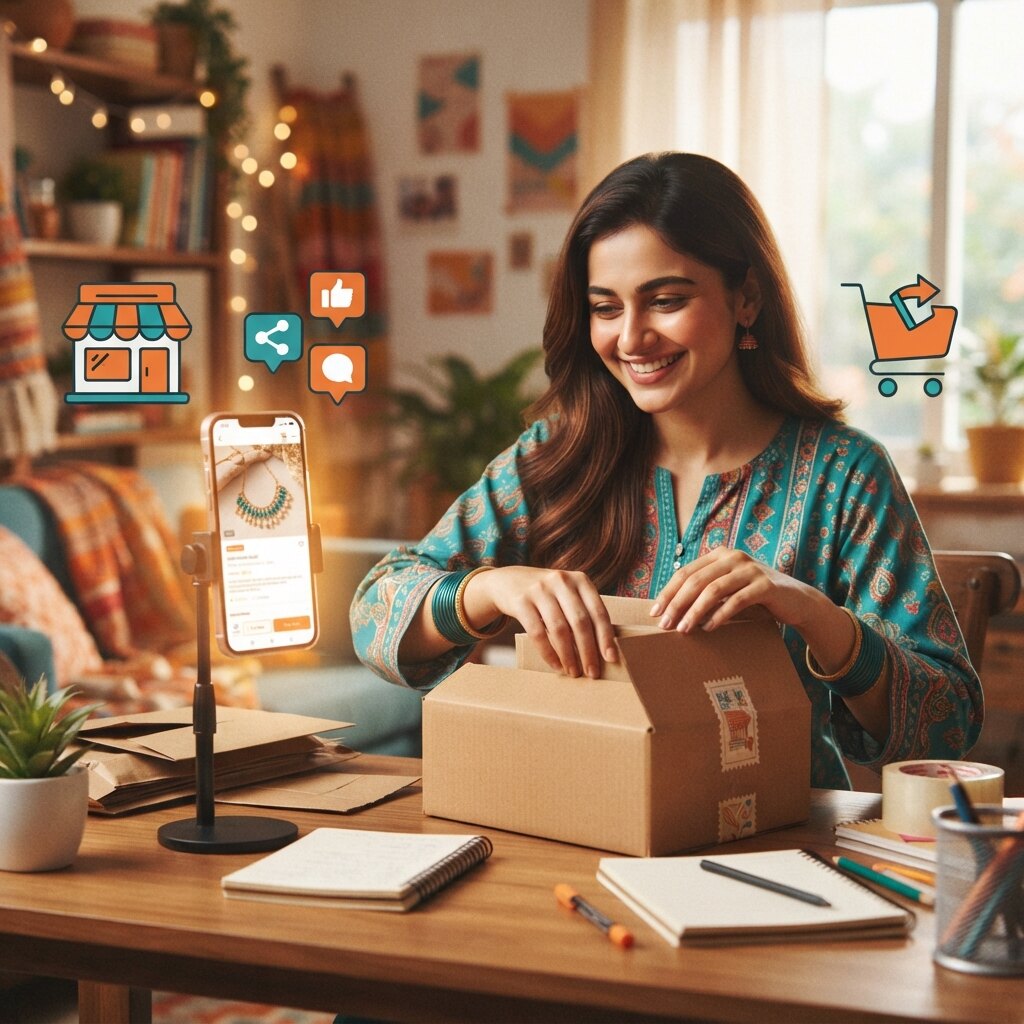
Here's the option many overlook, and it's often the smartest place to begin. You can sell directly through Instagram, Facebook, TikTok, and WhatsApp, with essentially zero setup cost and no website at all.
The model is simple and distinctly Pakistani: showcase products on Instagram or Facebook (photos, Reels, TikToks), let customers discover them, and close the sale on WhatsApp, where you answer questions, share your catalog, confirm the order, and arrange COD delivery. This is how thousands of Pakistani small businesses and home-based sellers operate, and social commerce's projected rise to 35% of online sales shows how powerful it is.
The advantages: virtually free to start, no technical skills needed, direct personal connection with customers (which builds loyalty), and fast to launch, you can start today. The trade-offs: it's manual and time-consuming (you handle every chat and order yourself), hard to scale beyond a certain volume, and you must arrange your own delivery (via services like TCS, Leopards, or local couriers) and COD collection.
Best for: absolute beginners, home-based businesses, testing a product idea cheaply before investing more, and anyone starting with little or no capital.
Here's honest, practical advice rather than a non-answer. For most beginners, the smartest path is to start with social/WhatsApp selling to validate your product and learn what customers want, at near-zero cost and risk. Once you have proven demand and some steady orders, expand to Daraz for greater reach and easier logistics. Then, as your brand grows and you want control and better margins, build your own store as your long-term home.
You don't have to choose just one, in fact, many successful Pakistani sellers eventually run all three: their own branded store as the hub, Daraz for reach, and social media as the discovery and community engine that feeds both. But start with one, master it, and expand deliberately. Trying to do everything at once as a beginner usually means doing nothing well.
A few things apply no matter which channel you pick. Nail your product photos and videos, on a visual, mobile-first market, great visuals are non-negotiable. Plan for COD, since most customers will pay on delivery, budget for return rates (COD orders get refused more often) and choose a reliable courier. Offer prepaid incentives, small discounts for advance payment can reduce COD risk and improve cash flow. Sort out payments, set up JazzCash, EasyPaisa, and bank transfer options. And prioritize trust, clear return policies, responsive replies, and honest listings turn first-time buyers into repeat customers in a market where trust is everything.
The rise of accessible online selling is quietly powerful for Pakistan's economy. It lets ordinary people, students, homemakers, small-town entrepreneurs, start businesses with little capital and reach customers across the country. For many, especially women running home-based businesses, social and marketplace selling has opened genuine income opportunities that traditional retail never could.
As the market grows toward and beyond a trillion rupees, e-commerce is becoming a real engine of small-business creation, employment, and economic participation. Every person who successfully starts selling online adds to a more dynamic, inclusive economy. The low barrier to entry, especially via social selling, means opportunity is genuinely widespread, if people know how to seize it.
The most common beginner mistake is over-investing before validating, spending heavily on a fancy website or bulk inventory before confirming anyone actually wants the product. The smarter approach is to start lean: test your product through low-cost social selling, learn from real customers, and reinvest profits into growth.
Success in Pakistani e-commerce rarely comes from having the biggest budget. It comes from choosing a product people genuinely want, presenting it well visually, building trust through reliable service, and picking the right channel for your stage. The tools are all accessible, the market is hungry, and the barrier to entry has never been lower. What separates those who succeed is starting smart, staying responsive to customers, and growing step by step.
Expect Pakistani e-commerce to keep growing, with social commerce and quick-commerce (ultra-fast delivery) expanding fastest. Digital payments will slowly gain ground on COD as trust and infrastructure improve. New tools, including AI for product listings, customer service, and marketing, will make selling easier and more competitive. And as global platforms and features evolve (like AI shopping agents), sellers who stay current will have an edge.
For aspiring sellers, the trajectory is clear: more opportunity, better tools, and a rapidly growing base of online shoppers. The best time to start learning is now, while the market is still expanding fast.
Starting an online business in Pakistan in 2026 is genuinely achievable for anyone willing to begin. The key is choosing the right channel for your stage: social and WhatsApp selling to start cheaply and validate, Daraz for instant reach and logistics, and your own store for long-term branding and control. Understand the local realities, mobile-first, COD-heavy, trust-driven, present your products beautifully, and serve customers reliably. You don't need a big budget or technical skills to begin; you need a product people want and the willingness to start. Pakistan's trillion-rupee online market has room for new sellers every day. Pick your channel, list your first product, and start today, your online business is one decision away.
This article is for general informational purposes only and reflects market conditions, platforms, and costs in 2026, which change frequently. Fees, features, and regulations vary; verify current details with each platform. Business success depends on many factors. This is not financial or business advice.
Starting an online business in Pakistan in 2026 centers on choosing the right sales channel in a market exceeding PKR 1.2 trillion, with 85%+ of orders from mobile, cash on delivery (COD) dominant (roughly 60–95% of orders by category), and social commerce projected to reach up to 35% of online retail sales.
Three main channels: (1) Daraz, Pakistan's largest marketplace, offers instant reach, built-in traffic and trust, and logistics/COD support, but with heavy competition, commissions, price wars, and limited branding control, best for quick, low-setup starts. (2) Your own store, either Shopify (fast, polished, monthly fee, mobile-optimized, supports JazzCash/EasyPaisa) or WooCommerce (maximum control, lower long-term cost, better SEO, more technical effort), gives full branding control, no marketplace commissions, and direct customer data, but you must drive your own traffic and handle logistics, best for long-term brand building. (3) Social/WhatsApp selling (Instagram, Facebook, TikTok for discovery; WhatsApp to close sales and arrange COD) is nearly free, needs no website or technical skills, and builds personal customer relationships, but is manual and hard to scale, best for beginners and testing products.
Recommended path for most beginners: start with social/WhatsApp selling to validate a product cheaply, expand to Daraz for reach, then build your own store for control and margins, eventually running all three (own store as hub, Daraz for reach, social for discovery).
Universal essentials: excellent mobile-first product photos/videos, planning for COD (return rates, reliable couriers), prepaid discounts, JazzCash/EasyPaisa setup, and building trust through clear policies and responsive service.
Informational only; platforms, fees, and conditions change; not business advice.