"Vibe coding" means building software, apps, websites, games, by describing what you want in natural language and letting AI generate the code, instead of writing it manually. Pakistan's AI Seekho 2026 program (by MoITT, Google, Telenor, and Innovista) taught it nationwide, engaging 50,000+ developers and producing 1,500+ AI solutions. It lowers the barrier to building software dramatically.
Imagine building a working app, website, or game without writing a single line of traditional code, just by describing what you want in plain language and letting AI do the heavy lifting. It sounds futuristic, but it's happening right now, and tens of thousands of Pakistanis just learned how to do it. The technique is called "vibe coding," and Pakistan recently bet big on teaching it at national scale.
Through a program called AI Seekho 2026, the government, Google, and partners trained a huge number of Pakistanis in this new way of building software. It's part of a bigger ambition to make Pakistan an AI-powered economy. But what exactly is vibe coding? Can you really build software without coding? What did the program achieve, and what does it mean for you? Here's an accessible, honest look at one of the most interesting developments in Pakistan's tech scene.
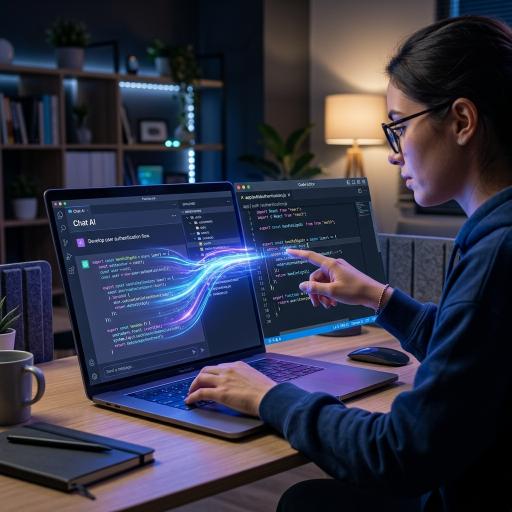
Let's start with the concept, because it genuinely represents a shift in how software gets built. "Vibe coding" is an emerging approach where, instead of writing code line by line in complex programming syntax, you build applications by describing what you want in natural language and letting AI tools generate the code for you.
Here's the idea in practice. Traditionally, building software meant learning programming languages and writing precise code, a high skill barrier. With vibe coding, you essentially prompt AI tools (describing your goal, the features you want, the problem you're solving), and the AI generates the application, website, or game. You guide, refine, and problem-solve through conversation and iteration, rather than manual coding. As the approach is often described, it's "agent-driven" and intuitive, you focus on what you want to build and why, and the AI handles much of the how. This dramatically lowers the barrier to creating software: someone without a traditional coding background can now prototype real apps, tools, or games. It's a genuine change in who gets to build software, and that's why it's generating so much excitement.
Pakistan didn't just dabble in this, it launched a major national program around it, which shows how seriously the country is taking the shift. AI Seekho 2026 is a nationwide upskilling initiative by the Ministry of IT and Telecommunication (MoITT), in collaboration with Google for Developers, Telenor Pakistan, and Innovista.
The program was built specifically to introduce vibe coding to Pakistani youth, entirely free. Using next-generation platforms like Google AI Studio and Google Antigravity, participants learned to build software through natural language and problem-solving rather than complex syntax. It followed a structured "Learn, Build, Win" model: an online challenge to master generative-AI fundamentals and prototyping, followed by a physical hackathon in Karachi, Lahore, and Islamabad where developers built solutions, with a prize pool (reportedly PKR 2.5 million) and pathways connecting participants to National Incubation Centers and the Pakistan Startup Fund. Crucially, it was open to everyone, students, freelancers, developers, and even non-technical professionals, reflecting the democratizing promise of vibe coding. And it's part of a far bigger ambition: the IT Minister has said the government aims to train over a million people in AI. AI Seekho is one visible, viral piece of that national upskilling drive.
Big programs often make big promises but deliver little. So what did AI Seekho 2026 actually achieve? Encouragingly, the results were substantial and real, not just hype.
By the reported figures, the campaign engaged more than 50,000 developers and builders, generated over 17,000 registrations, and resulted in more than 1,500 AI-powered solutions being submitted. These are genuinely significant numbers, showing real, broad participation. Notably, the initiative attracted talent well beyond conventional tech circles, drawing people from different professional, educational, and demographic backgrounds, exactly the democratization vibe coding promises. The national champions captured the spirit perfectly: a duo of students from a Karachi university won top honors for "Struggler," a single-player, agentic AI game featuring a dynamic world that adjusts its difficulty in real time based on player behavior. Strikingly, the winners said they'd initially viewed vibe coding as just a minor support tool, but the experience became a "total paradigm shift" for them. That captures the real impact: people discovering they can build sophisticated things in new ways. The program delivered genuine engagement and output, not just a launch announcement.
Here's the crucial question everyone asks, and the honest answer is nuanced: yes, meaningfully, but with important caveats. Let's be clear-eyed rather than hyped.
The genuine "yes": vibe coding really does let people, including non-coders, build functional software (apps, prototypes, tools, games) far more easily than before. The barrier has genuinely dropped. Someone with a good idea and problem-solving ability, but no deep coding background, can now create real things. That's a real, exciting shift, and the AI Seekho results prove it's not just theory. The important caveats: vibe coding doesn't make understanding irrelevant. To build anything beyond simple prototypes, especially robust, secure, scalable, production-grade software, you still benefit enormously from understanding how software works (logic, structure, data, debugging, security). AI can generate code, but someone needs to guide it well, catch its mistakes, refine it, and understand what it produces, which requires real knowledge and judgment. So vibe coding is best understood as a powerful accelerator and democratizer, not a magic button that eliminates the need for skill. It lowers the entry barrier dramatically and makes building faster for everyone, but the people who get the most from it will be those who pair it with genuine understanding. The honest framing: it's a genuine, valuable new skill and a real opportunity, not a shortcut to becoming an expert developer without effort.
So what does the rise of vibe coding, and programs like AI Seekho, actually mean for you? Several genuinely positive things, if approached wisely. Let's make it practical.
For different people: Non-technical professionals can now build simple tools, prototypes, and apps to solve their own problems or test ideas, a genuinely empowering capability previously locked behind coding skills. Aspiring developers and students get a faster, more accessible on-ramp into building software, and a valuable modern skill (working effectively with AI coding tools) that's increasingly in demand. Freelancers can potentially build and deliver more, faster, expanding what they can offer (though, as the market shifts toward higher-value work, genuine skill still matters, see our pieces on the freelance landscape). Founders and entrepreneurs can prototype products and MVPs quickly and cheaply, testing ideas without a full engineering team, a real advantage. And the broader ecosystem gains more people able to build, create, and innovate, expanding Pakistan's pool of makers. The key for everyone is to embrace vibe coding as a valuable new tool and skill, learn to use it well (which AI Seekho and similar free programs teach), while continuing to build genuine understanding so you can create things that actually work and matter. Used thoughtfully, it's a real opportunity to participate in building, regardless of your starting point.
If this excites you, here's practical guidance on actually learning vibe coding, because it's genuinely accessible. The barrier to starting has never been lower.
Concrete steps: Try the tools directly, platforms like Google AI Studio (and other AI coding assistants) are accessible, start experimenting by describing simple things you want to build and iterating. Watch for free programs, initiatives like AI Seekho 2026 (and its planned future editions, MoITT has signaled it will run annually) offer free, structured training, follow MoITT, Google Developer Groups, and official channels for the next cohort. Start with small projects, build simple apps, tools, or games first to learn how to prompt, guide, and refine AI effectively. Learn the fundamentals alongside, pair vibe coding with basic understanding of how software works (logic, data, structure), it'll make you far more effective and able to build real things. Join communities, Google Developer Groups and local tech communities offer support, learning, and connection. And build real things, the best way to learn is by actually building projects that solve problems you care about. The encouraging reality is that you can start today, for free, and programs like AI Seekho make structured learning accessible. The main ingredient is curiosity and willingness to experiment.
The rise of vibe coding and programs like AI Seekho carry real significance for Pakistan.
For digital inclusion, dramatically lowering the barrier to building software lets far more Pakistanis, including non-technical and non-elite people, participate in creating technology, broadening who gets to build.
For the economy, more people able to build apps, tools, and products supports Pakistan's shift toward a product-based (not just services-based) digital economy, a long-stated national goal.
For skills and competitiveness, equipping a large workforce with modern AI-building skills helps Pakistan compete globally and move up the value chain.
For entrepreneurship, easier, faster product-building enables more founders to prototype and launch, potentially strengthening the startup ecosystem (especially with pathways to incubation centers and funding).
The balanced takeaway is that vibe coding represents a genuine, exciting democratization of software creation, and Pakistan's embrace of it (via AI Seekho and its million-person AI-training ambition) is a smart, forward-looking move, provided it's approached wisely rather than as hype. The core shift is real: building software is becoming accessible to far more people, which is genuinely empowering and opens real opportunities for Pakistanis across backgrounds. The strong participation in AI Seekho (50,000+ builders, 1,500+ solutions) shows the appetite and potential are real, not imagined.
The wisdom lies in two things. First, embrace the opportunity, learning to build with AI tools is a valuable, increasingly important skill, and free programs make it accessible, so engage with it, experiment, and build. Vibe coding genuinely lets more people participate in creating technology, which is a real gift. Second, keep it grounded, treat vibe coding as a powerful accelerator and new skill, not a magic replacement for understanding. The people who'll benefit most are those who combine vibe coding with genuine learning (how software works, how to guide and refine AI well, how to build things that are robust and valuable). For Pakistan, the national bet on AI skills, with vibe coding as an accessible entry point, is exactly the kind of forward-looking investment the country needs, and for individuals, it's a real invitation to become a builder, whatever your background. So dive in with enthusiasm and curiosity, learn to use these powerful new tools well, keep building genuine understanding alongside, and you can be part of Pakistan's growing community of AI-era makers. The barrier to building has dropped; the opportunity to create is real. Seize it thoughtfully.
Expect vibe coding and AI-assisted building to keep growing rapidly, with tools getting more powerful and accessible, and programs like AI Seekho iterating annually at larger scale (as MoITT has signaled). Pakistan's ambition to train a million-plus people in AI suggests continued, expanding investment in these skills. As the tools mature, the line between "developer" and "non-developer" will keep blurring, with more people able to build.
For Pakistanis, this means growing opportunity to learn to build with AI, for free or cheaply, and to participate in the digital economy as creators, not just consumers. The winners will be those who embrace these tools early and pair them with genuine skill. The broader trajectory, toward a more capable, AI-skilled, product-building population, is positive for Pakistan's tech future, if the training translates into real, applied building. Vibe coding is an accessible, exciting entry point into that future, and it's increasingly within every Pakistani's reach.
"Vibe coding", building software by describing what you want in natural language and letting AI generate it, genuinely represents a shift in who gets to create technology, and Pakistan just embraced it at national scale through AI Seekho 2026. The program's real results (50,000+ builders engaged, 1,500+ AI solutions, national champions building an agentic AI game) prove the opportunity isn't just hype: the barrier to building software has genuinely dropped, and even non-technical Pakistanis can now prototype real apps, tools, and games. So can you really build software without coding? Meaningfully, yes, though the honest truth is that vibe coding is a powerful accelerator and democratizer, not a magic shortcut that eliminates the need for understanding. The people who benefit most will pair these new tools with genuine learning. For Pakistanis of every background, this is a real invitation: you can start learning to build, for free, today, through accessible tools and programs like AI Seekho. Pakistan is betting big on making its people AI-era builders, not just consumers, and vibe coding is an exciting, accessible on-ramp into that future. The opportunity to become a builder has never been more open. Dive in thoughtfully, learn the tools well, keep building real understanding, and you can be part of what comes next.
This article is for general informational purposes only and reflects programs and information available in 2026, which change over time. Program details, availability, tools, and results are as reported by cited sources and may evolve, verify current information through official channels (MoITT, AI Seekho's official portal, Google Developers), and beware of scams impersonating free programs. Specific tools mentioned are examples, not endorsements. This is not professional or financial advice.
"Vibe coding" is an emerging approach to building software where, instead of writing code line by line in programming syntax, you describe what you want in natural language and AI tools generate the code. It's agent-driven and intuitive, you focus on what to build and why, guiding and refining through conversation while AI handles much of the how, dramatically lowering the barrier so even non-technical people can prototype apps, websites, and games.
Pakistan embraced it at national scale through AI Seekho 2026, a free nationwide upskilling program by the Ministry of IT and Telecommunication (MoITT), Google for Developers, Telenor Pakistan, and Innovista. It taught vibe coding using Google AI Studio and Google Antigravity via a "Learn, Build, Win" model (an online challenge plus physical hackathons in Karachi, Lahore, Islamabad), with a reported PKR 2.5 million prize pool and pathways connecting participants to National Incubation Centers and the Pakistan Startup Fund. It was open to everyone (students, freelancers, developers, non-technical professionals) and is part of an ambition (per IT Minister Shaza Fatima Khawaja) to train over a million Pakistanis in AI; the program targeted 100,000+ developers.
The results were real: the campaign engaged 50,000+ developers/builders, generated 17,000+ registrations, and produced 1,500+ AI-powered solutions, attracting people from diverse professional and educational backgrounds. National champions, two Karachi (DHA Suffa University) students, won for "Struggler," a single-player agentic AI game that auto-adjusts difficulty in real time based on player behavior; they called vibe coding a "total paradigm shift."
Can you really build software without coding? Meaningfully yes, with caveats: vibe coding genuinely lets non-coders build functional apps/prototypes/games far more easily, but for robust, secure, production-grade software, understanding how software works (logic, structure, debugging, security) still matters, s