On July 10, 2026, Apple sued OpenAI in California federal court, alleging OpenAI stole trade secrets to develop its own AI hardware. Apple claims OpenAI recruited Apple employees and encouraged them to share confidential product information. OpenAI denies interest in others' trade secrets. The case marks a dramatic breakdown of the 2024 Apple-OpenAI partnership.
Two of the biggest names in technology are now at war in court. Apple, the world's most valuable company, has sued OpenAI, the maker of ChatGPT, accusing it of stealing trade secrets. This is a stunning turn for two companies that were partners just two years ago. And to add fuel to the fire, tech billionaires Elon Musk and Sam Altman have reignited their long-running feud over it, publicly trading insults online.
Beyond the drama, this lawsuit reveals something important about where technology is heading: a fierce race to build the next big AI device that could replace the smartphone. Here is what the case is really about, and why it matters far beyond Silicon Valley.
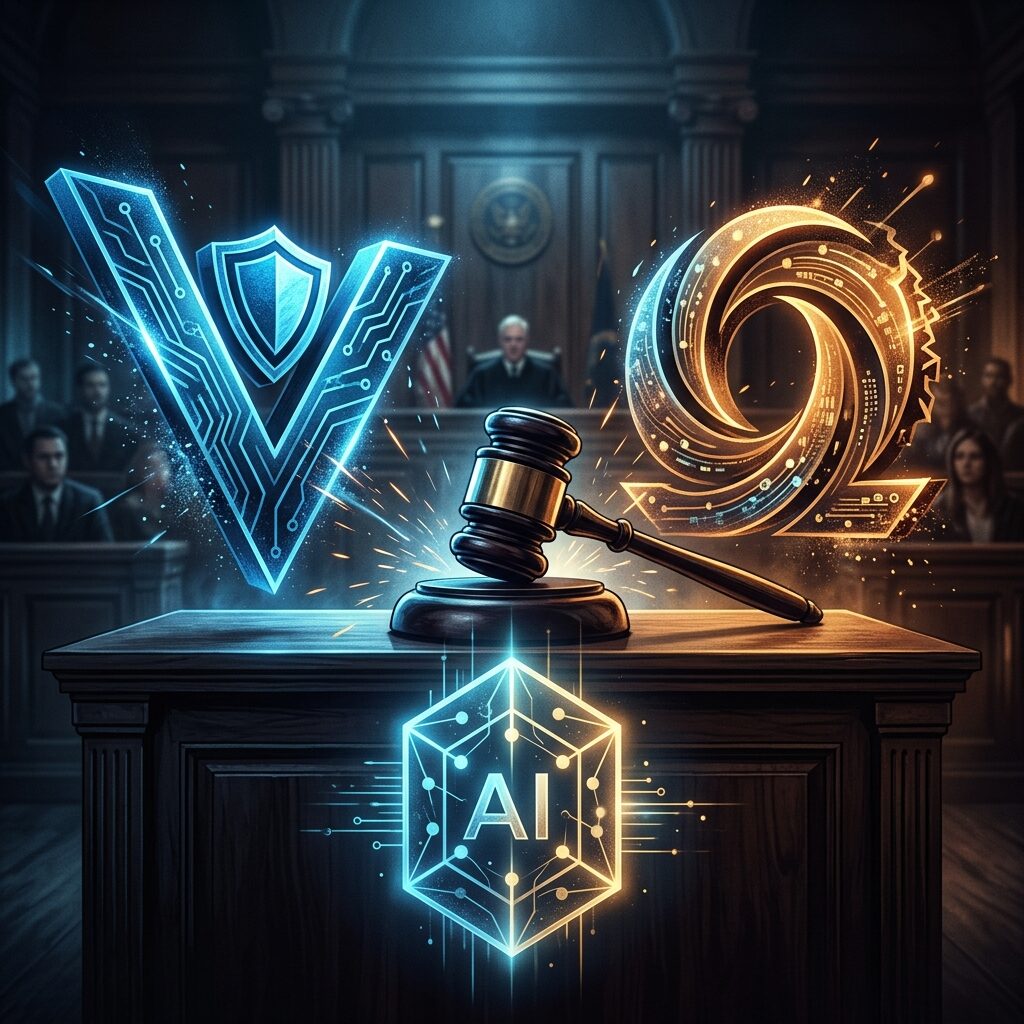
Apple's accusations are serious and detailed. On Friday, July 10, 2026, Apple sued OpenAI in federal court in Northern California, alleging that the AI lab took the iPhone maker's intellectual property to develop its own consumer hardware.
The company's language was strikingly direct. In its filing, Apple stated that at every level, from members of its technical staff to its chief hardware officer, and in coordination with business partners, OpenAI had been stealing Apple's trade secrets and confidential information.
The specific claims are dramatic. Apple alleges that OpenAI directed job candidates still working at Apple to bring "actual parts" from Apple to their interviews for "show and tell" sessions, where OpenAI could extract confidential information. Apple also claims OpenAI coached departing employees on how to evade the company's security processes when leaving, and that one former employee stole an Apple laptop.
The case centers on specific people who moved from Apple to OpenAI. The suit names Tang Tan, OpenAI's chief hardware officer and a former Apple VP of product design who worked on the iPhone, Apple Watch, and AirPods. Another former Apple employee, Chang Liu, is also named as a defendant.
Interestingly, one famous name is absent. Jony Ive, Apple's legendary former design chief who now works with OpenAI, is not named in the lawsuit, even though the case connects to his work. OpenAI acquired Ive's hardware startup, io Products, for $6.4 billion, a deal that clearly rattled Apple.
This lawsuit is shocking because these two companies were recently close allies. In 2024, they entered a high-profile partnership when ChatGPT was integrated into the iPhone's operating system as part of Apple Intelligence.
So what went wrong? The relationship soured when OpenAI decided to build its own hardware. Relations chilled after OpenAI announced plans to enter the hardware industry, hiring away Apple talent and buying Jony Ive's design firm. OpenAI's CEO Sam Altman has openly said he envisions a new class of AI gadgets that could replace smartphones as the main consumer device, a direct threat to Apple's core business.
There are signs of the split elsewhere too. Apple's updated Siri, coming this fall, is reportedly based on Google's Gemini AI models rather than OpenAI's technology, suggesting Apple is already distancing itself.
OpenAI has firmly denied the accusations. An OpenAI spokesperson told CNBC that the company has no interest in other companies' trade secrets. The company is expected to fight the lawsuit vigorously.
The stakes are high for OpenAI, which is preparing for what is expected to be a major IPO. A high-profile trade secrets case adds legal risk at a sensitive time, as the company also faces growing competition from rivals like Anthropic and Google.
No modern tech feud is complete without Elon Musk and Sam Altman, who co-founded OpenAI together in 2015 before falling out. The Apple lawsuit gave Musk fresh ammunition.
Musk, who has repeatedly clashed with Altman, mocked him publicly on X in response to the news. Altman fired back, framing Musk's renewed attention as a sign of OpenAI's success. He posted that the most reliable way to tell OpenAI had released a strong new model was that Musk was "obsessed" with him again, referencing OpenAI's newly released GPT-5.6 models.
The exchange got personal, with both trading digs about each other's business ventures, including Musk's SpaceX data-center plans and OpenAI's direction. It is worth remembering the backdrop: Musk recently lost a separate legal battle against OpenAI, and his own trade-secret suit against the company was dismissed. The rivalry is now part business, part personal.
Beneath the drama lies the real significance: the race to build the next computing device. For years, the smartphone has been the center of our digital lives. Now, AI companies believe the next big thing will be AI-first hardware, devices built around artificial intelligence rather than apps.
OpenAI wants to build that device, which is why it hired Apple's hardware talent and Jony Ive. Apple, naturally, wants to protect its dominance and its secrets. This lawsuit is really a battle over who controls the future of consumer technology.
That is why the stakes are so high. Whoever builds the winning AI device could reshape the entire tech industry, just as the iPhone did in 2007.
The Pakistan Angle: Why This Matters Here
For readers in Pakistan, this global clash carries useful lessons.
First, it shows how central intellectual property has become. The world's biggest companies now fight fiercely to protect what they build. For Pakistan's growing startup and product scene, this is a reminder that owning and protecting your innovations matters, a point especially relevant as Pakistani founders move from services toward building their own products.
Second, it signals where the industry is going. If AI-first hardware is the next frontier, Pakistani developers, designers, and AI specialists should pay attention to these trends. The skills in demand are shifting toward AI, and those who prepare early will benefit.
Third, it is a reminder that talent is the ultimate asset. This entire lawsuit is about people, engineers and designers who moved between companies, carrying knowledge with them. Pakistan's greatest tech resource is also its people. Retaining and developing that talent at home is exactly what the country's AI ambitions depend on.
The lawsuit will likely take months or years to resolve, and both companies have strong legal teams. Regardless of the outcome, the competition to build AI hardware will only intensify. Expect more talent wars, more legal battles over intellectual property, and a wave of new AI devices in the coming years.
For the broader industry, this marks a new, more combative phase of the AI era, where partnerships can quickly turn into rivalries as the stakes rise.
The Apple-OpenAI lawsuit is more than a legal spat or a billionaire feud. It is a window into the next great technology battle: the race to build the AI device that could replace the smartphone. Apple is fighting to protect its secrets and its future, while OpenAI is pushing aggressively into new territory. For the world, it signals how high the stakes in AI have become. For Pakistan, it is a timely reminder that in the age of AI, ideas, innovation, and talent are the most valuable assets of all, and worth protecting and nurturing. The AI era just got a lot more interesting.
This article is for general informational purposes only and reflects reports and legal filings available as of July 2026. The allegations described are claims that have not been proven in court; all parties are entitled to a defense. This is not legal or financial advice.
On July 10, 2026, Apple sued OpenAI in federal court in Northern California, alleging trade secret theft. Apple claims OpenAI took its confidential intellectual property, including details of unreleased hardware, technical specs, and supply-chain information, to develop its own AI consumer devices. Apple's filing alleges OpenAI recruited Apple employees, directed job candidates to bring "actual parts" and confidential materials to interviews, coached departing staff to evade security processes, and that one ex-employee stole an Apple laptop.
Named defendants include Tang Tan (OpenAI's chief hardware officer and former Apple product-design VP who worked on iPhone, Apple Watch, and AirPods) and former Apple employee Chang Liu. Famed designer Jony Ive, who works with OpenAI, is not named, though the case connects to his work; OpenAI acquired Ive's hardware startup io Products for $6.4 billion. Apple seeks damages, injunctions, and orders to stop the alleged use of its trade secrets. OpenAI denies the claims, saying it has "no interest in other companies' trade secrets."
The suit marks a dramatic reversal from the 2024 Apple-OpenAI partnership that integrated ChatGPT into Apple Intelligence; relations soured after OpenAI entered hardware. Apple's upcoming Siri reportedly uses Google's Gemini instead. The news reignited the Musk-Altman feud on X, with Musk mocking Altman and Altman framing it as proof of OpenAI's new GPT-5.6 model success; Musk recently lost separate cases against OpenAI.
The deeper story is a race to build AI-first hardware that could replace the smartphone. For Pakistan, it underscores the growing importance of protecting intellectual property and developing/retaining tech talent as founders move from services to products.
Note: these are unproven allegations; all parties are entitled to a defense. This is informational, not legal advice.