Muse Spark 1.1 is a multimodal reasoning AI model released by Meta Superintelligence Labs on July 9, 2026. Built for agentic tasks like coding and computer use, it features a 1 million-token context window and launched via the new Meta Model API at around $4.25 per million output tokens, roughly a quarter of rival prices.
Meta has entered the fierce AI race with a new model that could change the economics of building AI apps, and that has real implications for developers in Pakistan. On July 9, 2026, Meta Superintelligence Labs released Muse Spark 1.1, an advanced AI model designed to handle complex, multi-step tasks. Its biggest headline is not just capability, but price: it costs a fraction of what rivals charge.
For Pakistani developers, freelancers, and startups, where the cost of AI tools is often the single biggest barrier, this matters. This article breaks down what Muse Spark 1.1 actually is, what it can do, how it stacks up against competitors, and why its pricing could be a real opportunity, along with the honest caveats.
Muse Spark 1.1 is Meta's newest and most capable AI model, and a clear step up from its predecessor. Muse Spark 1.1 is a multimodal reasoning model built for agentic tasks, with major gains in tool and computer use, coding, and multimodal understanding.
Let's unpack the key terms. "Multimodal" means it can understand more than just text, including images. "Reasoning model" means it thinks through problems step by step before answering, rather than replying instantly. "Agentic" means it can act, not just chat: it can plan tasks, use software tools, and carry out multi-step jobs on its own.
In short, it is designed to be a capable digital worker that can handle real projects, not just answer questions.
The model's strengths are in handling big, complex, multi-step work. One of its most impressive features is memory. Muse Spark 1.1 can actively manage its context window of 1 million tokens. It remembers actions, retrieves information from much earlier work, and compacts in a way that keeps the critical steps needed for later work.
That means it can hold an enormous amount of information at once, useful for large codebases or long projects. It also works across multiple applications. It maintains context across extended sessions, adapts to evolving requirements, and navigates unfamiliar interfaces with minimal human intervention.
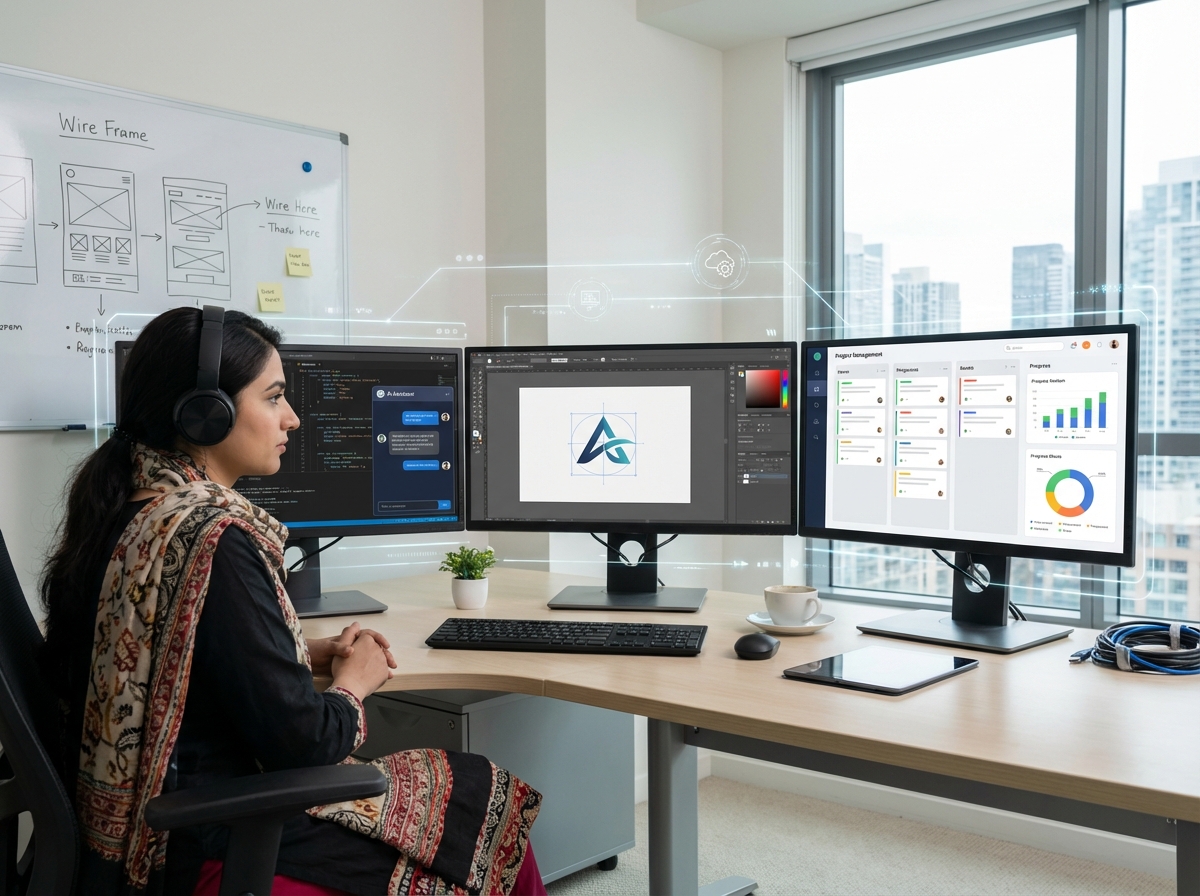
On coding specifically, Meta reports real gains. It can diagnose and fix complex bugs, implement new features in enterprise-grade systems, and execute large code migrations. Meta highlighted demos where it builds a web app, takes screenshots to spot problems, traces them back to the code, and fixes them, largely on its own.
Here is what makes this launch especially interesting. Muse Spark 1.1 launched at a strikingly low price. Meta's Muse Spark 1.1 API launched at $4.25 per million output tokens, roughly one-quarter of Anthropic and OpenAI flagship rates.
In simple terms, "tokens" are the units of text an AI processes, and you pay per token. By charging about a quarter of what leading rivals charge, Meta is clearly trying to win developers on cost. As one report put it, Meta wants to win on price in a crowded AI market.
For anyone building an AI product, cheaper tokens mean lower running costs, which can make the difference between an idea being affordable or not.
There is an important change here beyond the model itself. Meta used to release its AI models (like Llama) as "open weights," meaning developers could download and run them freely. Muse Spark 1.1 is different.
Meta's models previously reached developers mainly as open weights. Muse Spark 1.1 is closed, hosted, and metered per token. Alongside it, Meta opened a public preview of the new Meta Model API, where developers access the model as a paid service.
This means you cannot download or fine-tune Muse Spark 1.1 yourself; you use it through Meta's API and pay per use. It is a notable move for a company known for open-source AI, and a sign of how competitive and commercial the AI market has become.
Meta's own benchmarks tell a nuanced story, and it is worth being honest about them. According to Meta's reported figures, the model leads on tool use and orchestration, but is not the top performer on pure coding accuracy.
Independent analysis notes that it places third on several coding benchmarks, trailing leading models on raw coding skill, while leading on tool-use tasks in Meta's own tests. As reviewers point out, this is an orchestration model, not a coding-accuracy leader. It is also worth remembering that these launch figures are vendor-reported, with rivals often shown at their strongest settings, so real-world performance should be tested independently.
The takeaway: Muse Spark 1.1's edge is coordinating complex, multi-tool tasks affordably, rather than being the single smartest model at every job.
This is where the story gets practical for local readers.
For developers and startups, cheaper AI is a genuine unlock. The high cost of top AI models has held back many Pakistani builders. A capable model at a quarter of the price makes experimentation and product-building far more affordable.
For freelancers, AI tools that handle coding, automation, and multi-app tasks can boost productivity, letting them deliver more and offer higher-value services, exactly the shift experts say Pakistani freelancers need to make.
For the AI ecosystem, price competition among global providers is good news for everyone in developing markets. As models get cheaper and more capable, the barrier to building world-class AI products keeps falling.
For learners, more affordable API access, plus availability in the Meta AI app, means students and self-taught coders can experiment with advanced AI more easily.
Muse Spark 1.1 signals a new phase in the AI industry: aggressive price competition. With multiple powerful models now available, providers are competing not just on capability but on affordability and developer experience.
This is broadly positive for emerging tech nations. When AI becomes cheaper, countries like Pakistan, rich in talent but limited in capital, benefit the most. The playing field levels somewhat, allowing smaller teams to build things that once required big budgets.
The honest caveat is that developers should test models on their own real tasks rather than trusting launch benchmarks alone, and be aware that preview pricing can change and early access was reported as US-only. Still, the direction, more capable AI at lower cost, is exactly what helps Pakistani builders most.
Expect the AI price war to intensify, with more models, lower prices, and better tools for developers. For Pakistan, the smart move is to stay updated, experiment with these cheaper options, and build practical skills in using AI tools, especially agentic ones that can automate real work.
As access widens and costs fall, the opportunity for Pakistani developers to build competitive AI products grows. The talent is here; increasingly, the tools are affordable too.
Meta's Muse Spark 1.1 is a powerful new AI model, but its real significance is strategic: capable agentic AI at roughly a quarter of the usual price. For Pakistan's developers, freelancers, and startups, that lower cost could remove a major barrier to building with AI. It is not the single best model at everything, and it comes with normal caveats about vendor benchmarks and preview access. But the bigger trend it represents, cheaper, more accessible AI, is exactly what an ambitious, talent-rich, capital-scarce tech ecosystem like Pakistan's needs. Keep an eye on it, and start experimenting.
This article is for general informational purposes only and reflects information available as of July 2026. Model features, availability, and pricing can change; always check official Meta sources before building on any AI model.
On July 9, 2026, Meta Superintelligence Labs released Muse Spark 1.1, a multimodal reasoning AI model built for agentic tasks, with significant gains over the first Muse Spark in tool use, computer use, coding, and multimodal understanding. It was launched via a public preview of the new Meta Model API.
Key capabilities: a 1 million-token context window (1,048,576) that the model actively manages, remembering and retrieving earlier work and compacting context across long sessions. It operates as a main agent (gathering context, planning, delegating to parallel subagents) and as a subagent, and reports zero-shot generalization to new tools, MCP servers, and custom skills. It handles computer-use workflows across multiple apps, and coding tasks like bug fixing, feature implementation, and large code migrations.
The headline is pricing: about $4.25 per million output tokens, roughly one-quarter of Anthropic and OpenAI flagship rates, signaling Meta's aim to compete on price. However, reasoning tokens are billed at full output rates, and preview access was reported as US-only with pricing subject to change.
A major strategic shift: unlike Meta's earlier open-weight Llama models, Muse Spark 1.1 is closed, hosted, and metered per token, no local deployment or fine-tuning. It offers OpenAI and Anthropic SDK compatibility, making A/B testing easy.
On performance, Meta's own (vendor-reported) benchmarks show it leading on tool-use and tool-augmented reasoning but placing third on several coding and multimodal benchmarks (e.g., SWE-Bench Pro, DeepSWE 1.1), trailing models like Opus 4.8 and GPT-5.5 on coding. It is best characterized as an affordable orchestration model rather than a coding-accuracy leader.
Pakistan relevance: the low price lowers the biggest barrier (cost) for Pakistani developers, freelancers, and startups building with AI, supporting productivity and the shift toward higher-value, product-focused work.