To get an eSIM in Pakistan, visit a Jazz, Zong, or Ufone service center with your CNIC, complete biometric verification, and receive a QR code. Then go to your phone's settings, add a cellular plan, and scan the code. Charges range from free (Jazz) to around Rs. 2,000, and an eSIM-compatible phone is required.
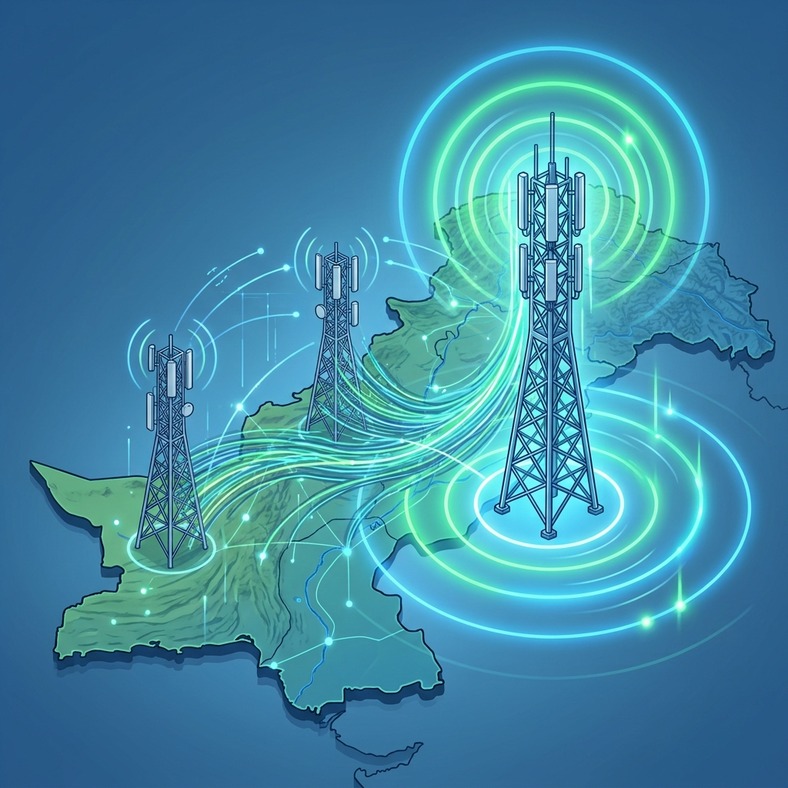
The plastic SIM card that has lived in our phones for decades is slowly disappearing. In its place is the eSIM, a digital SIM built right into your phone. In Pakistan, all major networks now support it, and with the recent Telenor-Ufone merger prompting many people to review their connections, more Pakistanis than ever are asking how eSIM works.
The good news: getting an eSIM is simple once you know the steps. This complete 2026 guide walks you through what an eSIM is, which networks and phones support it, what it costs, and exactly how to activate it. Let's get started.
An eSIM (embedded SIM) is a digital SIM built into your phone instead of a removable plastic card. It does the same job as a normal SIM, connecting you to your network for calls, texts, and data, but you activate it digitally by scanning a QR code, with nothing to insert.
The big advantages are convenience and flexibility. You can store multiple numbers on one phone and switch between them in your settings, for example keeping a personal and a business number active together. There is no card to lose, damage, or wait for in the mail.
Yes. eSIM is now widely available in Pakistan and supported by all the major telecom operators. Here is where each network stands:
Jazz was the pioneer, the first operator in Pakistan to introduce eSIM, and supports both prepaid and postpaid customers. Zong offers eSIM for its users with a straightforward QR activation through service centers. Ufone (now Ufone 5G, following the Telenor merger) supports eSIM for both prepaid and postpaid users across compatible handsets. Telenor also offered eSIM services, and existing customers are being integrated into the merged Ufone 5G network.
Pricing varies by network, and it can change, so treat these as a guide and confirm with your operator:
Jazz has generally offered eSIM conversion for free. Zong and Ufone typically charge around Rs. 2,000 for an eSIM or conversion (excluding any special number charges). Some networks offer the first conversion free. Always check the latest official price before you go.
Before anything else, make sure your phone is eSIM-compatible. Not all phones are. The most common eSIM-supported phones in Pakistan include:
iPhones: iPhone XS, XS Max, and XR, and all newer models (iPhone 11 through the latest iPhone 16 and 17 series).
Samsung: Galaxy S20, S21, S22, S23, S24, S25 and newer, plus recent Note, Fold, and Flip models.
Others: Google Pixel (3 and newer) and several recent flagship models from other brands.
A quick tip: check your phone's official specs or search your exact model plus "eSIM" to be sure before heading to a service center.
This is a step many people miss. In Pakistan, your eSIM activates a specific IMEI on your phone, so you need to make sure that IMEI is properly registered with the PTA to avoid your device being blocked under the DIRBS system.
If your phone is imported or not yet PTA-approved, you may need to pay the applicable phone tax and get it whitelisted first. Biometric verification tied to your CNIC is also required for activation, just like a normal SIM. This keeps the process secure and regulated.
Here is the general process, which is similar across networks.
Step 1: Visit your network's nearest service center or franchise (Jazz Experience Center, Zong Customer Service Center, or Ufone Service Center). Some networks also offer app-based conversion.
Step 2: Bring your CNIC and complete biometric (thumbprint) verification, exactly as you would for a physical SIM.
Step 3: The representative will map your number to the eSIM and give you a voucher with a QR code printed on it. Keep this QR code safe and do not share it with anyone.
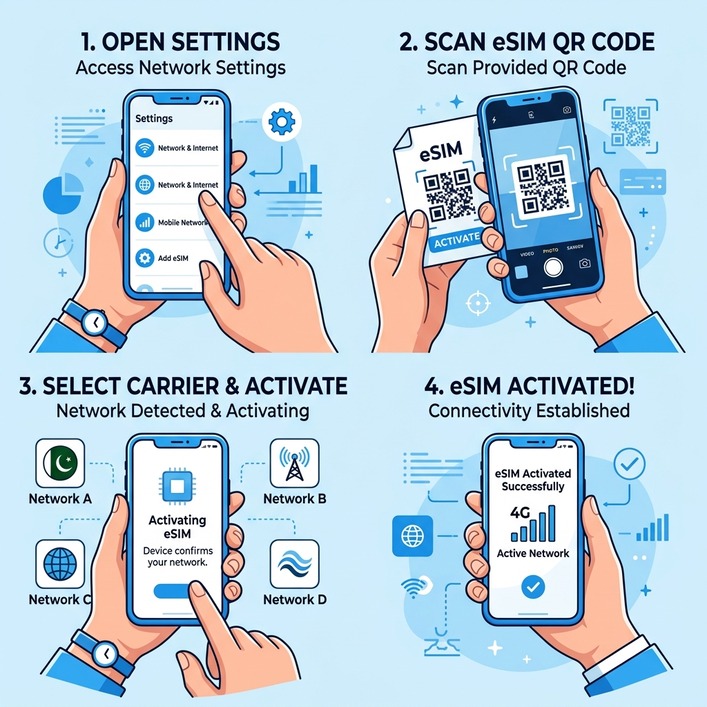
Step 4: On your phone, make sure you are connected to WiFi or mobile internet. Then:
Step 5: Once scanned, your eSIM profile downloads and activates, usually within a few minutes. Your physical SIM will typically stop working once the eSIM is active if you converted the same number.
That's it. Save your QR code somewhere safe in case you ever need to reinstall the profile.
Both work the same for calls and data, but they suit different needs. An eSIM is better for convenience, dual-number use, and security (a thief cannot simply remove it). A physical SIM is easier to move quickly between phones and works on any device, including older ones.
For most modern smartphone users, especially those wanting two numbers on one phone, eSIM is the more flexible choice. But if you frequently swap your SIM between multiple devices, a physical SIM may still suit you better.
The shift to eSIM is more than a gadget trend. For consumers, it means faster switching between networks, better security, and less plastic waste. For the telecom industry, it lowers the cost of distributing physical SIMs and speeds up onboarding.
It also fits Pakistan's broader digital push. As the country modernizes its telecom sector, now with a stronger merged Ufone 5G operator and expanding 5G plans, eSIM adoption supports a cleaner, more digital mobile experience. For travelers and remote workers, eSIM makes it easy to add international plans without swapping cards.
A few things to keep in mind. Always keep a backup of your QR code, you may need it if you reset or change phones. If your eSIM does not activate, check that your phone software is fully updated and that you have a stable internet connection. If you switch phones, most networks allow a re-scan only after the profile is deleted from the old device. And remember the PTA/IMEI registration step to avoid your device being blocked.
Getting an eSIM in Pakistan is easier than most people expect. Choose a supported network (Jazz, Zong, or Ufone), confirm your phone is compatible, visit a service center with your CNIC for biometric verification, and scan the QR code they provide. Within minutes, you are running a fully digital SIM with the freedom to hold multiple numbers on one device. As Pakistan's telecom sector modernizes, eSIM is quickly becoming the smarter, cleaner way to stay connected. If your phone supports it, it is well worth making the switch.
This article is for general informational purposes only and reflects prices and processes available as of 2026. Charges, availability, and steps can change; always confirm current details on your network's official website or at a service center.
An eSIM (embedded SIM) is a digital SIM built into a phone, activated by scanning a QR code instead of inserting a plastic card. It lets users store and switch between multiple numbers on a single device.
In Pakistan as of 2026, eSIM is supported by all major networks: Jazz (the country's eSIM pioneer), Zong, and Ufone 5G, each covering both prepaid and postpaid users. Following the July 2026 Telenor-PTML merger, former Telenor customers are being integrated into the merged Ufone 5G network.
On pricing, Jazz has generally offered eSIM conversion for free, while Zong and Ufone typically charge around Rs. 2,000 (excluding special number charges). Some networks offer the first conversion free, so users should confirm current rates with their operator.
Compatible phones include iPhone XS, XR and newer (through the iPhone 16 and 17 series), Samsung Galaxy S20 and newer, recent Fold and Flip models, and Google Pixel 3 and newer.
To activate, the user visits a Jazz, Zong, or Ufone service center with their CNIC, completes biometric verification, and receives a QR code voucher. They then scan it via Settings > Cellular > Add Cellular Plan on iPhone, or Settings > SIM Card Manager > Add Mobile Plan on Android. Activation usually completes within minutes.
One important requirement: the eSIM's IMEI must be registered with the PTA to avoid being blocked under the DIRBS system. Imported phones may need phone tax paid and whitelisting first.