Pakistan climbed 17 places to rank 119th in the UN E-Government Development Index (EGDI) 2026, with its score rising about 23% to 0.6264. Over the past four years, Pakistan has gained 31 places overall. The index, published every two years by the UN, measures online services, telecom infrastructure, and human capital. (51 words)
Government services in Pakistan have a reputation, and it is not a flattering one. Long queues, endless paperwork, and office visits for things that should take minutes. So a piece of news this week is worth noticing: according to the United Nations, Pakistan’s digital government is improving, and the numbers back it up.
Pakistan has climbed 17 places in the UN’s E-Government Development Index. It is a genuine sign of progress. But like any ranking, the real story is in the details, what it measures, what drove the jump, and whether it is changing anything for ordinary people. Here is the full picture.
Let’s start with the facts. The United Nations Department of Economic and Social Affairs publishes the E-Government Development Index, or EGDI, every two years. It assesses all 193 UN member states on how well they deliver government services digitally.
In the 2026 edition, Pakistan moved up 17 places to rank 119th, up from 136th in the previous survey. Its overall EGDI score rose by about 23%, reaching 0.6264.
The improvement is not a one-time event. Looking at the longer trend, Pakistan has climbed 31 places over the past four years, rising from 150th to its current 119th. That steady, repeated movement in the right direction is what makes this meaningful rather than a lucky bounce.
To understand why this matters, it helps to know what the EGDI actually scores. The index is built on three dimensions.
The first is online services: how many government services citizens can access through websites and apps, and how well those services work. The second is telecommunications infrastructure: internet access, mobile coverage, and connectivity across the country. The third is human capital: education and literacy levels, since people need the skills to use digital services.
A country’s score is an average of these three. That means Pakistan’s rise reflects progress across more than one area, not just a single flashy app. Better connectivity, more digital services, and a more capable population all feed into the number.
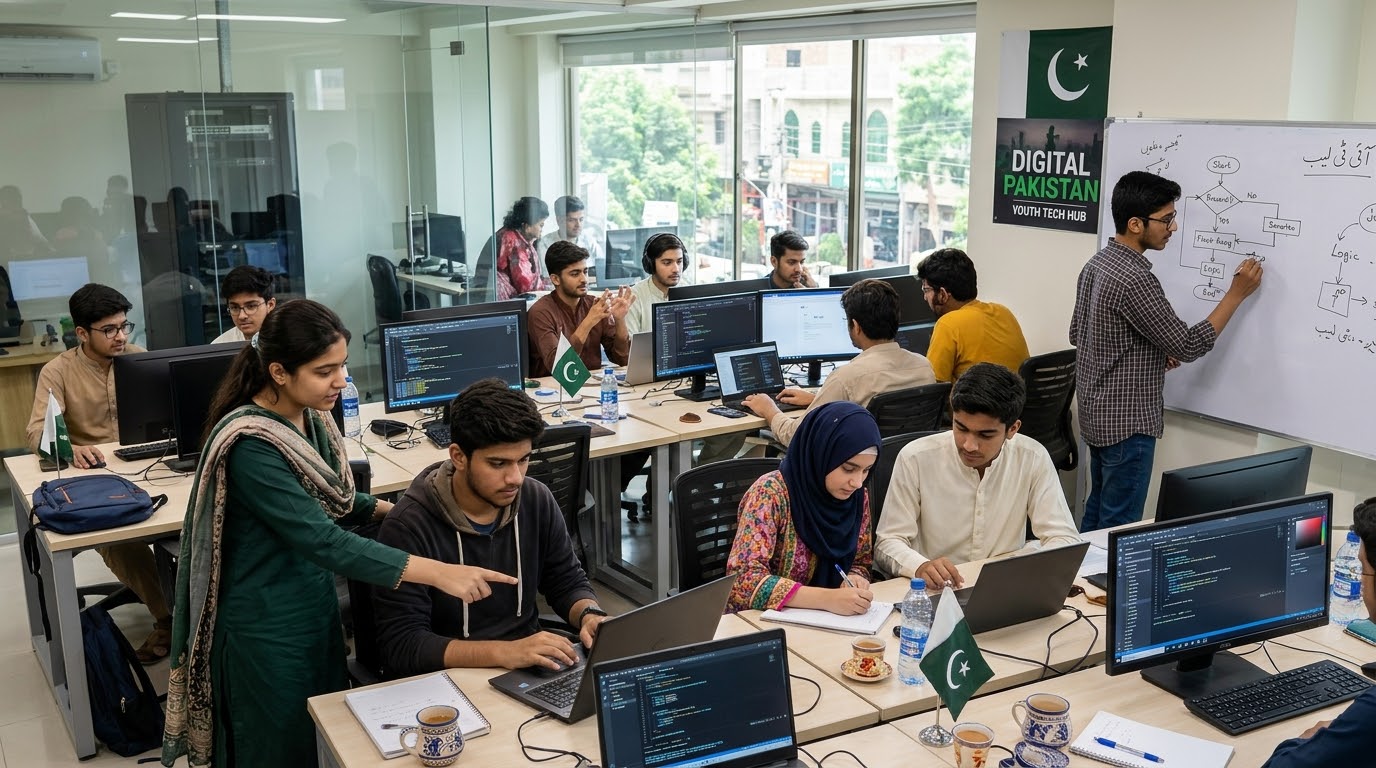
Pakistan’s improvement lines up with a broader government push to digitize public services. Over the past few years, there has been visible movement: more services moving online, expanding mobile and broadband coverage, and a general policy direction toward a “Digital Pakistan.”
The region as a whole has also been making progress in online public service delivery, and Pakistan is part of that wave. Investments in connectivity, including growing broadband penetration and the early rollout of faster networks, strengthen the infrastructure dimension. Efforts to put more citizen services, identity, records, payments, onto digital platforms strengthen the online services dimension.
In short, the ranking rose because several pieces moved together. That is usually how these indexes work: steady improvement across multiple areas adds up to a jump in position.
For ordinary citizens, digital government is not an abstract idea. It is the difference between standing in a queue for hours and completing a task on your phone. Better e-government means less time wasted, fewer trips to offices, and less opportunity for the kind of friction that frustrates people every day. As these services improve, the benefit is felt in daily life.
For the economy, efficient digital government reduces cost and friction for businesses too. Faster registrations, digital payments, and online verification make it easier to start and run a company. That supports the wider goal of a growing digital economy.
For Pakistan’s global image, climbing an international ranking published by the UN is a credibility signal. It tells investors and partners that the country is modernizing its systems, which matters when competing for attention and investment.
For the technology sector, government digitization creates demand. Someone has to build these systems, and a government committed to digital services is a significant client for local tech talent and companies.
This is good news, and it should be received as such. Consistent, multi-year improvement in a respected international index is a genuine achievement, not spin.
But perspective keeps it honest. A rank of 119th out of 193 places Pakistan in the middle of the global table, not near the top. The country has risen quickly, which is impressive, but it is climbing from a low base. There is a difference between improving fast and having arrived, and Pakistan is firmly in the first category.
It is also worth remembering what a ranking does and does not capture. The EGDI measures availability and capacity, how much digital infrastructure and service exists. It is a harder thing to measure whether every citizen, including those in rural areas or without smartphones, actually benefits equally. A high score on paper still has to translate into real, inclusive access on the ground.
So the fair read is this: Pakistan is genuinely moving in the right direction on digital government, at a good pace, and deserves credit for it. The task now is to keep climbing and, just as importantly, to make sure the improvements reach everyone, not just the connected and urban.
The trajectory suggests more progress is likely. Because the EGDI is published every two years, the next edition will show whether Pakistan can sustain the momentum. With continued investment in connectivity, more services going digital, and ongoing skills development, further climbing is realistic.
The things to watch are the same three dimensions the index measures: whether internet access keeps expanding, whether more and better services move online, and whether digital skills spread across the population. If all three keep improving together, Pakistan could continue its steady rise in future surveys. The bigger prize, beyond the ranking itself, is a government that genuinely works faster and more fairly for its citizens.
Pakistan climbing 17 places to 119th in the UN E-Government Development Index, part of a 31-place rise over four years, is a real and encouraging sign of progress. It reflects genuine improvement across online services, infrastructure, and human capital, not just a single initiative.
The honest framing is one of momentum, not arrival. Pakistan is rising quickly from a modest starting point and still has a long way to climb. But the direction is clearly positive, and for a country working to modernize how it serves its people, that steady upward movement is exactly what success looks like in the early stages. The challenge now is to keep going, and to make sure the digital government being built reaches every citizen it is meant to serve.
This article is for general information only. Rankings and figures are based on reported UN data and may be updated in future editions.
Pakistan climbed 17 places to rank 119th in the United Nations E-Government Development Index (EGDI) 2026, up from 136th in the previous survey, with its overall score rising about 23% to 0.6264. Over the past four years, Pakistan has gained 31 places overall, rising from 150th to 119th. The EGDI, published every two years by the UN Department of Economic and Social Affairs, assesses all 193 member states across three dimensions: online services, telecommunications infrastructure, and human capital. Pakistan’s improvement reflects progress across multiple areas, including more government services moving online, expanding broadband and mobile connectivity, and ongoing development in digital skills, aligned with the broader “Digital Pakistan” push and regional gains in online public service delivery. The rise matters for citizens (less bureaucracy and fewer office visits), for businesses (faster registration, payments, and verification), for Pakistan’s global credibility with investors, and for the local tech sector that builds these systems. A balanced view: the progress is real and consistent, but a rank of 119th out of 193 is mid-table, so Pakistan is improving quickly from a low base rather than having arrived. Rankings also measure capacity more than whether every citizen, including rural and less-connected populations, benefits equally. The outlook is positive, with the next survey (in two years) set to show whether momentum holds. This is general information based on reported UN data, which may be updated.