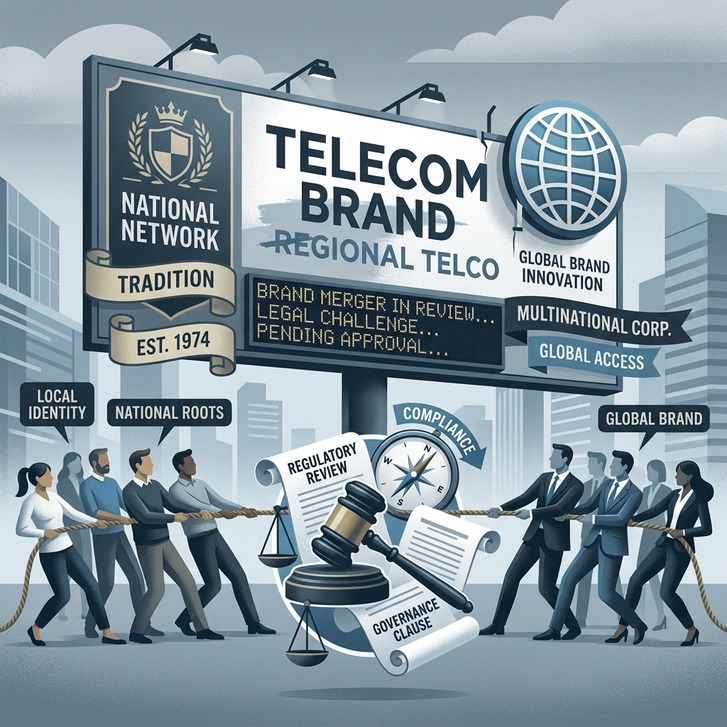
In July 2026, Pakistan's federal government halted the proposed rebranding of the merged Ufone-Telenor entity to "e&," the global brand of UAE-based Etisalat Group. Concerns included removing the word "Pakistan" from a strategically significant operator's identity, whether the Ufone board had authority to approve it, and roughly $800 million in outstanding dues. A legal review is underway.
When two of Pakistan's biggest mobile networks merged, the natural next question was: what will the combined company be called? The proposed answer, dropping the familiar "Ufone" name for the global brand "e&," has now triggered a genuine controversy, and the government has stepped in to halt it.
What looks at first like a simple branding decision has opened up bigger questions about national identity, corporate governance, and accountability at state-linked companies. Here is what is actually happening, why the rebrand was paused, and what it means, explained clearly and neutrally.
The government intervened to stop a rebranding that was already in motion. Pakistan's federal government has halted a proposed plan to rebrand the merged Ufone-Telenor company under the global "e&" brand, amid legal and governance concerns.
The trigger was a specific board decision. The controversy surfaced after the Ufone board approved the proposed "e&" brand name for the merged entity, even though the board of parent company Pakistan Telecommunication Company Limited (PTCL) had earlier deferred the same proposal. That approval reportedly raised alarm at the highest levels of government, prompting an immediate review and suspension of the rebranding.
For now, the change is frozen. The rebranding remains suspended while the government reviews its legal and corporate implications before making a final decision.
To understand the dispute, a quick recap helps. The rebrand follows Pakistan's largest-ever telecom merger, PTCL's acquisition of Telenor Pakistan and the integration of the two mobile operators, creating one of the country's biggest telecom companies, with a combined subscriber base sitting close behind market leader Jazz.
The proposed new name comes from the majority shareholder's global identity. "e&" is the global brand of the UAE-based telecom group formerly known as Etisalat, which holds a stake in and exercises management control over PTCL Group. Etisalat rebranded itself to "e&" globally a few years ago as part of its transformation into a broader technology group. So the proposal was essentially to align Pakistan's merged operator with its parent's international brand, a common move in global telecom.
The most emotionally resonant objection is about national identity. A central concern is the removal of the word "Pakistan" from the corporate identity of a strategically significant telecom operator.
This matters to many because telecom is critical national infrastructure, and the operators carry a sense of national ownership, "Ufone" and the PTCL lineage are seen as distinctly Pakistani. Replacing that with a foreign global brand, and specifically removing "Pakistan" from the identity, struck some in government as inappropriate for such a strategically important company. It is, in essence, a question of brand nationalism: should a critical national operator carry a Pakistani identity, or is aligning with a global parent brand acceptable and even beneficial? Reasonable people differ, and the article takes no side, but the concern is genuine and widely shared in government circles.
The second issue is more technical but arguably more consequential: corporate governance. Serious questions were raised over whether the Ufone board had the authority to approve such a major change, particularly before all merger formalities were legally complete.
The concern is sharpened by two facts. First, PTCL's own board had deferred the same decision, so the Ufone board approving it created an inconsistency. Second, the Ufone board includes government-nominated directors, reportedly including a sitting PML-N senator and two federal secretaries, which makes the decision sensitive given the state's direct involvement.
This has broadened into a larger debate. The controversy has reignited wider questions over the accountability of government-nominated directors serving on state-owned enterprises (SOEs), and the governance standards expected of them. In other words, a branding decision has become a case study in how well state-linked companies are governed, a genuinely important issue beyond this one company.
Adding another layer is a significant financial backdrop. The rebranding has also drawn scrutiny because of roughly $800 million in outstanding dues linked to the merged entity, and the regulatory obligations tied to the deal.
While somewhat separate from the identity and governance questions, this financial overhang adds to the government's caution. With the federal government holding approximately 67% ownership of the merged entity, it has both a decisive say and a strong interest in ensuring all obligations and formalities are properly settled before any high-profile rebrand proceeds.
Importantly, Pakistan's telecom regulator had already set conditions that made the halt somewhat predictable. In a letter dated June 16, 2026, the Pakistan Telecommunication Authority (PTA) approved the "e&" brand name but attached conditions, directing the company to notify the PTA once the amalgamation formally takes legal effect, and to do so before any commercial launch or marketing campaign.
The regulator reinforced this. A subsequent PTA letter dated July 2 reiterated that the company must notify the Authority once the amalgamation is legally effective and before any commercial rollout begins. So the PTA's approval was conditional from the start, tied to legal formalities being completed first. When the Ufone board moved to approve the brand before those formalities were settled, it effectively ran ahead of the conditions the regulator had set, part of why the government stepped in.
The situation has several practical implications.
For customers, the immediate takeaway is that nothing changes right now, the familiar brands remain in place while the matter is reviewed. There is no need to do anything; your service continues as normal.
For the merger, this is a governance and branding hurdle, not a threat to the merger itself, which has legal approval. The integration continues; only the naming is paused.
For corporate governance in Pakistan, this may be the most significant dimension. The episode is prompting real scrutiny of how government-nominated directors on state-owned enterprises make decisions, which could have lasting effects on SOE governance standards well beyond telecom.
For the broader business climate, how this is resolved will signal how Pakistan balances global corporate integration (aligning with international parent brands) against national identity and proper process, a balance many multinational-linked businesses watch closely.
The lesson here is that branding decisions for strategic national assets are never purely about marketing. A telecom operator is critical infrastructure, and when the state holds a majority stake, brand choices carry political, national, and governance weight that a purely private company's would not.
The genuinely important issue beneath the headlines is corporate governance: whether boards, especially those with government-nominated directors, follow proper process and authority. That question matters far beyond this rebrand, because Pakistan's state-owned enterprises collectively represent enormous public value, and how well they are governed affects everyone. If this episode leads to clearer rules and stronger accountability for SOE boards, it could prove more valuable than the branding decision itself.
On the branding question specifically, there is a reasonable case on both sides, global alignment brings recognition and integration benefits, while national identity carries real value for critical infrastructure. It is legitimately a matter for careful deliberation, which is arguably what the pause is meant to allow.
The immediate next step is the legal review, particularly the Law Division's opinion on whether the Ufone board overstepped its authority. That opinion will likely shape the outcome. Possible resolutions range from proceeding with "e&" once formalities are complete, to a compromise identity that retains a Pakistani element, to retaining a local brand, though the final decision rests with the government as majority owner.
More broadly, watch whether this episode prompts reforms in how SOE boards operate and how government-nominated directors are held accountable. That would be the most consequential legacy of what began as a branding dispute.
The halted "e&" rebrand of the merged Ufone-Telenor entity is far more than a corporate naming squabble. It sits at the intersection of national identity, corporate governance, financial accountability, and the proper role of government-nominated directors in state-owned enterprises. For customers, nothing changes for now. For Pakistan's business and governance landscape, the resolution will be telling. Whatever the final name, the more important outcome may be whether this prompts stronger, clearer governance at the state-linked companies that hold so much public value. Sometimes a debate about a logo turns out to be about much bigger things.
This article is for general informational purposes only and reflects reports available as of late July 2026, several based on unnamed sources. It presents a developing governance matter factually and neutrally, without endorsing any position or making claims about specific individuals. Details may change as the review concludes.
In late July 2026, Pakistan's federal government halted the proposed rebranding of the merged Ufone-Telenor entity to "e&," the global brand of UAE-based Etisalat Group (which holds a stake in and management control over PTCL Group). The rebrand follows Pakistan's largest telecom merger, PTCL's acquisition of Telenor Pakistan, creating one of the country's biggest operators, with a subscriber base close behind market leader Jazz.
Three intertwined concerns drove the halt: (1) Identity, the removal of the word "Pakistan" from the corporate identity of a strategically significant telecom operator raised national-identity concerns. (2) Governance/authority, questions over whether the Ufone board had authority to approve the change, especially since PTCL's board had deferred the same proposal and the Ufone board includes government-nominated directors (reportedly a sitting PML-N senator and two federal secretaries). This reignited broader debate over accountability of government-nominated directors on state-owned enterprises. (3) Finances, roughly $800 million in outstanding dues linked to the entity added caution.
The federal government holds ~67% of the merged entity, giving it decisive say. The PTA had given conditional approval of the "e&" name (letter dated June 16, 2026), requiring notification once the amalgamation is legally effective and before any commercial launch; a July 2 letter reiterated this. The Ufone board's approval ran ahead of these conditions.
Impact: customers see no immediate change (existing brands remain); the merger itself is unaffected (only branding is paused); the episode raises significant questions about SOE corporate governance. Next step: a legal review, including the Law Division's opinion on board authority.
Reported partly via unnamed sources; presented neutrally. Informational only; details may change.