In 2026, iPhone 17 prices in Pakistan range from about Rs. 400,000 for the base model to nearly Rs. 900,000 for the Pro Max, depending on storage. PTA tax adds roughly Rs. 129,000 to Rs. 213,000 per device. Note that FBR, not PTA, calculates the tax live at registration based on the current dollar rate.
Prices vary by model, storage, and whether the unit is officially PTA-approved. As a general guide for 2026, iPhone 17 models in Pakistan fall in a wide range of roughly Rs. 400,000 to nearly Rs. 900,000, depending on variant and storage capacity.
Breaking it down by model, the standard iPhone 17 typically starts in the Rs. 400,000 to 530,000 range. The ultra-thin iPhone Air sits in a similar-to-higher band depending on storage. The iPhone 17 Pro runs higher, and the iPhone 17 Pro Max, especially in 1TB storage, reaches the top of the range near Rs. 870,000 to 900,000+ at authorized retailers.
Remember, these are official PTA-approved retail prices. Actual figures shift with the dollar rate and retailer, so always check current listings before buying.
Here is something most people get wrong, and understanding it will help you. People call it "PTA tax," but PTA does not actually set or collect the tax.
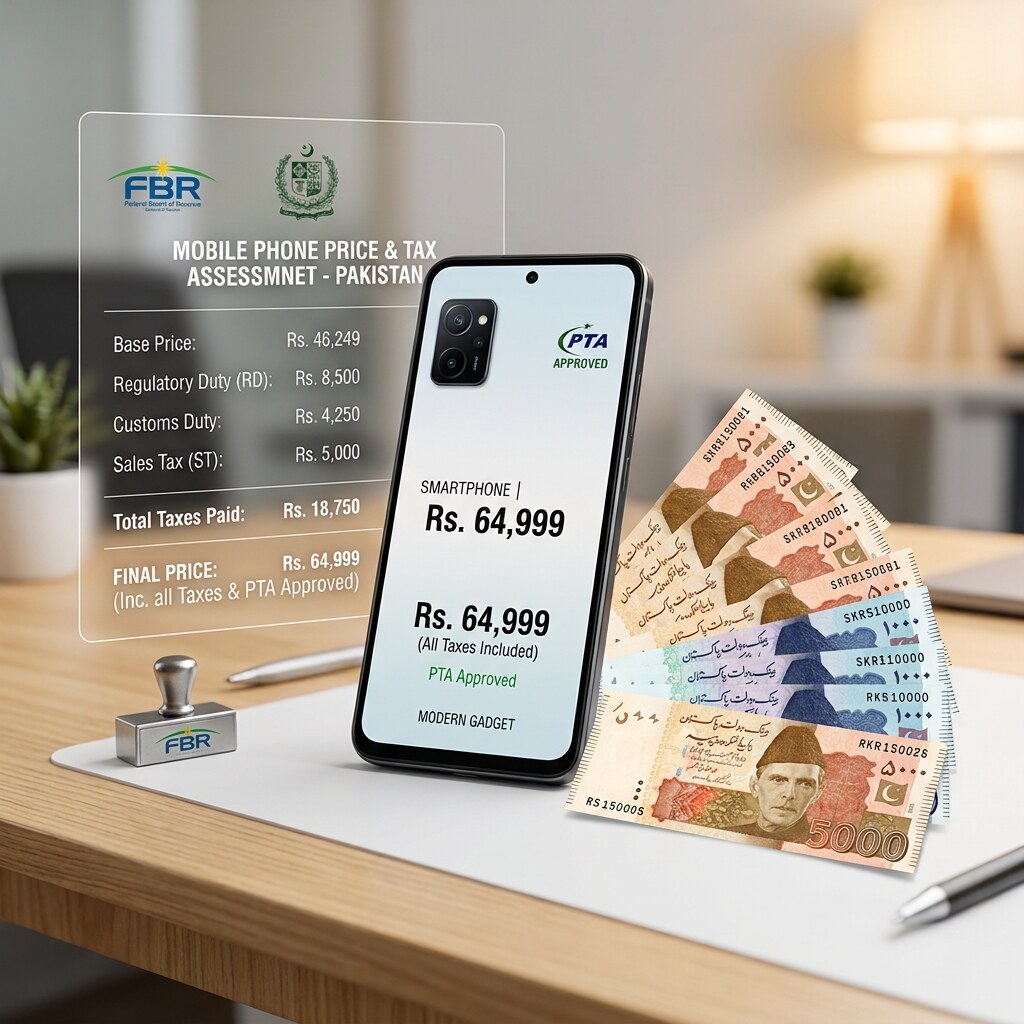
The reality is clearer once you know the roles. PTA's job is only to verify your phone's IMEI, confirming the device is genuine and not stolen or cloned. All the duty and tax calculations are the responsibility of the Federal Board of Revenue (FBR), not PTA.
This matters because of how the amount is decided. There is no fixed price list. FBR's customs valuation assigns a US dollar value to each model, then applies several taxes, sales tax, regulatory duty, handset levy, and withholding tax, on that value. The final amount is calculated live at the moment of registration, based on the current dollar-to-rupee rate. So the tax can change day to day.
While exact figures are generated live, industry estimates give a useful range. For the iPhone 17 series, PTA/FBR tax generally falls between approximately Rs. 129,000 and Rs. 213,000, depending on the specific model and how you register.
The registration method makes a real difference. You can register using your CNIC or your passport, and passport registration is usually cheaper than CNIC. However, there is a condition: passport-based registration requires FIA-verified records of recent international travel. If you have not traveled recently, the system will not allow the cheaper passport option.
For the most expensive models, the tax alone is significant. The DIRBS registration cost for a top iPhone 17 Pro Max can run well over Rs. 120,000 to 150,000, separate from the handset price.
This is the key decision for most buyers, and each path has trade-offs.
A PTA-approved iPhone costs more upfront because the tax is already included, but it works fully on Pakistani networks with no worries, and usually comes with proper warranty support. This is the safest, most hassle-free choice for long-term use.
A non-PTA iPhone is cheaper at purchase, but you must register and pay the tax within the allowed window (or your SIM gets blocked), and you take on more risk. Importantly, devices imported without prior PTA approval can face problems, and attempting to register some non-approved units can trigger IMEI blacklisting.
The simple rule: if you plan to use the phone long-term in Pakistan with a local SIM, a PTA-approved unit is almost always the smarter, cheaper-in-the-long-run choice. Non-PTA can suit those who use it briefly or on WiFi only.
Never guess your tax, check it officially. The government provides a direct way to see the precise amount.
Go to the PTA DIRBS Device Registration System (DRS) portal at dirbs.pta.gov.pk. There you can begin registration, and the system generates an FBR Payment Slip ID (PSID) showing the exact tax owed for your device at that moment. This is the only way to know your real, current figure, since it depends on the live dollar rate.
You can also check if a phone is already PTA-approved by sending its IMEI number to 8484 via SMS. A reply of "Compliant" or "Approved" means it is registered.
The high cost is not Apple's pricing alone, it is the tax structure. Heavy import duties and taxes on smartphones are designed partly to discourage costly imports and protect foreign reserves. For premium phones like iPhones, this pushes prices into ultra-premium territory.
This has real effects. Many Pakistanis opt for used or older iPhone models, which recently became cheaper to register after the government revised customs values downward for used and refurbished phones (though this relief does not apply to brand-new iPhone 17 units). Others choose strong Android alternatives that offer flagship features at a fraction of the price.
For freelancers and professionals who genuinely need iOS for work, the iPhone remains a serious but justifiable investment. For everyone else, it is worth weighing whether the premium is truly needed.
A few practical pointers to save money and avoid problems. Always buy from authorized dealers or trusted sellers and insist on a PTA-registered IMEI with an original invoice. Verify the IMEI yourself on the PTA DIRBS portal before paying. If you qualify for passport registration through recent travel, use it to save on tax. Consider a slightly older model or a used unit if budget is tight, since the tax and price are much lower. And time your purchase around dollar-rate stability if you can, since a weaker rupee raises the tax.
iPhone prices in Pakistan will keep tracking two things: Apple's global pricing and the rupee-dollar exchange rate. If the rupee stabilizes, taxes may ease slightly; if it weakens, expect prices to climb. Future FBR valuation updates could also shift costs, as they recently did for used phones.
For now, buyers should plan for high prices on new flagships and use the official DIRBS tool to know exactly what they will pay before committing.
Buying an iPhone 17 in Pakistan in 2026 means budgeting seriously: roughly Rs. 400,000 to 900,000 for the handset, plus Rs. 129,000 to 213,000 in tax. The smartest approach is to understand that FBR, not PTA, sets the tax; check your exact amount on the official DIRBS portal; use passport registration if eligible; and choose a PTA-approved unit for hassle-free long-term use. With the right knowledge, you can avoid overpaying and buy with confidence. Do your homework first, and the process becomes far less painful.
In 2026, Apple's iPhone 17 series in Pakistan ranges from roughly Rs. 400,000 for the base model to nearly Rs. 900,000 for the Pro Max (1TB), depending on variant and storage, among the most expensive phones officially priced in the country. These are PTA-approved retail figures that fluctuate with the PKR/USD exchange rate.
A key clarification: although commonly called "PTA tax," PTA only verifies the device's IMEI (genuine, not stolen/cloned). The actual duties and taxes are set and calculated by the Federal Board of Revenue (FBR). FBR assigns a customs value in USD per model, then applies sales tax (18%), regulatory duty, handset levy, and withholding tax, with the final amount generated live at registration based on the current dollar rate. There is no fixed public per-model tax table.
Estimated iPhone 17 tax ranges from about Rs. 129,000 to Rs. 213,000, depending on model and registration method. Passport registration is usually cheaper than CNIC but requires FIA-verified recent international travel records; otherwise the system rejects the passport option. DIRBS registration for the Pro Max can exceed Rs. 120,000-150,000 alone.
PTA-approved units cost more upfront (tax included) but work fully on local networks with warranty support; non-PTA units are cheaper initially but must be registered within the allowed window or the SIM is blocked, and improper units risk IMEI blacklisting. For long-term local use, PTA-approved is generally the smarter choice.
To find the exact tax, users should use the official PTA DIRBS Device Registration System (dirbs.pta.gov.pk), which generates an FBR Payment Slip ID (PSID); they can also SMS an IMEI to 8484 to check approval status. A January 2026 FBR ruling cut customs values on many used/refurbished phones (iPhone 11-15), but this does not apply to new iPhone 17 units.
This is informational only, not financial or purchasing advice; prices and taxes change constantly, so always verify at dirbs.pta.gov.pk before buying.