PTA tax is a fee to register an imported phone with the Pakistan Telecommunication Authority so it works on local networks. It's based on the phone's C&F value plus 18% sales tax, and is usually lower on a passport than a CNIC. You can check exact tax via SMS to 8484 or the DIRBS system before buying.
Few things confuse Pakistani phone buyers more than PTA tax. You find a great deal on a phone, then discover the tax to make it actually work might cost as much as the phone itself. Whether you're buying locally, importing a device, or bringing one back from abroad, understanding PTA tax is essential, it can be the difference between a smart purchase and an expensive mistake.
This guide explains, in plain language, how PTA tax works in 2026, the latest budget changes, how much you'll pay, the crucial CNIC-vs-passport difference, and exactly how to check and minimize your tax before you buy. Let's demystify it.
Let's start with the basics. Every mobile phone in Pakistan must be registered with the Pakistan Telecommunication Authority (PTA) to work on local mobile networks long-term. PTA tax is the fee you pay to complete that registration. Without it, your phone's mobile service (calls, SMS, and mobile data on a SIM) gets blocked, usually within days of use.
The system runs on DIRBS (the Device Identification, Registration and Blocking System), which tracks every phone's unique IMEI number and blocks those that aren't registered. There are two main reasons this system exists: to generate revenue for the government, and to protect Pakistan's local mobile assembly industry (like Infinix, Tecno, and others) by making fully imported phones more expensive than locally-assembled ones.
Whether you agree with it or not, it's the reality every phone buyer must navigate. Understanding it saves you money and headaches.
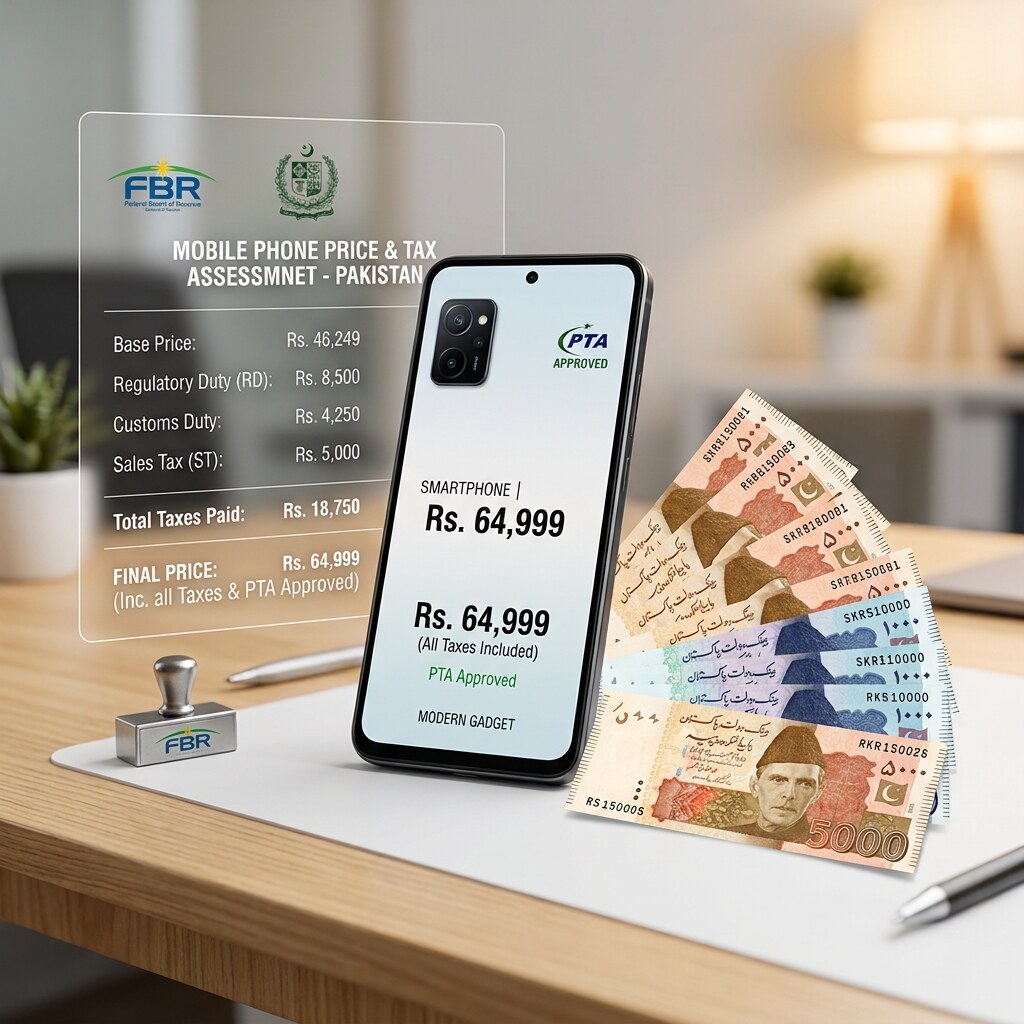
Here's the part that determines what you actually pay. PTA tax isn't a flat fee, it's calculated based on the phone's value, specifically its C&F (Cost and Freight) value as assessed by the Federal Board of Revenue's (FBR) customs valuation tables.
Several charges stack up on a phone: a fixed registration amount that varies by device value, plus 18% sales tax (GST) charged on top, plus withholding tax and regulatory duties. The 18% GST is often the heaviest single component. Because the tax scales with value, cheaper phones are taxed lightly while premium flagships are taxed brutally, on high-end iPhones, the PTA registration tax can reach PKR 100,000–135,000 or more, sometimes approaching the phone's own base price.
This is why a mid-range or locally-assembled phone is almost always the better value in Pakistan: you avoid the punishing tax that hits expensive imports.
Tax rules shift with each federal budget, so here's the current picture. In the Budget 2026-27, the government kept the overall PTA tax structure largely stable, declining to make the major cuts some had proposed. A proposal to reduce rates was dropped, partly due to resistance from the local mobile assembly industry, which benefits from the current structure.
However, there was some relief. Effective July 1, 2026, taxes were reduced on certain brackets, notably mid-range phones (the $100–$200 value bracket) and some high-end phones (above $500). Separately, earlier in 2026, the FBR revised customs valuations for used phones downward (some cuts as steep as 32–81% for older Apple models), reducing tax on many used devices.
The net effect: mid-range and used phones became somewhat more affordable to register, while the overall high-tax environment for premium imports persists. Always check current rates, because they genuinely change.
This is one of the most practical things to know, and it can save you real money. When registering an imported phone, you can do so using either your CNIC (national ID) or your passport, and the tax amount differs between them.
Registering on a passport is typically cheaper than on a CNIC, sometimes by several thousand rupees. For example, on many iPhone models, the passport rate runs a few thousand rupees below the CNIC rate. The catch: the cheaper passport-based registration is generally tied to international travel, it's designed for people bringing phones into the country.
The biggest benefit is for overseas Pakistanis: they can register one phone tax-free for 120 days per visit on their passport. If you're traveling, understanding this can save you significant money, always check both rates before registering.
Never guess, or take a shopkeeper's word. Always verify the exact tax before you commit. Here's how.
First, get the phone's IMEI by dialing *#06# on the device. Then you have a few ways to check status and tax. You can SMS your IMEI to 8484 to get the device's registration status. You can use the official DIRBS system (the PTA's DIRBS portal) to verify whether a phone is registered or blocked. And you can use PTA tax calculators (several reliable ones exist online) to estimate the exact duty for a specific model on CNIC vs passport, though always confirm the final amount through official PTA/FBR channels, since exchange-rate and valuation changes affect it.
Doing this two-minute check before buying protects you from the single most expensive mistake: buying a phone that's either already blocked or carries a shocking hidden tax.
A word of serious caution, because this catches many buyers. You'll often find "non-PTA" phones selling for significantly less, tempting, but risky. These phones aren't registered, and while they may work temporarily (sometimes with a paid "SIM time patch" that lasts only a set period), their mobile service will eventually be blocked.
Some sellers offer sketchy workarounds like temporary network patches or, illegally, IMEI cloning, avoid these entirely. A cloned or patched phone can stop working anytime, has no legitimate resale value, and involves real risk. The high tax environment has unfortunately fueled a grey market (PTA blocked nearly 100 million unauthorized devices in one recent year), but falling into it usually ends badly. If a deal seems too cheap, it's almost certainly non-PTA, walk away unless you fully understand and accept the cost of registering it.
Putting it together, here's how to be smart about PTA tax. Check the tax before buying using 8484, DIRBS, and calculators, so there are no surprises. Compare CNIC vs passport rates and use whichever is legitimately cheaper for your situation. If you're overseas or traveling, use the tax-free 120-day allowance for one phone. Consider locally-assembled phones (Infinix, Tecno, etc.), which avoid the heavy import tax and often include faster after-sales support. For used phones, factor in the recently-reduced valuations, which may make registration cheaper than before. And always verify a used phone's IMEI status before paying, to ensure it's not already blocked.
Follow these, and you'll avoid both overpaying and the far worse fate of a blocked, unusable phone.
PTA tax shapes the entire Pakistani phone market, and your wallet.
For everyday buyers, it's why phones cost more here than in many countries, and why understanding the system is essential to getting value.
For the local assembly industry, the tax structure is deliberately protective, boosting domestic manufacturers like those assembling Infinix and Tecno devices, which supports local jobs.
For the government, mobile taxes are a significant revenue source, which is why proposed cuts keep getting resisted despite consumer pressure.
For the grey market, high taxes unfortunately drive demand for smuggled and non-PTA devices, an ongoing challenge the DIRBS system tries to control.
Understanding this bigger picture helps you see why the system works the way it does, and make informed choices within it.
The consistent advice from those who know the market is simple: for most people, a PTA-approved, locally-assembled or mid-range phone offers the best value, avoiding the punishing tax on premium imports. Chasing a flagship you'll pay enormous tax on rarely makes financial sense unless you specifically need its features.
The golden rules never change: always verify PTA/DIRBS status and exact tax before paying, never trust a "non-PTA" bargain without understanding the real cost, and check CNIC vs passport rates. The buyers who lose money are almost always those who skipped the two-minute verification. In a market where tax can equal a phone's price, that quick check isn't optional, it's the smartest thing you can do.
Expect the PTA tax system to remain in place, with periodic budget adjustments, as it's tied to both revenue and protecting local assembly. Pressure to reduce taxes will likely continue from consumers and some lawmakers, but resistance from the assembly industry and revenue needs make dramatic cuts unlikely soon. Watch each June budget for rate changes.
The DIRBS registration system is firmly entrenched, so verifying phones will remain essential. For buyers, the smart strategy, verify everything, favor local/mid-range, use travel allowances, will stay relevant.
PTA tax doesn't have to be confusing or a costly trap. Once you understand it, that it's a value-based registration fee, cheaper on a passport, heaviest on premium imports, and always checkable before you buy, you can navigate it confidently. The 2026 budget brought modest relief on mid-range and used phones, but the core system remains. Your best moves: always verify tax and IMEI status before paying (via 8484 and DIRBS), compare CNIC vs passport, use the overseas 120-day allowance if eligible, favor locally-assembled or mid-range phones, and avoid the non-PTA trap. Do that, and you'll never overpay or get stuck with a blocked phone again. In Pakistan's phone market, a little knowledge genuinely saves a lot of money.
This article is for general informational purposes only and reflects PTA tax rules and rates as of 2026, which change with each budget and with exchange rates. Always verify the exact, current tax and registration status through official PTA (pta.gov.pk), DIRBS, and FBR channels or SMS to 8484 before purchasing or registering. This is not financial or legal advice.
PTA tax is a fee to register an imported mobile phone with the Pakistan Telecommunication Authority (PTA) so it works on local networks long-term; unregistered phones are blocked via the DIRBS system (which tracks IMEI numbers), usually within days. The system exists to generate government revenue and protect Pakistan's local mobile assembly industry (e.g., Infinix, Tecno).
Calculation: tax is based on the phone's C&F (Cost and Freight) value from FBR customs valuation tables, plus 18% sales tax (GST, often the heaviest component), withholding tax, and regulatory duties. It scales with value, cheap phones are taxed lightly, premium flagships brutally (high-end iPhone registration can reach PKR 100,000–135,000+, sometimes near the phone's base price), making mid-range and locally-assembled phones the best value.
2026 budget: Budget 2026-27 largely kept the structure stable (a proposed cut was dropped due to assembly-industry resistance), but effective July 1, 2026, taxes were reduced on some mid-range ($100–$200) and high-end (above $500) brackets. Earlier in 2026, FBR cut customs valuations on many used phones (some 32–81% for older Apple models), lowering their tax.
CNIC vs passport: registering on a passport is typically cheaper than CNIC (by several thousand rupees), though passport registration is generally tied to travel. Overseas Pakistanis can register one phone tax-free for 120 days per visit.
How to check before buying: dial *#06# for IMEI, SMS it to 8484 for status, use the DIRBS portal, and use PTA tax calculators for model estimates, always confirming via official PTA/FBR channels. Avoid "non-PTA" phones (eventually blocked) and illegal workarounds like IMEI cloning or temporary patches.
Informational only; rates change with budgets and exchange rates; verify via official PTA/FBR channels; not financial advice.