At Alibaba.com's Pakistan AI Export Voice 2026 finale in Lahore, SMEs showed real results from using AI export tools. One exporter, Producing Peak, secured its largest order (over $80,000) and more than $200,000 in sales in 90 days. The DigiSME Pakistan program, with SMEDA, has trained over 2,000 SMEs in 100 days. (52 words)
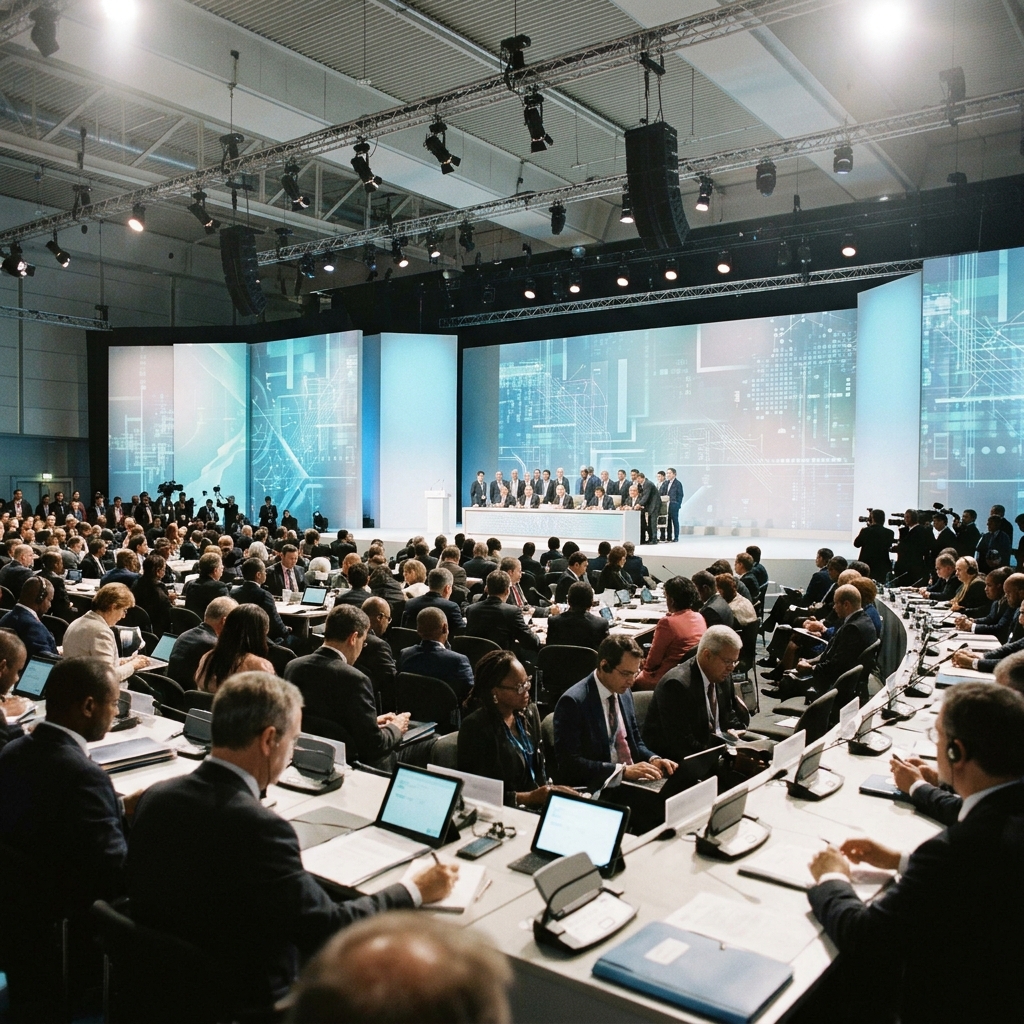
The Pakistan AI Export Voice 2026 was a competition run by Alibaba.com, the global business-to-business e-commerce platform, to highlight how Pakistani businesses can use AI to export. The grand finale took place in Lahore and brought together SMEs, exporters, and business leaders.
The event also marked a milestone for DigiSME Pakistan, Alibaba.com's partnership with the Small and Medium Enterprises Development Authority (SMEDA). In its first 100 days, the initiative provided digitalization and AI training to over 2,000 local SMEs and onboarded 12 Pakistani businesses onto Alibaba.com's global platform.
The chief guest was Rana Ahmed Atteeq Anwar, the Prime Minister's Coordinator on SMEs, alongside Alibaba.com's Head of Pakistan Business, Summer Gao, and SMEDA's CEO, Nadia J Seth. The presence of government, a global platform, and local businesses together is the point: this is a public-private effort to get Pakistani SMEs selling internationally.
What makes this event worth paying attention to is that the results are real, not promises. Two case studies stood out.
A business called Producing Peak used AI tools to manage its product listings and handle buyer requests. The outcome: it secured its largest single order ever, worth over $80,000, and reported more than $200,000 in sales over 90 days. For a small Pakistani exporter, those are life-changing numbers.
Another business, HMD IMPEX, used an AI assistant to summarize buyer inquiries quickly. The result: it confirmed an international apparel order in under three hours, and generated repeat business exceeding $20,000 in a single month. Speed matters in global trade, and AI helped this exporter respond faster than it ever could manually.
These are not tech startups. They are traditional exporters using AI as a practical business tool, and winning.
So what exactly are these businesses using? The two AI tools highlighted were the Smart Assistant Agent (SAA) and Accio Work AI.
In plain terms, these tools act like an AI-powered business team. They help exporters manage product listings, respond to buyer inquiries (called RFQs, or requests for quotation), summarize long buyer messages, and keep up with the constant communication that international selling demands.
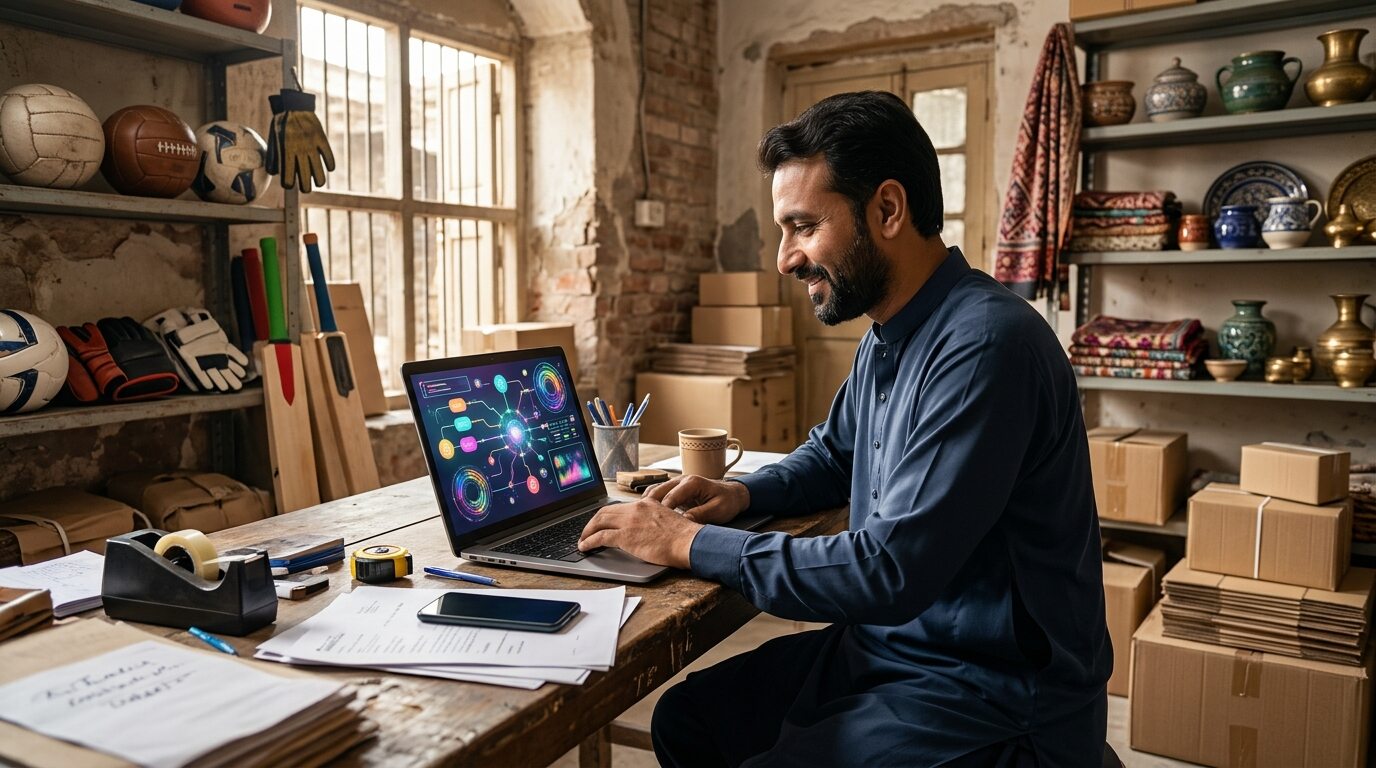
For a small business with a handful of staff, this is a big deal. Serving global buyers used to require a large team to handle listings, translations, and round-the-clock messaging. AI tools let a small Pakistani exporter operate with the responsiveness of a much bigger company. That is how a modest business in Sialkot can suddenly compete for, and win, large international orders.
The finalists are a snapshot of Pakistan's real export economy, and that is what makes this encouraging. Six finalists came from traditional, well-established Pakistani export sectors: Sialkot sportswear, equestrian gear, surgical instruments, Himalayan pink salt, and onyx crafts.
The grand champion was M Hamza Imtiaz of Black Cheetah Sportswear, followed by Muhammad Wasim Choudhry of Blue Hands International and Haider Ali of Impex Pakistan.
These sectors are the backbone of Pakistan's physical exports. Sialkot alone is world-famous for sports goods and surgical instruments. What is new is these traditional industries adopting AI to reach buyers directly and grow. It shows that AI is not only for tech companies. It is a tool the whole export economy can use.
For Pakistan's economy, this is significant. SMEs are the vast majority of businesses in the country, and exports bring in badly needed foreign currency. If AI tools can help thousands of small exporters win more international orders, the cumulative effect on exports and jobs could be substantial.
For individual business owners, the message is practical and hopeful. You do not need to be a tech expert to benefit from AI. If you run an export business, or want to, these tools can help you reach global buyers, respond faster, and compete with bigger players. The barrier to selling internationally is lower than it used to be.
For online sellers more broadly, this is a preview of where commerce is going. AI is becoming a standard business tool, handling the repetitive communication and management work so owners can focus on their product and relationships. Sellers who adopt these tools early gain an advantage.
For the technology sector, it shows AI delivering real, measurable value in the physical economy, not just in software. That is exactly the kind of practical impact that builds confidence in the broader AI push.
This is genuinely good news, and the real case studies make it more credible than the usual announcements. Seeing an actual $80,000 order tied to AI tools is far more convincing than a vague promise of transformation.
That said, a balanced view helps. These are showcase results, the standout success stories chosen to highlight what is possible. Not every SME that uses these tools will land an $80,000 order. AI makes exporters faster and more competitive, but it does not replace having a good product, fair pricing, and the hard work of building buyer trust. The tools are an accelerator, not magic.
It is also worth noting the scale. Onboarding 12 businesses and training 2,000 is a strong start, but Pakistan has a vast number of SMEs. The challenge now is to take these early wins and scale them to tens of thousands of businesses. The model clearly works. The question is reach.
The honest takeaway: this is a real, working example of AI helping ordinary Pakistani businesses sell to the world. It deserves genuine optimism, paired with the understanding that results depend on the business using the tools well, not just signing up.
Expect this trend to grow. As AI export tools prove their value through results like these, more Pakistani SMEs are likely to adopt them, and programs like DigiSME Pakistan will probably expand their reach. Global B2B platforms have a strong incentive to bring more Pakistani sellers online, and the government is clearly supportive.
The things to watch are scale and sustainability: whether the program grows beyond its initial cohort, whether the early success stories translate into consistent gains across many businesses, and whether Pakistan's traditional export sectors broadly embrace these digital tools. If they do, AI could become a meaningful driver of Pakistan's export growth, not by replacing its sportswear and surgical-instrument makers, but by helping them reach the world more effectively.
The Pakistan AI Export Voice 2026 finale told a simple, powerful story: a Sialkot exporter, using AI tools, can land an $80,000 international order. That is AI doing practical, profitable work in the real economy, for the kind of traditional businesses that form the backbone of Pakistan's exports.
The broader lesson is encouraging. AI is not just for startups and software houses. It is becoming a tool any Pakistani exporter or online seller can use to compete globally. The early results are real and the direction is clear. For Pakistan's small businesses, the opportunity is to stop seeing AI as something distant and start using it as what it has become: a practical way to reach more buyers and grow.
This article is for general information only. Results described are reported case studies and individual outcomes vary.
At Alibaba.com's Pakistan AI Export Voice 2026 grand finale in Lahore (reported November 24, 2026), Pakistani SMEs showcased real results from using AI tools to export. The event highlighted DigiSME Pakistan, Alibaba.com's partnership with the Small and Medium Enterprises Development Authority (SMEDA), which in its first 100 days trained over 2,000 local SMEs in digitalization and AI and onboarded 12 Pakistani businesses onto Alibaba.com. Concrete case studies: Producing Peak used AI tools to manage listings and buyer requests, securing its largest-ever order (over $80,000) and more than $200,000 in sales in 90 days; HMD IMPEX used an AI assistant (Smart Assistant Agent) to summarize buyer inquiries and confirmed an international apparel order in under three hours, generating over $20,000 in repeat business in one month. The AI tools featured were the Smart Assistant Agent (SAA) and Accio Work AI, which help manage product listings, respond to RFQs, and summarize buyer messages, functioning like an AI-powered business team. Finalists came from traditional export sectors, Sialkot sportswear, equestrian gear, surgical instruments, Himalayan pink salt, and onyx crafts, with Black Cheetah Sportswear's M Hamza Imtiaz named grand champion. The significance: AI is delivering practical, measurable value to Pakistan's traditional SME exporters, not just tech firms, lowering the barrier to international selling. A balanced view: these are showcase results, AI accelerates rather than replaces good products and pricing, and the challenge is scaling beyond the initial cohort to Pakistan's vast SME base. This is general information; individual outcomes vary.