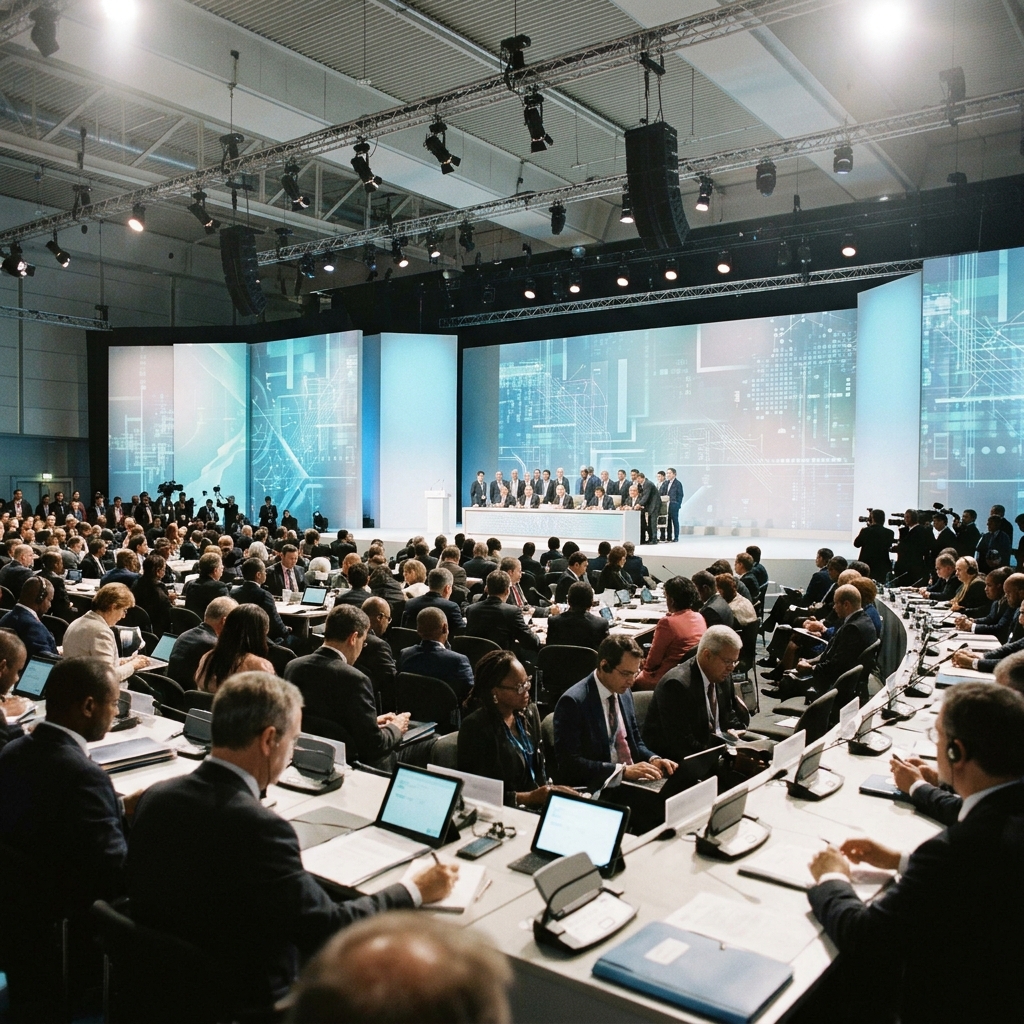
The US and China are forming rival AI blocs. Pakistan has become a founding member of China’s World Artificial Intelligence Cooperation Organisation (WAICO), a Shanghai-based body of 29 countries focused on open, inclusive AI for the Global South. The US-led bloc (reportedly “Pax Silica”) offers chips and technology but reportedly excludes countries backing China’s AI initiatives.
Here is a development that may shape Pakistan’s technology future for years: the world is splitting into rival artificial-intelligence blocs, and Pakistan has just chosen which one it belongs to. As the US and China, the two AI superpowers, increasingly compete not just on technology but on alliances, countries around the world are facing pressure to pick a side. And Pakistan has made its move, becoming a founding member of China’s new global AI organisation.
This is a significant, consequential choice with genuine opportunities and genuine risks, and it deserves an honest, clear-eyed look (not a partisan one). What exactly are these AI blocs? What has Pakistan joined, and why? What does it stand to gain, and what does it risk? And is aligning this way a smart strategic bet or a dangerous one? Here is a balanced, non-partisan analysis of Pakistan’s place in the emerging global AI divide, a topic that will matter enormously for the country’s tech future.
Let’s start with the broader shift, because it is the essential context. Artificial intelligence has become so economically and strategically important that it is now a central arena of competition between the world’s two superpowers, the United States and China. And increasingly, that competition is not just about who builds the best AI, but about building rival alliances, blocs of countries aligned with one side or the other.
On one side, China has moved to build a coalition around its vision of AI governance and cooperation. On the other, the United States has its own grouping, reportedly centred on sharing advanced AI chips, technology, and manufacturing partnerships with trusted allies. The key, and concerning, dynamic is that these blocs are becoming somewhat exclusive: reportedly, the US has signalled that countries cannot join its AI grouping while also backing China’s competing AI initiatives. In other words, the world’s AI landscape is starting to resemble a new kind of cold-war alignment, where countries may have to choose a camp, and where that choice affects their access to technology, cooperation, and opportunity. This is a significant and somewhat worrying development for the world (fragmentation of a global technology into rival camps is rarely ideal), and it is the backdrop against which Pakistan has made its choice. Understanding this bloc dynamic is key to understanding what Pakistan has done.
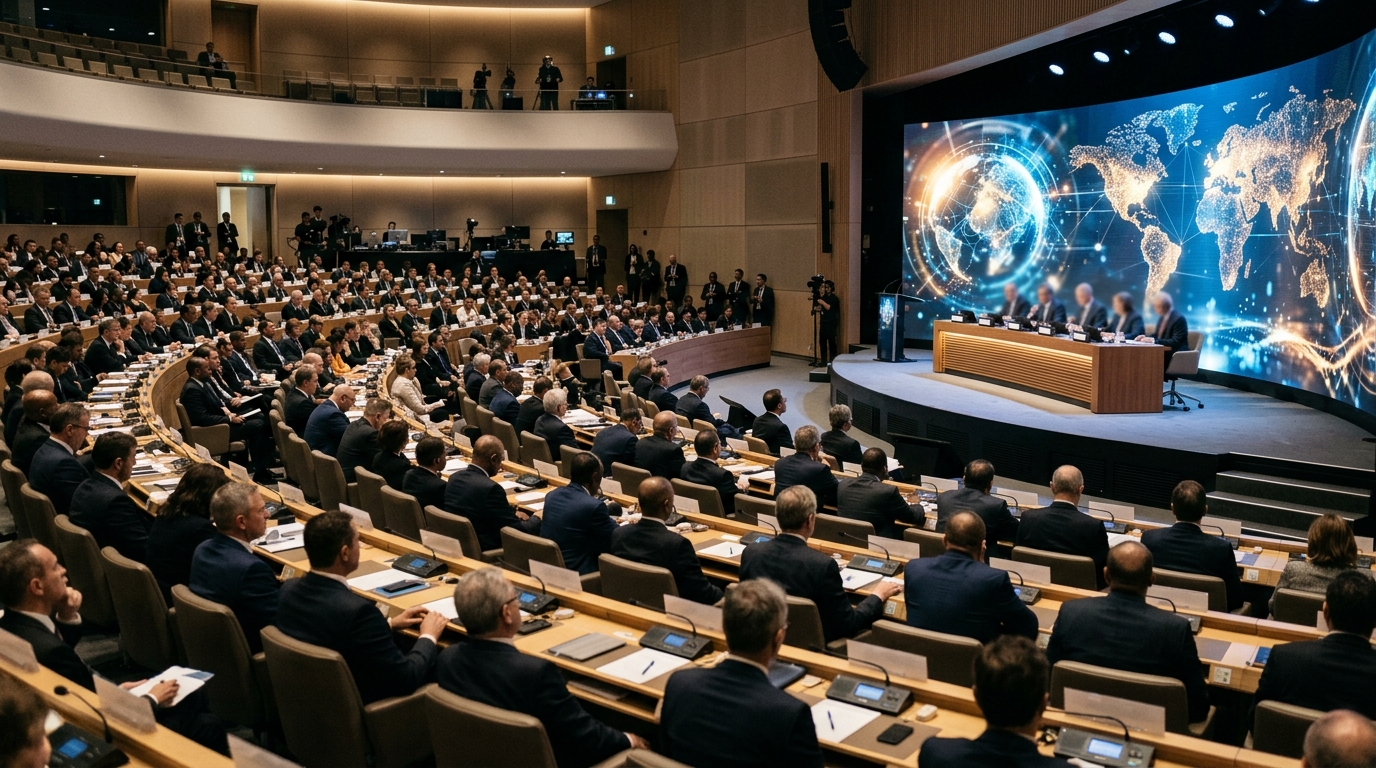
Now the specifics, accurately. Pakistan has become a founding member of the World Artificial Intelligence Cooperation Organisation (WAICO), a China-led international AI body. Pakistan’s Deputy Prime Minister and Foreign Minister signed the founding agreement at a ceremony in Shanghai, making Pakistan one of 29 founding-member countries.
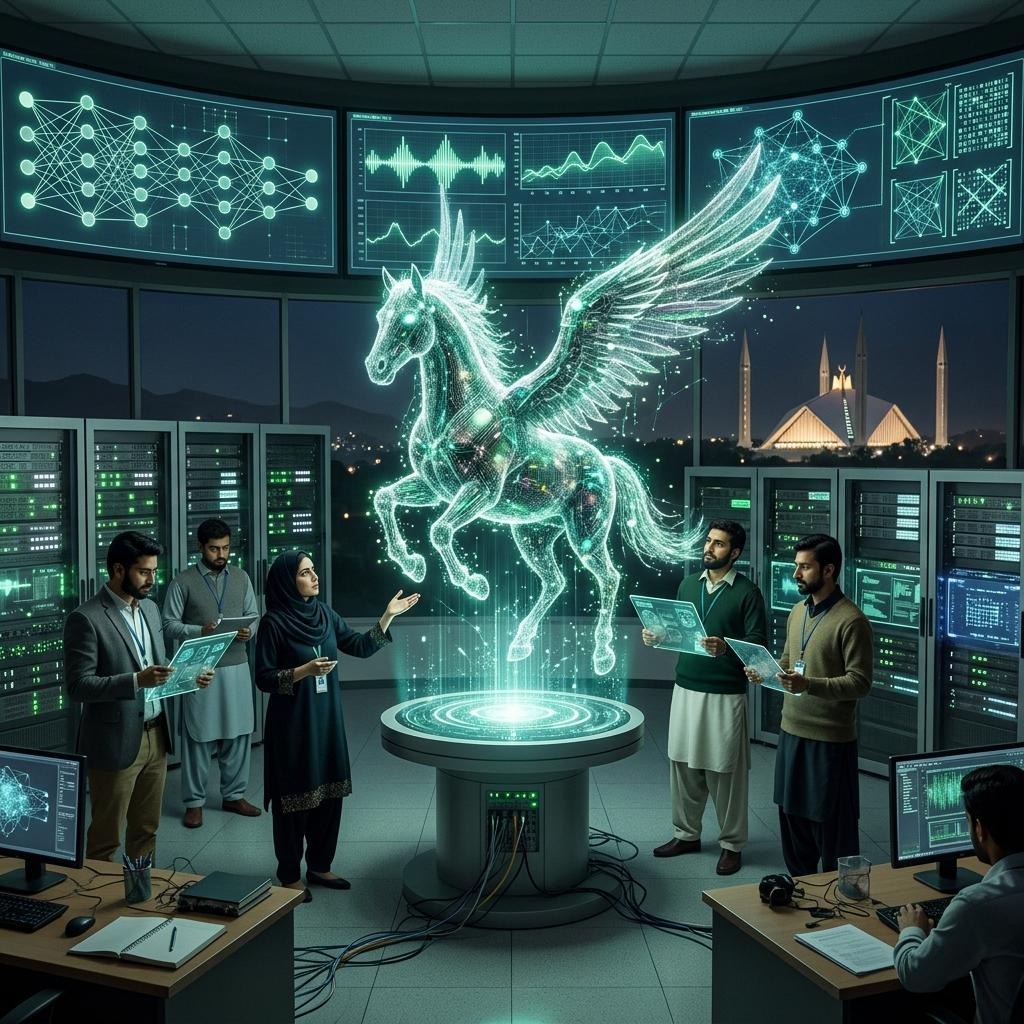
Here are the details. WAICO was proposed by China (its premier floated the idea at the World AI Conference) and formally established in July 2026, with its headquarters in Shanghai. Its founding members include China, Pakistan, Russia, Kazakhstan, Indonesia, Laos, and more than two dozen others, with the body now reported to have expanded toward around 50 members, and its first council meeting expected in mid-December. WAICO describes itself as an independent intergovernmental organisation aimed at promoting international cooperation and global governance of AI, supporting AI development that is “beneficial, safe and fair.” It positions itself as open and inclusive, emphasising open-source AI systems, affordable technology for developing countries, knowledge-sharing, and capacity-building, explicitly framing itself around the interests of the Global South. For Pakistan, which has made AI a national priority (with its National AI Policy, the $1 billion AI plan, the Buraq sovereign model, and more), joining as a founding member is presented as reaffirming its commitment to international AI cooperation, especially from a Global South perspective, and deepening its strategic partnership with China. So that is the concrete choice Pakistan has made: a founding seat in China’s AI bloc.
To assess the decision fairly, it helps to understand the genuine reasons behind it, because there is real logic to Pakistan’s choice. Several factors make aligning with China’s AI bloc sensible from Pakistan’s perspective.
Consider the rationale. Pakistan and China have a long, deep strategic partnership (across many domains), so extending it to AI is a natural continuation. China offers Pakistan genuine access: to AI technology, expertise, investment, and cooperation that Pakistan needs and that may be more accessible (and affordable) than Western alternatives. WAICO’s framing around the Global South, affordable AI, open-source systems, and capacity-building aligns with Pakistan’s actual needs as a developing country trying to build AI capability without huge resources. Being a founding member gives Pakistan a voice and a seat at the table in shaping an emerging global AI-governance body, more influence than it might have as a minor player elsewhere. And aligning with China’s inclusive, Global-South-oriented framing fits Pakistan’s own stated positions (we have noted Pakistan’s advocacy for inclusive AI and against a few powers dominating the technology). So from Pakistan’s standpoint, the choice is understandable and arguably logical: it deepens a key partnership, offers real access and cooperation, aligns with its Global South identity and needs, and gives it a founding voice. There are genuine, rational reasons behind it. But, as with any such choice, there are also real risks and trade-offs to weigh honestly.
Let’s lay out the genuine opportunities, because the choice could bring Pakistan real benefits. Aligning with China’s AI bloc offers several potential gains.
The upside includes: access to AI technology and cooperation (chips, models, infrastructure, expertise, and collaboration from China and fellow members, valuable for building Pakistan’s AI capability); affordable and open-source options (WAICO’s emphasis on affordable, open AI for developing countries could genuinely help resource-constrained Pakistan access AI it could not otherwise); a voice in AI governance (as a founding member, Pakistan helps shape the body’s direction, a real seat at an international table); Global South solidarity (joining a bloc oriented around developing countries’ interests could amplify Pakistan’s voice and align it with peers facing similar challenges); investment and partnership opportunities (deeper AI ties with China could bring investment, joint projects, and technology transfer); and capacity-building (knowledge-sharing and training that could help develop Pakistani AI talent and infrastructure). So the opportunities are real: access, affordability, voice, solidarity, investment, and capability-building, all things Pakistan genuinely wants and needs for its AI ambitions. If the cooperation delivers, the benefits could be substantial. That is the case for the choice.
In keeping with honest analysis, the risks are equally real and must be weighed, because this choice is not cost-free. Several genuine concerns deserve clear acknowledgement.
The risks include: potential exclusion from the US bloc and its technology (this is the sharpest risk, if the US genuinely bars countries that back China’s AI initiatives from its own AI grouping, Pakistan may find itself cut off from access to advanced US AI chips, models, and partnerships, which are currently at the technological frontier); over-dependence on one partner (deepening reliance on China for a critical technology, as we have discussed regarding AI and tech cooperation generally, risks dependence and reduced leverage, the “cooperate but do not become captive” concern); getting caught in great-power rivalry (aligning in a US-China contest could expose Pakistan to geopolitical pressures, pushback, or being used as a pawn in a larger competition); fragmentation costs (if the world’s AI splits into incompatible blocs, Pakistan tied to one camp could lose access to the best of the other, and to a unified global ecosystem); and the uncertainty of a new body (WAICO is brand new and unproven, its actual benefits, effectiveness, and direction remain to be seen, so the gains are potential, not guaranteed). The sharpest of these is the exclusion risk: in a world where the US holds much of the AI frontier (chips, leading models), being shut out of US AI access to stay in China’s bloc could be costly. So the trade-off is real: alignment brings cooperation and access on one side, but potentially closes doors on the other. Weighing this honestly is essential.
This brings us to the heart of the matter, the genuine strategic dilemma, which has no easy answer and which deserves honest framing rather than a confident verdict. The core question is: in a world of rival AI blocs, is it wiser for a country like Pakistan to clearly pick a side (as it has, with China), or to try to stay non-aligned and hedge across both?
There are reasonable arguments on multiple sides. In favour of Pakistan’s choice: given its deep China partnership, its Global South identity, its need for affordable and accessible AI, and the genuine cooperation on offer, aligning with China’s bloc may well serve Pakistan’s interests, and trying to straddle both camps might satisfy neither (especially if the US genuinely forces a choice). Against it (or in favour of hedging): tying firmly to one bloc risks dependence and exclusion from the other (particularly the frontier US technology), so maintaining flexibility and relationships across both, where possible, could preserve more options and leverage. The honest reality is that this is a genuinely hard strategic judgment, and much depends on factors outside Pakistan’s control (how exclusive the blocs really become, how the US-China rivalry evolves, what each bloc actually delivers). It is also worth noting that Pakistan, like many countries, may not have a fully free choice: its existing alignments, relationships, and the pressures from both powers shape what is realistically available. So rather than declaring Pakistan’s choice simply “right” or “wrong,” the honest view is that it is a consequential bet with real logic and real risks, whose wisdom will depend heavily on how the global AI landscape unfolds. What matters most is that Pakistan navigates it thoughtfully, maximising the benefits while managing the risks.
This choice has real stakes for Pakistan’s technology future.
For AI access and capability, which bloc Pakistan aligns with shapes what AI technology, cooperation, and investment it can access, directly affecting its ability to build AI capability.
For technological sovereignty, the alignment raises the ongoing question (as with the Buraq sovereign-AI push) of balancing beneficial cooperation against dependence and control, central to Pakistan’s tech autonomy.
For geopolitics, Pakistan’s AI alignment is part of its broader navigation of the US-China rivalry, with implications beyond technology, for trade, diplomacy, and strategic relationships.
For the Global South, Pakistan’s role in a developing-country-oriented AI bloc could help shape whether emerging economies get fairer access to AI, a genuinely important question.
The key insight is that Pakistan joining China’s WAICO is a genuinely significant, consequential strategic choice in an emerging world of rival AI blocs, one with real logic and real benefits, but also real risks, whose ultimate wisdom depends on how Pakistan manages it and how the global AI landscape evolves, rather than being obviously right or wrong. This is not a topic for partisan cheerleading or alarmism in either direction. On one hand, Pakistan’s choice is understandable and arguably sound: it builds on a deep China partnership, offers genuine access to affordable AI, cooperation, and investment that resource-constrained Pakistan needs, gives it a founding voice in global AI governance, and aligns with its Global South identity and its stated support for inclusive AI. Those are real, legitimate benefits. On the other hand, the risks are equally real, especially the possibility of being shut out of US frontier AI technology (chips and leading models) if the blocs become genuinely exclusive, plus the familiar dangers of over-dependence and getting caught in great-power rivalry.
The wise path, then, is for Pakistan to navigate this AI divide thoughtfully and with eyes open, not blindly. That means maximising the genuine benefits of WAICO membership (access, cooperation, affordable AI, capacity-building, voice) while actively working to manage the risks: preserving as much flexibility and as many relationships as realistically possible (including, where feasible, not completely burning bridges to Western technology and cooperation), continuing to build its own sovereign AI capability (as with Buraq) so it is not wholly dependent on any single partner, and avoiding becoming a mere pawn in a larger contest. The broader, sobering truth is that a world splitting AI into rival, exclusive blocs is not good for anyone, least of all developing countries that benefit most from open access to the best technology wherever it comes from. Pakistan, having picked a side, should both make the most of that choice and advocate (as it has) for openness and inclusion that keeps AI accessible across divides. For Pakistan’s tech future, the goal is clear: extract real value from its AI alignment, guard its autonomy and options, and help push against a fragmented AI world rather than simply accepting it. This is a high-stakes moment, and navigating it wisely, pragmatically, flexibly, and with a clear eye on both the opportunities and the costs, matters enormously. The choice is made; now the execution, and the hedging of its risks, is what will determine whether it serves Pakistan well.
Watch how the US-China AI-bloc rivalry evolves, whether the blocs become genuinely exclusive (forcing hard either-or choices) or remain porous enough for countries to maintain some ties across both. Watch, too, what WAICO actually delivers for members like Pakistan (real cooperation, technology, and investment, or mainly symbolism), and whether Pakistan can preserve any access to Western AI technology despite its China alignment. The first WAICO council meeting (expected mid-December) and the broader trajectory of the rivalry will be telling.
For Pakistan, the key will be managing its AI alignment to maximise benefits and minimise costs, extracting genuine value from WAICO while guarding against over-dependence and exclusion, and continuing to build its own AI capability for resilience. The broader hope, for Pakistan and the world, is that AI cooperation remains as open and inclusive as possible, rather than fragmenting into rigid, exclusive camps that leave developing countries worse off. How this unfolds will significantly shape Pakistan’s access to the transformative technology of our era. It is a story very much worth watching, and one where Pakistan’s thoughtful navigation will matter.
The world is splitting into rival AI blocs, and Pakistan has picked a side, becoming a founding member of China’s World Artificial Intelligence Cooperation Organisation (WAICO), a Shanghai-based body of around 50 countries focused on open, inclusive, affordable AI for the Global South. It is a genuinely significant, consequential choice. The opportunities are real: access to AI technology, cooperation, investment, and affordable and open-source options, a founding voice in global AI governance, and solidarity with fellow developing nations, all valuable for Pakistan’s AI ambitions, built on its deep partnership with China. But the risks are equally real, above all the possibility of being shut out of the US-led bloc and its frontier AI technology (chips and leading models) if the camps become genuinely exclusive, plus the familiar dangers of over-dependence and entanglement in great-power rivalry. So is picking China’s side wise? Honestly, it is a high-stakes bet with real logic and real risks, whose wisdom will depend on how Pakistan manages it and how the global AI landscape unfolds, not a simple right or wrong. The sensible path is for Pakistan to navigate this AI divide thoughtfully: extract genuine value from WAICO, guard its autonomy and preserve what options it can, keep building its own AI capability, and advocate for an open, inclusive AI world rather than a fragmented one. A planet dividing AI into rival camps serves no one well, least of all developing countries. Pakistan has made its choice; now the task is to make it work, and to hedge its risks, wisely. In the emerging AI cold war, how Pakistan plays its hand could shape its technological future for a generation. This is a moment that genuinely matters, and one worth watching closely.
This article is an analysis and opinion piece for general informational purposes, based on reports and information available in 2026 (including reporting on WAICO and the emerging US-China AI blocs). Details, membership, and developments are as reported by cited sources and may evolve. This article is strictly non-partisan, it presents the opportunities and risks of Pakistan’s AI alignment evenhandedly and does not take geopolitical sides. This is not political, policy, or investment advice.
The world is splitting into rival artificial-intelligence blocs as the US and China compete not just on AI technology but on alliances, pressuring other countries to pick a side. Pakistan has joined China’s bloc: it is a founding member of the World Artificial Intelligence Cooperation Organisation (WAICO), a China-led intergovernmental body established in July 2026 and headquartered in Shanghai. Pakistan’s Deputy Prime Minister and Foreign Minister Ishaq Dar signed the founding agreement in Shanghai, making Pakistan one of 29 founding countries (membership has since expanded toward ~50); its first council meeting is expected in mid-December 2026. (This was reaffirmed in an October 27, 2026 Senate briefing alongside Pakistan’s national AI ecosystem program and $1 billion AI plan.)
WAICO describes itself as an independent intergovernmental organisation promoting international AI cooperation and governance, supporting AI that is “beneficial, safe and fair,” and positions itself as open and inclusive, emphasising open-source systems, affordable technology for developing countries, knowledge-sharing, and capacity-building, explicitly oriented around the Global South. Founding members include China, Pakistan, Russia, Kazakhstan, Indonesia, Laos, and others.
The rival US-led bloc, reportedly called “Pax Silica,” offers advanced AI chips, technology, and manufacturing partnerships, but Washington has reportedly warned that no country can join it while also supporting China’s competing AI initiatives, pushing countries toward an either-or choice.
Why Pakistan chose this way: its deep, long-standing strategic partnership with China; genuine access to AI technology, expertise, investment, and affordable/open-source options China offers; WAICO’s Global-South, affordable-AI framing aligning with Pakistan’s needs and identity; and a founding seat/voice in an emerging AI-governance body.