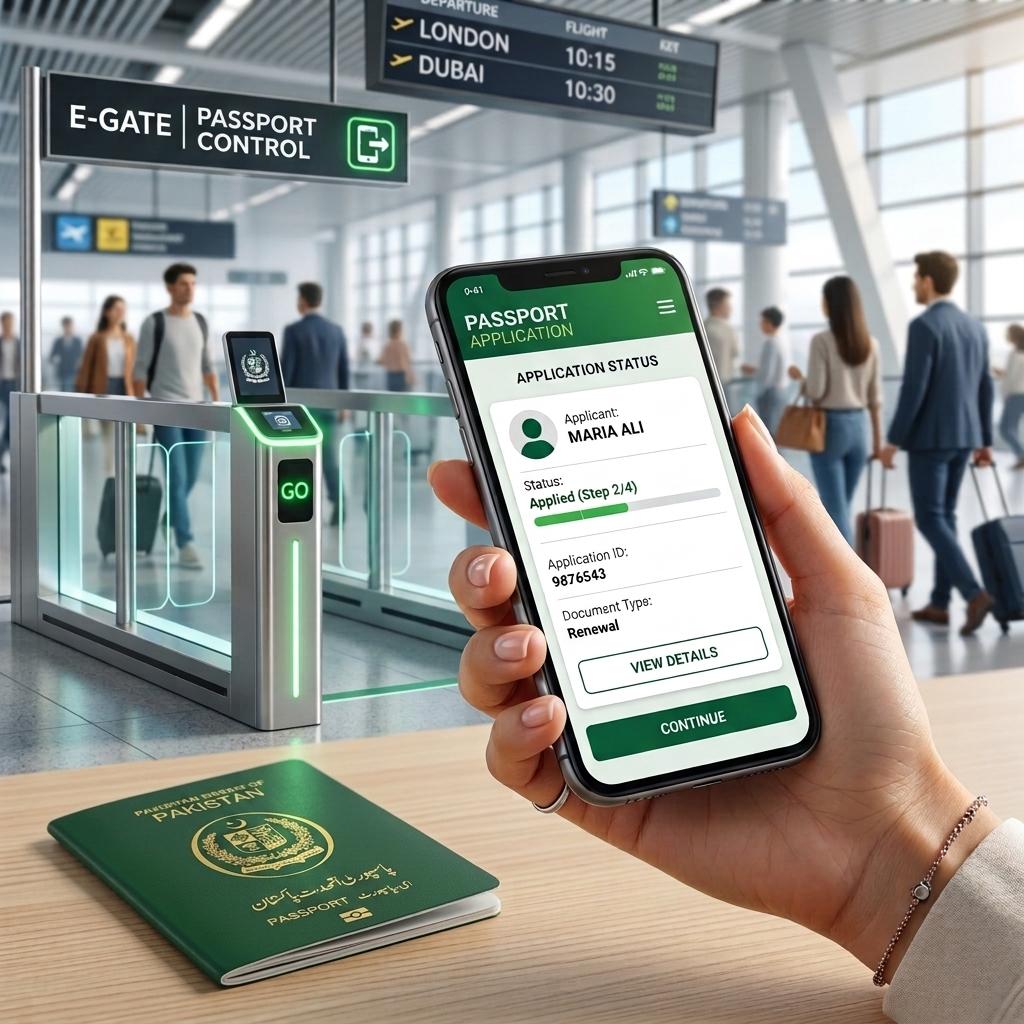
Pakistan's Federal Investigation Agency (FIA) is using AI-assisted profiling and a Risk Analysis Unit to identify high-risk passengers and curb human smuggling, analyzing travel history, destination, and visa type. In "high-risk" cases it may examine mobile phones. Legal experts argue phone searches without a formal criminal inquiry may exceed FIA authority and infringe constitutional privacy rights.
Artificial intelligence has arrived at Pakistan's airport immigration counters, and it is sparking a genuine, important debate. On one side is a real, deadly problem: human smuggling that has cost thousands of Pakistani lives. On the other are real concerns about privacy, rights, and how far the state should go in screening its own citizens.
Pakistan's Federal Investigation Agency (FIA) has begun using AI to identify "high-risk" travelers, and in some cases to check their phones, prompting both praise and pushback. This is a story where both the security rationale and the rights concerns deserve to be taken seriously. Here is what is actually happening, why, the criticism, and what it means for ordinary travelers, presented fairly.
The FIA has shifted toward a technology-driven, intelligence-led approach to border screening. The agency has confirmed it uses AI-assisted profiling and its Risk Analysis Unit to identify travel patterns that may indicate a higher risk of illegal migration or human smuggling.
Importantly, officials stress it is targeted, not blanket. According to FIA Additional Director-General for Immigration Nouman Siddiqui, the agency does not subject every passenger to the same level of scrutiny, instead using AI-assisted profiling to focus on higher-risk cases. The system evaluates factors including a passenger's travel history, destination, visa type, and personal background.
The agency gave a concrete example of how profiling works. A first-time traveler heading to a country such as Senegal or Malawi on a visit visa, without employment or family connections there, could receive additional scrutiny, because that pattern can match known smuggling routes. The FIA's 2025 annual report confirms it has introduced AI-based passenger profiling and risk-assessment tools as part of a broader shift toward intelligence-led border screening.
To understand the FIA's motivation, you have to understand the tragedy driving it. This is not screening for its own sake, it is a response to a genuine, deadly crisis.
The catalyst was horrific. Pakistan stepped up its campaign against human smuggling after a June 2023 migrant boat disaster off Greece, in which 262 Pakistanis were among an estimated 650 people killed. That tragedy, and others like it in the Mediterranean, prompted Islamabad to overhaul its immigration system, introducing AI tools to detect suspicious travel patterns, uncover new smuggling routes, and strengthen border screening.
The scale of the problem is stark, shown by visa-overstay data the FIA cites. Between January 2025 and April 2026, around 15,800 Pakistanis traveled to Cyprus on visit visas, but only 3,553 had returned. More than 57,000 traveled to Azerbaijan, with over 3,000 remaining after their visas expired. These patterns, the agency argues, reveal organized smuggling networks exploiting visit visas as a pathway to dangerous illegal migration.
The FIA also points to results. It reports offloading nearly 40,000 passengers in 2025 under this intelligence-led system, registering thousands of trafficking cases, arresting suspected agents, and, by its account, cutting EU-bound illegal migration sharply, even bringing illegal migration through some routes to near zero. Framed this way, the technology is a tool to save lives and dismantle criminal networks.
Here is where the genuine debate lies, and it centers specifically on one element: mobile phone searches. This is the crux of the pushback.
Alongside AI profiling, the FIA has acknowledged conducting selective checks of mobile phones in cases linked to suspected human smuggling. This is what triggered criticism from travelers and legal experts, following reports of passengers being asked to provide access to their phones.
Legal experts have raised substantive concerns. They argue that such searches may exceed the agency's authority and infringe upon constitutional privacy rights. Specifically, one key concern is that immigration officials cannot compel passengers to hand over phones without a formal criminal inquiry, meaning a phone search absent a registered case may lack legal basis. Pakistan's Constitution protects the privacy of citizens, and a mobile phone today contains a person's entire private life, messages, photos, finances, contacts, making its search a significant intrusion.
The FIA, for its part, maintains the checks are limited and targeted. The agency says it examines mobile phones only in "high-risk" cases identified after AI-based profiling, not as a routine measure for ordinary travelers. So the dispute is partly about scope and safeguards: even if targeted screening is legitimate, are there adequate legal authority, oversight, and limits around the phone searches specifically?
This situation captures a genuine, difficult tension that democracies everywhere grapple with, and it deserves an honest framing rather than a one-sided take.
On one hand, the security rationale is real and serious. Human smuggling kills Pakistanis, damages the country's reputation, and destroys families. Using data and AI to identify genuine risk patterns is a legitimate, modern law-enforcement approach, and preventing someone from boarding a deadly smuggling route can literally save their life.
On the other hand, the rights concerns are equally legitimate. Constitutional privacy protections exist for good reason, profiling systems can produce errors or unfairly target people based on crude patterns, and searching phones without clear legal authority sets a concerning precedent. Rights, once eroded in the name of security, are hard to restore.
The honest answer is that both matter, and the goal should be achieving the security benefit while respecting rights, through clear legal authority, defined limits, transparency about how AI profiling works, oversight to prevent abuse, and proper safeguards (such as warrants or registered cases) before intrusive steps like phone searches. This article takes no side on the politics; it simply notes that a legitimate security aim and legitimate rights protections need not be mutually exclusive, and the debate is precisely about getting that balance right.
The practical implications matter for several groups.
For ordinary travelers, the key takeaway is that most passengers are not the focus, the system is designed to target specific high-risk patterns, not everyone. If you are traveling normally with proper documentation and clear purpose, you are unlikely to face phone checks. Still, it is wise to carry complete, genuine documentation of your travel purpose.
For those on visit visas to unusual destinations, be aware that certain travel patterns may trigger additional scrutiny, having clear documentation of your reasons, connections, and plans helps.
For the AI-governance conversation in Pakistan, this is an important early case of the government deploying AI in a rights-sensitive area. How it is handled will shape norms for AI use in law enforcement, an area Pakistan's own AI policy says should be responsible, auditable, and subject to human accountability.
For potential migrants, the deeper message from the FIA is protective: many intercepted passengers were linked to fake job offers, forged documents, or dangerous routes. Verifying any overseas opportunity through legal channels protects you from both exploitation and life-threatening journeys.
The broader lesson is that AI in law enforcement is powerful but demands strong guardrails. Profiling systems are only as good as their data and design, and they carry real risks: false positives that inconvenience or stigmatize innocent people, opaque decision-making that is hard to challenge, and potential for mission creep beyond the original purpose.
Pakistan's own National AI Policy and the Islamabad AI Declaration emphasize that AI should be sovereign, responsible, auditable, and subject to human accountability. This airport case is a real-world test of those principles. The most constructive path is transparency about how the profiling works, clear legal frameworks defining what officers can and cannot do, independent oversight, and accessible avenues for wrongly flagged travelers to seek redress.
Used with those safeguards, AI-assisted screening could genuinely help fight smuggling while respecting rights. Used without them, it risks eroding trust and rights. The presence of an active legal and public debate, as is happening now, is actually a healthy sign that these questions are being asked.
Expect this debate to continue and likely intensify as AI screening expands. Watch for whether the courts or parliament weigh in on the legality of phone searches, whether the FIA introduces clearer safeguards and transparency, and whether formal frameworks emerge governing AI use in immigration and law enforcement.
More broadly, Pakistan is likely to keep expanding AI in border management, including systems like AI-powered e-gates for faster clearance. The key question is whether rights protections and oversight keep pace with the technology. Getting that balance right will matter well beyond airports.
The FIA's use of AI to profile airport passengers sits at the intersection of two things that genuinely matter: protecting Pakistanis from deadly human smuggling, and safeguarding citizens' constitutional rights and privacy. The anti-smuggling mission is real and important, born from tragedy, and the technology can help. The privacy concerns, especially around phone searches without clear legal authority, are equally real and deserve serious attention. The path forward is not choosing one over the other, but insisting on both: effective, intelligence-led security and clear legal safeguards, transparency, and oversight. For travelers, the practical reality is that ordinary passengers are not the target, but everyone benefits from a system that is both effective and accountable. That is the balance Pakistan now has to strike.
This article is for general informational purposes only and reflects reports and statements available as of late July 2026. It presents a developing policy and legal debate factually and neutrally, without endorsing any position, and is not legal advice. Travelers with specific concerns should consult qualified legal counsel and official FIA guidance.
In late July 2026, Pakistan's Federal Investigation Agency (FIA) publicly defended its use of AI-assisted passenger profiling at airports to combat human smuggling, amid a privacy backlash over related mobile phone checks. FIA Additional Director-General for Immigration Nouman Siddiqui said the agency uses AI-assisted profiling and its Risk Analysis Unit to identify high-risk travelers, analyzing travel history, destination, visa type, and background, rather than scrutinizing every passenger equally. The FIA's 2025 annual report confirms AI-based profiling and risk-assessment tools as part of intelligence-led border screening.
The push followed the June 2023 migrant boat disaster off Greece, in which 262 Pakistanis were among ~650 killed, prompting an immigration overhaul. The FIA cites visa-overstay data (e.g., of ~15,800 Pakistanis who went to Cyprus on visit visas between Jan 2025-April 2026, only 3,553 returned) and reports offloading nearly 40,000 passengers in 2025, claiming sharp reductions in EU-bound illegal migration.
The controversy centers on mobile phone searches in "high-risk" cases. Legal experts argue immigration officials cannot compel passengers to surrender phones without a formal criminal inquiry, and that such searches may exceed FIA authority and infringe constitutional privacy rights. The FIA maintains phone checks are limited to high-risk cases identified via profiling, not routine.
The piece frames this as a genuine security-versus-rights tension: the anti-smuggling mission is real and lifesaving, while privacy concerns are equally legitimate; the goal should be achieving security with clear legal authority, transparency, oversight, and safeguards, consistent with Pakistan's own National AI Policy/Islamabad AI Declaration principles (AI should be responsible, auditable, human-accountable). Most ordinary travelers aren't the focus.
Presented neutrally; informational only, not legal advice.