Pakistan and Japan agreed to deepen cooperation in AI, Web3, and digital technologies at a July 2026 startup event in Tokyo, organized by Pakistan's Embassy and the Asia Web3 Alliance Japan (AWAJ). A key driver: Japan faces a shortage of hundreds of thousands of IT engineers by 2030, making Pakistan's engineering talent a strategic asset.
Pakistan's technology sector just opened a promising new door, this time to Japan, one of the world's most advanced economies. At a high-profile event in Tokyo, Pakistan and Japan agreed to deepen cooperation in artificial intelligence, Web3, and digital technologies, signaling a new chapter in tech ties between the two countries.
This is more than a diplomatic handshake. Behind it lies a powerful practical logic: Japan needs tech talent, and Pakistan has it in abundance. For Pakistani founders, engineers, and students, this partnership could open real opportunities. Here is what was agreed, why Japan is so interested, and what it means for you.
The partnership was launched at a significant gathering. The Embassy of Pakistan in Tokyo, in collaboration with the Asia Web3 Alliance Japan (AWAJ), organized a Pakistan-Japan startup and innovation event to promote cooperation in AI, Web3, digital technologies, and entrepreneurship.
It brought serious players to the table. The event convened representatives from government, industry, technology companies, investors, and the startup ecosystems of both countries, including Japan's Parliamentary Vice-Minister for Digital Affairs and Pakistan's Federal Secretary for IT and Telecommunication.
The tone was ambitious and forward-looking. Pakistan's Ambassador to Japan, Abdul Hameed, highlighted the growing importance of technology in Pakistan-Japan economic relations, emphasizing Pakistan's expanding digital economy, skilled workforce, and entrepreneurial potential, and called for stronger partnerships between the two countries' institutions, companies, and investors.
Here is the strategic heart of the story, and why this partnership has genuine substance. Japan is facing a major shortage of technology workers.
The numbers are striking. Japan is projected to be short several hundred thousand IT engineers by 2030, and is widening visa pathways in response. This is a serious challenge for the world's third-largest economy, which needs skilled engineers to power its industries and digital transformation.
And this is exactly where Pakistan comes in. At the event, Pakistan's engineering pipeline was named plainly as a strategic asset for both nations. Pakistan produces tens of thousands of engineers and IT graduates every year, has a young population, and ranks among the top countries for tech talent. Japan's need and Pakistan's supply are a natural match, and that is what makes this partnership more than symbolic.
The organizers were clear that this is meant to be lasting infrastructure, not a single event. The alliance behind it, AWAJ, sees the Tokyo summit as a founding act, the first plank of an institutionalized corridor carrying investment one way and talent the other.
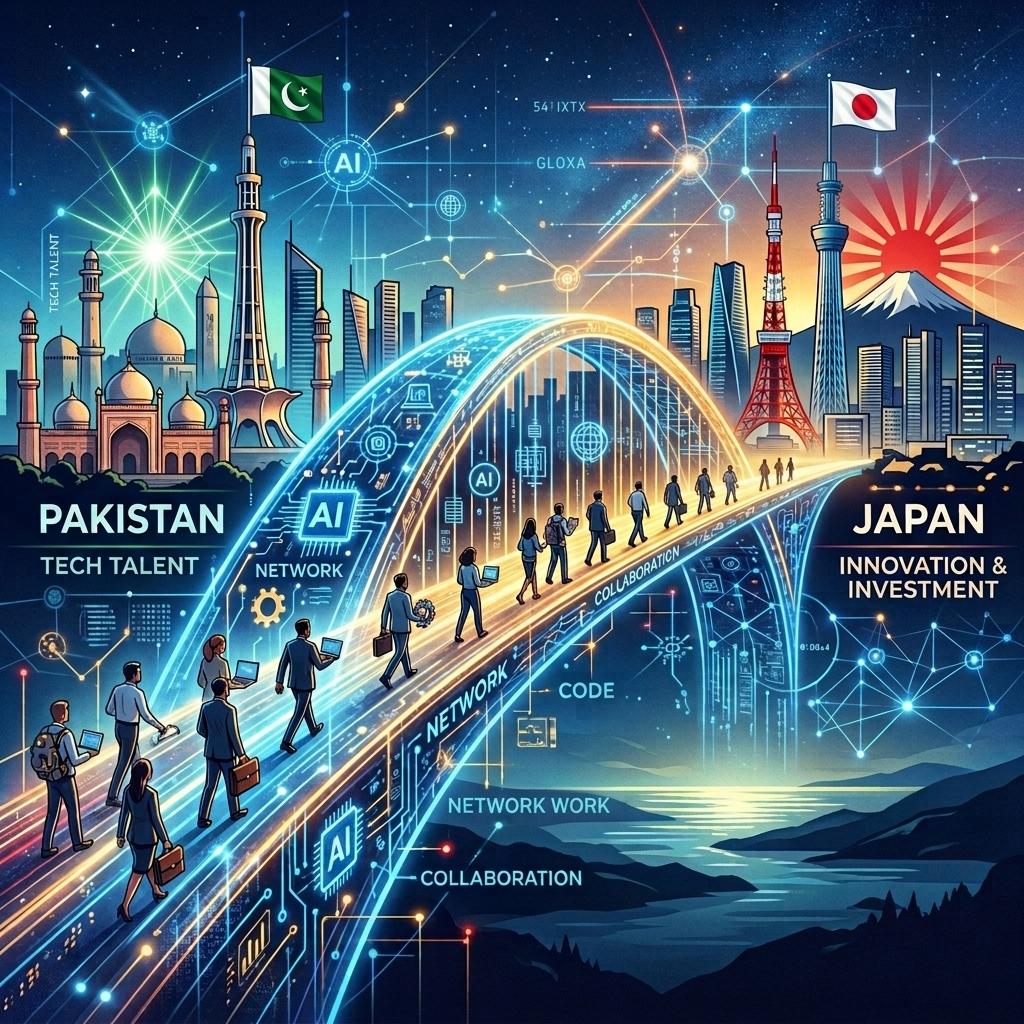
In simple terms, the vision is a two-way bridge: Japanese investment and business opportunities flowing into Pakistan's startup ecosystem, and Pakistani engineering talent and startups gaining access to Japan's market and capital. By hosting the summit inside the Pakistani embassy, the partnership gave this government-startup-investor connection official standing from the start.
This structural approach matters. Many international partnerships fade after the photos are taken. Building an institutional corridor, with government backing, investor involvement, and accelerator programs, gives this one a better chance of producing real, ongoing results.
Japan brings unique strengths that make this especially valuable for Pakistan. Japan is a global leader in technology, home to major corporations, deep capital, and advanced industries. Access to Japanese investors and corporate partners could be transformative for Pakistani startups.
Japan is also moving to modernize its digital and Web3 rules. At the event, Japan outlined its newly liberalized playbook, including eased data rules for AI, the rollout of yen stablecoins for low-cost cross-border payments, and updated token regulation. A more open, innovation-friendly Japan creates more room for foreign partners like Pakistan to plug in.
Crucially, Japanese corporations have strong demand for innovation, and that demand can connect directly to Pakistan's founder and engineering pipeline. This is a match of Japanese need and capital with Pakistani talent and energy.
This partnership could benefit several groups across Pakistan's tech ecosystem.
For engineers and IT professionals, Japan's talent shortage and widening visa pathways could mean new, high-quality job and collaboration opportunities, whether working with Japanese companies remotely or relocating.
For startups and founders, the corridor offers access to Japanese investors, corporate partners, and a large, advanced market, through accelerator programs and direct connections. The panel specifically focused on investor readiness and market-entry strategies for Pakistani startups engaging with Japan.
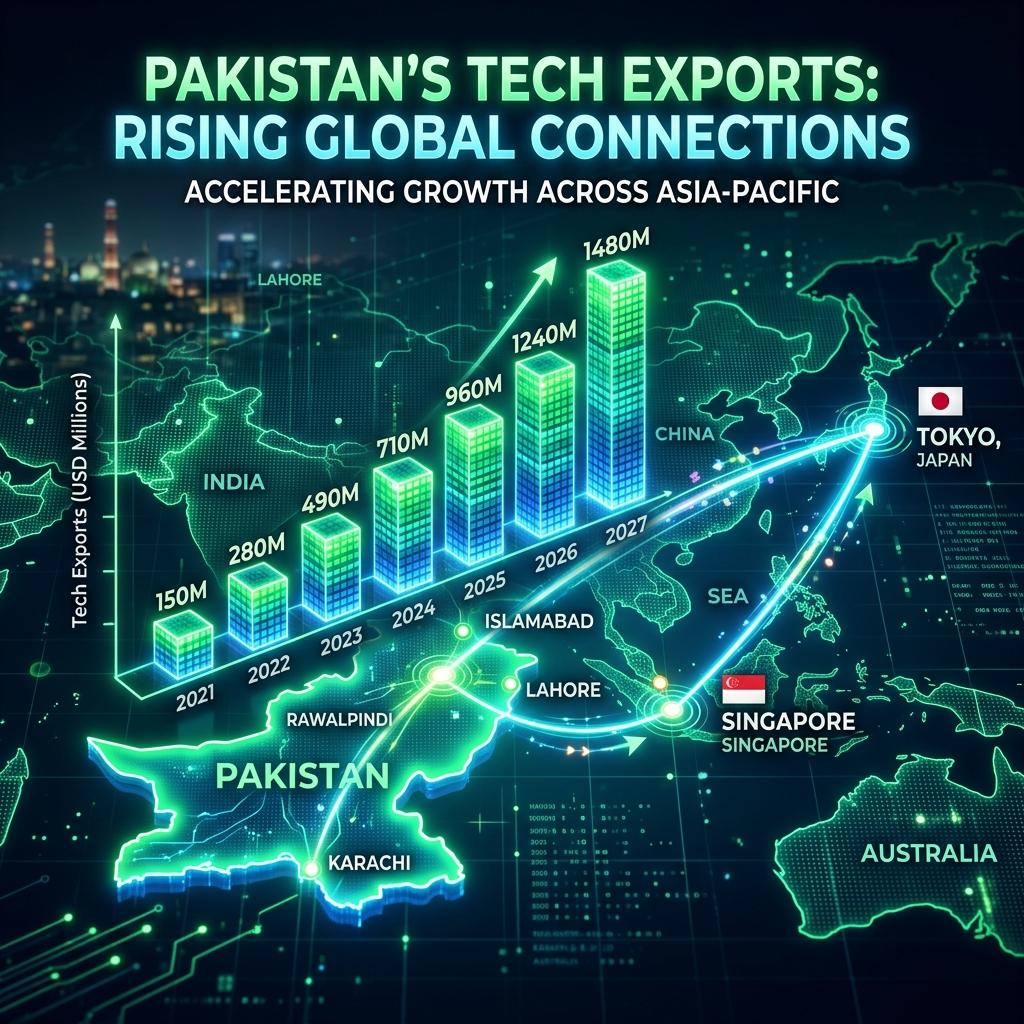
For the economy, deeper ties with Japan diversify Pakistan's tech relationships beyond the traditional US and European markets, exactly the strategic diversification that recently helped push Pakistan's IT exports to a record $4.5 billion, with Japan specifically named as a growth market.
For Pakistan's global image, a partnership with a respected economy like Japan validates the country's tech potential and can attract further international interest.
The clearest theme from the event was that talent is the foundation of this relationship. As discussions highlighted, the sharpest thread was talent, with Pakistan's engineers positioned as a solution to Japan's shortage.
This reflects a broader truth about Pakistan's place in the global tech economy: its greatest asset is its people. Whether it is global startups building engineering hubs in Pakistan, or Japan seeking to fill its talent gap, the common thread is demand for skilled Pakistani technologists.
The opportunity, and the responsibility, for Pakistan is to keep developing that talent and to build the connections, like this corridor, that turn it into jobs, investment, and growth. Honest challenges remain, including cross-cultural communication, market-entry hurdles, and the need for Pakistani startups to become "investor-ready," which the panels directly addressed. But the direction is genuinely promising.
If this corridor develops as intended, we could see more Pakistani engineers working with Japanese companies, more Japanese investment in Pakistani startups, and more Pakistani founders entering the Japanese market through accelerator programs. The organizers explicitly aim to translate these discussions into concrete partnerships and investment opportunities.
Much depends on follow-through, turning the vision into actual deals, placements, and programs. But with government backing on both sides, real economic drivers (Japan's talent need, Pakistan's talent supply), and institutional structure, this partnership has a strong foundation to build on.
The new Pakistan-Japan technology partnership is a genuinely promising development, rooted not just in goodwill but in real, complementary needs: Japan's demand for tech talent and Pakistan's abundant supply. By focusing on AI, Web3, startups, and a lasting talent-and-investment corridor, it opens tangible opportunities for Pakistani engineers, founders, and the broader economy. It also reinforces a powerful message: Pakistan's skilled young technologists are increasingly a global asset. As Pakistan diversifies its tech partnerships and builds bridges to advanced economies like Japan, its digital future looks brighter and more connected than ever. The foundation is laid, now comes the work of building on it.
This article is for general informational purposes only and reflects reports available in July 2026. Partnership outcomes depend on future implementation; this is not investment or immigration advice. Those considering opportunities in Japan should verify current visa and business rules through official sources.
In mid-July 2026, Pakistan and Japan agreed to deepen cooperation in artificial intelligence, Web3, digital technologies, and entrepreneurship at a startup and innovation event in Tokyo, organized by the Embassy of Pakistan in Tokyo with the Asia Web3 Alliance Japan (AWAJ), led by President Hinza Asif. It convened senior officials including Japan's Parliamentary Vice-Minister for Digital Affairs Kawasaki (Hideto) and Pakistan's Federal Secretary for IT and Telecommunication Zarrar Hasham Khan, plus Ambassador Abdul Hameed, investors, and startups.
The strategic driver: Japan is projected to be short several hundred thousand IT engineers by 2030 and is widening visa pathways in response. Pakistan's large engineering/IT graduate pipeline was named plainly as a strategic asset for both nations, a natural match of Japanese demand and Pakistani talent supply.
AWAJ framed the summit as a founding act, the first plank of an institutionalized "corridor" carrying Japanese investment one way and Pakistani talent the other. Japan outlined newly liberalized rules: eased data-consent rules for AI, yen stablecoins for low-cost cross-border payments, and updated token regulation. Panels focused on investor readiness, cross-cultural communication, and market-entry strategies for Pakistani startups, plus accelerator programs like the AI Founder Programme.
Significance for Pakistan: new opportunities for engineers (jobs, visas), startups (Japanese investors, corporate partners, market access), and economic diversification. Japan is a named growth market behind Pakistan's record $4.5 billion IT exports in FY2025-26. Challenges include market entry, cross-cultural gaps, and making startups investor-ready; outcomes depend on follow-through.
This is informational, not investment or immigration advice; verify current visa and business rules officially.