Pakistan became a founding member of the World Artificial Intelligence Cooperation Organisation (WAICO) on July 16, 2026, when Deputy PM and Foreign Minister Ishaq Dar signed the agreement in Shanghai. The China-proposed body, joined by around 29-31 countries, aims to promote international AI cooperation and bridge the global AI divide, particularly for developing nations.
Pakistan has taken a notable step onto the world stage of artificial intelligence diplomacy. The country has become a founding member of a brand-new international organization dedicated to AI cooperation, signing on alongside dozens of other nations at a ceremony in Shanghai.
For a country working hard to build its own AI capabilities, this raises real questions: what exactly is this organization, what does membership actually provide, and how does it fit Pakistan's wider technology strategy? Here is a clear explainer, including the strategic context worth understanding.
The signing took place at a high-profile international gathering. Pakistan joined the World Artificial Intelligence Cooperation Organisation (WAICO) as a founding member, with Deputy Prime Minister and Foreign Minister Senator Ishaq Dar signing the agreement on Pakistan's behalf at a ceremony in Shanghai, China, on July 16, 2026.
It was part of a larger event. Dar attended the World Artificial Intelligence Conference (WAIC) 2026 during the visit, engaging with other leaders to advance international AI cooperation. Reports indicate around 29 to 31 countries signed the founding agreement.
Pakistan's stated motivation focused on developing nations. As a founding member, Pakistan reaffirmed its commitment to advancing international cooperation in artificial intelligence, especially from the perspective of the Global South, and said it looks forward to working with fellow member states to help bridge the global AI divide and promote equitable access to AI.
The organization is new and China-initiated. WAICO is a multilateral body proposed by China last year, intended to promote international collaboration on AI, particularly among developing countries.
Its stated purpose centers on shared access and capacity. According to Chinese officials, the aim is building international consensus, advancing practical cooperation, and strengthening capacity building, so that all countries, especially those of the Global South, can benefit equally amid the wave of intelligent transformation and prevent an AI divide from emerging.
The "AI divide" concern is genuinely real. Advanced AI development is concentrated in a handful of wealthy countries with the capital, chips, and infrastructure to build frontier models. Many developing nations, including Pakistan, risk becoming consumers rather than participants. An organization aimed at addressing that imbalance addresses a legitimate problem.
It is worth understanding the broader picture, which coverage has noted. WAICO's founding membership includes countries such as Russia, Belarus, Cuba, Brazil, Venezuela, Serbia, Kazakhstan, Pakistan, Indonesia, Laos, and various African and Asian nations, while no major Western democracy, including the United States, United Kingdom, Germany, France, Japan, or Australia, signed on.
Some analysts have therefore characterized WAICO as a China-led alternative to Western-dominated AI governance forums. Whether one views this as healthy multipolarity or as bloc formation depends on one's perspective, and this article does not take a position on that question.
What is factually clear is that AI governance institutions, once established, tend to shape norms durably. So Pakistan's founding membership means it will have a seat at the table as this particular body develops standards, whatever role it ultimately plays in global AI governance.
Beyond the multilateral organization, the visit strengthened Pakistan's direct technology ties with China. Dar held a bilateral meeting with Chinese Foreign Minister Wang Yi, where both sides agreed to enhance collaboration in trade, investment, science and technology, the digital economy, and artificial intelligence.
This was explicitly linked to the countries' flagship economic partnership. The two sides underscored advancing high-quality development under CPEC 2.0, which now increasingly emphasizes technology and the digital economy alongside traditional infrastructure.
Business voices at home welcomed the direction. The Faisalabad Chamber of Commerce & Industry praised the government's AI collaboration with China, describing it as a step toward building a knowledge-based, technology-driven economy, and noting AI's potential across manufacturing, healthcare, agriculture, education, logistics, and public service delivery.
The practical value of such memberships depends entirely on follow-through, but the potential benefits are real.
For AI infrastructure, cooperation could mean access to technology, expertise, and possibly investment in the data centers and computing capacity Pakistan urgently needs, an area where the country currently lags, as its middling regional AI-readiness ranking shows.
For skills and training, capacity building is an explicit WAICO objective, which could support Pakistan's ambitious training goals, including its plan to train a million people in AI skills.
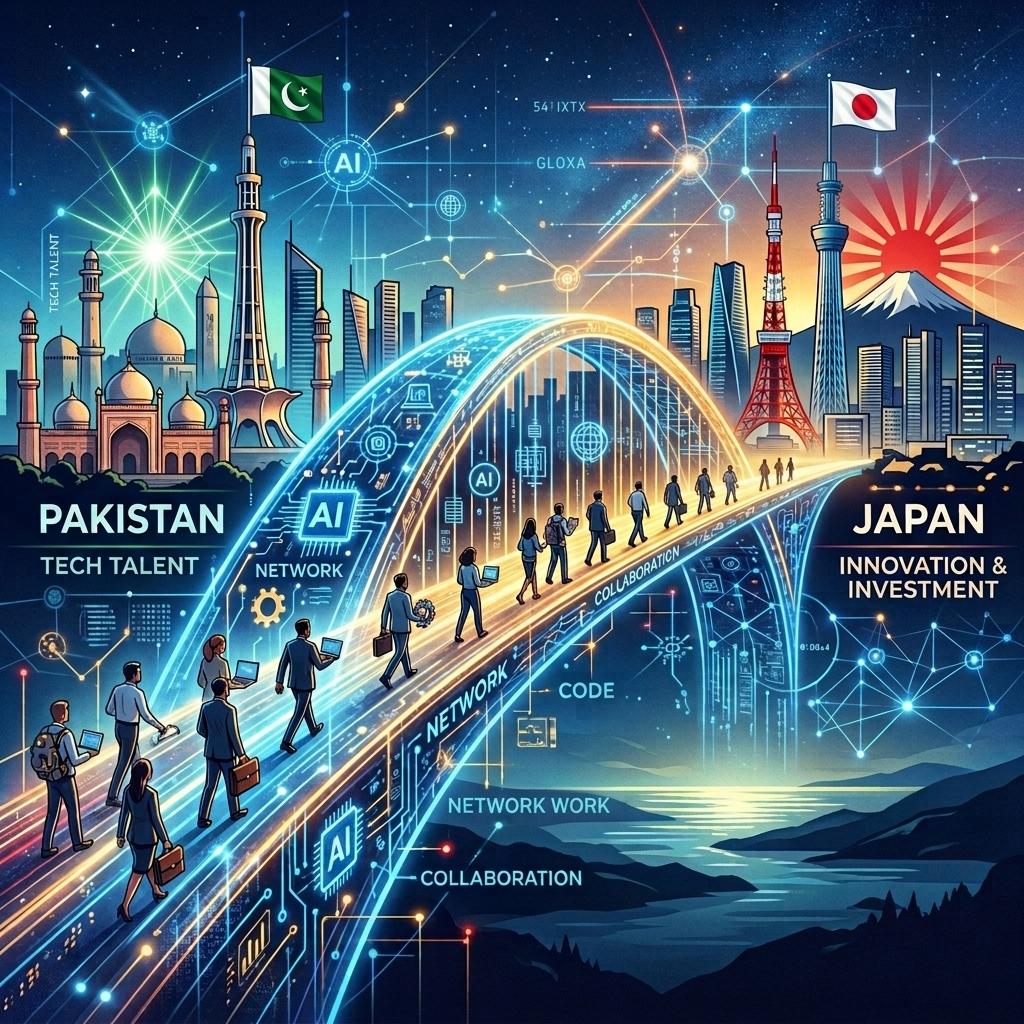
For Pakistani businesses and startups, deeper digital-economy ties with China could open market access, partnerships, and investment opportunities, complementing Pakistan's parallel outreach to Japan and other markets.
For Pakistan's global positioning, founding membership gives the country a voice in shaping AI norms rather than simply adopting rules made elsewhere, which matters for a nation pursuing "sovereign AI."
Here is the honest caveat that any useful analysis must include. Signing an international agreement is a diplomatic act, not an infrastructure project. Pakistan has now accumulated an impressive portfolio of AI commitments: a National AI Policy, a billion-dollar investment plan, a talent partnership with Japan, and now founding membership in a global AI body.
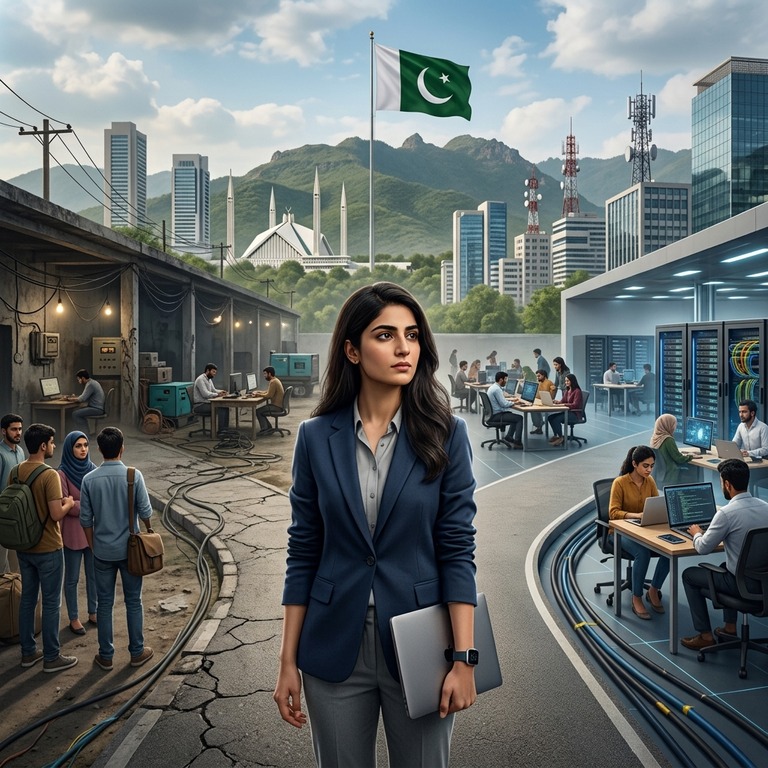
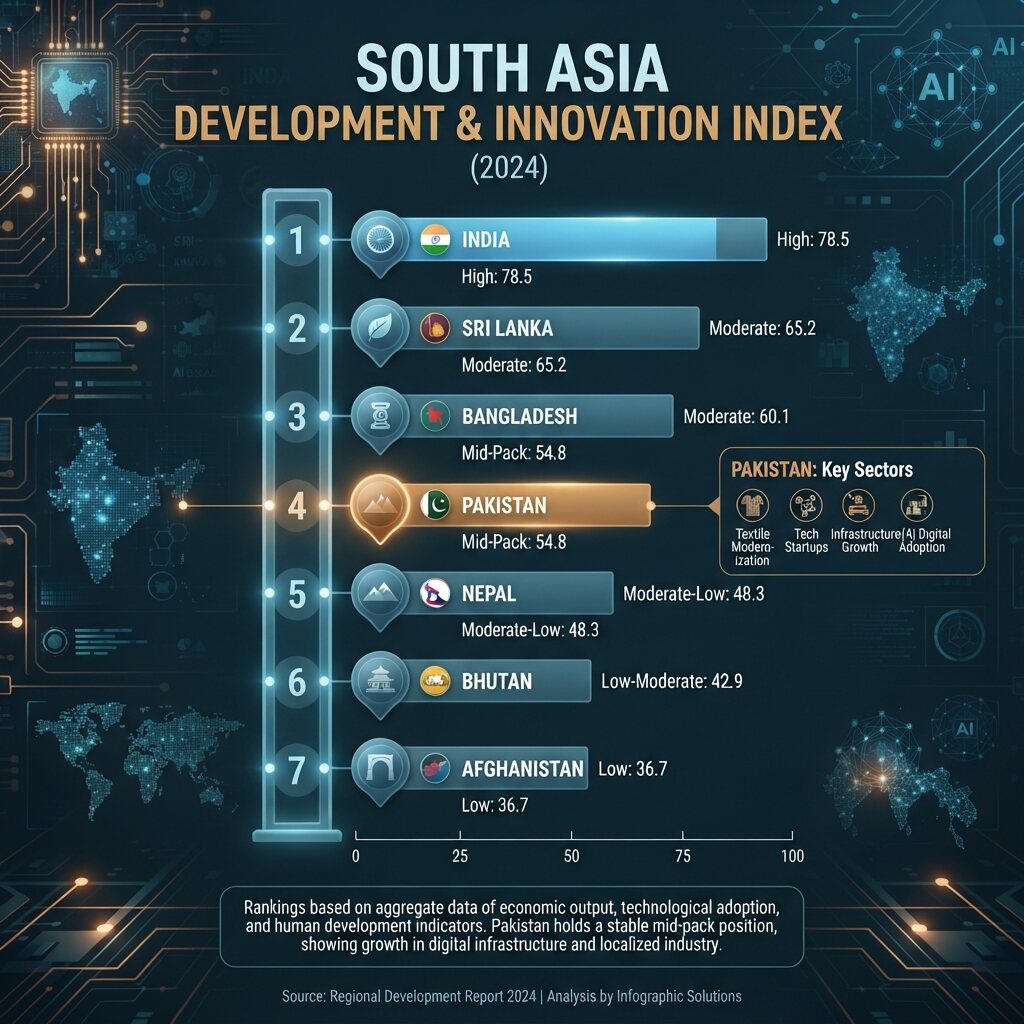
What has consistently lagged is implementation. Pakistan ranks eighth of seventeen in its region for AI readiness, behind India, Bangladesh, and Sri Lanka, largely due to gaps in infrastructure, electricity reliability, and data systems. No international membership fixes a power outage at a data center or trains an engineer by itself.
The value of WAICO membership will be measured by whether it produces concrete outcomes: actual technology transfer, real training programs, genuine investment in Pakistani infrastructure. If it does, it will be significant. If it remains a signature and a photograph, it will join a long list of well-intentioned agreements.
One genuinely interesting aspect is that Pakistan is not putting all its eggs in one basket. Within a single week, Pakistan joined a China-led AI organization and deepened technology and talent ties with Japan, a close US ally.
That suggests a pragmatic strategy of engaging multiple partners rather than aligning exclusively with one bloc, which makes sense for a country that needs technology, investment, and market access from wherever it can responsibly obtain them. For Pakistan's tech sector, more partnerships generally means more opportunity.
Watch for what WAICO actually does: whether it establishes working programs, funds capacity building, facilitates technology sharing, or produces meaningful governance standards. Also watch whether Pakistan-China digital cooperation under CPEC 2.0 translates into visible projects, data centers, training programs, or startup investment on Pakistani soil.
The next year should reveal whether this is the beginning of substantive cooperation or primarily a diplomatic milestone.
Pakistan becoming a founding member of WAICO is a meaningful step in the country's growing AI diplomacy, giving it a voice in an emerging international body focused on bridging the global AI divide, a genuine problem for developing nations. Combined with deeper bilateral technology ties with China under CPEC 2.0 and parallel outreach to Japan, it reflects an active, multi-partner strategy. The open question, as always with Pakistan's AI ambitions, is delivery. Agreements create opportunity; infrastructure, skills, and execution create results. Pakistan now has plenty of the former. The coming years will show whether it can build the latter.
This article is for general informational purposes only and reflects reports available as of July 2026. It describes international agreements and their context factually; it does not endorse any government or geopolitical position. Outcomes depend on future implementation.
On July 16, 2026, Pakistan became a founding member of the World Artificial Intelligence Cooperation Organisation (WAICO), with Deputy Prime Minister and Foreign Minister Senator Ishaq Dar signing the establishing agreement in Shanghai, China, during the World Artificial Intelligence Conference (WAIC) 2026. Around 29-31 countries signed as founding members.
WAICO is a multilateral body proposed by China, intended to promote international AI collaboration, build capacity, and prevent a global "AI divide," particularly benefiting Global South and developing nations. Pakistan stated it joined to advance international AI cooperation from the Global South perspective and promote equitable access to AI.
Geopolitical context (reported neutrally): founding members include Russia, Belarus, Cuba, Brazil, Venezuela, Serbia, Kazakhstan, Pakistan, Indonesia, Laos, and various African and Asian countries; no major Western democracy (US, UK, Germany, France, Japan, Australia) joined. Some analysts describe it as a China-led alternative to Western-dominated AI governance forums.
Bilaterally, Dar met Chinese Foreign Minister Wang Yi; both sides agreed to enhance collaboration in trade, investment, science and technology, the digital economy, and AI under CPEC 2.0. Pakistan's Faisalabad Chamber of Commerce & Industry welcomed the AI collaboration as a step toward a knowledge-based economy.
Analysis: potential benefits include AI infrastructure support, capacity building for Pakistan's goal of training one million people, market access for startups, and a voice in shaping AI norms. However, diplomacy is not delivery, Pakistan ranks 8th of 17 regionally in AI readiness due to infrastructure, electricity, and data-system gaps. Notably, Pakistan simultaneously deepened AI ties with Japan, suggesting a multi-partner strategy.
This is informational and politically neutral; outcomes depend on implementation.