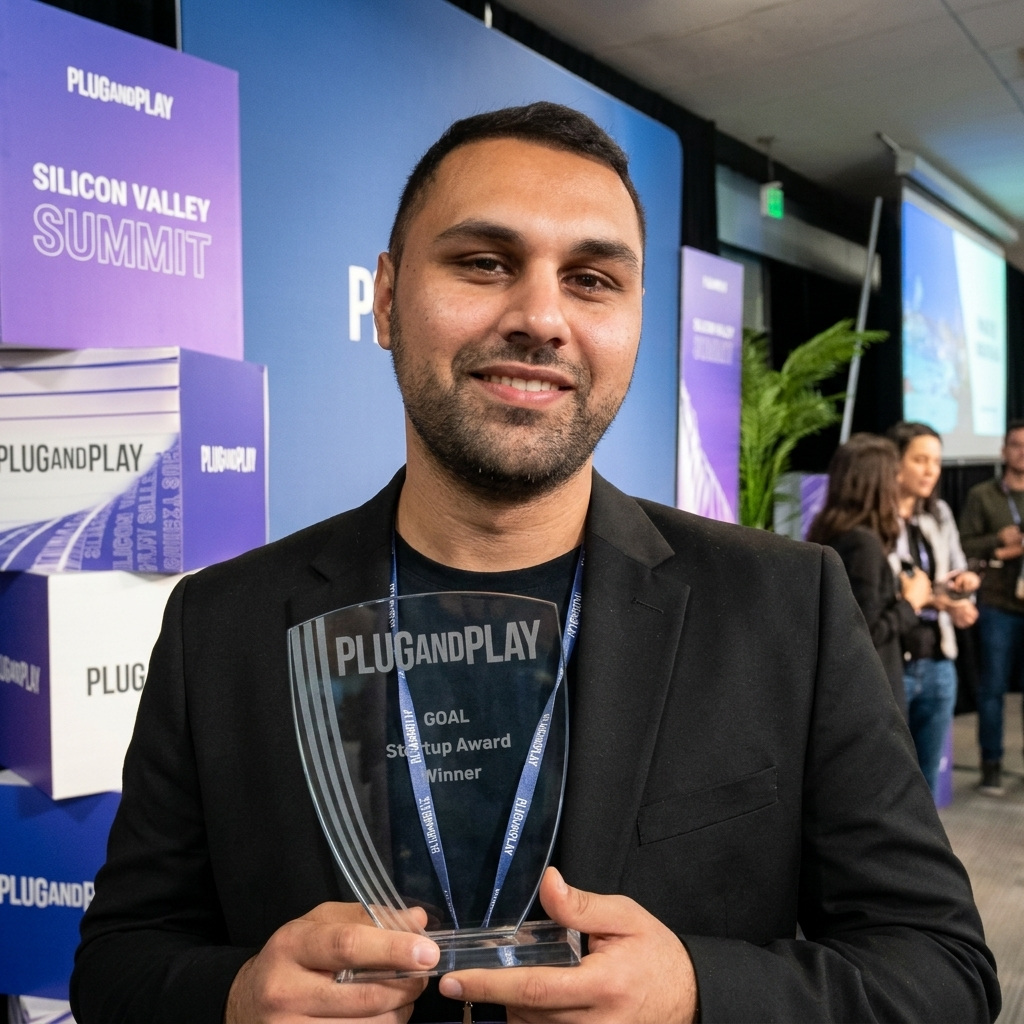
RLabs, a Pakistani startup founded by NUST graduate Harris Ahmed, won the GOAL Startup Award at the Silicon Valley November Summit, organized by Plug and Play. RLabs was one of just 18 startups selected worldwide for the program. It builds XR simulators, synthetic data, and machine-training tools now applied to training AI systems. (52 words)
Silicon Valley is the center of the global technology world, the place where the biggest companies and boldest startups compete for attention. So when a Pakistani startup wins an award there, it is worth stopping to notice.
That is exactly what happened. RLabs, a startup founded by a graduate of Pakistan’s own NUST, won the GOAL Startup Award at a major Silicon Valley summit, chosen from startups around the world. It is a genuine moment of pride, and a sign of what Pakistani technology talent can achieve on the biggest stage. Here is the story.
RLabs was named the winner of the GOAL Startup Award at the Silicon Valley November Summit, held in California. The event was organized by Plug and Play, a well-known global innovation platform and venture capital firm that has helped launch and back many successful startups.
The scale gives the win weight. The summit drew more than 3,000 participants, and RLabs was one of only 18 startups selected from around the world for Plug and Play’s Global Overseas Acceleration & Learning, or GOAL, program. Being chosen among just 18 globally, and then winning, is a serious achievement for any startup, let alone one from Pakistan’s still-growing ecosystem.
This is not a local prize. It is recognition on the world’s most competitive technology stage.
Behind RLabs is Harris Ahmed, and his background is a story in itself. He graduated in 2018 from the National University of Sciences and Technology (NUST) in Islamabad, one of Pakistan’s top institutions.
His profile shows a deep specialization built over years. He has described himself as a computer graphics enthusiast, a TEDx speaker, and a certified virtual reality developer, with additional training at Draper University and the University of London. In other words, this is not an overnight success. It is the result of about a decade of focused work in a demanding, specialized field.
That matters because it sends a message to young Pakistanis: world-class achievement is possible from a Pakistani education and a Pakistani base, with enough depth and persistence.
So what does the company build? In simple terms, RLabs works in extended reality (XR) and AI training.
For about a decade, the founder built XR systems that teach people how to operate complex machinery, using realistic virtual simulations instead of expensive or dangerous real-world training. Think of training someone to run heavy equipment or complex systems safely inside a virtual environment first.
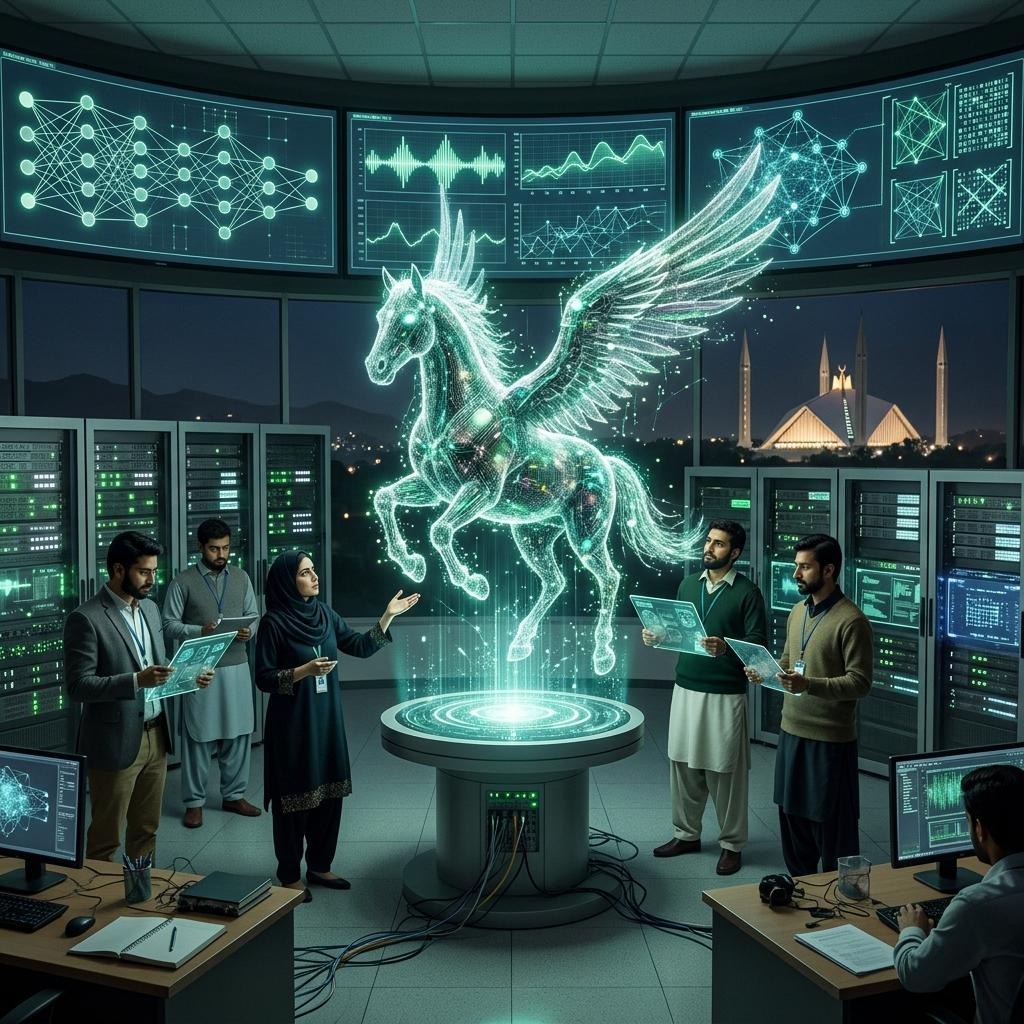
Now RLabs is applying that expertise to a cutting-edge problem: training AI systems. The company develops XR simulators, synthetic data, and machine-training tools. According to the National Incubation Centre for Aerospace Technologies (NICAT), where RLabs was incubated, the company is building a proprietary large language model for a modular, cross-platform simulation engine that could cut simulation development time by up to 75%.
That last point is the commercial heart of it. If RLabs can help companies build simulations far faster and cheaper, that is a valuable product for industries worldwide, from aerospace to manufacturing.
For Pakistan’s tech ecosystem, wins like this are powerful. They prove that Pakistani startups can compete at the highest global level, not just serve as back-office support for foreign companies. A homegrown startup winning in Silicon Valley changes the story from “Pakistan does cheap work” to “Pakistan builds world-class products.”
For young Pakistanis, especially students, the inspiration is direct. The founder studied at a Pakistani university and built deep expertise over years. His success shows that the path to global achievement can start right at home. That is a motivating example for the next generation of founders and engineers.
For investors and the startup scene, international recognition attracts attention and capital. When a Pakistani startup is selected among 18 worldwide and wins, global investors take notice, and that can open doors for other Pakistani companies too.
For the country’s image, these moments reposition Pakistan as a source of serious innovation. The win was praised at the government level, with the IT Minister crediting the country’s innovation support system, and it fits into Pakistan’s broader push to build a real technology economy.
This is a genuine win and deserves genuine celebration. It is the kind of success story Pakistan needs more of, a deep-tech startup competing and winning on merit at the global level.
A grounded perspective helps, though. One award, however prestigious, is a milestone, not a finished journey. RLabs still has to do the hard work of entering the US market, winning customers, and turning its technology into a sustainable business. Many promising startups win early recognition and then face the real challenge of scaling. The award opens doors; walking through them is the next task.
It is also worth noting what made this possible: years of specialized skill-building, a strong technical education, and support from local incubation programs. That combination, deep talent plus a support system, is exactly what Pakistan needs to produce more wins like this. The lesson is not that one founder got lucky. It is that the ingredients for global success exist in Pakistan and can be replicated with the right investment in talent and ecosystem.
So the honest read: real achievement, well earned, and a model worth building on, not a reason to assume the work is done.
RLabs is now preparing to enter the US market, which is the natural next step after this recognition. Its progress there will be worth watching, because it will test whether the early acclaim converts into real commercial success.
More broadly, this win fits into a growing pattern of Pakistani startups and innovators gaining international recognition. As Pakistan continues to invest in incubators, innovation funds, and skills, more startups are likely to reach global stages. The hope is that RLabs is not an isolated success but an early example of a rising wave. If the country keeps building its talent and support systems, Silicon Valley wins by Pakistani startups could become less of a surprise and more of an expectation.
A Pakistani startup winning the GOAL Startup Award in Silicon Valley, founded by a NUST graduate who built his expertise over a decade, is a real and inspiring achievement. RLabs earned its place among the world’s best, with technology aimed at a genuinely valuable problem.
The deeper message is the encouraging one. Pakistani talent, educated at home and supported by the country’s growing innovation system, can compete and win at the very top of the global technology world. RLabs has shown it is possible. The task now, for the company and the country, is to turn this moment into momentum, and to make such wins a habit rather than a headline.
This article is for general information only. Details are based on reported announcements, and some award criteria and company claims could not be independently verified.
RLabs, a Pakistani technology startup, won the GOAL Startup Award at the Silicon Valley November Summit in California, organized by Plug and Play, a global innovation platform and venture capital firm. The summit drew over 3,000 participants, and RLabs was one of just 18 startups selected worldwide for Plug and Play’s Global Overseas Acceleration & Learning (GOAL) program. The startup was founded by Harris Ahmed, a 2018 graduate of the National University of Sciences and Technology (NUST) in Islamabad, with additional training at Draper University and the University of London; he is a computer graphics enthusiast, TEDx speaker, and certified virtual reality developer. RLabs builds extended reality (XR) simulators, synthetic data, and machine-training tools. After about a decade building XR systems that teach people to operate complex machinery, Ahmed is now applying that expertise to training AI systems. According to the National Incubation Centre for Aerospace Technologies (NICAT), where RLabs was incubated, the company is building a proprietary large language model for a modular, cross-platform simulation engine that could cut simulation development time by up to 75%. The win matters because it shows Pakistani startups can compete and win at the highest global level, inspires young founders, attracts investor attention, and improves Pakistan’s innovation image; IT Minister Shaza Fatima Khawaja praised it and credited the Ignite innovation arm. A balanced view: one award is a milestone, not a finished journey, and RLabs still must enter the US market and build a sustainable business. The win reflects deep skill-building plus a local support system, a model worth replicating. This is general information; some award criteria and claims could not be independently verified.